

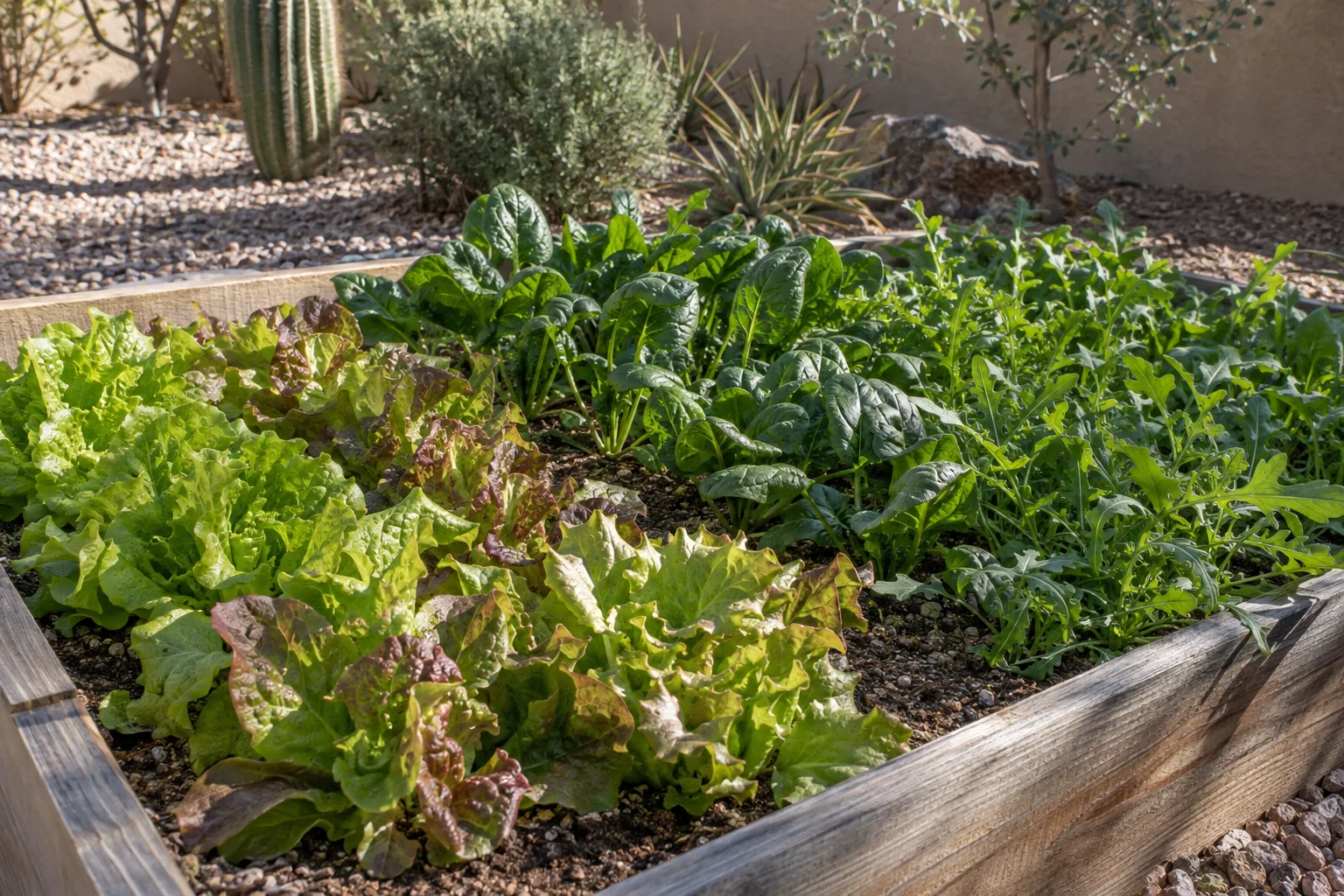
You can start a salad garden in Arizona in January by sowing lettuce, spinach, arugula and radishes in a sunny bed or container, then covering them on nights forecast below about 30°F. Most greens finish before the heat arrives in March or April.
Key takeaways
- Sow lettuce, spinach, arugula, radish and cilantro seed from early January into mid-February, and set out transplants through the same window.
- Cover beds with frost cloth in the late afternoon when the forecast low is 32°F or colder.
- Give greens at least 6 hours of direct sun, because the low winter sun lets walls and trees cast long shadows.
- Water raised beds about every 2 to 4 days and check containers daily, since wind dries shallow soil quickly even in cool weather.
- Plan to finish harvesting by March or April, when warming days make lettuce and arugula bolt and turn bitter.
When should I plant a salad garden in Arizona in January?
Sow seed and set out transplants from early January through about mid-February, while days stay under 75°F and cool-season crops have time to mature. The University of Arizona Cooperative Extension vegetable planting calendar for Maricopa County lists the planting window for each crop, so check it for the greens you pick.
Queen Creek days in January usually reach the 60s°F, and nights often drop into the 30s or 40s, with a few frosty mornings each winter. Cool-season greens grow best between roughly 45°F and 75°F. Warmth in March shortens the harvest, because lettuce and arugula bolt (send up flower stalks) and turn bitter. Start early.
Our herbs, vegetables and berries department is the place to look for cool-season seed and transplants. We commonly carry lettuce, spinach, kale, chard and cilantro in winter, though availability changes week to week and season to season.
Which salad greens grow best in the low desert in January?
Spinach, arugula, leaf lettuce, radishes, kale and Swiss chard are the most dependable, because they tolerate cold nights and mature fast. Days to harvest below are typical ranges counted from seed.
Leaf and butterhead lettuce (Lactuca sativa)
Cut leaf lettuce a few outer leaves at a time starting about 4 to 6 weeks after sowing, and one planting keeps producing for a month or more. Butterhead forms heads in roughly 55 to 65 days. Full-size romaine needs 70 days or more, so sow it early in January or skip it.
Spinach (Spinacia oleracea)
Spinach handles cold better than lettuce and is ready in about 40 to 50 days. It bolts quickly as days lengthen, so a January sowing gives the longest harvest.
Arugula (Eruca vesicaria) and radishes (Raphanus sativus)
Arugula reaches baby-leaf size in about 3 to 5 weeks, and radishes are ready in about 3 to 4 weeks. Both are quick. Arugula turns bitter and radishes turn pithy if they sit too long, so tuck radishes between slower crops and pull them on time.
Kale (Brassica oleracea) and Swiss chard (Beta vulgaris)
Both take frost well and keep producing into spring after the lettuce has finished. Harvest baby leaves in 4 to 6 weeks, or let the plants grow and pick outer leaves for months. Give each plant about 12 inches of room.
Cilantro (Coriandrum sativum)
Sow cilantro thickly and cut young leaves for salads. It bolts as soon as days warm, which is its main drawback. Sow a fresh pinch every 2 to 3 weeks through February to keep leaves coming.
How do I prepare a bed or containers for winter salad greens?
Fill a raised bed or large containers with quality vegetable mix, because native East Valley soil is alkaline (often pH 7.5 to 8.5) and frequently sits on caliche, a cemented layer that roots and water struggle to pass through. Salad greens prefer near-neutral, loose soil, and a compost-rich mix gives them both.
If you plant in the ground, dig at least 12 inches deep, break up any caliche you hit, and mix in 3 to 4 inches of compost. Work a slow-release organic fertilizer into the top 4 to 6 inches. Greens are light feeders. One application usually carries them through the season.
Containers suit patios and small yards. Choose pots 8 to 10 inches deep for lettuce and spinach and 6 inches deep for radishes and cilantro, always with drainage holes. You can carry them under an eave on frost nights, and dark pots hold a little more heat. Browse our pottery and planters for sizes. Hard water leaves mineral salts in containers, so let water run freely out the bottom now and then.

How do I plant a January salad garden step by step?
You need seed or transplants, vegetable mix or compost, slow-release organic fertilizer, a watering can with a rose head or a drip line, and frost cloth with stakes or hoops. Have the frost cloth ready before you plant.
- Pick a spot with at least 6 hours of direct sun. The winter sun sits low, so walls and trees cast longer shadows than they do in summer.
- Fill the bed or containers and mix in the fertilizer.
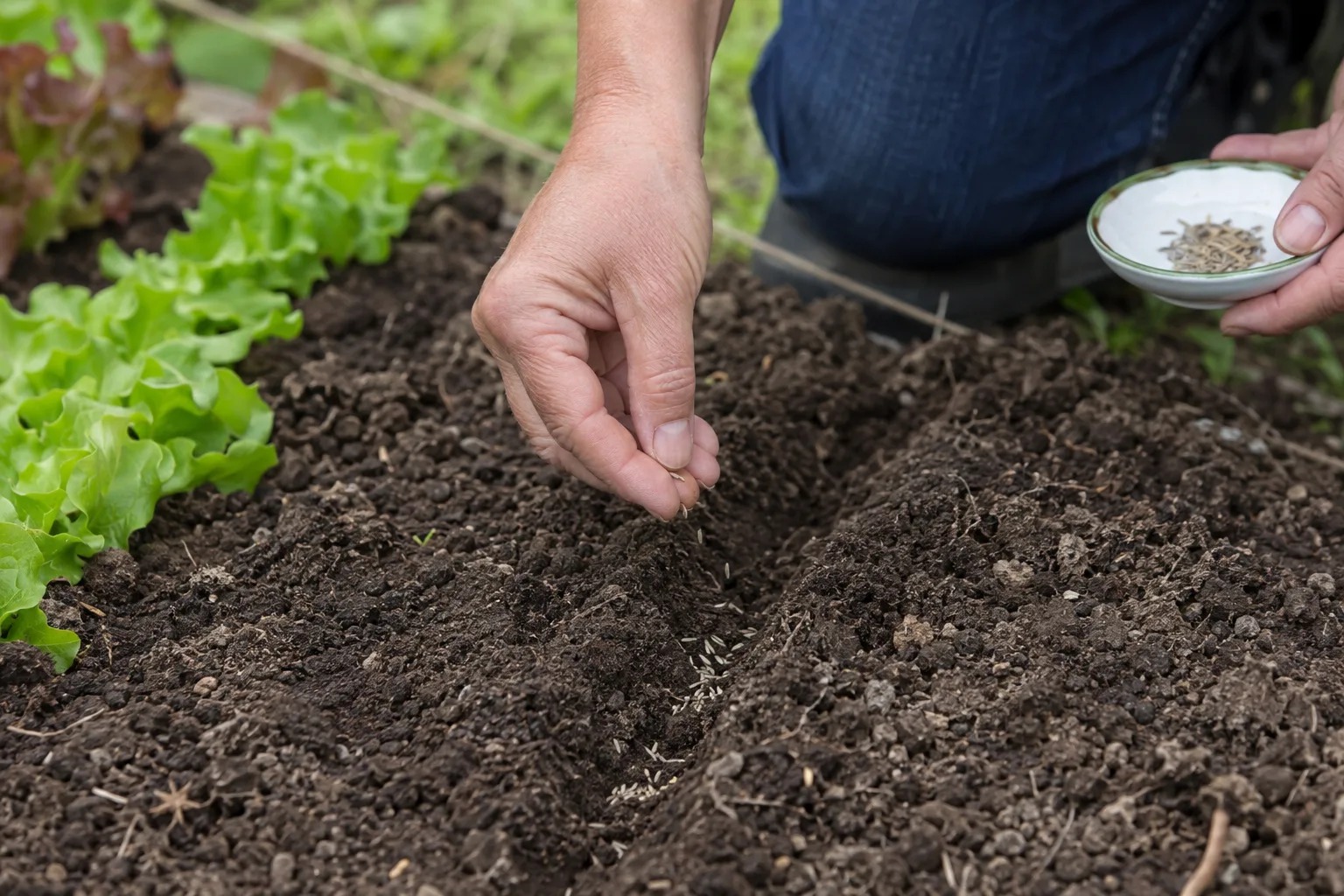
- Sow lettuce and arugula seed about 1/8 inch deep, and spinach, radish and cilantro seed up to 1/2 inch deep.
- Water gently as often as needed to keep the top inch moist until seedlings emerge, usually in about 4 to 10 days.
- Thin seedlings to about 4 to 6 inches apart for leaf lettuce, 3 to 4 inches for spinach and 1 to 2 inches for radishes. Add the thinnings to your salad.
- Set transplants at the same depth they grew in the pot and water them in.
- Start harvesting outer leaves when they reach 3 to 4 inches long, and leave the center to keep growing.
How do I protect salad greens from frost in Arizona?
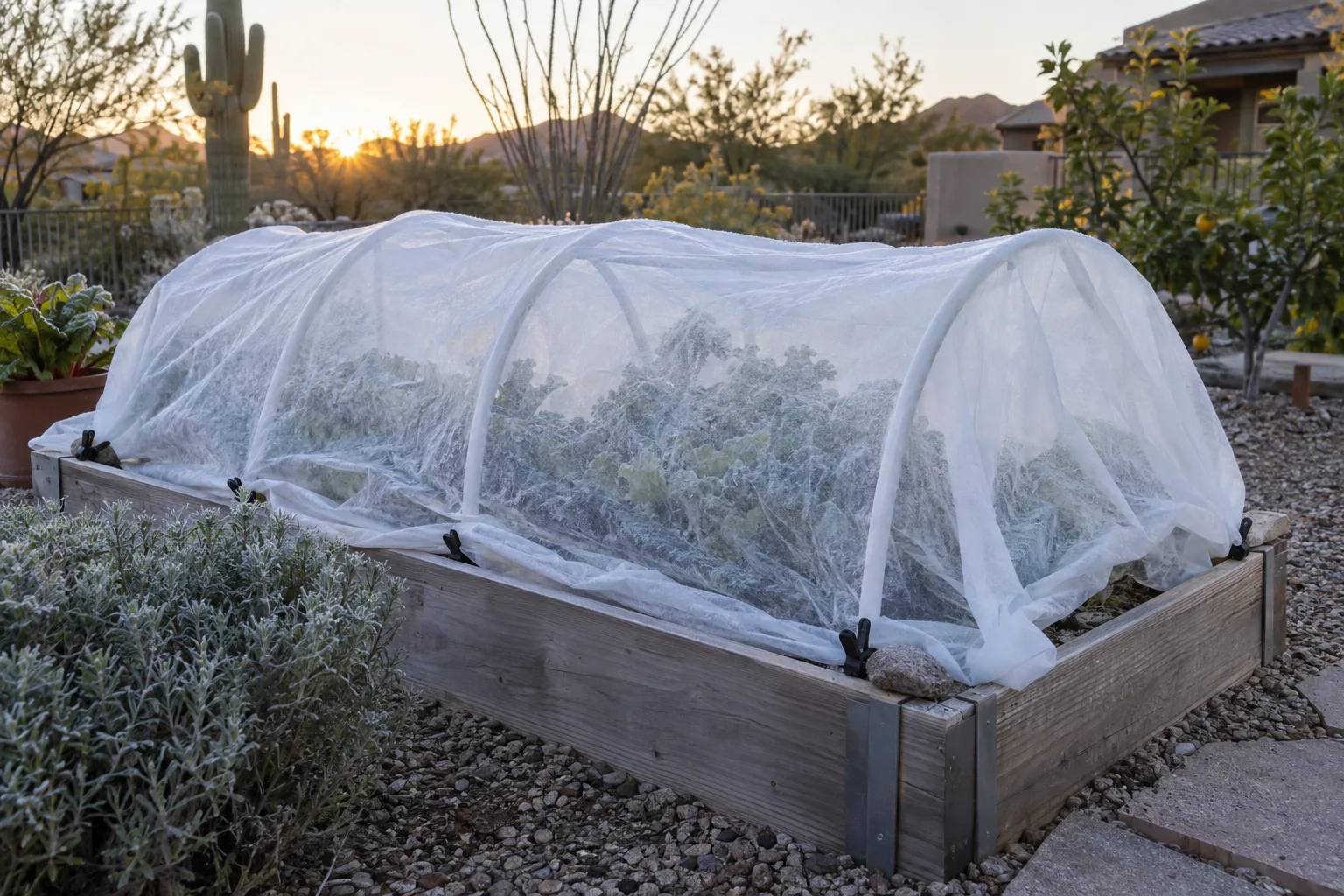
Cover plants with frost cloth in the late afternoon whenever the forecast low is 32°F or colder, and uncover them the next morning once it warms up. Spinach, kale, chard, arugula and radishes shrug off a light frost, while lettuce and cilantro are more tender and need cover first.
Drape the cloth loosely, hold it above the leaves with stakes or hoops, and anchor the edges to the soil with rocks or bricks to trap ground heat. Plastic works only if it is propped so it never touches foliage, and it must come off in the morning before the sun overheats the plants. Cloth is the easier option.
Water the bed in the afternoon before a frost night, because moist soil holds heat better than dry soil. Move containers under an eave or into the garage. Cold air settles in low spots, so avoid planting at the lowest point of your yard. Check the National Weather Service forecast for your own area, since Queen Creek nights can differ from other parts of the Valley.
How often should I water salad greens in January?
Water raised beds about every 2 to 4 days and check containers daily, aiming for evenly moist soil in the top 4 to 6 inches. Cool air slows evaporation, but wind and bright sun still dry shallow beds fast. Push a finger 1 to 2 inches into the soil and water when it feels barely moist.
Water in the morning. Leaves then dry before the cold night, which lowers the risk of fungal problems. Drip irrigation puts water at the roots with little wet foliage, and a thin layer of straw mulch slows evaporation. Overwatering is the more common winter problem, since cold, soggy soil invites root rot in seedlings.
What mistakes ruin a January salad garden?
Six errors cause most failures, and each is easy to avoid.
- Planting in shade. Greens need at least 6 hours of direct winter sun to stay compact and leafy, whether in the ground or in pots, and pale, stretched seedlings are asking for more light.
- Watering on a fixed schedule. Check the soil with a finger first.
- Letting plastic touch leaves overnight, which conducts cold into the foliage and freezes it.
- Feeding with high-nitrogen fertilizer, which pushes soft new growth that frost damages easily.
- Starting slow crops late, since full-size romaine and head lettuce need 70 days or more.
- Waiting too long to harvest. Leaves picked at 3 to 4 inches keep the plant producing, while bolted greens taste bitter.
Frequently asked questions
Can I start salad seeds indoors in January?
Yes, but most salad greens do better sown straight into the bed, because lettuce and spinach seedlings resent root disturbance. If you start indoors, sow 2 to 3 weeks ahead, harden seedlings off outside for 5 to 7 days, and set them out when no frost is forecast.
Are pests a problem for winter greens?
Pests are few in January, though aphids and slugs can show up. Rinse aphids off with a strong stream of water, and hand-pick slugs and snails in the evening after rain or heavy watering. If you need a product on edible crops, choose one labeled for vegetables and follow the label directions.
Is it too late to plant in February?
No, early February still works for fast crops such as radishes, arugula, leaf lettuce and baby spinach, which mature in 3 to 8 weeks. The window narrows each week as temperatures climb, so choose quick varieties and skip slow crops needing 70 days or more.
What do I plant after the salad greens finish?
Replace the greens with warm-season crops such as tomatoes, peppers and squash once lettuce and arugula bolt, usually in March or April. Our gardening calendars list what to plant each month, so you can time the swap. Pull the bolted plants, work in a couple of inches of fresh compost, and replant.
Can I eat greens that got frost on them?
Yes, harvest frost-nipped greens after they thaw, and cut off any leaves that turn dark, slimy or translucent. Spinach, kale and arugula often taste sweeter after a cold night. Lettuce that froze solid and turned mushy will not recover, so pull those plants and replant.
Is a January salad garden worth starting in the East Valley?
Yes, if you have a spot with at least 6 hours of winter sun and a few minutes to check the forecast on cold evenings. A bed or two large containers can supply salads for weeks, with far fewer pests and less watering than a summer garden. It is a poor fit for a fully shaded patio, or for anyone who will not cover tender lettuce when frost is forecast, since one hard night can set it back badly. Come visit us in Queen Creek, and we will help you choose greens for your space.
