

To revive houseplants in Arizona, find the cause first, then correct watering, hard-water salt buildup, dry air, window light and soil drainage one at a time. Most struggling plants show improvement within 3 to 6 weeks once those conditions change.
Key takeaways
- Water until it drains from the bottom, then wait until the top 1 to 2 inches of soil are dry before watering again.
- Flush the pot with 3 or 4 rounds of slow watering every 2 to 3 months to wash out salts left by hard tap water.
- Keep tropical plants back from west and south windows from roughly May through September, and favor east-facing light.
- Repot in March or April into a mix of about 60% potting soil, 20% perlite and 20% pumice or coarse sand.
- Wait at least 4 weeks after repotting or root trimming before you fertilize.
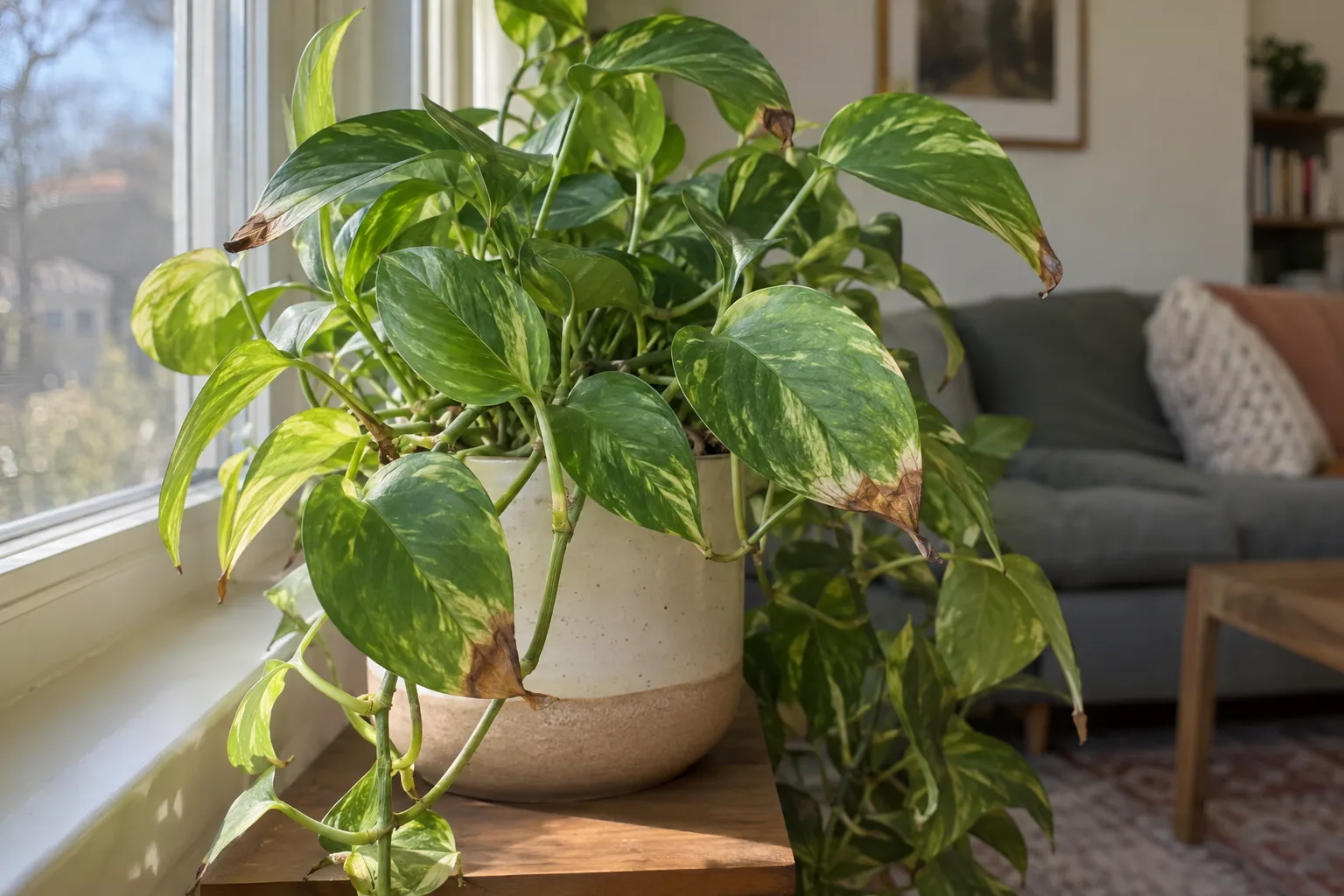
When is the best time to revive a struggling houseplant in Arizona?
Start diagnosing the day you spot a problem, and save repotting for March or April, when plants move into active growth. Watering, flushing and light changes work in any month. Repotting in the middle of a summer when highs top 110°F, or in winter when growth has slowed, adds stress to a plant that is already weak. Rotting roots cannot wait.
Air conditioning pulls indoor humidity well below what tropical plants prefer, often into the 20 to 35% range, and sun through west and south glass heats leaves further. That combination, plus hard tap water, accounts for much of the decline in Arizona houseplants. If a plant is past saving, look through our houseplants for varieties that tolerate dry indoor air.
What do I need before I start?
Gather these first, because a plant out of its pot should not sit around while you hunt for supplies.
- A moisture meter, or your finger, to check the soil 2 inches down
- Clean, sharp scissors or pruners
- Fresh potting mix, plus perlite and pumice or coarse sand
- A pot with drainage holes, 1 to 2 inches wider than the current one
- Filtered water for sensitive plants
- Insecticidal soap or neem oil, only if pests are present
- A balanced liquid fertilizer, and chelated iron if new leaves come in yellow between the veins
Wipe pruner blades with rubbing alcohol between plants so a disease on one plant does not travel to the next, and do it again before cutting rotted roots. Nothing here is specialized.
What are the eight steps to revive an unhealthy houseplant?
Work through these in order, then change only one thing at a time so you can tell what helped.

- Diagnose first. Yellow leaves point to overwatering, salt buildup or low light, brown crispy tips to dry air, fluoride or salts, and wilting in wet soil to root rot. Pale, bleached leaves usually mean too much direct sun. Check leaf undersides for stippling or fine webbing from spider mites.
- Trim and inspect the roots. Cut off dead leaves, then slide the plant from its pot. Mushy, dark or sour-smelling roots are rotting, so cut them back to firm, pale tissue with clean scissors.
- Water deeply, then wait. Soak the pot until water runs from the drainage holes and let the top 1 to 2 inches dry before the next watering. Drought-tolerant plants can dry out further.
- Flush the salts. Water slowly until the pot drains freely, repeat 3 or 4 times, and empty the saucer. Do this every 2 to 3 months.
- Raise the humidity. Group plants together, set pots on a pebble tray with the pot base above the waterline, or run a small humidifier near humidity-loving tropicals from March through June. Misting gives only a brief lift.
- Move the plant out of harsh light. Pull it back from west and south windows or filter the sun through a sheer curtain.
- Repot into a free-draining mix. Choose a pot 1 to 2 inches wider than the old one, and do it in March or April if the plant can wait.
- Feed late and lightly. Wait at least 4 weeks after repotting or root trimming, then use a balanced liquid fertilizer at half strength from March through September.
Isolate any plant with pests from the rest of your collection and treat it before repotting, following the label on whatever product you use.
How does hard water affect houseplants in the East Valley, and how do I flush it?
Hard tap water leaves calcium, magnesium and other mineral salts in the potting mix, and over months they scorch roots and turn leaf tips and edges brown. A white or tan crust on the soil, pot rim or saucer is the visible sign. Dracaena (Dracaena), spider plant (Chlorophytum comosum), peace lily (Spathiphyllum) and calathea (Calathea) are commonly reported as sensitive to fluoride and salts.

To flush a pot, take it to a sink or outdoors and pour in water slowly until it drains freely. Let it stop dripping, then repeat three or four times and empty the saucer. Flush every 2 to 3 months.
For sensitive plants, switch to filtered water or collected rainwater. Letting tap water stand overnight clears chlorine but does little for fluoride or dissolved salts.
How much window light can a houseplant take in Arizona?
East-facing windows are the safest, because they give gentle morning sun that fades before the afternoon heat. West and south windows can scorch tropical leaves from roughly May through September, since glass concentrates heat and leaves run hotter than the room air. Set plants a few feet back or add a sheer curtain, and treat your room as one step brighter than the plant tag suggests.
North windows are gentler. They still give enough light for low-light plants such as pothos (Epipremnum aureum), snake plant (Dracaena trifasciata) and cast iron plant (Aspidistra elatior). Rotate pots a quarter turn every 2 to 3 weeks so growth stays even instead of leaning toward the glass.
What potting mix works best for houseplants in dry desert air?
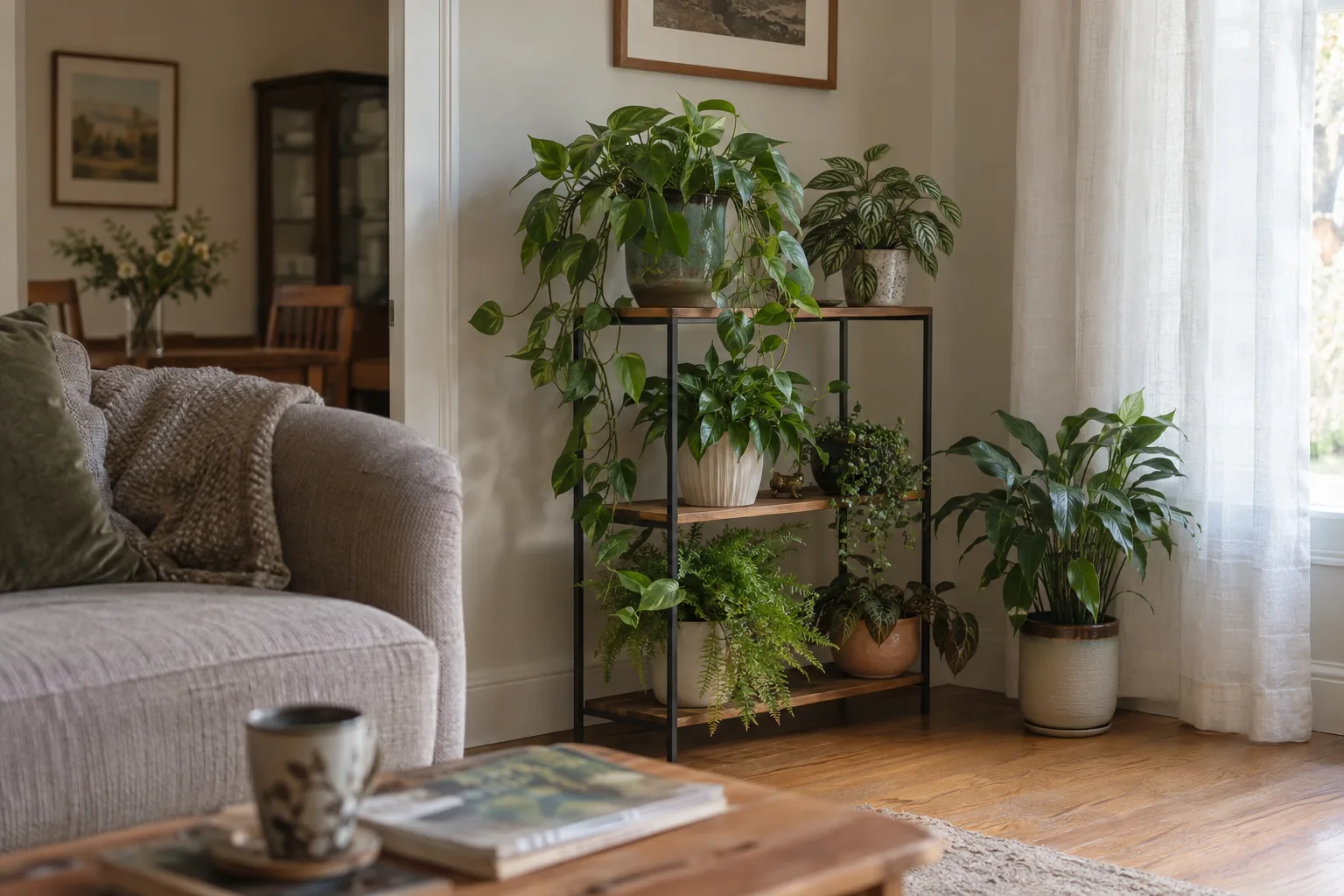
A fast-draining mix works best: about 60% quality potting soil, 20% perlite and 20% pumice or coarse sand. Peat-heavy bagged mixes hold water unevenly, and a pot that stays soggy for days invites root rot in a warm room. For cacti and succulents grown indoors, raise the perlite and pumice share to about 50%.
Ferns and calatheas want more moisture, so blend in some coco coir for them. Every pot needs drainage holes. When you shop for pottery and planters, check the base for a hole, because a decorative pot without one holds water around the roots.
How often should I water houseplants through the year?
Water when the soil is dry 2 inches down, and ignore the calendar. As a rough guide for a 6-inch pot in a bright room, expect every 3 to 5 days in peak summer and every 10 to 14 days in winter. Larger pots and dim rooms go longer. The monsoon, from roughly July through September, raises outdoor humidity somewhat, so soil may stay damp longer and fungus gnats can appear in constantly wet mix.
| Season | Months | Main tasks | Typical watering |
|---|---|---|---|
| Winter | Dec to Feb | Skip fertilizer, keep plants away from cold drafts at windows | Every 10 to 14 days |
| Spring | Mar to May | Repot, resume half-strength feeding, add humidity | Every 5 to 8 days |
| Summer | Jun to Sep | Pull plants back from west and south glass, watch for gnats during the monsoon | Every 3 to 5 days |
| Fall | Oct to Nov | Taper feeding, clean leaves, check for pests before bringing outdoor plants in | Every 7 to 10 days |
Our gardening calendars track outdoor planting and care month by month.
Which mistakes keep a struggling houseplant from recovering?
Avoid these habits, because each one adds stress to roots that are already damaged.
- Watering on a fixed weekly schedule, which floods the plant in cool weeks and starves it in hot ones.
- Moving to a much larger pot, where unused soil stays wet around the roots.
- Fertilizing a stressed plant, which adds salts to damaged roots.
- Changing five things in one week, so you cannot tell what worked.
- Leaving water standing in the saucer, which keeps roots soggy and returns salts to the soil.
Browned leaf tips and yellowed leaves will not turn green again, so judge progress by the new leaves that emerge over the following 3 to 6 weeks rather than by the old damage. Be patient. If you would like to learn repotting hands-on, see whether a session is listed on our classes and events page.
Frequently asked questions
How do I get rid of spider mites on a houseplant?
Wash the plant with a strong spray of water, then treat all leaf surfaces, undersides included, with insecticidal soap or diluted neem oil, following the product label. Repeat every 5 to 7 days for at least three rounds, because eggs hatch between treatments. Raising humidity near the plant makes the leaves less inviting to mites over time.
Can houseplants spend the winter outdoors in the East Valley?
Many can, on days when temperatures sit roughly between 65 and 80°F, and you should bring them in when nights are forecast near 40°F, or earlier for very tender plants. Acclimate them over 1 to 2 weeks, starting in shade, since direct sun will burn leaves used to indoor light. A covered patio or east-facing spot works best.
Why does water run straight through my pot without soaking in?
Dry peat-based mix turns water-repellent, so water slides down the gap between soil and pot wall and drains out. Set the pot in a basin of water for 20 to 30 minutes so the mix rehydrates from below. Afterward, avoid letting the soil dry out completely, and blend coco coir into the next mix, which rewets more easily than peat.
Should I fertilize a plant that is already struggling?
No, wait until you see new healthy growth, usually 4 to 6 weeks after you fix the underlying problem. Damaged roots cannot take up nutrients well, and fertilizer salts can burn them further. Once new leaves appear, feed at half the label strength from March through September and skip feeding from October through February.
Which houseplants handle dry Arizona indoor air best?
Snake plant, pothos, ZZ plant (Zamioculcas zamiifolia) and aglaonema (Aglaonema) tolerate dry air and irregular watering better than most tropicals. These are varieties we commonly carry, though availability changes week to week and season to season. Calatheas, ferns and peace lilies need more humidity and attentive watering, so they suit gardeners willing to run a humidifier.
Is reviving a struggling houseplant worth the effort?
Yes, if the plant still has firm stems and some green leaves, because those usually respond within 3 to 6 weeks once watering, salts, light and soil are corrected. Skip the rescue when the stem is mushy at the soil line or the roots are mostly black, since little is left to save. A tougher replacement is the better choice for anyone unwilling to check soil moisture weekly. Come visit us in Queen Creek and bring a photo of your struggling plant.