To revive struggling desert plants in Arizona, find the cause first: check soil moisture 6 inches down, look at the root crown, and match the symptom to heat, water or soil. Most recover with a corrected watering routine, mulch and several weeks of patience.
Key takeaways
- Push a probe 6 to 8 inches into the soil before you change anything. Dry soil needs a deep soak, and damp, musty soil needs irrigation turned off.
- Leave sunburned and leafless growth on the plant through summer. Prune once daytime highs stay below about 95°F, usually in October.
- Hold fertilizer until you see new growth, then use half the label rate.
- Yellow leaves with dark green veins point to iron, and chelated iron works faster than trying to acidify alkaline soil.
- Expect 4 to 8 weeks before you see recovery, and a full growing season before the plant looks vigorous again.

How do I tell what is wrong with a struggling desert plant?
Check three things in order: soil moisture, the base of the plant, and the pattern on the leaves or pads. Together they separate water problems from heat damage and soil chemistry in about ten minutes.
Push a screwdriver or wooden dowel 6 to 8 inches into the soil beside the plant. Soil that is bone dry and pulling away from the basin points to underwatering. Soil that is still damp and musty several days after irrigation points to overwatering, or to a caliche layer that holds water around the roots like a bathtub. Then press the base of the trunk or stem. Soft, dark or mushy tissue means rot.
The foliage tells the rest. Yellowing from the bottom up often follows too much water. Crispy brown edges and bleached patches on the sun side suggest heat or sunburn. Pale new leaves with dark green veins suggest iron deficiency, which is common in our alkaline soil. If you are unsure what you are growing, browse our plants department to identify it, because a saguaro and a bougainvillea need opposite care.
| Plant type | Common sign of stress | First move |
|---|---|---|
| Cactus and succulents | Soft spots, yellowing, mushy center | Stop watering and check for rot |
| Desert trees such as palo verde and mesquite | Leaf drop, thin canopy | Deep basin soak |
| Shrubs such as Texas sage | Sudden total leaf drop | Cut back irrigation and check drainage |
| Bougainvillea and other vines | Wilting, scorched leaf edges | Steady the watering schedule |
When is the best time to revive a stressed desert plant?
Start the diagnosis the day you notice the problem, but save big changes for fall. Summer highs above 110°F and the July through September monsoon put plants under pressure, and moving, hard pruning or feeding during that stretch adds more.
In summer, stick to triage. Correct the watering, add mulch, and put up shade cloth if the plant is baking. In October and early November, soil temperatures drop and roots grow actively again, which makes it the right window for pruning, replanting and feeding. Frost-damaged plants follow a different clock, since you wait until the danger of frost has passed in late winter before you cut. Our gardening calendars lay out what to do each month in the low desert.
How do I revive a struggling desert plant step by step?
Work through the steps below in order, because each one rules out a cause before you spend time on the next. You need a probe or dowel, a shovel, clean hand pruners, organic mulch, 30 to 50 percent shade cloth with stakes, and a chelated iron product labeled for alkaline soil.

- Probe the soil 6 to 8 inches deep beside the plant and note whether it is dry, damp or soggy.
- Dig gently 4 to 6 inches down near the base. Firm tan or white roots are healthy, and brown, mushy roots mean rot.
- Fix the water first. Turn irrigation off for 7 to 10 days if the soil is soggy, or start the basin soak described below if it is dry.
- Test for caliche by pushing a metal rod into the soil around the root zone. A hard layer that stops the rod within 12 to 18 inches will hold water and block roots.
- Spread 3 to 4 inches of mulch from about 6 inches off the trunk out to the drip line. Keep it away from cactus and succulents, which rot when mulch stays against them.
- Stake shade cloth on the west or south side if the plant sits near a block wall or pavement. Leave it up for 4 to 6 weeks.
- Hold fertilizer until you see new leaves or plumper pads.
- Check the plant once a week for 6 to 8 weeks and adjust if nothing has changed.
That last step matters because desert plants recover slowly. Many show nothing for a month.
How do I fix a watering problem?
Match the fix to what the probe told you. A dry plant needs deep, slow soaks, and a soggy plant needs a break from irrigation.
Underwatered plants
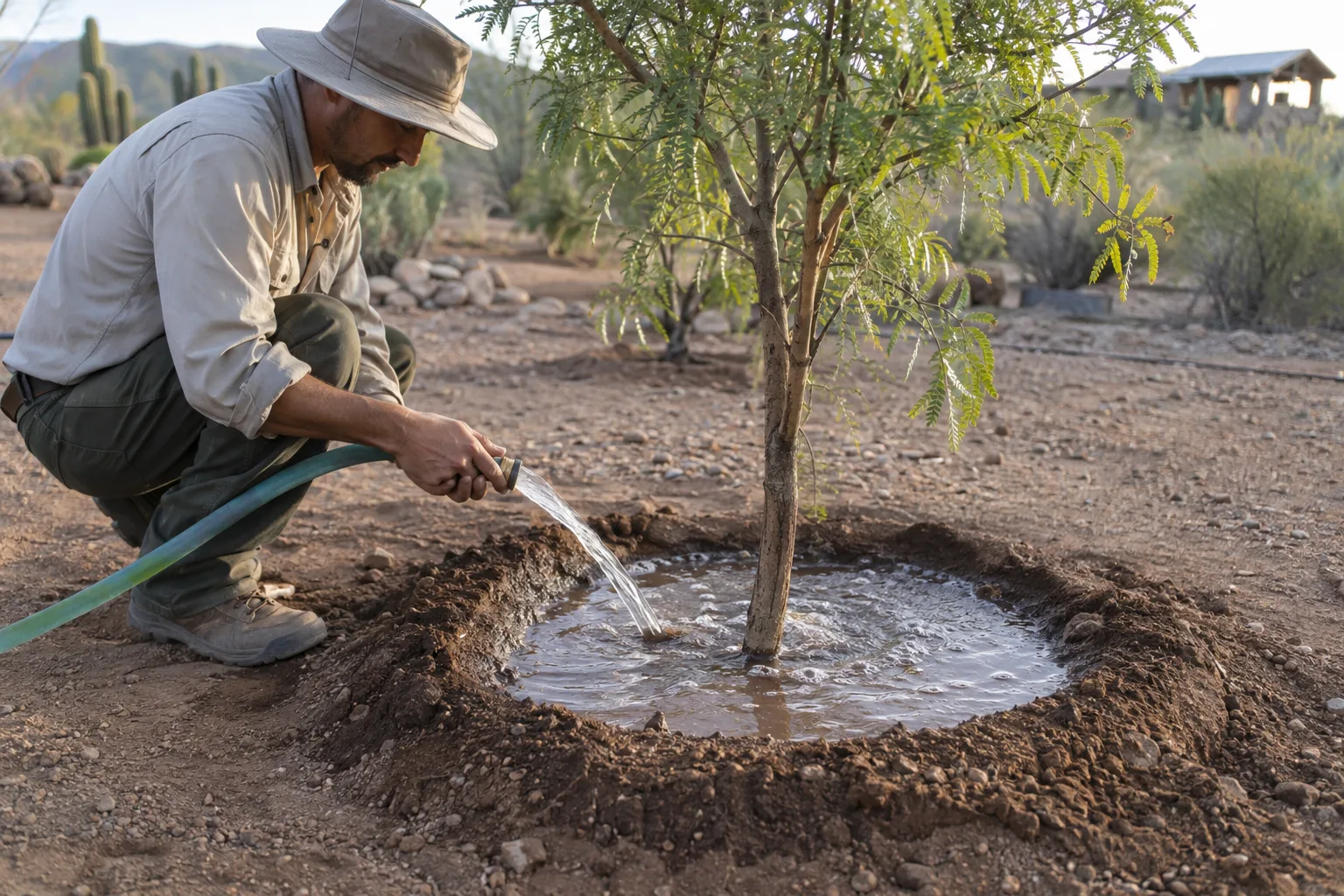
Drip emitters often wet only a small circle, and hard, compacted soil can shed water before it reaches the roots. Build a basin 2 to 3 feet out from the trunk, fill it slowly, let it drain, then fill it again. Repeat every 3 or 4 days for two weeks, then return to a timer with longer, less frequent runs. Established desert trees often do well with a deep soak every 10 to 14 days in summer, though soil type changes that.
Overwatered plants
Shut the irrigation off for 7 to 10 days and watch for new growth. If you find black, mushy roots, cut them back to firm tissue with clean pruners and let the area dry before watering lightly. Monsoon weeks are the usual trigger, so skip scheduled irrigation whenever it rains, especially for agave, aloe and cactus.
Can yellow leaves be fixed in alkaline soil?
Yes, if the yellowing shows dark green veins, which is classic iron chlorosis. Our soil often tests around 7.5 to 8.5 pH, and at that level iron and zinc are in the ground but locked up where roots cannot take them in.
Chelated iron applied as a soil drench or a foliar spray gives the fastest response, often within a few weeks. Follow the label rate, and apply it in the cooler hours of the day to avoid leaf burn. Sulfur-based soil acidifiers lower pH gradually, but the change is slow and modest in caliche-heavy soil, so treat sulfur as a long-term help. Mulch and deep watering also improve how roots take up nutrients over time.
Should I prune sun-damaged or leafless plants?
Not during summer. Brown, papery growth shades the living tissue underneath, and cutting it away exposes bark and stems that can sunscald within days.
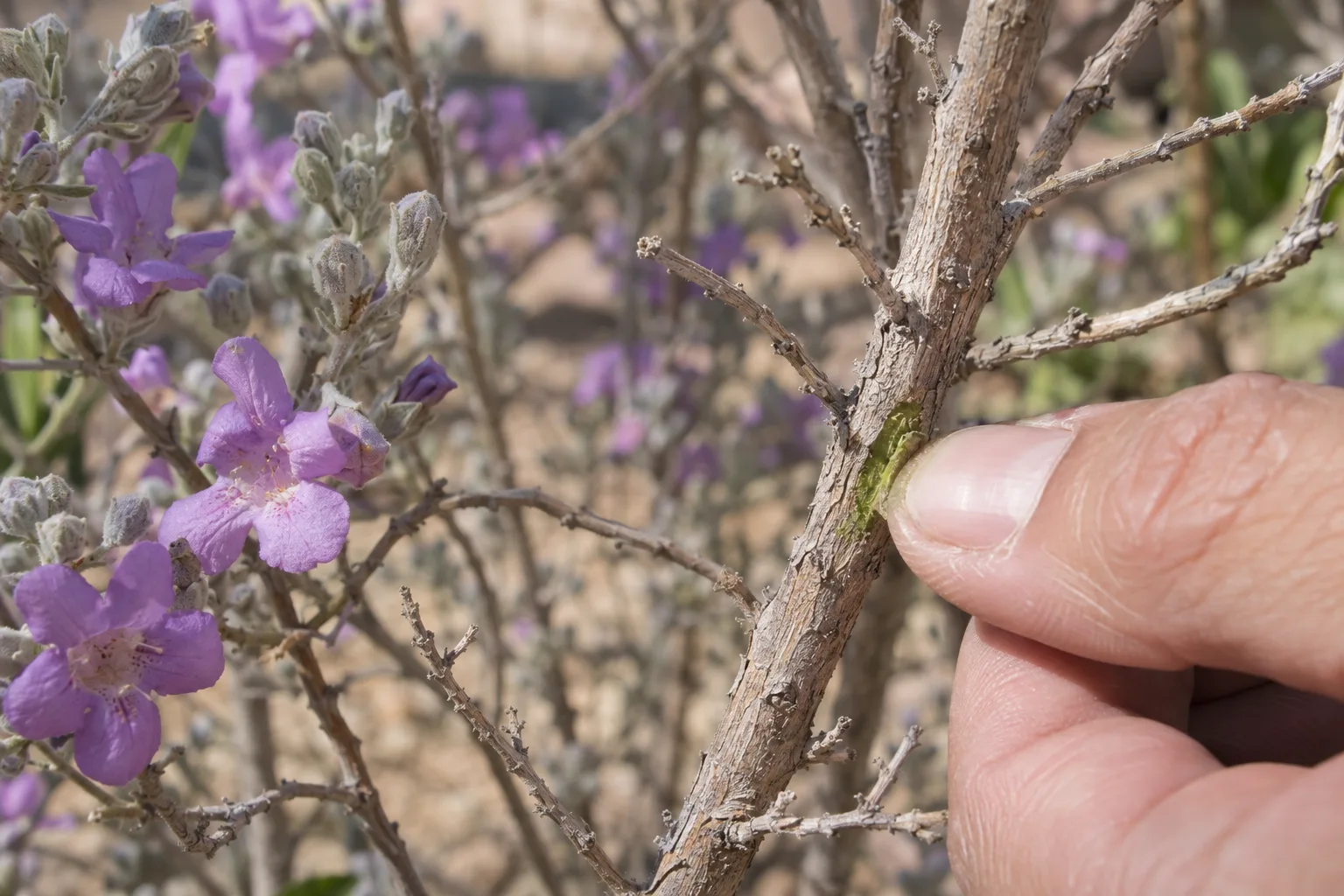
Texas sage, desert willow and some palo verde drop leaves under stress or go dormant, and they often look dead when they are not. Scratch a small patch of bark with a fingernail. Green underneath means the stem is alive. Wood that snaps cleanly with a dry crack and shows brown or gray beneath the bark is dead and can be removed. Wait until highs stay below about 95°F before shaping anything, and clean your pruners with rubbing alcohol between plants.
When is a plant past saving?
A plant is past saving when the roots, the crown or every stem have failed. If you find none of those signs, give it more time.
- Every root you uncover is black, mushy and falling apart.
- Scratching several stems at different heights shows no green anywhere.
- The crown of an agave or aloe has collapsed into foul-smelling mush.
- A large share of a cactus is soft and oozing dark liquid.
Dead plants can harbor pests and decay, so remove them promptly. Plan replacements for October through early November. If you need a tough replacement for a tree, our desert trees are a good place to start.
What mistakes slow a plant’s recovery?
Four mistakes cause most of the setbacks. The first is fertilizing a stressed plant, which adds salt around roots that already struggle to take up water. The second is replacing the plant before you have checked the roots, since many look dead and are not.
The third is watering daily in short bursts, which keeps roots shallow and vulnerable to heat above 110°F. The fourth is piling mulch against the trunk or the base of a succulent, where it holds moisture and invites rot. Pulling mulch back a few inches is a quick fix. If you want hands-on help, check our classes and events for upcoming gardening sessions.
Frequently asked questions
How long does a stressed desert plant take to recover?
Most show early signs of recovery within 4 to 8 weeks of fixing the cause. Look for new leaf tips, better color or plumper pads. Full recovery often takes a whole growing season, and the most visible progress usually comes in September through November, when cooler weather lets the plant put energy into new growth.
Can a saguaro with a soft spot be saved?
Sometimes. A small, contained soft spot may come from frost, a wound or early bacterial decay, and improving drainage while reducing water gives the plant its best chance. A large area that is spreading or oozing dark liquid carries a poor outlook. Have a certified arborist look at any saguaro in decline before you cut into it.
Can a plant that lost all its leaves come back?
Often yes. Texas sage, desert willow and some palo verde drop every leaf under stress and then re-flush when conditions ease. Check that the stems bend and show green under the bark, and that the soil is neither soggy nor bone dry. Then wait. A month is not unusual.
Should I mulch around cactus and succulents?
Use gravel or leave bare soil near the base of cactus and succulents. Organic mulch holds moisture against the stems and can cause rot, especially in monsoon weeks. Save the 3 to 4 inch mulch layer for trees, shrubs and perennials, and keep it a few inches back from every trunk.
Is a west-facing wall too hot for my plant?
A west or south wall can make the air around a plant noticeably hotter, because block and pavement radiate heat into the evening. Plants that struggle there often improve with shade cloth, deeper watering and mulch. If the plant keeps declining after a season, moving it in October to a spot with morning sun gives it a fresh start.
Is it worth reviving a struggling plant or starting over?
Revive it if the roots are firm, the stems show green under the bark, and the problem traces to water, heat or soil. That covers most cases, and a mature tree or shrub is worth the wait. Start over if the roots have rotted or every stem is dry inside, or if the plant sits in a spot that will keep damaging it. Bring a photo or a cutting, and visit us at the nursery in Queen Creek for a second opinion.