

Arizona gardeners are replacing oleander, Indian laurel fig, Italian cypress and Mexican fan palms because of disease, root damage, pests and upkeep costs. Tougher low-desert plants now fill those spots with less water and less work.
Key takeaways
- Oleander leaf scorch has no cure, and an infected shrub usually declines over several seasons.
- Indian laurel fig roots can lift sidewalks and reach pipes, so a mature tree close to paving is worth removing before repairs start.
- Mexican fan palms can pass 60 feet and need a professional crew to trim, while Mediterranean fan palm usually stays around 6 to 15 feet.
- Set replacements 1 to 2 inches above the surrounding soil, in a watering basin, under 2 to 3 inches of mulch.
- Bermuda lawns can skip fall overseeding and stay tan from roughly November through March.
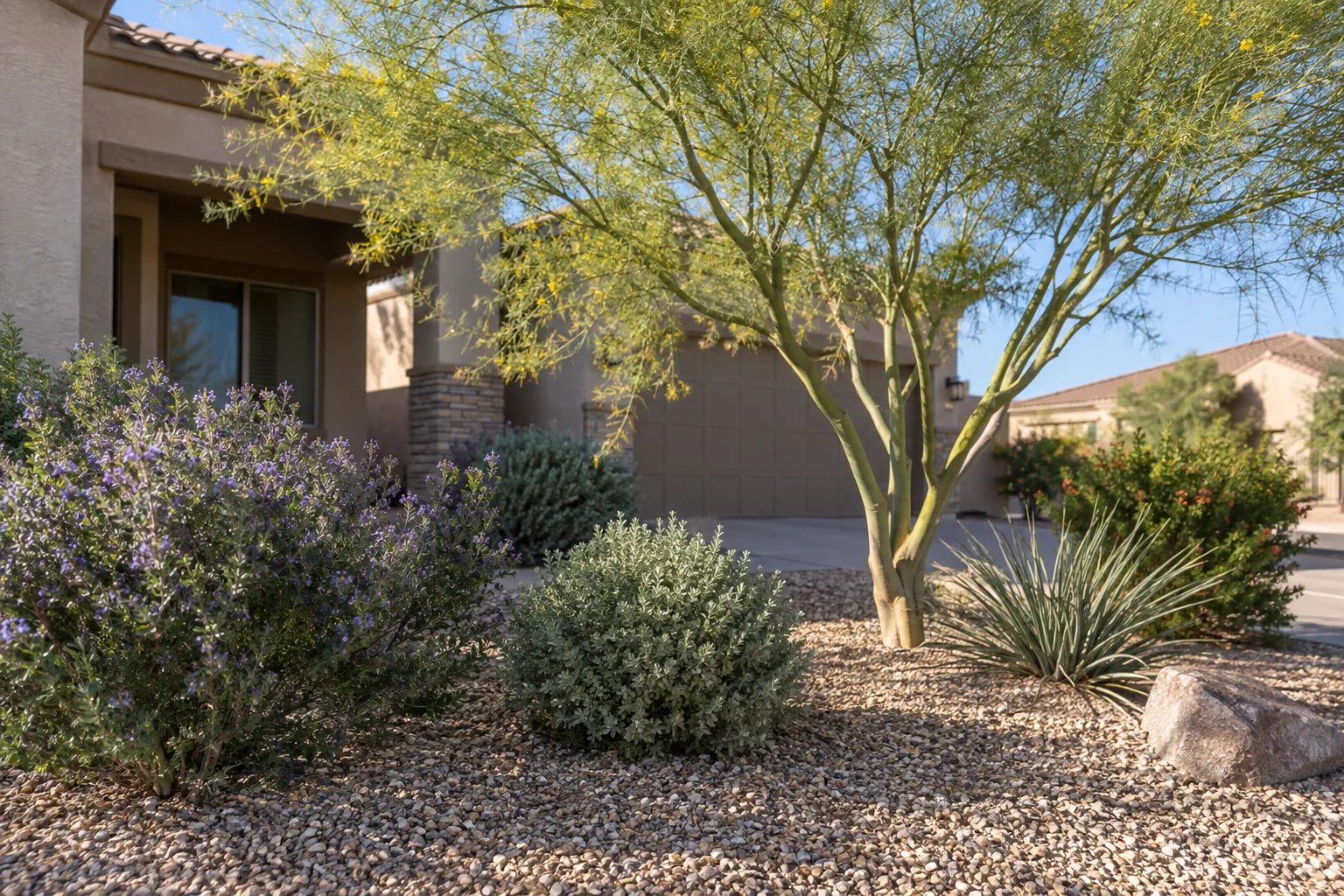
Which popular plants are Arizona gardeners replacing?
The plants that come out most often are oleander, Indian laurel fig (Ficus microcarpa), Italian cypress, Mexican fan palm (Washingtonia robusta) and, in colder pockets, bougainvillea. All of them sold well because they grew quickly and looked good in a pot, but after ten or twenty years in alkaline soil, summers above 110°F and the occasional frost, their weak points show up. The pattern repeats across the East Valley.
The table pairs each plant with its main problem and a replacement to consider. Our plant department shows the kinds of shrubs and perennials that commonly go in as replacements, though availability changes week to week and season to season.
| Plant coming out | Main problem | Replacement to consider |
|---|---|---|
| Oleander | Leaf scorch disease, toxicity | Texas sage, desert willow |
| Indian laurel fig | Aggressive roots, thrips | Desert Museum palo verde |
| Italian cypress | Mites, root rot, canker | Texas sage hedge |
| Mexican fan palm | Height, trimming cost | Mediterranean fan palm |
| Bougainvillea | Frost damage, thorns | Yellow bells, desert marigold |
What is happening to oleander in Arizona?
Oleander leaf scorch, a bacterial disease caused by Xylella fastidiosa, is the main reason gardeners pull oleander hedges. Sap-feeding insects carry the bacterium, and no treatment cures an infected shrub. Leaf tips and edges brown first, the scorch moves through the plant, and the shrub declines over several seasons.
Toxicity adds a second reason. Poison control guidance lists every part of oleander as poisonous to people and pets if eaten, and the sap can irritate skin, so wear gloves when you prune. Households with toddlers or dogs often decide not to replant it, and any replacement is worth checking for pet safety too.

Texas sage (Leucophyllum frutescens) grows 5 to 8 feet tall in full sun, needs little water once established, and blooms in purple, pink or white after humid monsoon weather. Its drawback is a leggy, sparse look if it is sheared hard or overwatered. Desert willow (Chilopsis linearis) reaches roughly 15 to 25 feet, gives a looser screen, and drops leaves in winter plus blooms and seed pods in season.
Why are Indian laurel figs coming out of East Valley yards?
The roots lift sidewalks, driveways and block walls, and they find irrigation and sewer lines. Cuban laurel thrips also curl and distort the new leaves on these trees. A mature tree close to paving rarely gets easier to manage, so many homeowners remove it before the repair bills begin.
Removing a large tree is a job for a licensed, insured arborist. Ask for the stump to be ground out, since leftover trunk and roots can resprout.
Desert Museum palo verde (Parkinsonia hybrid) grows about 20 to 30 feet tall and wide in full sun, needs little water after the first couple of years, and covers itself in yellow flowers in spring. Its shade is light and filtered, and it sheds flowers and tiny leaves onto patios. You can browse the desert trees we commonly carry, though availability changes by season.
Do Italian cypress work in the low desert?
They can survive here, but they decline often. Spider mites build up in the hot, dry weeks before the monsoon, root rot follows overwatering in heavy soil, and Seiridium canker turns sections of the tree brown and dead. Canker has no cure.
Prune out dead branches with clean tools in dry weather, and expect to remove a tree once most of it has browned. For a tall privacy screen, a Texas sage hedge works at 5 to 8 feet, and a row of desert willow reaches higher. Narrow side yards are harder, so bring a photo and the measurements and we will help you narrow the options.
Are Mexican fan palms worth the upkeep?
Often not, once they are too tall to trim from a ladder. These palms can reach 60 to 100 feet, so trimming the dead frond skirt takes a bucket truck or a trained climber, and the cost comes back year after year. Left untrimmed, the skirt shelters roof rats and burns easily. Seedlings also sprout in the beds below mature palms.
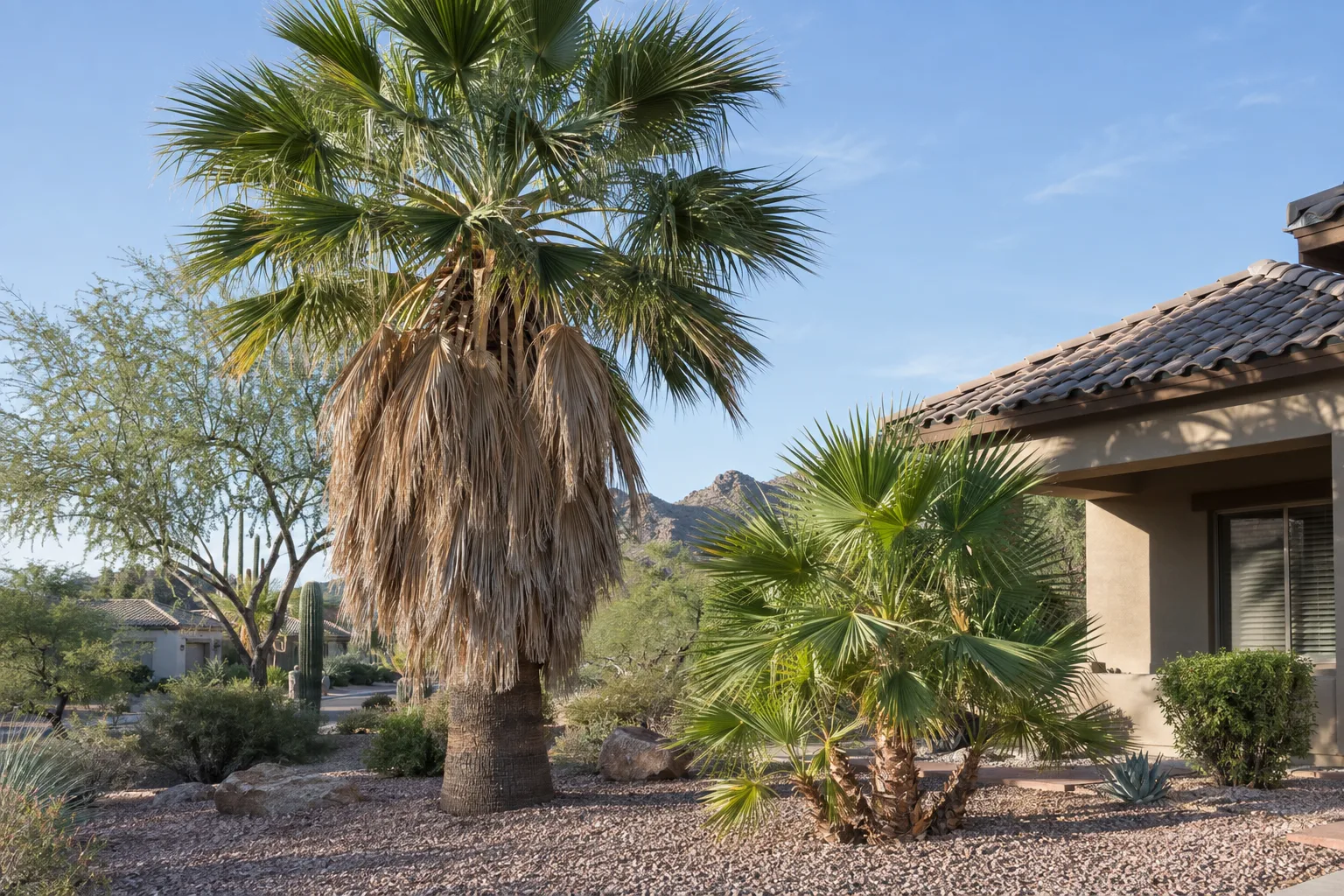
Mediterranean fan palm (Chamaerops humilis) stays much smaller, usually 6 to 15 feet, and grows as a clump of several trunks in sun or part shade. It grows slowly and carries sharp spines on the leaf stems, so keep it back from walkways. The palm trees page shows the types we commonly carry, and availability changes week to week and season to season.
Should I replace my bougainvillea?
Only if it keeps freezing back or has outgrown its spot. Bougainvillea handles heat and reflected sun well, but frost near or below 32°F burns the leaves and tips, and an open, cold exposure leaves it ragged for weeks. A sheltered wall facing south or west suits it best. Thorns slow down pruning, so wear long sleeves and thick gloves.
Yellow bells (Tecoma stans) grows about 6 to 10 feet tall and blooms for many months in full sun with little water once established. It can freeze back in hard winters and drops seed pods. For low, steady color, desert marigold (Baileya multiradiata) stays around 1 to 2 feet. Neither climbs, so they replace the color and leave the vine behind.
Should I stop overseeding my Bermuda lawn?
You can. Bermuda goes tan and dormant in winter, then greens up again in spring, and skipping ryegrass does not harm it. Overseeding calls for frequent light watering for a couple of weeks while the seed germinates, plus winter mowing and feeding. In spring the ryegrass competes with waking Bermuda until the heat finishes it off.
If you do overseed, timing follows soil temperature, and our gardening calendars are a good place to check the season. Shrinking the lawn and planting shrubs along the edges also cuts water use.
How do I replace a problem plant the right way?
Remove the old roots, check drainage, plant slightly high and water deeply. October through November and February through March give new plants mild weather to root in before summer heat above 110°F arrives.
- Take out the plant and as much root as you can. Stump grinding works for trees, and leftover oleander or ficus roots can resprout.
- Dig the new hole and fill it with water. If it still holds water after a day, caliche or compacted clay sits below, and you need to break through it with a digging bar or choose a raised planting.
- Match the plant to the spot, including sun, reflected heat off walls and room for its mature size.
- Set the root crown 1 to 2 inches above the surrounding soil to help prevent crown rot.
- Build a basin about two to three times as wide as the root ball so water soaks down to the roots.
- Spread 2 to 3 inches of mulch, pulled back a few inches from the trunk or stems.
- Water deeply and less often, adjusting the schedule for season and plant.

Planting in midsummer is the most common mistake. Shallow daily watering keeps roots near the surface, and a replacement too big for its spot brings the same problems back in ten years. Check the classes and events page to see what is on the schedule.
Frequently asked questions
Can I replant oleander after mine died of leaf scorch?
You can, but the new plant faces the same risk. The bacterium has no cure and insects carry it between shrubs. Gardeners who want a flowering hedge often choose Texas sage or another desert-adapted shrub instead. If you do replant, watch leaf edges for browning during the first few years.
How long before replacement plants look established?
Plan on one to three years. Most shrubs and small trees look modest in the first year while roots spread, and the first summer needs the closest attention to watering. By the second or third summer, desert-adapted plants usually need far less water and fill out noticeably.
Can I remove a large tree myself?
Small shrubs are a weekend job, but large trees call for a licensed, insured arborist. Falling limbs, power lines and heavy root balls create real risk of injury and damage. Ask whether stump grinding is included, and finish the removal before you plan new plantings nearby.
What if I hit caliche while digging?
Break through it. Use a digging bar or rented tool to open a hole through the hard white layer, then fill the hole with water and check that it drains within a day. If it will not drain, plant in a raised mound above grade or choose another spot.
Do desert-adapted replacements need any water?
Yes, they need regular deep watering through the first year, and young plants need more in summer heat above 110°F. Once established, they use far less than the plants they replace. Watch for wilting and leaf drop, and ask us for a schedule that suits your species.
Is it time to replace your plants or keep them?
Replace a plant when it is diseased, damaging paving or walls, or costing more to maintain than it gives back. Keep it when it is healthy and well placed, such as a bougainvillea on a sheltered wall or an oleander with no scorch symptoms and no small children or pets nearby. A ficus well away from pipes and paving can wait. Bring a photo and measurements of your spot, and visit us in Queen Creek to talk through replacements.
