
To reduce frost risk in Arizona low desert gardens, plant tender species against south-facing walls, water the soil the day before a freeze, and cover plants to the ground before sunset. Frost is rare here, but a night below 28°F can kill unprepared plants.
Key takeaways
- Frost season in the East Valley runs roughly mid-November through late February, and January usually brings the coldest nights.
- Cover tender plants before sunset when the forecast low is 35°F or below, and bring the cover all the way to the soil.
- Water the soil deeply the day before a freeze, because moist soil holds more heat than dry soil.
- Plant frost-tender shrubs and trees between late February and early May so roots have a full summer to settle in.
- Wait until March, after new growth appears, to prune frost-damaged plants.
When is frost a risk in Queen Creek and the East Valley?
Frost is a risk from roughly mid-November through late February, with the most freezes in December and January. Outliers in early November or March are rare but possible.
Most frost here is radiation frost, which forms on clear, calm nights when heat escapes from the ground into the sky. Temperatures fall fastest after midnight and bottom out just before sunrise. Cold air is dense and drains like water into low spots, so a yard at the edge of open desert can run several degrees colder than the official reading for the Phoenix metro area. Cloudy or windy nights are much safer.
Check the National Weather Service forecast for our area and watch for freeze watches and warnings. If your yard sits low or backs onto open ground, assume it will be a few degrees colder than the forecast.
Which plants need frost protection and which can be left alone?
Tropical and subtropical plants need protection, while desert natives and Mediterranean plants generally do not. Sorting your plants first keeps you from covering the whole yard every cold night.
Plants that usually need cover
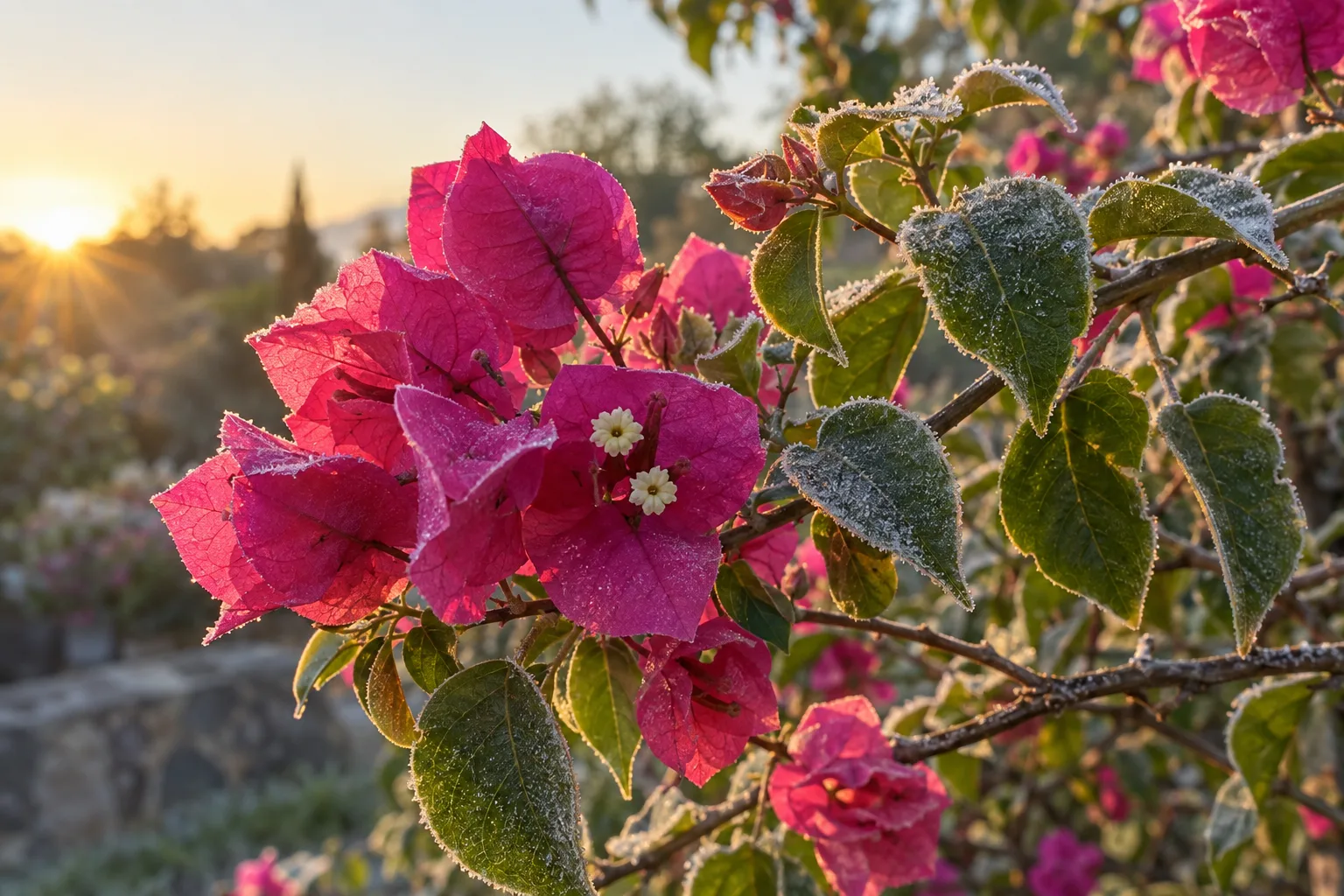
- Bougainvillea: leaves and tips burn near freezing, and a long freeze in the mid-20s can kill stems to the ground.
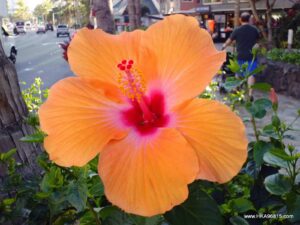
- Tropical hibiscus (Hibiscus rosa-sinensis): damaged by a light freeze.
- Young citrus trees (Citrus species), especially in their first three winters, when the trunk and graft are most vulnerable.
- Plumeria (Plumeria rubra): frost damages it, so potted plants belong in a garage or against a warm wall.
- Lantana (Lantana camara): the tops burn back in a hard freeze, though roots often resprout in spring.
- Sago palm (Cycas revoluta) and pygmy date palm: fronds can burn in the mid-20s.
- Basil (Ocimum basilicum): any frost kills it.
Plants that usually need nothing
Palo verde (Parkinsonia species), mesquite, most agaves (Agave species), native salvias, rosemary (Salvia rosmarinus) and Texas sage (Leucophyllum frutescens) handle our winters without help. Smaller tropical agaves and young saguaros are exceptions. When you shop our plant department, ask for the cold rating of any tropical plant before you buy it.
Where and when should I plant frost-tender plants?
Put them against a south- or west-facing wall between late February and early May. That placement and timing do more for frost survival than any cover you buy later.
Block walls and stucco absorb heat all day and release it after dark, so the ground beside them stays several degrees warmer than open lawn. A tree canopy or ramada slows heat loss in a similar way. Low spots and the ends of sloped driveways collect cold air, and tender plants do poorly there.
Spring planting gives roots the whole summer to establish. A bougainvillea set out in October has little root system to recover with. Our gardening calendars list planting windows month by month.
Pots need extra care because cold reaches the root ball from every side. Move containers into a garage or against a warm wall on freeze nights, and group heavy pots together when they are too big to carry. A large pot buffers roots better than a small one.
What can I use to cover plants?
Frost cloth, old bedsheets, burlap and cardboard boxes all work, and each has a best use. The numbers below are rough, because protection varies with wind, cloud cover and how close the cover sits to the ground.
| Material | Approximate protection | Best use | Watch out for |
|---|---|---|---|
| Frost cloth | About 4 to 8°F, depending on weight | Citrus, bougainvillea, large shrubs | Tears if snagged on thorns |
| Bedsheets or blankets | A few degrees | One-night freezes, mid-size shrubs | Heavy when wet, must come off in the morning |
| Burlap | A few degrees | Wrapping trunks and palm crowns | Absorbs water and gets heavy |
| Cardboard boxes | A few degrees | Small plants and potted succulents | Blows away without weight on top |
| Plastic sheeting | Little, unless held off the leaves | Last resort, on a frame | Leaves touching it can freeze, and it overheats in sun |
For young citrus, wrap the trunk from the soil line to the first main branches with burlap or foam pipe insulation. Leaf loss is recoverable. Damage to the graft union can cost you the tree.
How do I cover plants before a freeze?
Cover them before sunset so the heat stored in the soil stays under the cover. Follow these steps when a freeze watch appears.
- Check the forecast 24 to 48 hours ahead and gather your covers, stakes and weights.
- Water tender plants deeply the day before, in the morning if possible.
- Move potted plants into a garage, covered patio or against a warm south wall.
- Set stakes or a light frame around shrubs so the cover does not rest on the leaves.
- Drape the cover over the frame before sunset and bring it all the way to the soil on every side.
- Weigh the edges with rocks, landscape staples or heavy pots, because winter cold fronts can bring wind.
- Remove the cover the next morning once the temperature climbs above freezing and sun reaches the plant.

Should I water before a frost?
Yes, for most plants. Moist soil stores more heat and releases it overnight, while dry soil loses heat quickly after sundown in our low humidity.
Soak citrus and other trees slowly so water reaches the deeper roots, and wet shrub and perennial beds thoroughly. Give the water time to soak in, because soil that drains slowly over caliche should not sit soggy for days. Skip the pre-frost watering for cactus and agave, which tolerate cold best when kept dry in winter. Running sprinklers all night to coat plants in ice is a commercial grower method, and it uses too much water for a home yard.
What mistakes make frost damage worse?
Most frost damage traces back to a handful of avoidable habits. These are the common ones.
- Covering plants after dark, when the stored heat has already escaped.
- Letting plastic touch the leaves, which conducts cold into the foliage.
- Leaving a solid cover on through a sunny afternoon.
- Planting tropicals in October or November, before their roots have settled.
- Fertilizing in late fall, which pushes soft new growth that frost burns first.
- Pruning burned growth in January, which exposes the plant to the next cold night.
What should I do after a frost?
Wait. Blackened, mushy leaves look alarming, but they also act as a shield for the stems beneath them, so leave them on until the cold season ends.
Begin pruning in March, once new growth shows you which stems are alive. Cut back to just above the new growth. To check citrus or bougainvillea wood, scratch the bark with a fingernail. Green tissue underneath means the branch is alive, while brown and dry tissue means you should work downward until you find green.
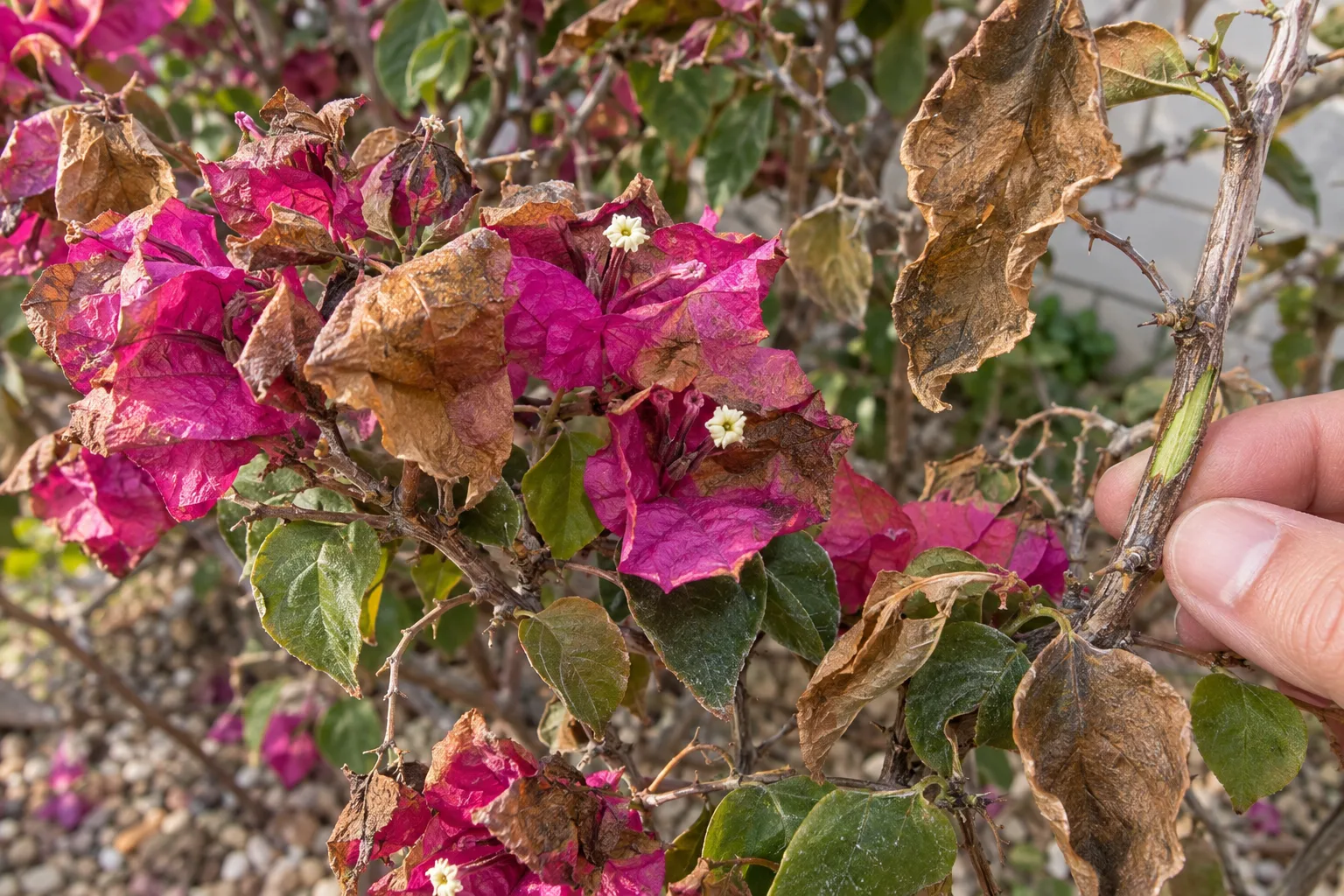
If a plant looks dead above ground, give it until April before pulling it. Lantana, bougainvillea and citrus on vigorous rootstock often push new shoots from the base in spring.
Frequently asked questions
At what forecast temperature should I cover my plants?
Cover tender plants when the forecast low is 35°F or below, because yards near open ground often run colder than the forecast. Established citrus and other hardier plants usually need cover only when lows approach the upper 20s. A clear, calm night is riskier than a cloudy one at the same forecast temperature.
Do cactus and other desert natives need covering?
Most do not. Established saguaro, prickly pear, palo verde and agave handle our winters on their own. Young saguaros and tropical succulents can burn when lows reach the 20s, so a light cover helps them. Keep cactus on the dry side before a freeze, since cold wet soil invites rot.
How long can I leave frost cloth on?
Take it off the morning after a freeze, once temperatures rise above freezing and sun reaches the plant. Trapped midday heat can stress foliage under any solid cover. During a multi-night cold stretch, recover the plants each evening before sunset. Lightweight frost cloth tolerates more time on the plant than blankets or plastic.
Do palms need frost protection?
Most established palms need none, but young palms and cold-sensitive types such as sago and pygmy date palms can burn in the mid-20s. Loosely wrap the crown with frost cloth on those nights. Check the cold rating of any palm before planting, and browse our palm trees department for options.
Is frost protection worth the effort in your yard?
It is worth it if you grow citrus, bougainvillea, hibiscus, plumeria or potted tropicals, because a few covers and a bit of planning protect plants that take years to grow. If your yard is built around palo verde, agave, Texas sage and rosemary, you can skip most of this, since ordinary winters pass without help. Stop by the nursery in Queen Creek and ask us which of your plants need cover.