Red Mexican bird of paradise (Caesalpinia pulcherrima) needs pruning after frost danger passes, a light layer of compost, mulch by early May and deep, infrequent watering before the low desert heat arrives. Those four jobs, done between March and May, carry it through summer.
Key takeaways
- Prune in March, after frost danger has passed, cutting back to green tissue or new buds.
- Wait until late April before giving up on a plant that looks dead, since regrowth from the base can be slow.
- Water deeply every 10 to 14 days in spring, then shorten the interval as highs climb above 100°F.
- Spread 2 to 3 inches of mulch by early May and keep it a few inches back from the stems.
- Skip heavy pruning, fertilizer and transplanting once June heat sets in.

When should I prune red Mexican bird of paradise in Arizona?
Prune in March, once frost danger has passed and you can see new growth at the base or along the stems. Cutting earlier exposes fresh growth to a late cold night, and the damaged top growth shields the lower stems in the meantime.
Frost is occasional in Queen Creek, so some plants come through winter with only tip damage while others freeze to the ground. Scratch the bark with a fingernail. Green underneath means the stem is alive. Brown and dry all the way through means cut back to the next green tissue or bud.
A plant that looks lifeless in February can sprout from the base well into April, so give it until late April before you decide to replace it.
After removing dead wood, thin out crossing stems and those growing toward the center. An open shape lets air move through the plant and keeps the structure easy to water and maintain. You are shaping a loose shrub, not trimming a hedge.
If you want to add a second shrub nearby, our plants department is the place to start. Red bird of paradise is a variety we commonly carry, though availability changes week to week and season to season.
What does the soil need before summer?
Established plants need very little, but a thin layer of compost helps in our alkaline soil. Spread 1 to 2 inches over the root zone out to the drip line, scratch it in lightly and water it well. Avoid digging deeply around the roots.
Queen Creek soil is alkaline, often with caliche (a cement-like mineral layer) a foot or two down. Red bird of paradise tolerates both, but it needs drainage. If water stands around the plant for several hours after an irrigation, the planting area is too flat or too compacted.
Yellow leaves with green veins point to iron chlorosis, which is common in alkaline soil. A chelated iron product applied at label rates in April can help. Hard irrigation water adds to the problem over time, so deep watering that flushes the root zone is worth the effort.
Does it need fertilizer in spring?
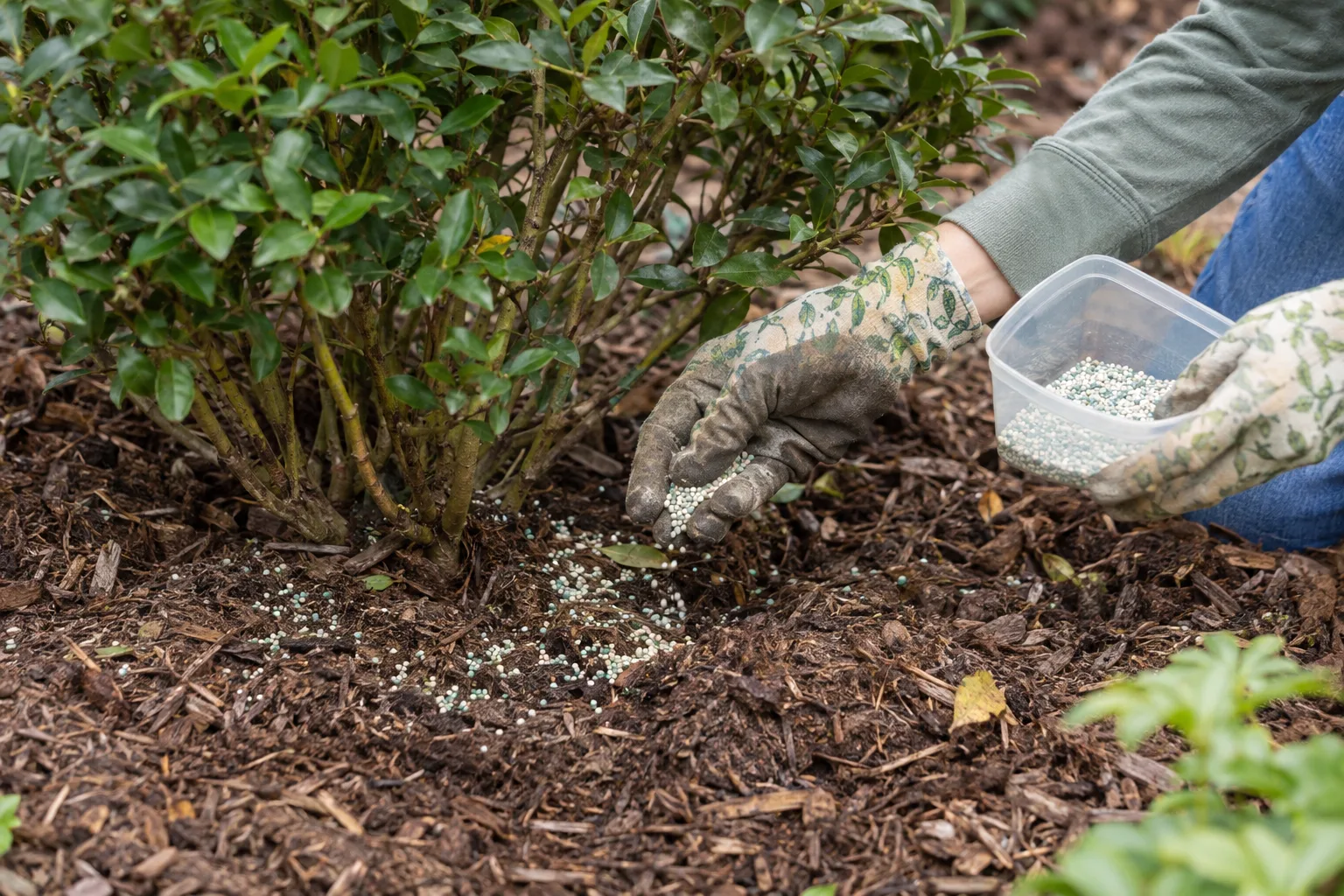
Usually a light feeding is enough, and sometimes none at all. If the plant looks pale after it leafs out, apply a slow-release fertilizer once in April at the rate on the label.
Heavy nitrogen pushes soft leafy growth that scorches in summer sun and can reduce flowering. Stop feeding by mid-May. Never fertilize in June or July, when the plant is already working hard just to stay cool. Always water fertilizer in thoroughly, and keep it off the stems.
How deep and how often should I water before summer?
Once established, water deeply about every 10 to 14 days in spring, then move toward every 7 to 10 days as highs pass 100°F. Each watering should wet the soil 18 to 24 inches down.
The easiest check is a long screwdriver. Push it into the soil near the drip line a day after watering. If it slides in 18 inches or more, you are reaching the roots. If it stops at 6 inches, run the drip longer or lower the flow so water soaks in rather than running off.
Frequent shallow watering keeps roots near the surface, where they bake in summer. Deep soaks send them down where the soil stays cooler. Plants in their first year need closer attention, usually more often than established ones, until roots spread. Check our classes and events page for current gardening workshops.
What is the month-by-month pre-summer plan?
Spread the work over March to May so nothing happens at the last minute. This table lays out the order we suggest for the low desert.
| Month | Task | Why |
|---|---|---|
| March | Prune dead wood and thin the center | Frost danger has mostly passed and new growth shows where to cut |
| April | Add compost, feed lightly if needed, apply iron if leaves yellow | Soil is warming and roots are active |
| Early May | Mulch and check drip emitters | Soil needs protection before highs reach 100°F |
| Late May | Extend watering interval, then stop feeding | Deeper roots handle June heat |
Our gardening calendars list other seasonal jobs so you can fit this plant in with the rest of your yard.
How much mulch does it need?
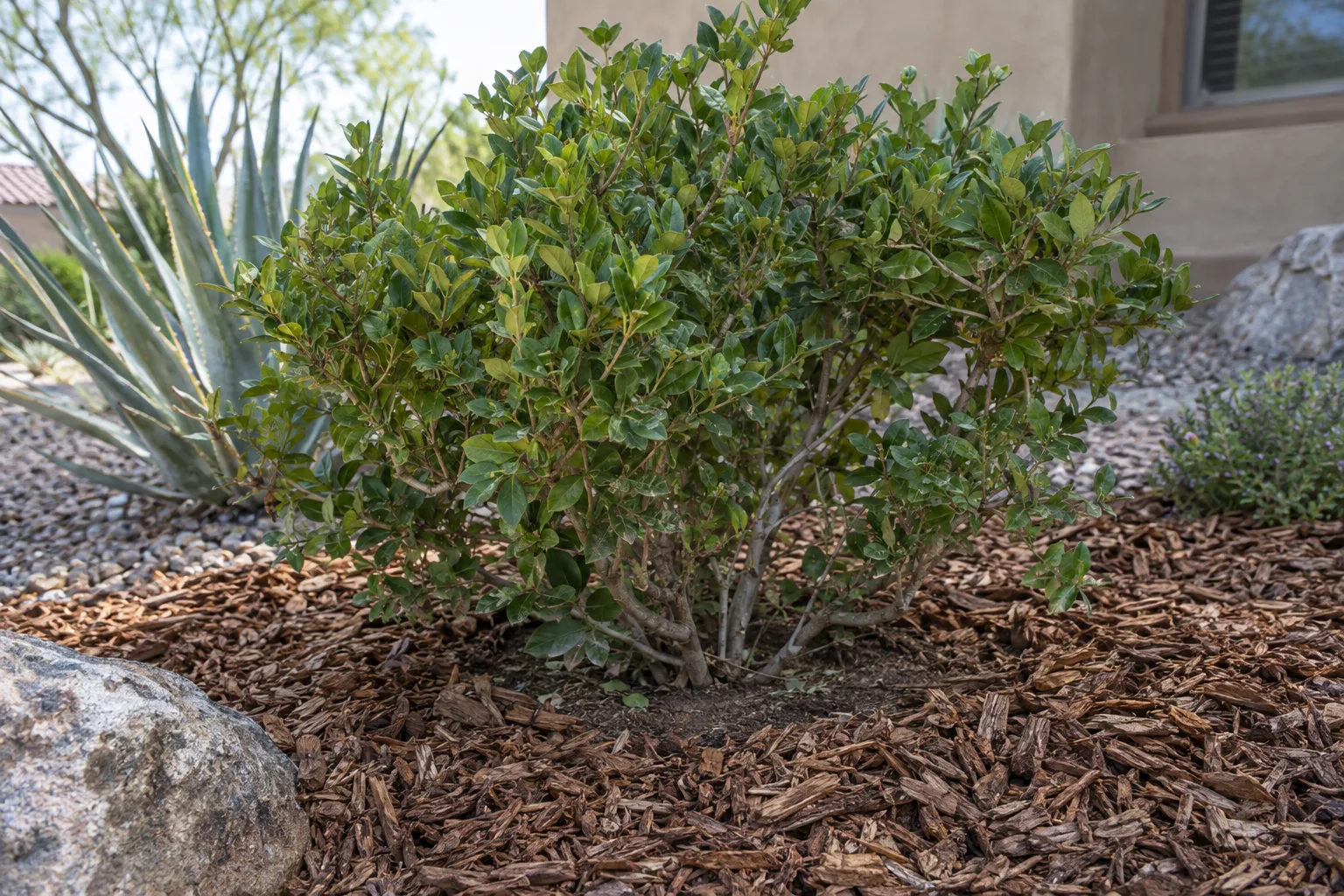
Apply 2 to 3 inches of wood chips or shredded bark over the root zone by early May. Mulch slows evaporation and keeps surface roots from baking when soil would otherwise heat up fast.
Pull it back a few inches from the base of the stems. Mulch piled against the plant holds moisture where bark should stay dry and can invite rot. The mulch layer breaks down over a year or two, so top it off each spring. Remember that mulch also hides the drip emitters, so check that they still work before you cover them.
What should I leave alone in June?
Leave heavy pruning, fertilizer and transplanting for another season. Cuts and new growth during extreme heat leave the plant with soft tissue that scorches.
Light deadheading is fine. Removing spent flower clusters and developing seed pods may encourage more blooms, though results vary by plant. Do not change the plant’s care routine in response to leaf drop on a single hot afternoon, because short-term wilting often recovers by evening. Check the soil with your screwdriver before adding water. Overwatering in summer causes more trouble than skipping a day.
Do not confuse this shrub with yellow bird of paradise, which is a different species that some references now list under another genus. Check which one you have before applying a care schedule.
How does it handle monsoon storms and wind?
It handles monsoon well, since it blooms through summer heat, but its brittle stems can snap in strong gusts. The monsoon runs roughly July through September in the East Valley, with highs often above 110°F before storms arrive.
Young plants in exposed spots may need a stake and a soft tie for the first couple of summers. Mature plants can lose branches in a hard blow, and any broken stems are easy to trim cleanly afterward. Drainage matters during monsoon rain. Water that pools for hours around the base can cause yellowing and leaf drop. Cut back on supplemental irrigation whenever storms soak the soil.

Frequently asked questions
Can I grow red Mexican bird of paradise in a pot?
Yes, but pots need more attention in the low desert. A large container holds moisture and heat better than a small one, and light-colored pots keep roots cooler. Place it where it gets some afternoon shade and expect to water often in summer. Browse our pottery and planters for large options.
When does it bloom?
Blooms typically start in late spring or early summer and continue into fall. Timing depends on how much winter damage the plant had and how warm spring turns out. A plant that regrows from the base may bloom later than one that only lost its tips. Heat does not stop flowering, and monsoon months are often peak.
How much sun does it need?
It needs full sun, meaning at least 6 to 8 hours of direct light. Reflected heat from a south or west wall suits it fine. In too much shade it grows leggy and flowers sparsely. Afternoon sun above 110°F rarely harms an established plant if the soil is moist enough at depth.
How big does it get?
Expect roughly 6 to 10 feet tall and wide in a good season, with size depending on how far winter cuts it back. Plants that freeze to the ground rebuild each year and may stay smaller. Give it room, since crowding forces constant pruning, and plant it where its open shape will not block walkways.
Why are the leaves dropping?
Leaf drop usually comes from cold, drought or overwatering. A cold snap causes it in winter, and some seasonal leaf drop is normal. In summer, check soil moisture 12 to 18 inches down before adjusting water. Dry soil means water deeply. Soggy soil means wait longer between irrigations.
Is red Mexican bird of paradise right for your yard?
It suits you if you have full sun, decent drainage and want color through summer without much fuss once it is established. Skip it if you want a tidy evergreen shape, since freeze damage means it will look rough some winters, or if your spot stays shaded or soggy. Gardeners who prefer a hands-off look may want something that does not need annual cutting back. If it fits, come see us at the nursery in Queen Creek and we will help you plan your planting.