
Eight plants make a rabbit-resistant backyard in Arizona: rosemary, lavender, brittlebush, autumn sage, desert marigold, agave, Texas sage and desert ruellia. None is rabbit-proof, but aromatic, resinous and spiny plants usually get skipped when rabbits have easier food nearby.
Key takeaways
- No plant is rabbit-proof. A hungry rabbit in a dry summer will sample almost anything, so plan on protecting new plants.
- Aromatic, resinous, woolly and spiny foliage is what rabbits most often pass over.
- Young plants are the most vulnerable. Cage them with 1/4-inch hardware cloth for the first season.
- Plant from October through February so roots establish before summer highs above 110°F.
- Roses, pansies, petunias and the bark of young fruit trees are the plants rabbits go for first.

Why do rabbits eat some plants and skip others?
Rabbits choose tender, mild, moisture-rich growth first. Desert cottontails and black-tailed jackrabbits live throughout the East Valley, and both feed mostly at dawn and dusk, so damage often shows up overnight.
Three traits make a plant less appealing. Aromatic oils, found in rosemary, lavender and sages, taste strong and bitter. Resinous or woolly leaves, like those on brittlebush and desert marigold, feel unpleasant to chew. Spines and stiff leaf tips, as on agave, make eating physically difficult.
This list reflects what gardeners and extension sources commonly report, not controlled trials. Rabbit pressure also changes with your location, so a yard backing onto open desert or a wash sees more browsing than one in the middle of a subdivision.
A plant that is ignored in a wet, green year may get chewed in a dry one. That is why the first season matters most.
Which eight plants do rabbits usually leave alone?
These eight handle low desert heat, alkaline soil and reflected sun, and rabbits tend to skip them once they are established. Browse our shrubs, perennials and other plants for similar choices. These are varieties we commonly carry, but availability changes week to week and season to season.
1. Rosemary (Salvia rosmarinus)
Rosemary grows 2 to 4 feet tall and wide, with some upright types reaching 5 feet. It needs full sun and low to moderate water once established. The oils in its needle-like leaves are the deterrent. The drawback is drainage: it rots in soil that stays wet, so keep it away from lawn sprinklers. You can also find it with our culinary herbs, which makes it a useful border plant next to a vegetable bed.

2. Lavender (Lavandula species)
Lavender reaches roughly 2 to 3 feet tall and wide, wants full sun and prefers low water. Its silvery, fragrant foliage is usually left alone. The drawback is that heavy caliche and wet feet shorten its life, so plant it slightly mounded in a hole that drains. Some lavender types struggle in summer humidity during the monsoon, and the plant may look tired by September.
3. Brittlebush (Encelia farinosa)
Brittlebush is a native shrub about 3 to 4 feet tall and wide with silvery, slightly resinous leaves and yellow daisy flowers in late winter and spring. It needs full sun and very little water once established. The drawback is that it looks sparse and gray in summer, and it can die back during hard freezes.
4. Autumn sage (Salvia greggii)
Autumn sage grows 2 to 3 feet tall and wide in full sun or light afternoon shade. Water is low to moderate. The aromatic leaves put rabbits off, and hummingbirds visit the flowers. Its drawback is that it gets leggy without a hard shearing in late winter, and it wants a little more water than the other plants here during summer.
5. Desert marigold (Baileya multiradiata)
Desert marigold stays 1 to 2 feet tall with woolly, gray-green leaves and yellow flowers that appear over a long season. It wants full sun, very little water and soil that drains. Its drawback is a short life. Plants tire after a few years and depend on reseeding, so expect to replace or thin them.
6. Agave (Agave species)
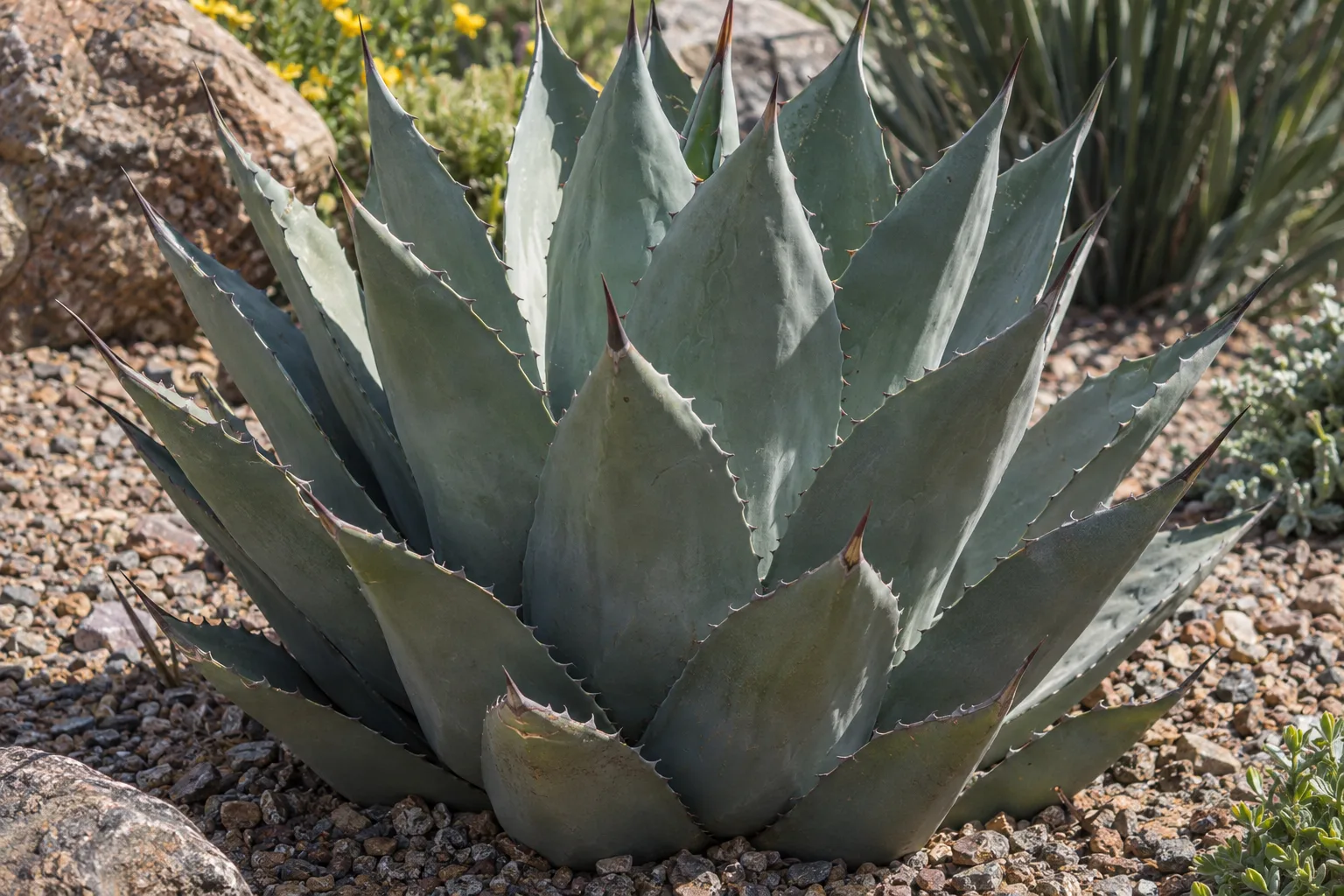
Agave sizes vary widely, from compact types about 2 feet across to large ones 6 feet or more. All want full sun and low water. Stiff, spine-tipped leaves discourage browsing. The drawback is the spine itself, which makes agaves a poor choice beside walkways or near kids and pets. Small, young plants are softer, so protect them early.
7. Texas sage (Leucophyllum frutescens)
Texas sage is a silver-leafed shrub that reaches 5 to 8 feet tall and wide, depending on the variety, and flowers in purple or pink bursts after humid weather. It needs full sun and low water. The drawback is overwatering: too much irrigation causes sudden decline. Shearing it into a tight ball also removes most of the bloom.
8. Desert ruellia (Ruellia peninsularis)
Desert ruellia is a rounded shrub about 3 to 4 feet tall and wide with rough, gray-green leaves and purple blooms. It handles full sun and reflected heat with low to moderate water. The drawback is frost, since hard winter freezes can burn it back, so plant it where cold air does not settle.
When should I plant rabbit-resistant plants in Arizona?
October through February is the best window in the low desert. Cooler soil lets roots spread before summer highs above 110°F arrive.
Spring planting works if you commit to regular watering through the first summer, but a shrub planted in May has far less root mass than one planted in November. Our gardening calendars lay out what to plant and do in each month.
Plants that go in during fall also face lower rabbit pressure from newly weaned young, so the damage risk is smaller.
How do I protect young plants while they establish?
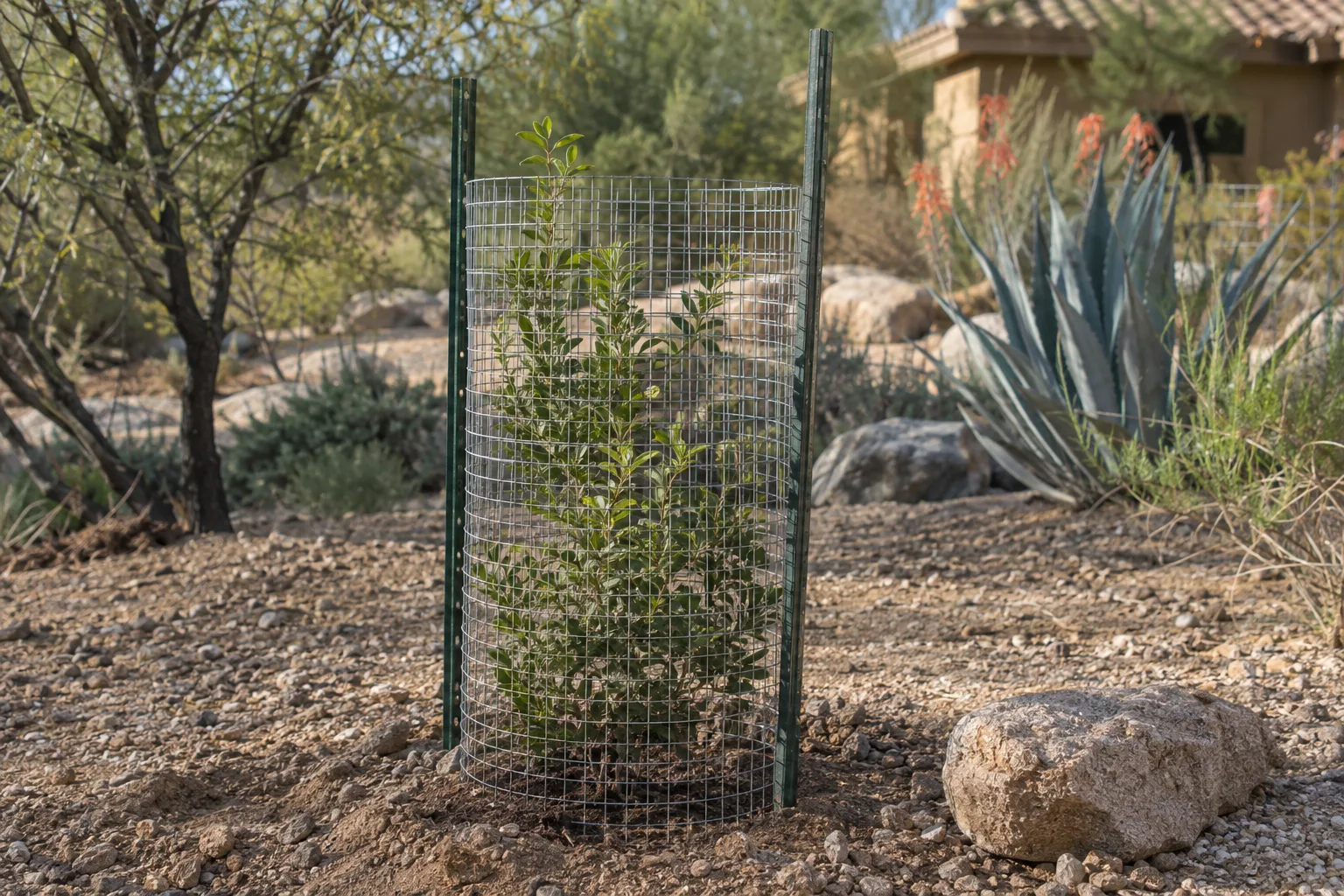
Wrap each new plant in a cylinder of 1/4-inch hardware cloth, staked firmly, for the first season. Young stems and leaves have not yet built up the oils, resin or texture that deter rabbits.
Make the cylinder 18 to 24 inches tall and set it a couple of inches into the soil so rabbits cannot squeeze underneath. Leave room around the plant so the foliage does not poke through the mesh. Check it after wind or heavy rain.
For raised beds and vegetables, a buried barrier works better than cages. Bury hardware cloth 6 inches deep and extend it 18 to 24 inches above the soil.
Which plants should I keep away from rabbits?
Roses, pansies, petunias and young fruit trees draw rabbits first. Soft new growth on roses is a favorite, and cool-season color from our annual flowers and foliage disappears quickly in unprotected beds.
Young trees need a trunk guard because rabbits gnaw bark in winter when other food runs short. Soft groundcovers and lawn edges also attract them.
You do not have to give these plants up. Grow them in a fenced bed or a spot close to the house, and put the resistant plants along the outer edge of the yard.
Do rabbit-resistant plants need special soil or water?
No, they need what most low desert plants need: drainage and deep, infrequent watering. Queen Creek soil is alkaline and often sits on a layer of caliche, which holds water in the planting hole and rots the roots of rosemary, lavender and Texas sage.
Break through any hard layer when you dig, and plant the root ball slightly above the surrounding grade. Mix a modest amount of compost into the backfill, but avoid a rich, wet mix.
Water deeply and then let the soil dry. Constant shallow watering produces lush, tender growth, which is exactly what rabbits prefer.
Frequently asked questions
Do rabbits eat succulents?
Yes, some, especially during dry spells. Spiny cacti and mature agaves are usually left alone, but soft succulents such as aloes and small, young plants can be chewed for their moisture. Place soft types in a protected courtyard, a pot near the house or inside a hardware cloth enclosure.
Will aromatic plants keep rabbits out of my whole yard?
No, aromatic plants protect only the area around them. A row of lavender along one wall will not stop a rabbit that enters through a side gate and heads for your vegetables. Treat fragrant plants as one layer, and add barriers around anything you cannot afford to lose.
How long do new plants need cages?
Plan on one full season, roughly until the plant has grown through its first summer. By then the foliage has hardened and the roots are deep. Remove the cage once the plant is clearly established and shows no chewing, then watch it for a few weeks.
Are jackrabbits harder to deter than cottontails?
Jackrabbits are larger and can reach higher, so low cages that stop cottontails may not protect taller shrubs. They also travel farther from cover. Use taller hardware cloth, around 24 inches or more, if you see jackrabbits, and rely most on spiny and aromatic plants.
Can I grow vegetables if rabbits visit my yard?
Yes, with a physical barrier. Vegetables are the first thing rabbits eat, and no companion plant reliably protects them. Fence the garden with buried 1/4-inch hardware cloth or grow in raised beds with mesh, and plant rosemary and sage outside the fence as a border.
Is a rabbit-resistant planting right for your yard?
Yes, if you want a low-water yard that needs less guarding. These eight plants fit most Queen Creek and East Valley yards, and they cut browsing without chemicals. Skip this approach if you want a lawn, roses or a large vegetable garden, because those need fencing no matter what else you plant. Stop by our Queen Creek nursery and we will help you match plants to your sun, soil and rabbit pressure.