
Prune yellow bells (Tecoma stans) in Arizona from late February to mid-March, after frost danger passes, cutting stems back by one-third to one-half. Flowers form on new growth, so a hard late-winter cut produces more flowering shoots.
Key takeaways
- Make the main cut from late February to mid-March, once hard frost danger has passed in the East Valley.
- Cut stems back by one-third to one-half, or to 18 to 24 inches above the ground on a badly overgrown shrub.
- Flowers form on new growth, so old woody stems add structure but very little bloom.
- Skip heavy pruning from late October through January, because tender new growth burns in a freeze.
- Water deeply after the cut and avoid high-nitrogen fertilizer, which pushes leaves instead of flowers.

Why does pruning yellow bells produce more flowers?
Yellow bells blooms on new growth, so every stem you cut back sends out fresh shoots that can carry flowers. A cut just above a node often produces two or more shoots, and each one can end in a cluster of yellow trumpets.
Without a yearly cut, the shrub builds up thick, woody stems that add height but few blooms. The interior turns bare and twiggy, and the flowers move out to the tips of long branches, sometimes well above eye level on a plant that can reach 6 to 10 feet tall and nearly as wide. Pruning resets that pattern.
Thinning also opens the canopy so light and air reach the center. If you are planning a sunny bed, browse our plants department for other sun-loving shrubs. Many of the varieties we commonly carry suit the low desert, though availability changes week to week and season to season.
When should I prune yellow bells in Arizona?
Do the main prune from late February to mid-March, once the danger of hard frost has passed. Yellow bells is frost tender, and frost can still reach the East Valley into late February, so waiting for settled weather protects the new growth and still leaves the whole warm season for regrowth and bloom.
From April through September, limit yourself to deadheading and light shaping. Avoid heavy cuts from late October through January. If a freeze blackens the foliage, leave it alone until new growth shows in spring, then scratch the bark with a fingernail: green underneath means the stem is alive. Patience pays here.
What does a yearly pruning calendar look like?
The calendar below puts the main cut in late winter and keeps the rest of the year light, with only deadheading through summer heat above 110°F. Our gardening calendars cover other monthly tasks for East Valley yards.
| Timing | What to do | Notes |
|---|---|---|
| Late February to mid-March | Main annual prune | Cut stems back by one-third to one-half after hard frost danger passes |
| April to September | Deadhead and shape lightly | Remove spent flower clusters and stray stems only |
| October | Light tidy if needed | Avoid heavy cuts as nights cool |
| November to January | No pruning | Leave frost-damaged growth in place until spring |
Dates shift a little with each winter’s weather.
What tools do I need to prune yellow bells?
You need bypass pruners, loppers and a folding saw, plus gloves and a way to clean the blades. Match the tool to the stem so each cut is clean, because crushed or torn tissue closes slowly and the shrub spends energy sealing ragged wounds.
- Bypass hand pruners for stems up to about 3/4 inch thick.
- Loppers for stems from about 3/4 inch to 1.5 inches thick.
- A folding pruning saw for older, thicker stems at the base.
- Leather or reinforced gloves, since the woody stems scratch.
- Rubbing alcohol and a rag to wipe blades between plants.
Sharpen blades before you start. Dull blades tear.
How do I prune yellow bells step by step?
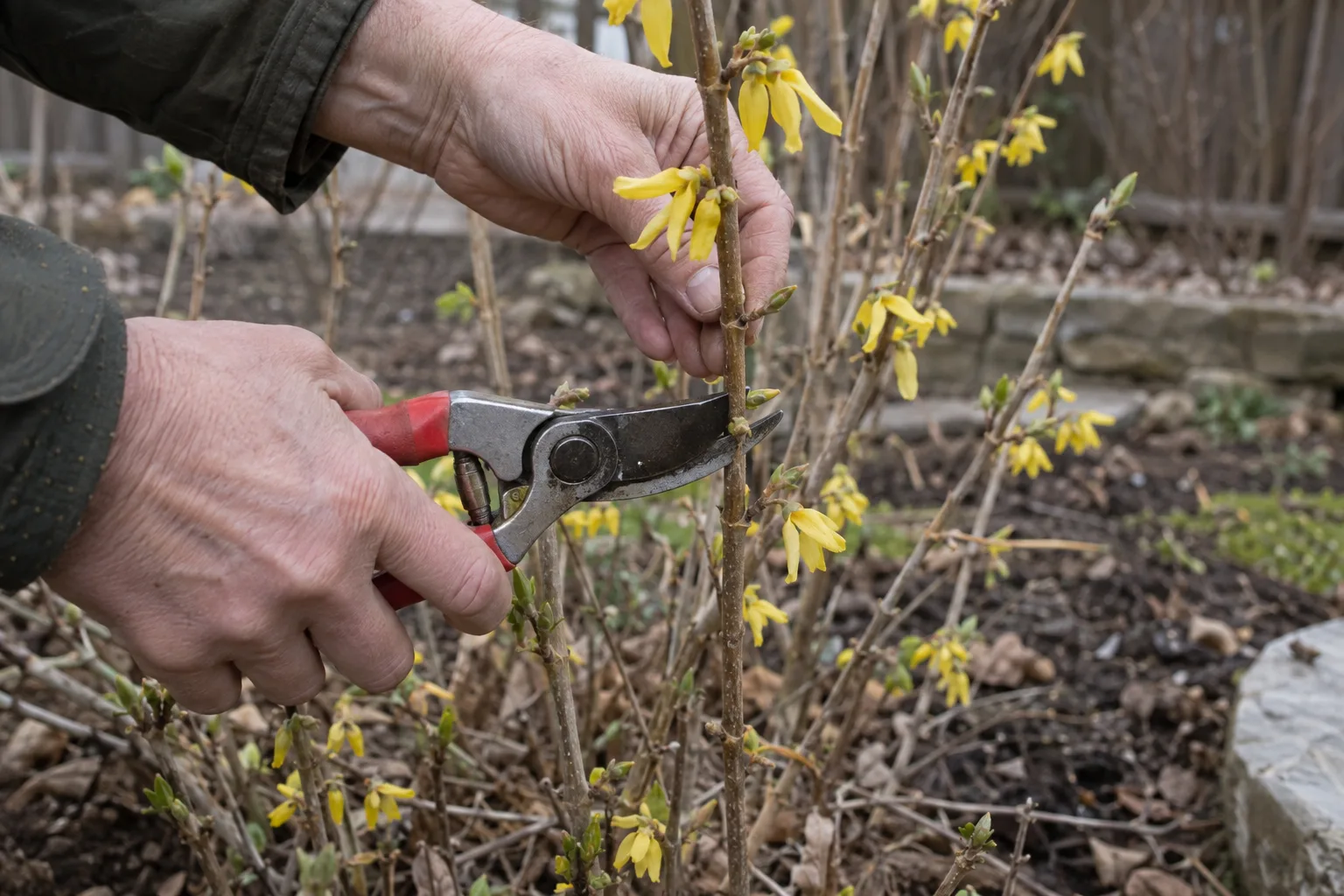
Remove dead wood first, then crossing and inward branches, then cut the remaining stems back by one-third to one-half. These steps suit an established shrub in late February to mid-March.
- Walk around the shrub and note its height, its shape and the oldest, thickest stems.
- Cut dead stems back to a healthy stem or to the ground. Dead wood is brittle and shows no green when you scratch the bark.
- Remove branches that cross, rub or grow toward the center, keeping the stronger of each pair.
- Cut the remaining stems back by one-third to one-half, just above a node or an outward-facing bud, at a slight angle so water sheds off the cut.
- Thin the interior so light and air can reach the center of the shrub.
- Shape the outside into a loose mound or vase, following the plant’s natural habit instead of a geometric form.
- Rake up the clippings from around the base.
- Water deeply when you finish.
Step back and look at the shrub from a few angles after every handful of cuts, because it is far easier to remove more later than to put a stem back. Cuts cannot be undone.
How hard can I cut back an overgrown yellow bells?
An overgrown, woody yellow bells can usually be cut to 18 to 24 inches above the ground in late February to mid-March and will regrow from the base. The plant is vigorous, and fresh shoots often appear within a few weeks of warm spring weather, though timing varies from year to year.

You can also train yellow bells into a small tree. Choose one to three strong main stems, remove the others at the base, and over two to three years take off side shoots on the lower trunk to raise the canopy. Keep clearing suckers from the base each spring. Expect a form around 6 to 8 feet tall rather than a wide shrub. Hard cuts belong in late winter only.
What mistakes should I avoid when pruning yellow bells?
The most common mistakes are pruning too late, shearing only the top and cutting too timidly. Each one leaves the shrub woody, leggy or short on flowers.
- Pruning in April or May. The plant is already growing, so it starts the season behind.
- Shearing only the top like a hedge, which produces a flush of growth at the cut line while the woody interior stays crowded and bare.
- Cutting too timidly. A light trim leaves old wood in place, and a harder cut gives a fuller shrub.
- Making heavy cuts in July or August, when highs sit above 105°F and the plant is under heat stress. Deadheading is fine at any time.
- Pruning from late October through January, when frost can burn tender new growth.
A cut made at the wrong time is the mistake that costs the most flowers, so check the month before you pick up the loppers.
How should I care for yellow bells after pruning?
Water deeply right after pruning, then keep watering regularly while new growth fills in. In cool weather, a deep watering about once a week is a reasonable starting point, and you can move to two deep waterings a week as highs reach the 90s, adjusting for your soil and irrigation system.
Feed lightly in early March with a balanced, slow-release fertilizer made for shrubs. Heavy nitrogen pushes leaves at the expense of flowers. Alkaline soil can limit iron, and our hard water leaves salts behind, so an occasional deep soak helps move those below the root zone.

Spread 2 to 3 inches of organic mulch around the base, keeping it a few inches from the stems. Mulch holds moisture in the soil. It also cools the root zone through the long summer.
Frequently asked questions
Should I remove the seed pods on yellow bells?
Removing the long, bean-like seed pods helps the shrub keep blooming, though it is optional. A plant that sets seed may ease off flowering, so deadheading spent clusters before pods develop sends energy back into new blooms. Leaving pods does no harm, and you can keep a few if you want to collect seed.
Why is my yellow bells blooming less than it used to?
Old wood from missed pruning is the usual cause, but shade and feeding matter too. Yellow bells needs full sun, and too much water or a high-nitrogen fertilizer can produce leaves instead of flowers. Check sun, water and fertilizer, then do the late-winter cut. If bloom does not improve after a full season, reach out through our contact page.
Does yellow bells lose its leaves in winter?
It can, depending on how cold the winter is. Yellow bells is semi-evergreen to deciduous, so frost often browns or drops the leaves, and a mild winter may leave much of the foliage in place. Leaves dropping by itself does not mean the plant is dead, so wait for spring growth before cutting anything.
Can I prune yellow bells to keep it small?
Yes, but expect to prune every year. A cut of one-third to one-half each late winter holds the height down, and shaping through summer can keep it in bounds. If the space allows only 3 or 4 feet, a smaller shrub will need less work.
Where can I learn more about pruning in person?
Our classes and events page lists workshops when they are scheduled, so check it for gardening topics. Dates and subjects change through the year. For a specific plant, bring a photo or a cutting and ask the team; we can tell you whether a stem is alive and where to cut.
Is yellow bells worth the yearly pruning?
Yes, if you have a full-sun spot and want long-lasting golden color with one big cut each late winter. Yellow bells earns its place in the low desert for heat tolerance and bloom. It is a poor fit for a small, tidy bed where 6 to 10 feet of spread will crowd walkways, and for anyone who will not pick up loppers once a year. Without that cut, the shrub gets leggy and flowers thin out. If you would like help deciding where it fits in your yard, visit us at the nursery in Queen Creek.