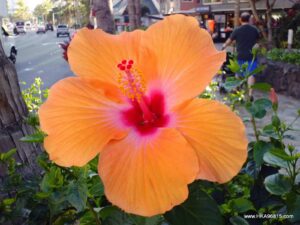

The five shrubs to prune in April in Arizona are bougainvillea, lantana, red bird of paradise, autumn sage and Texas sage. Frost danger has mostly passed and the worst heat has not arrived, so each one has time to branch out and set more flowering tips.
Key takeaways
- Prune bougainvillea, lantana, red bird of paradise, autumn sage and Texas sage in April, after the last frost risk has passed.
- Most of these shrubs tolerate a cut of one-third to one-half. Lantana can go down to 6 to 8 inches.
- Let a bougainvillea bloom cycle fade before you cut, because pruning in full color removes flowers you could have enjoyed.
- Water deeply after pruning so moisture reaches 12 to 18 inches down, and skip heavy nitrogen fertilizer going into summer.
- Leave roses and any shrub that has not finished its spring bloom alone until the flowers fade.

Why is April a good month to prune flowering shrubs in Arizona?
April works because frost is behind us in most years and daytime highs have not yet reached 100°F or more, so fresh cuts have several weeks to push new growth before summer stress begins. Timing matters here.
Many warm-season bloomers flower at the tips of new stems. When you cut a stem back, it sends out two or more side shoots, and each shoot ends in a flower cluster. A shrub left unpruned often grows tall and leggy, with blooms only at the very top where you cannot see them. Our gardening calendars list other seasonal jobs worth lining up with your April pruning.
What tools do I need to prune shrubs?
You need sharp bypass hand pruners, loppers and a small pruning saw, matched to the thickness of the stems you are cutting. Dull blades crush stems and slow healing.

- Bypass pruners handle stems up to about 3/4 inch and leave a clean cut. Anvil-style pruners tend to crush tissue.
- Loppers cover stems from roughly 3/4 inch to 1.5 inches.
- A pruning saw is better for anything thicker, since loppers can tear bark on heavy wood.
- Rubbing alcohol on a rag lets you wipe blades between plants.
- Thick gloves and eye protection matter most with thorny bougainvillea.
Water the shrub a day or two ahead of time. A hydrated plant recovers better, and in compacted or caliche-heavy soil you can check that the water is soaking in rather than sitting on a hard layer.
Which five shrubs should I prune in April?
The five below respond well to an April cut. You can browse shrubs like these in our plants department, where these are varieties we commonly carry, though availability changes week to week and season to season.
1. Bougainvillea (Bougainvillea hybrids)
Prune bougainvillea when a bloom cycle is winding down, often late March into April. Cut the long canes back by one-third to one-half, and remove dead wood and stems growing into walls or walkways. Bougainvillea blooms on new growth, so more branching means more color tips by early summer. Its drawback is the thorns, which are sharp enough to puncture thin gloves. Frost can burn new growth, which is why we prune after the cold has passed.
2. Lantana (Lantana camara and related hybrids)
Lantana takes the hardest cut of the five. Take the whole plant down by half, or to within 6 to 8 inches of the ground if it is woody and tired. It then sends up a flush of fresh stems that bloom from May into fall. A second light trim in midsummer keeps it compact. The drawback is that old, woody lantana can be slow to leaf out, so check for green buds low on the stems before cutting hard.
3. Red bird of paradise (Caesalpinia pulcherrima)
Red bird of paradise often shows frost damage after winter, with brown, brittle tips. Wait until new leaves appear, then cut back to live wood, which is green or pale under the bark. You can reduce the height by up to half. New shoots carry the orange and red flower spikes through summer. The drawback is that it leafs out late. A bare shrub in early April is usually still alive, so scratch a stem before you give up on it.
4. Autumn sage (Salvia greggii)
Autumn sage blooms repeatedly across the warm season when it is kept in shape. Once its spring flush slows, cut it back by one-third to one-half to remove spent stems and trigger new side shoots. Always leave some leafy growth on each stem, because cutting into bare wood can leave a branch that never sprouts again. The drawback is that it can look rough for a couple of weeks right after pruning, before new growth fills in.
5. Texas sage (Leucophyllum frutescens)
Texas sage needs a lighter hand than the others. Take off no more than one-third, cutting just above a leaf node, and open the plant so air moves through the center. Avoid shearing it into a tight ball. Shearing makes the outer layer dense, shades the interior and leads to dieback over time. The drawback is that it flowers in response to humidity and rain, so a pruned plant may hold its blooms until the monsoon.
How do I prune a flowering shrub step by step?
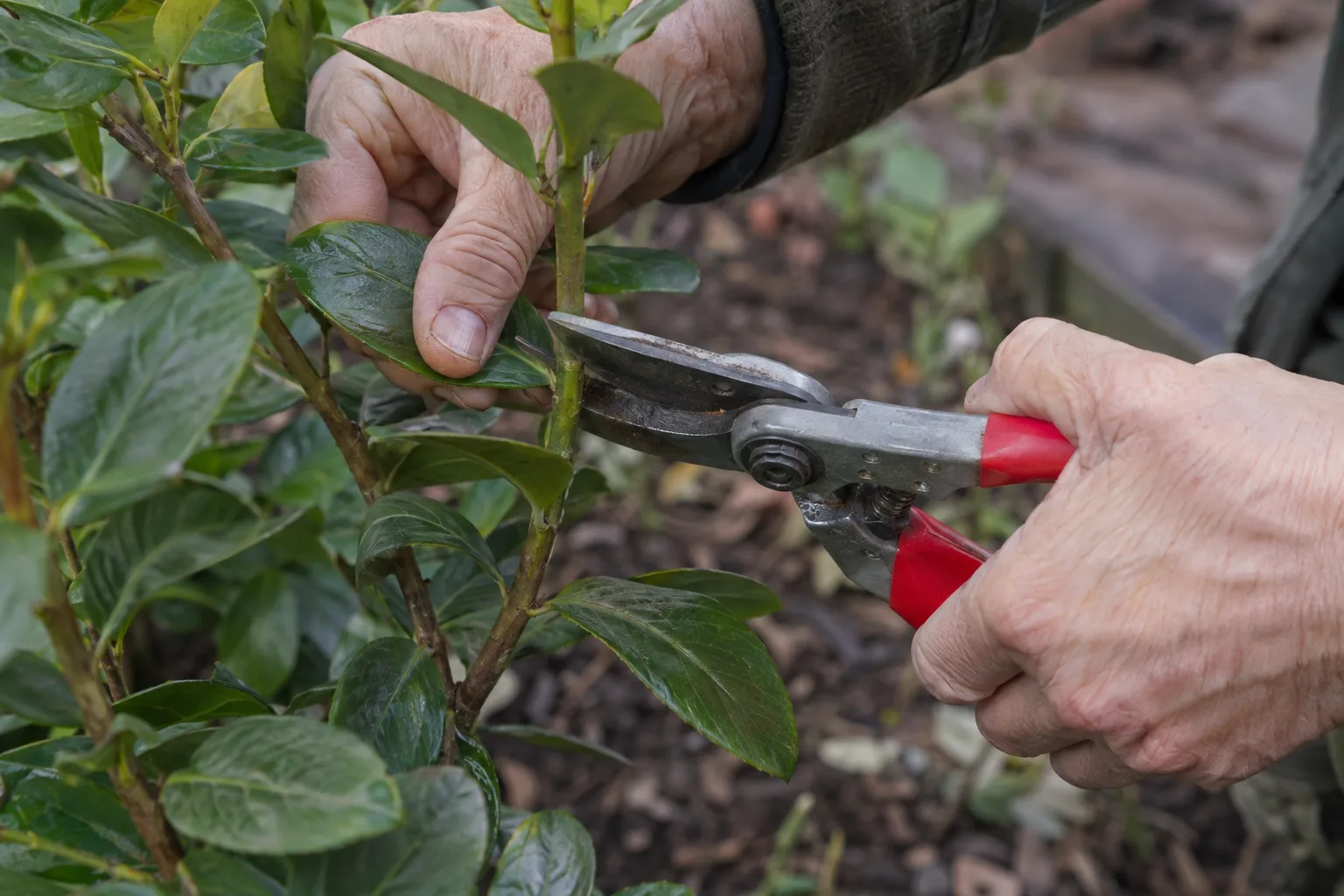
Start with dead wood, then fix the structure, and only then shape the outline. Working in that order stops you from cutting more than the plant needs.
- Walk around the shrub and note dead, crossing and inward-growing stems.
- Cut dead stems back to healthy tissue, which is green or white inside rather than brown.
- Remove the weaker of any two stems that rub against each other.
- Make shaping cuts just above a leaf node or an outward-facing bud, at a slight angle.
- Step back after every few cuts so the shape stays balanced on all sides.
- Bag diseased material and rake up debris. Healthy clippings can go in the green bin or compost.
A few mistakes cause most of the damage. Cutting to a flat line across the top (topping) produces weak, fast sprouts and large wounds. Removing more than 30 to 40 percent of the canopy in one session stresses the plant heading into summer, so spread a severe renovation over two seasons. Early morning is the most comfortable time to work, for you and for the shrub.
Which shrubs should I leave alone in April?
Leave any shrub that is in the middle of its spring bloom, because cutting it removes flower buds that have not opened. Roses are the most common example.
Roses do best with their main structural pruning in late winter. By April they are blooming, so deadhead spent flowers and hold off on heavy cuts. Plants that flower in early spring, such as many native desert trees and shrubs, set next year’s buds soon after they bloom, so prune them just after the flowers fade rather than in the middle of the season. If you are unsure what a shrub in your yard is, contact us with a photo and we will help you identify it before you cut.
What should I do after pruning?
Water deeply and feed lightly. Pruning triggers a burst of growth that needs moisture and a modest amount of nutrients.
In the low desert’s alkaline, often compacted soil, slow and deep watering reaches the roots better than frequent shallow sprinkling. Aim for moisture 12 to 18 inches down, which for an established shrub on drip may take 45 to 60 minutes, depending on your emitters and soil. A light application of a balanced slow-release fertilizer or a compost top-dressing is plenty. Heavy nitrogen pushes soft, leafy growth that scorches when May and June heat arrives. Our classes and events page lists upcoming workshops if you want to see these techniques demonstrated.
When is the best time to prune each shrub?
The table below compares the five shrubs with roses, so you can see what to cut in April and what to wait on.
| Shrub | Pruning window | Amount to remove |
|---|---|---|
| Bougainvillea | April, after a bloom cycle fades | One-third to one-half |
| Lantana | March to April, light trim in midsummer | Half, or to 6 to 8 inches |
| Red bird of paradise | Once new growth shows, March to April | Dead wood, up to half the height |
| Autumn sage | After spring flush slows | One-third to one-half |
| Texas sage | April, light shaping | No more than one-third |
| Roses | Late winter | Deadhead only in April |
Frequently asked questions
Should I use pruning sealer on cuts?
No, sealer is not needed on these shrubs. Plants form their own callus tissue over a clean cut, and paint or tar can trap moisture against the wound. Focus on sharp blades, cuts just above a node, and good watering while the plant recovers.
How soon will my shrubs bloom after pruning?
Expect new flowering growth within roughly 6 to 8 weeks for bougainvillea and lantana, a little longer for sage. The exact timing depends on weather, watering and how hard you cut. A warm, steady April gives faster results than a cool snap.
Can I prune during a heat spike?
It is better to wait. Choose a stretch with highs below the mid-90s if you can, and work in the early morning. A shrub with fresh cuts and a sudden run of 100°F days loses more water through the new tender growth and needs extra deep watering.
What if my pruned shrub looks bare for weeks?
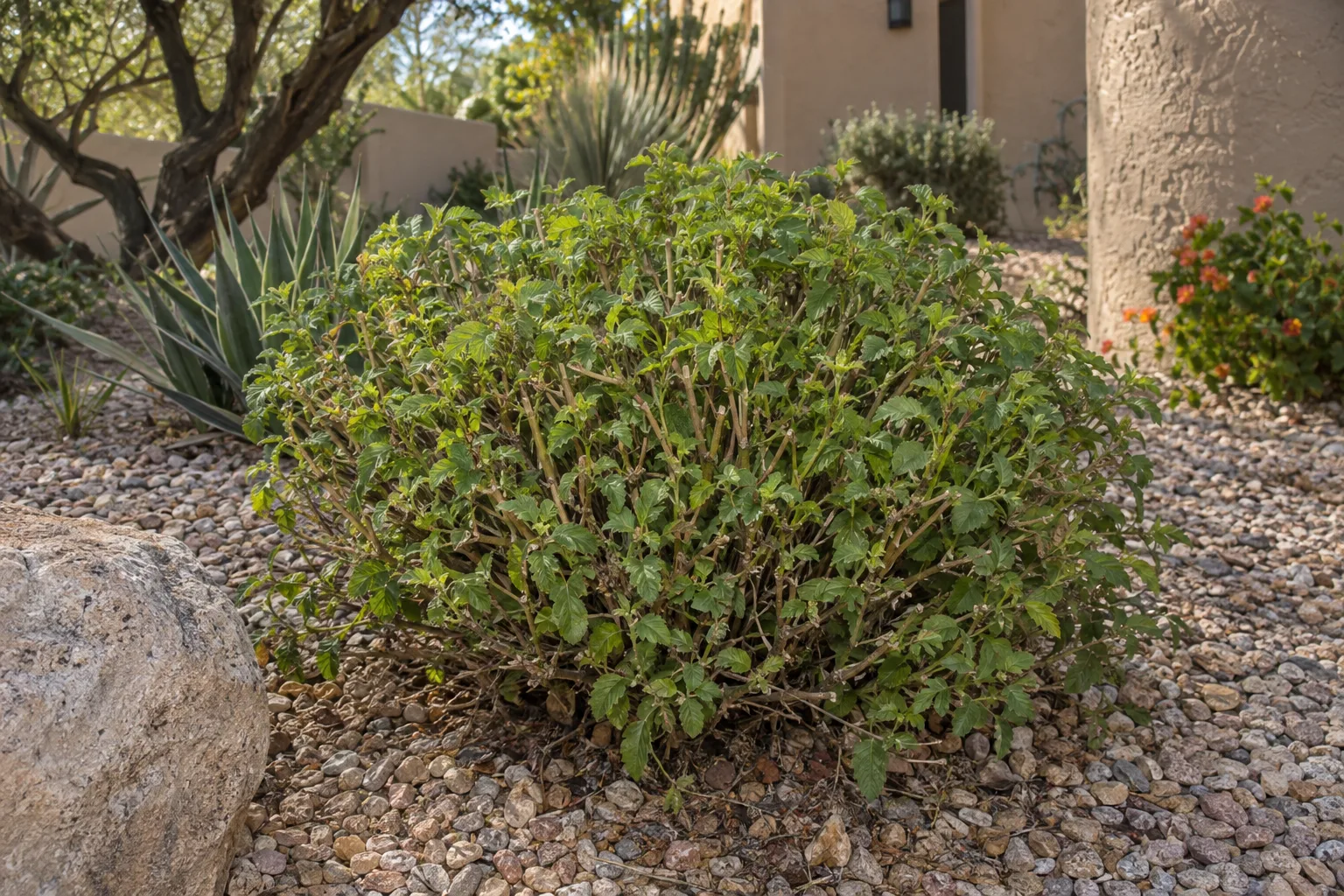
A bare look is common, especially with red bird of paradise and lantana. Scratch a stem with a fingernail. Green underneath means the stem is alive and will leaf out as temperatures rise. Brown and dry throughout means you can cut back to the next live tissue.
Is April pruning worth it for your yard?
For most gardeners with bougainvillea, lantana, red bird of paradise or sage, yes. One hour with sharp pruners now gives you denser plants and more flowers from May through the monsoon. It is not worth the effort if your shrubs are young and compact, or if you are unsure of the plant and what it blooms on, since cutting blindly can remove buds. Come by our Queen Creek nursery and bring a photo of your shrub, and we will talk through the cut.