Prune bougainvillea, lantana, Texas ranger, autumn sage, red bird of paradise, Mexican petunia, yellow bells and natal plum in April, after frost danger passes and before summer highs above 110°F. New growth then has several weeks to harden off in the Arizona low desert.
Key takeaways
- Prune after the last frost, usually by mid-March in the East Valley, and finish before May heat pushes highs into the 100s.
- Remove no more than about one-third of a shrub in one session, except lantana and Mexican petunia, which tolerate a cut to 6 to 12 inches.
- Texas ranger needs only light thinning, about 10 to 20 percent, so it still blooms after summer humidity arrives.
- Wait for bougainvillea to finish its spring flush, then take up to one-third of the plant.
- Water deeply within a day or two of pruning, because April is dry.
Why is April a good time to prune in Arizona?
April is a good time to prune because frost danger has mostly passed and shrubs are growing fast enough to heal cuts and refill within a few weeks. In Queen Creek, cold pockets can still dip to freezing in early March, so wait until your forecast stays above 32°F before cutting back frost-damaged stems.
Most pruned shrubs push new growth in two to four weeks. That growth needs time to harden off before June, when highs regularly pass 105°F. Cutting hard in late May or June removes the leaves that shade bark and roots, and the exposed bark can sunscald under afternoon sun that reflects off block walls and gravel. Late cuts cost the plant its shade.
Alkaline soil and caliche slow recovery on stressed plants, so a deep soak after each pruning session helps. Our gardening calendars cover the rest of the month’s garden work.
What tools and cuts do I need for April pruning?
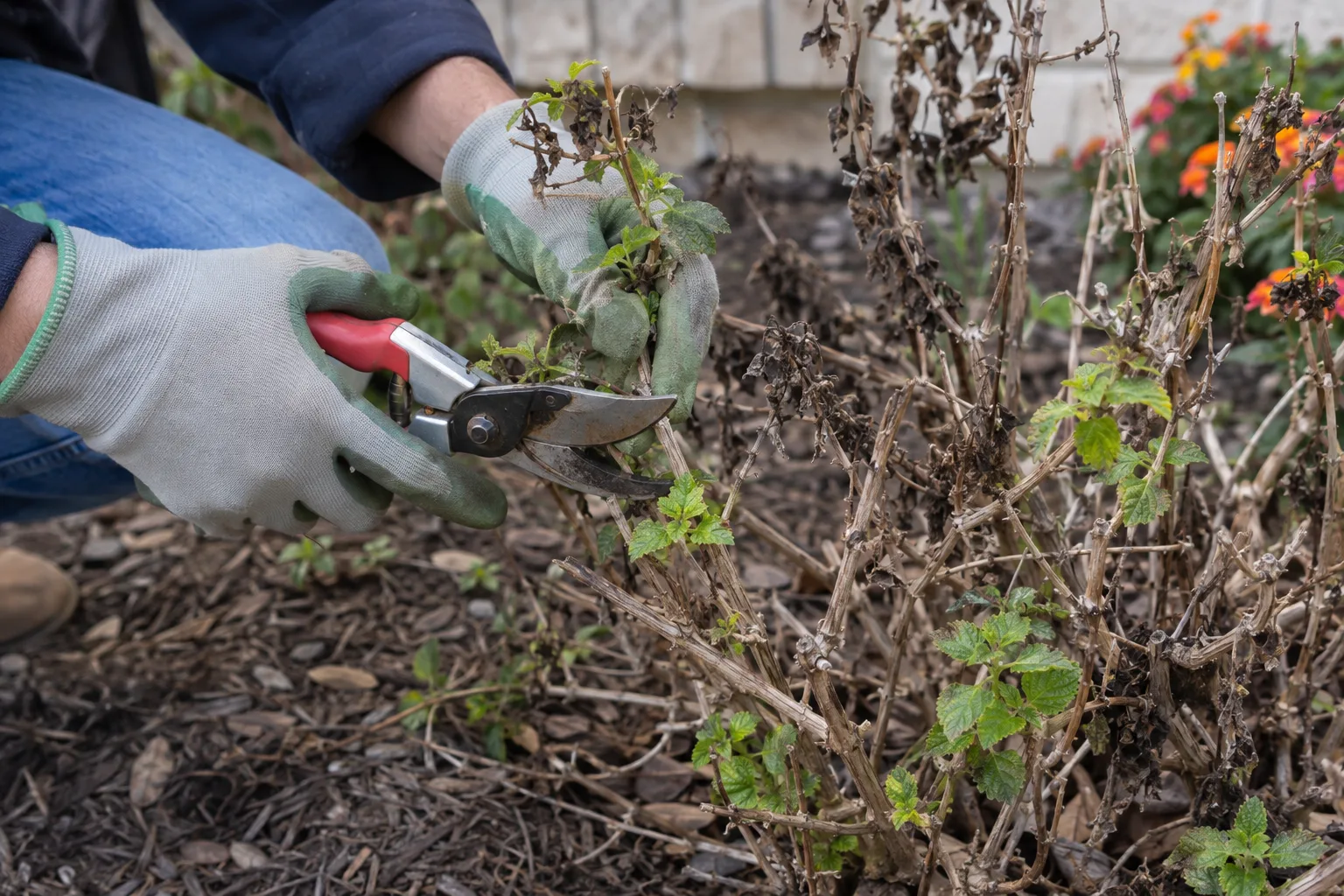
You need sharp bypass pruners, loppers, a pruning saw, heavy gloves and eye protection. Clean the blades with rubbing alcohol between plants if you see any disease, because dull or dirty blades crush stems and carry problems from one shrub to the next.
Follow this order on every plant:
- Cut out dead, broken and frost-burned wood first. Scratch the bark with a thumbnail, and green tissue underneath means the stem is alive.
- Remove one of any two crossing or rubbing branches.
- Make thinning cuts, which remove a branch back to where it starts, before any heading cuts that shorten a branch mid-length.
- Step back 6 to 8 feet after every few cuts and look at the overall shape.
- Stop at the amount listed in the table below. You can always cut more in three weeks.
- Water deeply within a day or two of finishing.
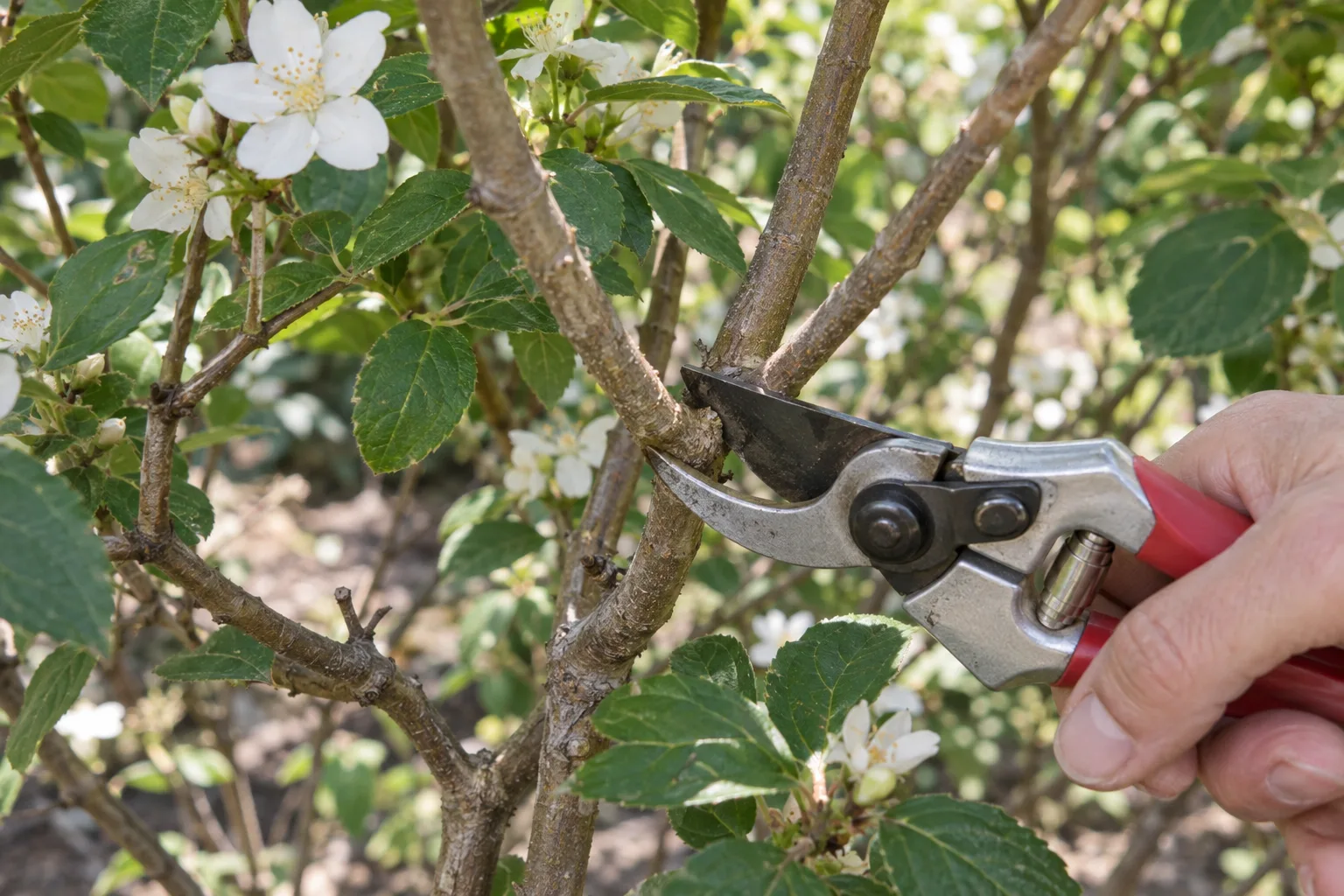
Thinning cuts keep a shrub’s natural shape and let light reach the center of the plant. Shearing builds a dense shell of leaves over a bare, dead interior, and that hollow look is common on shrubs that get trimmed into balls every year. For upcoming workshops, check our classes and events page.
Which eight plants should I prune in April?
The eight below are common in East Valley yards and all respond well to April pruning. We commonly carry many of them in our plant department, though availability changes week to week and season to season.
Bougainvillea (Bougainvillea spp.)
Size depends on the variety, from a 3 foot shrub to a vine that reaches 15 feet or more on a trellis. It wants full sun and little water once established, and its main drawbacks are frost damage in cold pockets and sharp thorns that make pruning slow work. Prune after the spring flush fades, removing up to one-third of the plant, starting with dead wood, crossing stems and shoots reaching into walkways. Go easy on water and fertilizer afterward, since a plant kept on the dry side blooms better. Thick gloves help.
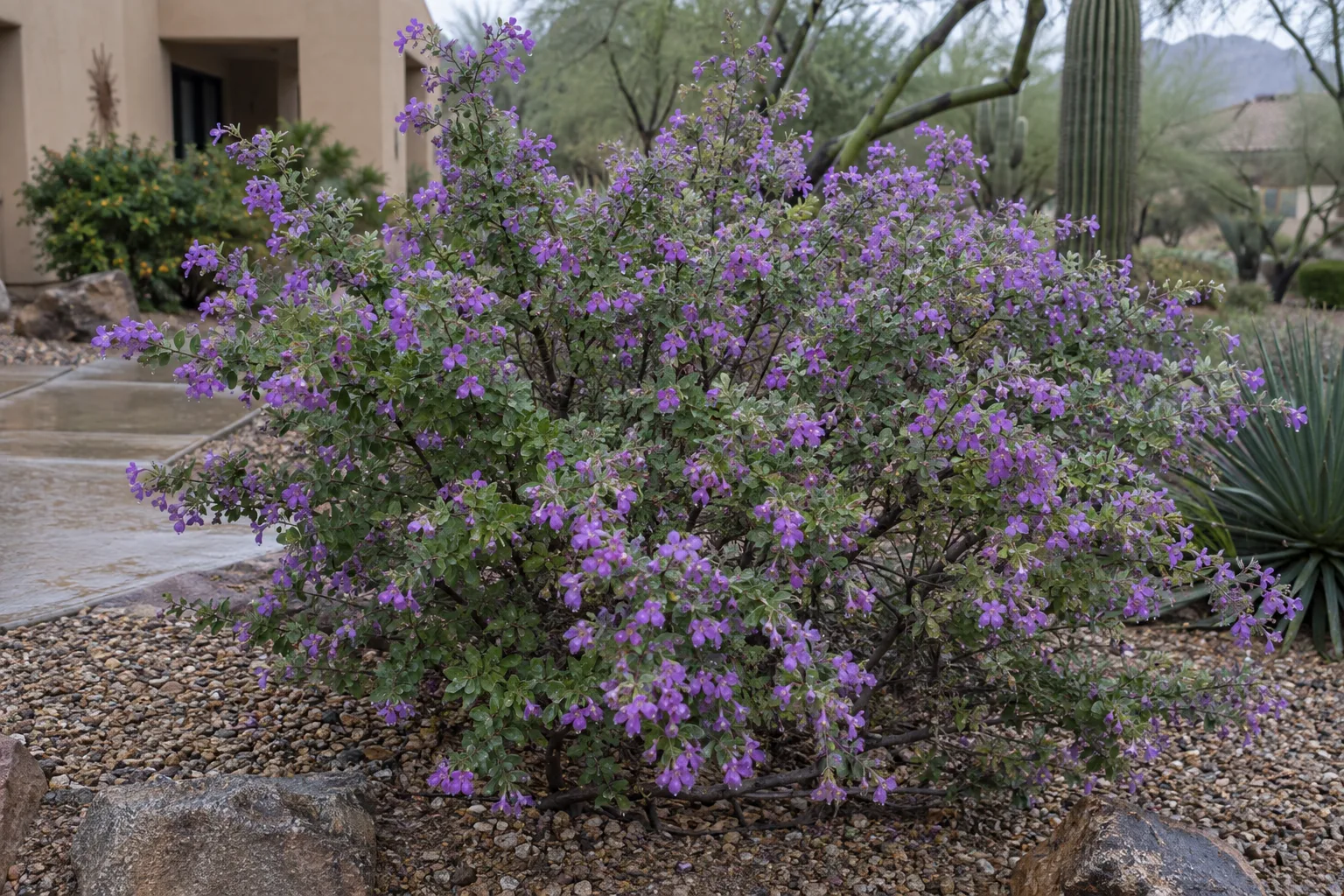
Texas ranger (Leucophyllum frutescens and related species)
Depending on the species, Texas ranger grows 3 to 8 feet tall and about as wide, in full sun with low water. The drawback is its response to shearing, which leaves a stiff ball with fewer blooms and a leggy interior. Keep April cuts light, about 10 to 20 percent, using thinning cuts and removing any frost-damaged tips. It blooms in flushes after summer humidity or rain, so heavy cuts in late spring can cost you those flowers. An overgrown plant is better reduced by 20 to 25 percent a year over two or three years. Never cut it to bare wood.
Lantana (Lantana camara and Lantana montevidensis)
Lantana grows 2 to 4 feet tall and spreads wider, in full sun, with low to moderate water once established. Frost often burns it back each winter, so it looks ragged until you prune. Cut it back by one-third to one-half in April, or to about 12 inches if the stems are mostly dead. New shoots usually show at the base within a few weeks. Remove the dead wood first so you can see where the green growth starts.
Autumn sage (Salvia greggii)
Autumn sage reaches 2 to 3 feet, takes full sun or light afternoon shade, and needs low to moderate water. Left alone for several seasons, it turns woody and sparse at the base. Remove spent flower stalks and frost-burned wood, then reduce the plant by one-quarter to one-third. Leave some green leaves on every stem, because old bare wood may not resprout. This is a quick job on a small plant.
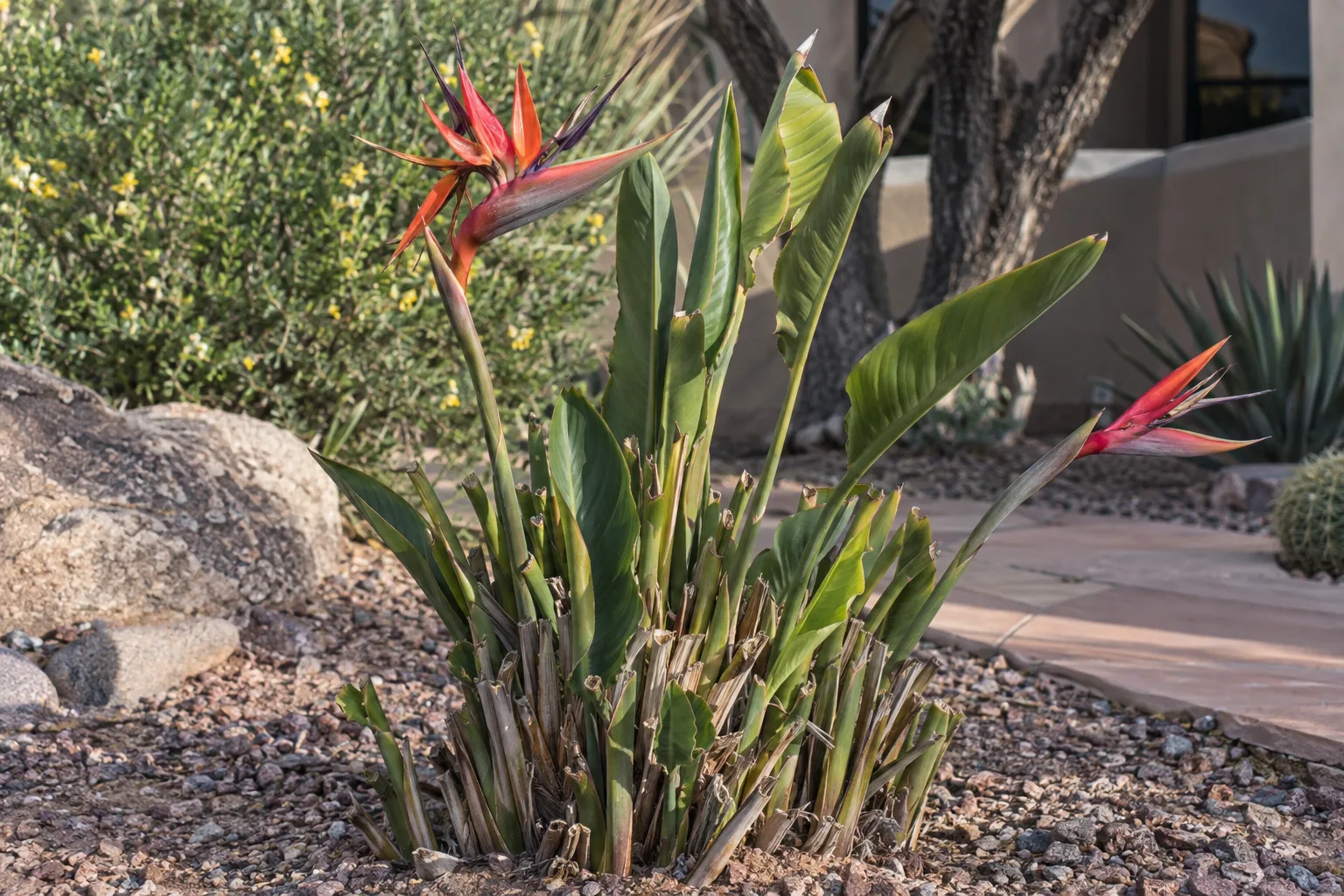
Red bird of paradise (Caesalpinia pulcherrima)
This shrub grows 6 to 10 feet tall in full sun with low water once established, and it freezes back in cold winters, leaving a clump of bare sticks until spring. Prune when new shoots appear at the base or along the stems, cutting each dead stem back to healthy green tissue or a fresh bud. Pulling out a plant that merely looks dead is a common mistake, so scratch a stem and check first. Give it a deep soak after pruning.
Mexican petunia (Ruellia simplex, also sold as Ruellia brittoniana)
Standard Mexican petunia grows 2 to 3 feet tall, while dwarf selections stay closer to 1 foot, in sun or part shade with moderate water. It spreads by runners and seed and can crowd out neighbors in irrigated beds. Cut full-size plants to 6 to 8 inches in April and pull stray seedlings and runners at the same time. Dwarf selections need only a trim of one-quarter to one-third. Some dwarf types set less seed, so check the plant tag.
Yellow bells (Tecoma stans)
Yellow bells can reach 6 to 10 feet tall and nearly as wide in full sun, with low to moderate water once established. It grows fast, and frost can burn back the tips in a cold winter, so it needs yearly shaping. Remove frost-damaged tips, thin crossing branches deep inside the plant, and reduce height by up to one-third if it has outgrown its spot. Avoid shearing the top flat, which creates a dense shell with a dead center. Pods can be messy.
Natal plum (Carissa macrocarpa)
Natal plum is a dense evergreen shrub that grows 3 to 6 feet tall in sun or part shade with moderate to low water, and it is sold in dwarf forms of 1 to 2 feet. Its sharp spines are the drawback, and cold pockets can burn the leaves. April is a good time to shape it, remove dead wood and trim stems that stray from the hedge line. The plant has a milky sap that can irritate skin and eyes, so wear gloves and eye protection. Only the ripe red fruit is generally considered edible, so check with the University of Arizona Cooperative Extension or poison control before kids or pets handle clippings.
How much should I cut from each plant?
Most of these shrubs tolerate removing up to one-third of their growth in April, while lantana and Mexican petunia accept a much harder cut. Use this table as a ceiling, and cut less if you are unsure.
| Plant | Amount to remove | Cut style |
|---|---|---|
| Bougainvillea | Up to one-third | Thinning plus tip cuts, after bloom |
| Texas ranger | 10 to 20 percent | Thinning cuts only |
| Lantana | One-third to one-half, or to about 12 inches | Hard cutback |
| Autumn sage | One-quarter to one-third | Remove spent stalks, then shape |
| Red bird of paradise | All dead wood | Cut to green tissue or new buds |
| Mexican petunia | Down to 6 to 8 inches (dwarf types: one-quarter to one-third) | Hard cutback, pull runners |
| Yellow bells | Up to one-third | Thinning plus height reduction |
| Natal plum | Light shaping as needed | Heading cuts and dead wood removal |
What should I leave alone in April?
Leave heavy citrus pruning, brittlebush and severe cuts on old Texas ranger for another time. Light cleanup on citrus is fine in April, such as removing dead wood and suckers, but cutting deep into the canopy exposes bark and fruit to full sun. Browse our citrus trees to see what grows well here.
Brittlebush (Encelia farinosa) is usually cut after its spring bloom ends, often late April or May, so trim it only lightly now. Leave it be if it is still flowering. Newly planted shrubs in their first season need only dead wood removed, because they are still building the roots that carry them through summer.
Frequently asked questions
Should I seal pruning cuts with wound paint?
No, wound sealants and pruning paint are generally not recommended for shrubs and most trees. Plants seal their own cuts by walling off the damaged tissue, and sealant can trap moisture against the wound. Make clean cuts at the branch origin and let the surface dry, which happens quickly in our low humidity.
How can I tell if a stem is dead or dormant?
Scratch a small patch of bark with your thumbnail. Green, moist tissue underneath means the stem is alive, while brown and dry tissue all the way through means it is dead. If a red bird of paradise or lantana looks bare, wait two to three weeks for buds before cutting.
What if my bougainvillea is still blooming in April?
Wait until the flush fades, then prune. Cutting during bloom removes the flowering tips and shortens the show. Light cleanup of dead wood can happen any time. A sheltered or shaded plant may bloom later than a neighbor’s, so follow your own plant rather than the calendar.
Can I prune in May or June if I missed April?
Light trimming is fine, but hold off on heavy cuts until the heat eases in fall. Shrubs cut hard in summer lose the shade their own leaves provide, and the regrowth can burn. Remove dead wood and tidy stray stems now, then plan bigger reshaping for the following April.
Should I fertilize after pruning?
A light feeding is fine for flowering shrubs, but follow the label rate and water it in. Heavy feeding as heat rises pushes soft growth that can burn, and bougainvillea blooms better on the lean side. Yellowing between leaf veins in alkaline soil often points to iron, so ask us before adding more nitrogen.
Is April pruning worth it for your yard?
Yes for most established shrubs in Queen Creek, Gilbert, Chandler and Mesa yards. One April session keeps lantana, bougainvillea, yellow bells and the rest compact and sets up the summer and fall bloom. Skip it for shrubs in their first season in the ground, which need only dead wood removed, and for anyone who prefers a tightly sheared Texas ranger ball, since shearing trades flowers for shape. Come see us at the nursery in Queen Creek, and we will help you decide how much to cut.