

In March, remove only dead wood, frost damage and crossing branches from native Arizona plants. Creosote takes light shaping now. Anything still in bloom should wait until its flowers fade.
Key takeaways
- In March, cut only dead wood, frost damage and crossing branches, and keep any shaping cut to about a quarter of the plant or less.
- Wait until buds swell and new leaves open before you cut frost-damaged stems, because a late cold night can still reach Queen Creek in early March.
- Prune spring bloomers only after the flowers fade, which for many desert natives falls in April or May.
- Skip wound sealant and fertilizer, and give a dry plant one slow soak that reaches 12 to 18 inches deep.
- Save heavy pruning for the cooler months, because summer highs above 110°F can sunburn freshly exposed stems.
What should I prune on native Arizona plants in March?
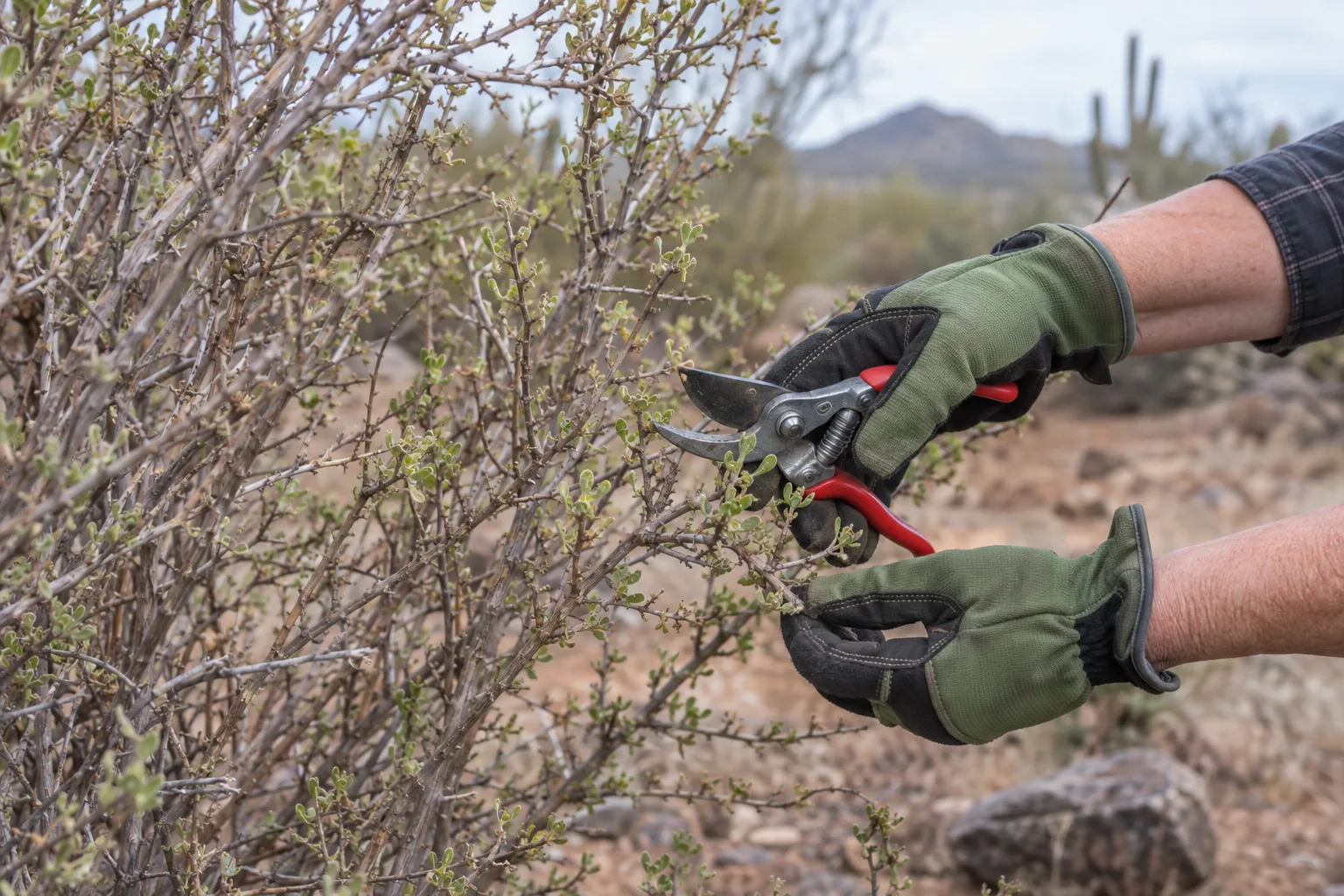
Remove dead wood, frost-damaged stems and branches that cross or rub, and leave the rest alone. Most desert natives grow into a good shape with very little help, so a March visit with the pruners is a cleanup.
Dead wood snaps instead of bending. Scratch the bark with a thumbnail, and green tissue underneath means the stem is alive. On many desert shrubs, stems that look dead after a cold night still have green lower down, so cut back to the first live growth instead of removing the whole branch.
Frost is the reason to wait a little. Queen Creek can see frost into February and occasionally early March, and the damaged tips shield the healthy growth below them. Once buds swell and new leaves open, the line between live and dead wood is easy to see. If you are filling gaps left by plants you have lost, browse our desert-friendly plants for replacements.
Which native plants can I trim in March?
Plants that have finished flowering, or that bloom later in the year, can take light work in March, because a tidy-up cut costs them no major bloom. Keep each cut to about a quarter of the plant or less.
Creosote bush (Larrea tridentata)
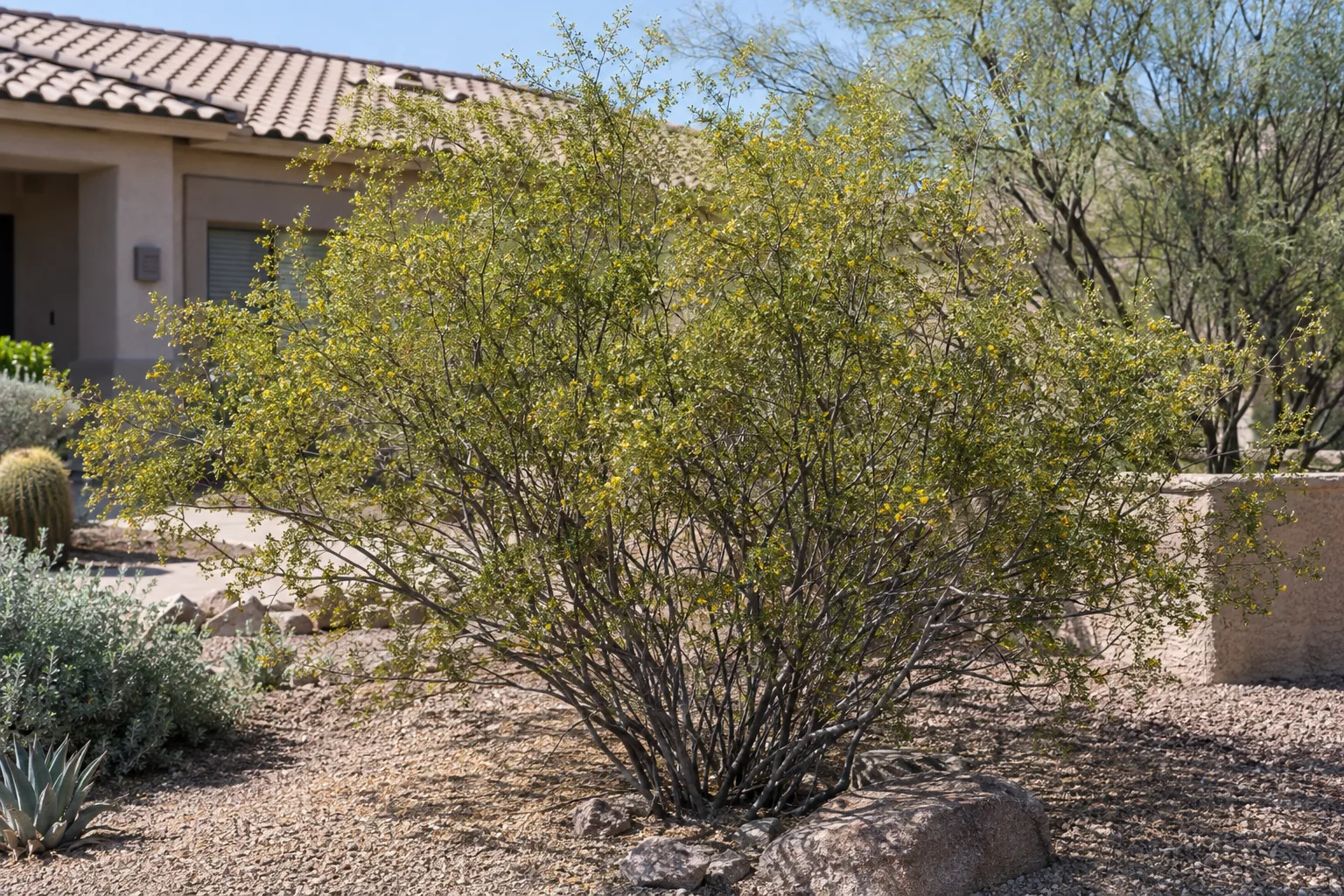
Creosote needs very little. Thin out dead interior branches, remove frost-damaged tips and lightly shape the arching canopy. Flat-top cuts and topping ruin the natural form and send up crowded, weak shoots, so work with the plant’s shape. Once a year is plenty, and some years it needs nothing.
Fairy duster (Calliandra eriophylla)
Fairy duster carries pink powderpuff flowers from late winter into spring, often finishing in March or April. Wait until the first flush fades, then remove dead twigs and shorten straggly stems by up to a quarter. If it is still covered in flowers, leave it be.
Desert marigold (Baileya multiradiata)
Desert marigold sends up yellow flowers from spring into fall. Trim spent flower stalks to keep the clump tidy, and let a few seed heads drop in place, since this plant is short-lived and renews itself from seed.
Agave (Agave species)
Agave needs only dead lower leaves and finished bloom stalks removed, and the timing is flexible. Wear eye protection and long sleeves, because the leaf tips are sharp enough to puncture skin.
Which native plants should wait until after they bloom?
Anything that is flowering in March, or that sets flower buds soon after, should wait, because cutting it removes the display you planted it for. Each plant below has its own timing.
Palo verde (Parkinsonia florida and Parkinsonia microphylla)
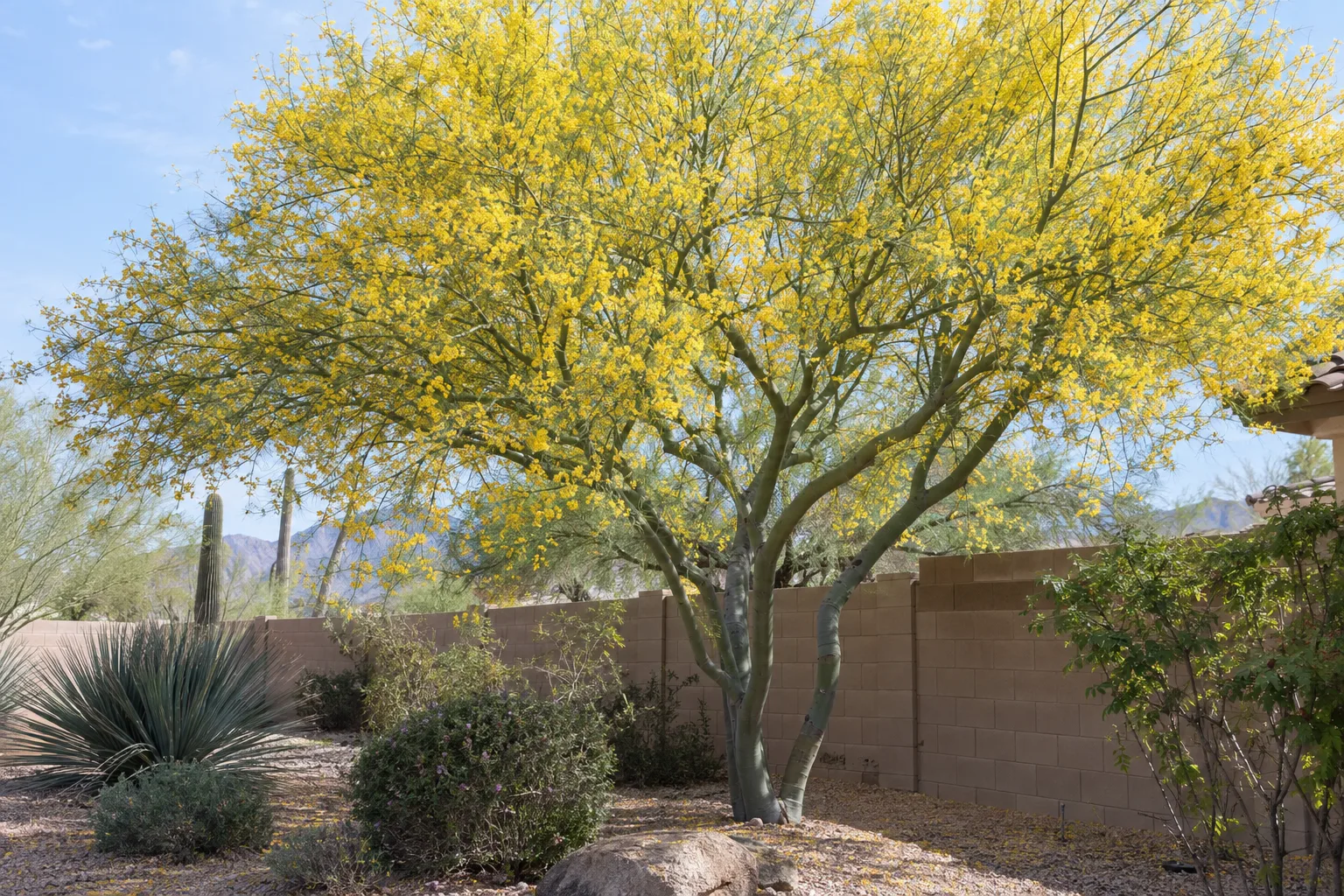
Blue palo verde and foothill palo verde open yellow flowers from roughly late March into May, so structural pruning belongs after the petals drop. In March, take out dead branches only. Never top these trees, since topping produces fast, weak regrowth that tends to split in monsoon winds. You can compare palo verde and its relatives among our desert trees.
Brittlebush (Encelia farinosa)
Brittlebush holds yellow daisy-like flowers above silver-gray foliage from late winter through spring. Leave it alone until the flowers fade, then shorten spent stalks and take the mound back by up to a third, usually in April or May. It is a relatively short-lived shrub, so a plant that has turned woody and sparse may be better replaced than pruned.
Globe mallow (Sphaeralcea ambigua)
Globe mallow opens orange, apricot or pink flowers beginning in March on many plants. After the main flush ends, cut the plant back to roughly 6 to 12 inches. The hard cut brings fresh stems and prevents the woody, floppy look it gets when left alone. Cutting it during bloom gives up the flowers.
Texas sage (Leucophyllum frutescens)
Texas sage keeps a silver, rounded form and flowers in purple flushes that often follow humid weather or summer rain. It needs little pruning. Heavy shearing into a tight ball removes flowering wood and the natural shape. If it must come down in size, take light cuts of no more than a quarter of the plant after frost risk has passed.
Desert willow (Chilopsis linearis)
Desert willow bears pink, purple or white trumpet flowers from late spring into summer, and it leafs out late. Wait until new leaves open, typically in April or later, then remove dead wood and lightly thin crowded branches. Heavy cuts cost you flowers and invite weak regrowth.
March pruning at a glance
This table sums up the March call for each plant above.
| Plant | In March | Better window |
|---|---|---|
| Creosote | Dead wood, light shaping | March through May |
| Fairy duster | Light shaping after first flush | March or April |
| Desert marigold | Trim spent stalks | Spring through fall |
| Palo verde | Dead wood only | After flowers drop, often May |
| Brittlebush | Leave until flowers fade | April or May |
| Globe mallow | Leave until main bloom ends | Late spring, cut to 6 to 12 inches |
| Texas sage | Light shaping only if needed | After frost risk has passed |
| Desert willow | Wait for leaf-out | April or later, light cuts |
How do I make clean cuts on native plants?
Use sharp, clean bypass pruners for stems up to about 3/4 inch, loppers up to about 2 inches and a pruning saw beyond that. Bypass blades slice stems cleanly, while anvil-style tools crush tissue. Wear heavy gloves and eye protection, because dry desert wood splinters and many natives carry thorns or spines.
- Scratch the bark to find which stems are alive.
- Wipe your blades with rubbing alcohol between plants.
- Remove dead and damaged wood first, cutting back to live tissue.
- Cut just outside the branch collar, the slightly swollen ring where a branch meets its parent stem, and leave no stub.
- Step back after every few cuts and look at the whole plant.
- Haul away the clippings when you finish.

The mistakes we would steer you away from are topping trees, shearing shrubs into balls and removing more than about a quarter of a plant in one visit.
Should I water or fertilize after pruning?
Water if the soil is dry, and skip the fertilizer. Native plants evolved in lean desert soil, and nitrogen fertilizer pushes soft, fast growth that attracts pests and scorches in summer heat.
A slow, deep soak that reaches 12 to 18 inches helps a plant push new growth, and it matters most for anything you cut back hard. Check pruned plants every week or two. Fresh leaves or buds within three to four weeks show that recovery is on track.
Is March a good time to plant native Arizona plants?
Yes, because soil is warming and roots get several months to settle in before summer highs pass 110°F. Water new plants deeply and often enough to keep the root ball moist while they establish. Many of the natives in this post are varieties we commonly carry, though availability changes week to week and season to season.
Our gardening calendars lay out planting and care by month, and our classes and events page shows what is coming up if you prefer to learn in person.
Frequently asked questions
Do I need to seal pruning cuts on native plants?
No, wound sealant is not recommended on desert plants. Trees and shrubs close wounds with their own tissue, and sealants can trap moisture against the cut. A clean cut just outside the branch collar heals better than a painted one. Put your effort into sharp tools and good timing instead.
What if my palo verde is too big for its spot?
Remove whole branches back to a main limb after the flowers drop, instead of cutting the top off. Spread the work over two or three seasons so you never take more than about a quarter of the canopy. If the tree keeps outgrowing the space, a smaller desert tree may be the better long-term choice.
Can I prune native plants in June or July?
Light cleanup is fine, but heavy pruning is a poor idea when highs pass 110°F. Stems that were shaded by dense growth can sunburn once exposed, and the plant has few reserves to push new growth. Wait until the monsoon winds down in September, or until the next late winter.
What should I do with the clippings?
Compost soft clippings and chip woody ones for mulch, as long as they are free of disease and pests. Keep fresh mulch a few inches away from trunks, where trapped moisture can encourage crown rot. Bag anything showing disease or insect damage and put it in the trash rather than the compost pile.
How often do native plants need pruning?
Most native plants need pruning once a year at most, and many need none. Check each plant when it finishes flowering, remove dead wood and fix anything crossing or rubbing. A plant with a healthy natural shape in a space that fits it can go years with only dead wood removed.
Is pruning your native plants in March worth the effort?
Yes, for dead wood, frost damage and light shaping of plants like creosote, and no for anything still in flower. If your yard is mostly palo verde, brittlebush and globe mallow, the best March job is checking for dead wood and waiting a few weeks. Gardeners whose natives already have a good shape and fit their space can skip pruning altogether. Come by our nursery in Queen Creek and bring photos of your plants.
