Pruning too late in spring in Arizona, roughly May onward, exposes bark to sunscald, stresses new growth in 100°F-plus heat, and can cost you blooms. Hold elective pruning until the heat breaks in fall, and remove only dead or broken wood in between.
Key takeaways
- Finish shaping and thinning by about early April in Queen Creek, after frost risk has passed and before highs settle above 100°F.
- From May through September, remove only dead, broken or hazardous wood.
- Sunscald shows up as pale, papery, cracked or sunken bark, usually on the south and west sides of a trunk or limb.
- If you must cut in late spring, keep it to roughly 10 to 20 percent of the canopy.
- After a late cut, water deeply, shade exposed bark, and hold fertilizer until temperatures ease in fall.
When is it too late to prune in spring in Arizona?
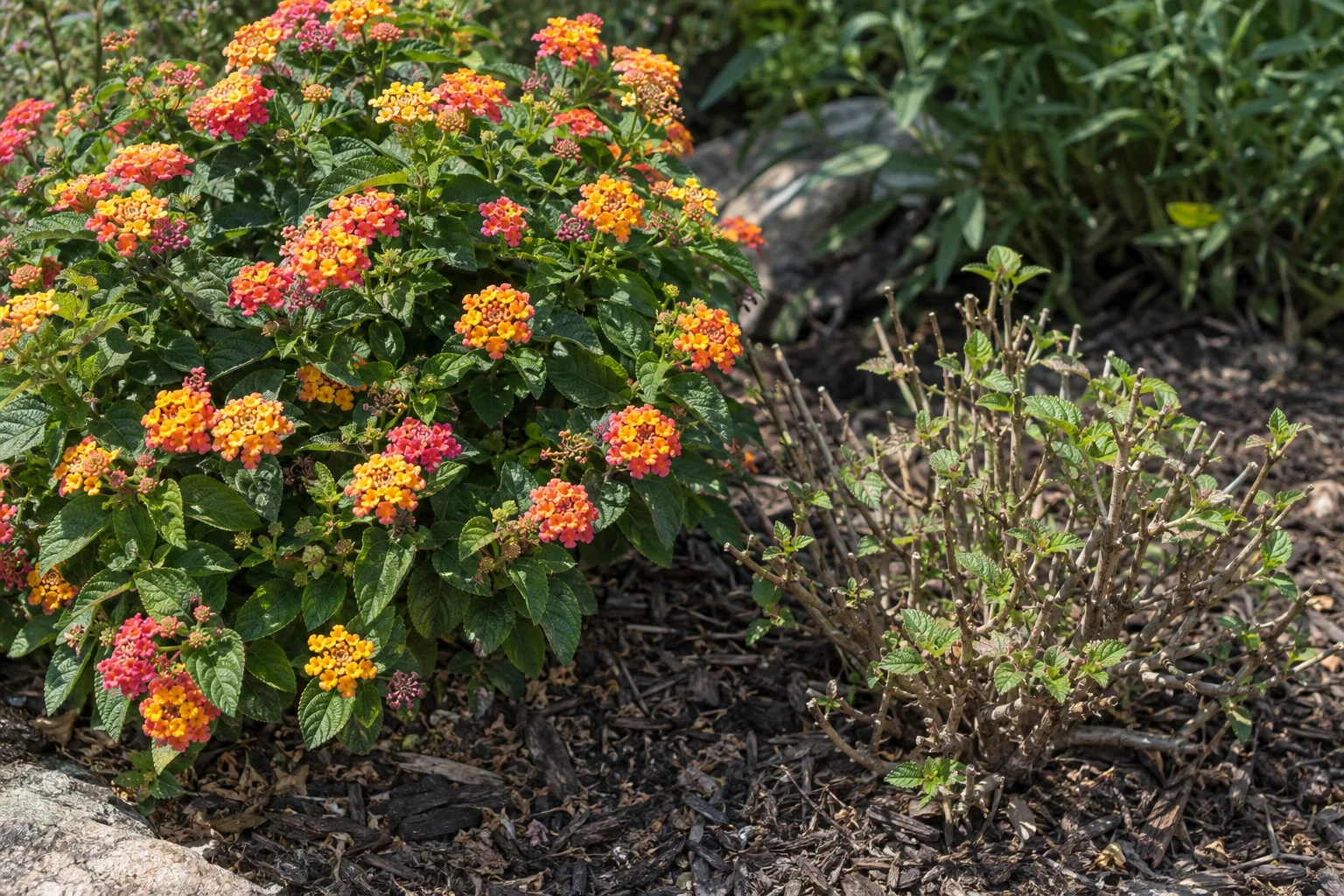
For most shrubs and trees here, shaping cuts are best finished by about early April. After that, every cut lands on a plant that has to heal while afternoon highs climb toward 100°F and beyond. Frost-tender plants such as lantana, bougainvillea and citrus should wait until frost danger is over, so their usable window can be only a few weeks in late winter and early spring.
Two kinds of pruning behave very differently. Corrective pruning removes dead, broken or diseased wood and is fine in any month. Shaping pruning thins canopies, reduces size or changes form, and carries the seasonal risk. This post covers shaping. If you are still deciding what belongs in your beds, our plants department is a good place to start.
How does heat damage fresh pruning cuts?
A cut removes leaves that feed and shade the plant, and it opens a wound that needs water and energy to seal. In a month when highs pass 105°F, the plant has little to spare for either job.
The regrowth that follows a late cut is soft and pale. It scorches easily, and it needs more water than the mature leaves it replaced. Shallow caliche layers and alkaline soil can limit how deep roots reach, so a plant may not have the reserves to push new shoots and keep its existing leaves hydrated at the same time. Wilting tips, brown shoot ends and thin, slow regrowth through June and July are the usual signs.
Extra irrigation helps but cannot fully offset the loss of leaf cover.
What is sunscald and which plants get it?
Sunscald is sun injury to bark that was previously shaded by leaves and is suddenly exposed. Heavy thinning in late spring is a common cause, because bark under a dense canopy has not toughened up for direct summer sun.
Injured bark turns pale, then dry, papery and cracked, and the wood beneath can die. On a limb, the damage can wrap around and cut off water movement to everything beyond it. Thin-barked young trees are the most vulnerable, and citrus is a well-known example. If you grow citrus trees, keep the canopy dense over the trunk through summer.

Palo verde and mesquite can also scald when interior limbs are opened up suddenly. Thin gradually over more than one season instead of all at once.
Will pruning too late in spring cost me flowers?
Often it will, though the reason depends on the plant. Lantana, bougainvillea, desert willow and many other desert shrubs flower on new growth, so a hard cut in May does not remove buds but does delay flowering while the plant regrows. In extreme heat that regrowth is slow, and the delay can stretch for weeks.
Shrubs that set buds on last season’s wood lose those buds outright when cut before they flower. The rule for them is to prune right after the bloom finishes.
Shearing Texas sage (Leucophyllum frutescens) into tight shapes also removes much of its flowering wood, and heavy late cuts can leave dieback on new tips. Flowering trees need the same care, since pruning at the wrong time can trim away a season of color. If you are choosing new ones, our flowering trees page shows the types we commonly carry, and availability changes with the season.
Do pests and monsoon storms make late pruning riskier?
They can. Wood-boring beetles are generally drawn to stressed or damaged trees, and a tree that was heavily cut in the heat fits that description. Look for sawdust-like frass, small round exit holes or sap oozing from cuts.
Monsoon winds, which arrive from roughly July through September, add a second risk. A tree that was topped or heavily thinned grows a flush of fast, weakly attached shoots, and those snap easily in a storm gust. Gradual, moderate pruning in the proper season gives the tree time to grow sturdier wood before the first big storm.
What should I do if I already pruned too late?
You cannot undo a cut, but you can lower the stress on the plant. Work through these steps in order.
- Stop pruning. Extra cleanup cuts add more wounds, so leave the plant alone until new growth tells you which wood is alive.
- Water deeply and slowly, then let the soil surface dry before the next watering. For shrubs, aim to wet the root zone to roughly 2 feet; for trees, wet a wide area out past the canopy edge.
- Shade exposed bark. A 30 to 40 percent shade cloth draped over a shrub, or a trunk wrap or diluted white latex paint on a trunk, reduces direct sun on tissue that is suddenly bare.
- Hold fertilizer. Nitrogen pushes tender growth that the heat will burn, so wait until temperatures ease in fall.
- Check trees every week or two for borer signs, and call a certified arborist if you see them.

When is the right time to prune in Queen Creek?
For most plants, the window runs from after the last frost through about early April. Spring bloomers on old wood get pruned right after they flower, and light shaping of frost-hardy shrubs can wait for fall, once the heat breaks.
Citrus is commonly pruned lightly in late winter through early spring, after frost risk. Desert trees need the most patience, since heavy cuts at any season invite problems. Our desert trees page lists the kinds we commonly carry, and each has its own growth habit to plan around.
For a month-by-month view of tasks across the whole yard, use our gardening calendars. Mark the dates on your own calendar in January so late winter does not slip past.
Frequently asked questions
Can I remove a broken branch in summer?
Yes. Dead, cracked or hazardous limbs can come off in any month, and monsoon storms often force the issue. Cut just outside the branch collar with a sharp, clean tool, and avoid taking extra healthy wood along with it. Watch the cut for borer activity over the next few weeks.
Is fall a good time to prune instead?
For hardy desert shrubs, light shaping after the heat breaks, around October, works well. Frost-tender plants such as lantana, bougainvillea and citrus should wait until late winter, because fall cuts push soft growth that winter frost can damage. Keep fall cuts light on any plant.
Should I seal pruning cuts with wound dressing?
Most arborists do not recommend it for ordinary cuts. Plants seal wounds on their own, and dressings can trap moisture against the wood. Clean cuts made at the branch collar with sharp tools heal best. Sunscald protection for bare trunks is a separate matter and calls for paint or wrap.
Does a shaded yard change the timing?
A little. Plants shaded by walls or large trees face less direct sun on fresh cuts, so sunscald risk drops. Air and soil still run hot from May through September, and regrowth still struggles. Treat shade as a small cushion and keep your pruning on the same seasonal schedule.
Should you prune in May or wait until fall?
Wait. If a shrub looks overgrown in May, it will look the same in October, and it will come through summer in better shape. Cut now only for dead, broken or hazardous wood, or branches that block a driveway or sight line. Anyone planning to remove more than a fifth of a tree’s canopy should wait for late winter or fall, or hire a certified arborist. Stop by our Queen Creek nursery and we will help you plan your pruning calendar.