To prune clematis in Arizona, first find its pruning group: Group 1 right after spring bloom, Group 2 lightly in late winter, Group 3 hard in late winter. Clematis struggles in low desert heat, so shade the roots and expect a modest show.
Key takeaways
- Identify the pruning group before cutting. Group 1 blooms on last year’s wood, and Group 3 blooms only on new growth.
- Late winter, roughly late January to February here, is the usual window for Group 2 and Group 3 cuts, before new shoots start moving.
- Cut about 1/4 inch above a pair of healthy buds with clean bypass pruners, angled so water runs off the cut.
- Group 3 vines are cut to about 12 inches from the ground each year, while Group 1 vines get only a light tidy.
- Cover the root zone with 3 to 4 inches of mulch, because summer highs above 110°F stress this vine more than any pruning mistake.
Which pruning group is my clematis in?
Your clematis is in the group that matches when and on what wood it flowers. The plant tag usually lists it, and a variety name searched online will confirm it. Pruning in the wrong group is the usual reason a healthy vine never blooms.
Group 1 vines flower in late winter or spring on stems grown the previous year. Group 2 vines flower in spring on old wood and may flower again later on new growth. Group 3 vines flower only on stems that grew this season, so they can take a hard cut. The evergreen Clematis armandii is a Group 1 vine, and Clematis terniflora is a Group 3 vine.
| Group | Blooms on | When to prune in the low desert | How much to cut |
|---|---|---|---|
| Group 1 | Old wood | Right after spring bloom | Light tidy, dead and crossing stems only |
| Group 2 | Old wood, then new wood | Late winter, plus a light trim after the first flush | Back to the first pair of strong buds |
| Group 3 | New wood | Late winter, before growth starts | To about 12 inches above the ground |
If you cannot find the variety, do not hard prune. Let the vine go through one full year, note when it flowers, and prune lightly in the meantime.
When should I prune clematis in Arizona?
Prune Group 2 and Group 3 clematis in late winter, about late January to February in Queen Creek, and prune Group 1 right after it finishes flowering. Our winters are mild, so buds can swell earlier than the books written for colder places suggest.
Check the vine before you cut. Swollen buds along the stems tell you growth has started, and you can still prune just above them. Waiting until shoots are several inches long means you cut off growth the plant already paid for. Our gardening calendars are a handy place to track the other late-winter jobs around the same time.
Avoid heavy pruning from June through September. New growth that emerges when highs sit above 110°F scorches quickly. Remove only dead or broken stems in summer, and save structural cuts for the cooler months.
What tools do I need to prune clematis?
You need sharp bypass pruners, a pair of loppers for thick old stems, and something to disinfect the blades. Bypass blades slice cleanly, while anvil pruners crush stems and leave ragged wounds.
- Bypass pruners for stems up to about 1/2 inch thick.
- Loppers for older, woody stems.
- Rubbing alcohol or a diluted bleach solution to wipe blades between plants, since clematis wilt can spread on dirty tools.
- Gloves, because clematis sap can irritate skin for some people.
- Soft ties for guiding new shoots onto the support.
How do I prune clematis step by step?
Work from dead wood to live wood, then make your final cuts just above healthy buds. The steps below apply to all three groups, and only the depth of the cut changes.
- Confirm the pruning group and the right season for that group.
- Cut out stems that are brown, brittle or clearly damaged. Scratch the bark lightly with a thumbnail, and green tissue underneath means the stem is alive.
- Untangle the vine so you can see where each stem starts and ends.
- For Group 3, cut every stem back to about 12 inches above the ground, just above a pair of buds.
- For Group 2, trim each stem back to the first pair of plump, healthy buds, and remove weak or crowded growth.
- For Group 1, remove only dead, damaged or crossing stems and shorten any shoots that outgrow the support after flowering ends.
- Make each cut about 1/4 inch above a bud pair, sloped away from the buds.
- Bag and discard the clippings rather than leaving them at the base of the plant.

A hard cut looks drastic on a Group 3 vine. It is the normal routine, and the plant sends up fresh stems from the base in spring.
How do I keep clematis alive after pruning in the desert?
Shade the roots, mulch deeply and water at the base. Clematis wants cool roots and a sunny top, which is hard to deliver when summer soil gets hot. Plant it where it gets morning sun and afternoon shade, such as an east-facing wall or fence.

Spread 3 to 4 inches of wood chips or shredded bark over the root zone, keeping mulch a few inches off the stems. Low plants at the base also shade the soil. Most East Valley soil is alkaline and often has caliche below the surface, so dig a wide planting hole and make sure water drains instead of pooling.
After pruning, water deeply and let the top few inches dry before watering again. In active growth, that often works out to once every week or so, but it varies with soil and exposure. Hard irrigation water leaves mineral salts behind, so an occasional slow, deep soak helps flush them below the roots.
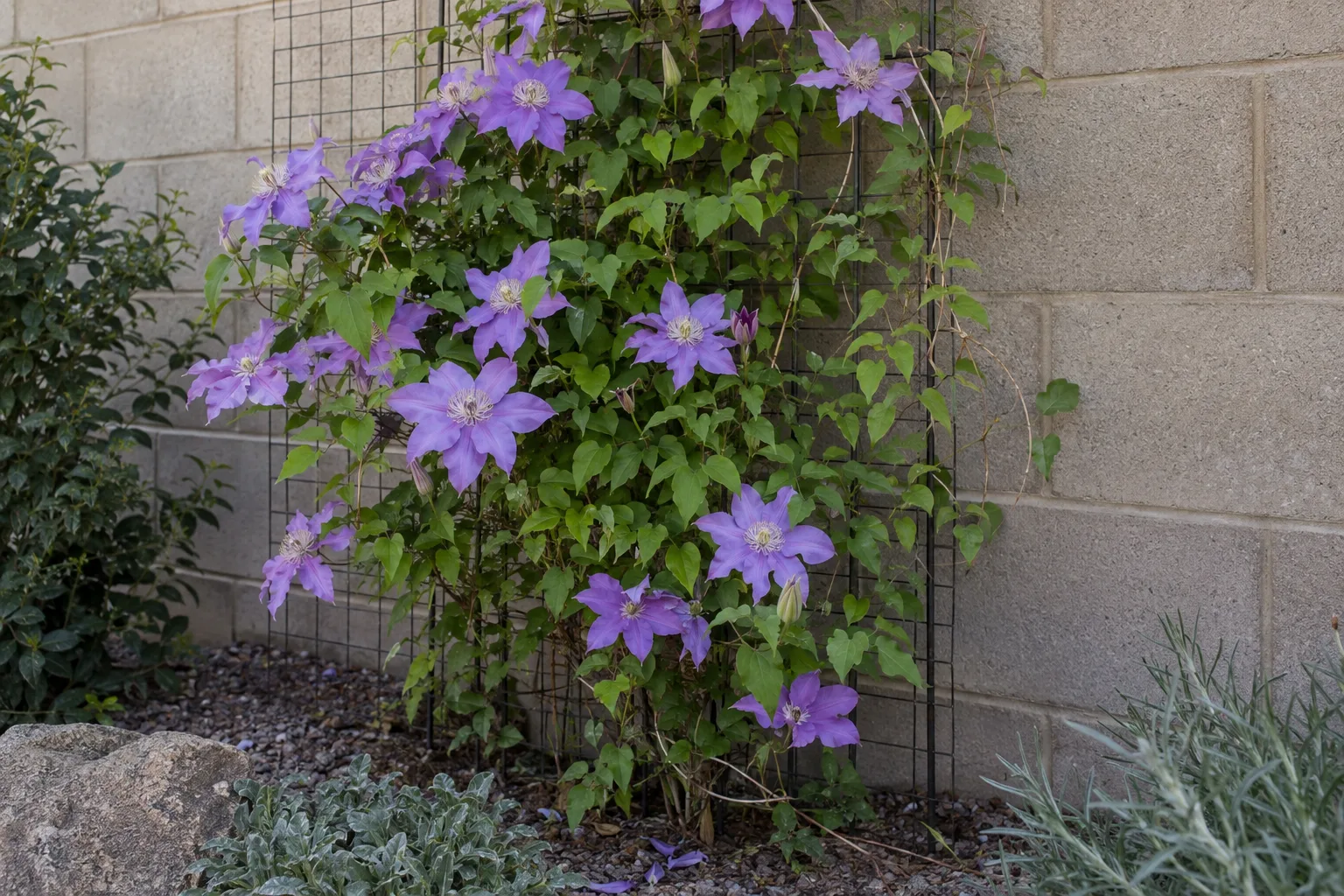
Clematis climbs by wrapping leaf stalks around thin supports. A wire grid, netting or trellis set a few inches off a solid wall works well. Tie new shoots in loosely as they grow, because young stems snap easily in wind.
Which clematis handles the low desert best?
None of them loves it here, but some cope better than others. Evergreen Clematis armandii is worth trying with afternoon shade and protected roots. Small-flowered Clematis viticella types are often described as more heat tolerant than large-flowered hybrids.
Large-flowered hybrids such as ‘Nelly Moser’ and ‘Jackmanii’ can sulk when summer highs stay above 110°F. Flower color also fades in strong sun. These are varieties we commonly carry in some years, though availability changes week to week and season to season, so ask before you plan a spot around one. Browse our plant selection for other vines that suit the low desert.
What mistakes should I avoid when pruning clematis?
The biggest mistake is cutting Group 1 in winter, which removes the buds that would have flowered that spring. A close second is hard pruning a vine whose group you never confirmed.
- Pruning too late. Cutting after shoots have grown several inches wastes the plant’s early effort.
- Skipping pruning entirely. Unpruned vines build up dead stems and flower only at the tips.
- Cutting between buds. Stubs above a node die back and invite decay.
- Dirty blades. Wipe tools between plants to limit the spread of clematis wilt.
- Heavy pruning in summer. Fresh growth in 110°F weather burns and drains the vine.
If you would like to see pruning done in person, check our classes and events page for upcoming sessions.

Frequently asked questions
How can I tell clematis wilt from heat stress?
Heat stress causes drooping in the afternoon and recovery by evening, often with scorched leaf edges. Clematis wilt causes a stem to collapse suddenly and turn dark, and it does not bounce back. If you suspect wilt, cut the stem back to healthy green tissue, clean your pruners and discard the clippings.
Should I fertilize clematis after pruning?
Wait until new growth is visibly under way, then apply a balanced slow-release fertilizer at the label rate. Too much nitrogen produces leaves at the expense of flowers. Water it in well, and keep granules away from the stems, since fertilizer salts add to what hard water already leaves in the soil.
Can I grow clematis in a pot in Arizona?
You can, but pots heat up quickly, and roots cook when soil temperatures climb. Choose a large, light-colored container, place it where it gets afternoon shade and expect to water more often than for an in-ground vine. Browse our pottery and planters for roomy options.
Will my clematis bloom again in summer?
Probably not much. Group 2 vines may try a second flush on new wood, but flowering tends to stall once highs stay above 100°F. Light trimming of spent flowers and steady moisture give it the best chance. Expect the main show in spring, and treat any later flowers as a bonus.
Is it okay to prune a vine that looks dead in winter?
Wait before cutting a vine that looks dead. Many clematis drop leaves in cool weather and look bare. Scratch a stem with a thumbnail, and if you find green tissue, the stem is alive. Cut only stems that are brown and brittle all the way through, and check again after growth starts.
Is clematis worth growing in the Arizona low desert?
Clematis suits a gardener who has a shaded east-facing wall, is willing to mulch and water carefully, and is happy with a good spring display instead of nonstop flowers. If your only open spot gets full western sun, or you want a vine that needs no attention, choose a tougher climber instead. Bring a photo of your spot to the nursery in Queen Creek, and we can help you decide.