

To protect young plants from wildlife in Arizona, wrap each transplant in a half-inch hardware cloth cage, fence beds to the right height, and cover seeded rows. Layer these with repellents and motion sprinklers, since no single method stops a hungry rabbit, quail or javelina.
Key takeaways
- Cover each transplant with a half-inch hardware cloth cylinder about 12 to 18 inches across and 18 to 24 inches tall, pushed 2 to 3 inches into the soil.
- A rabbit fence stands roughly 24 to 36 inches tall with the bottom 6 inches turned outward. Javelinas call for a sturdier fence about 4 feet high.
- Cover seeded beds for the first 2 to 3 weeks, because quail scratch out seeds and tender sprouts.
- Repellent sprays and granules wear off within 1 to 2 weeks and after any rain or irrigation that wets the plants.
- Most cages can come off after 6 to 8 weeks, once stems turn thick and woody.

Which animal is eating my young plants?
The damage tells you. Clean, angled cuts near the soil point to rabbits, while torn-up soil and trampled beds point to javelinas. Knowing the culprit keeps you from spending money on the wrong defense.
Gambel’s quail leave scratched soil and missing seeds, and seedlings may lie on the surface with roots exposed. Ground squirrels and pack rats chew stems and carry off fruit, seeds and plant material. Coyotes rarely eat plants, but they dig and will take ripe fruit near the edge of open desert. If you are still choosing what to plant, browse our plant selection and think about how exposed each spot in your yard is.
| Animal | What you will see | Plants it goes for | Best first defense |
|---|---|---|---|
| Cottontail rabbit | Clean, angled stem cuts near the ground | Vegetable and herb transplants, young perennials | Hardware cloth cages or low fence |
| Javelina | Rooting, trampling, uprooted plants | Succulents, bulbs, root crops | Sturdy fence about 4 feet tall |
| Gambel’s quail | Scratched soil, missing seeds, pulled sprouts | Seeded beds and seedlings | Row cover or mesh over the bed |
| Ground squirrel or pack rat | Chewed stems, dug root zones, missing fruit | Squash, beans, corn, ripening fruit | Cages and elevated containers |
Why are young plants most at risk in spring?
Transplants and sprouts are soft, shallow-rooted and freshly watered, so they are the easiest meal in the yard. The first 2 to 4 weeks after planting carry the most risk. One visit from a rabbit can take down a whole row of new vegetable starts overnight.
Spring adds pressure. Wild forage dries out as the weather warms, and a lush, irrigated bed in Queen Creek stands out beside it. Animals also roam farther for water before summer highs pass 110°F. Protecting plants at planting time costs far less than replacing them two weeks later.
What are the 8 easiest ways to protect young plants?
Start with physical barriers, then add deterrents and smarter plant choices. Each of these eight methods covers a different gap, and they work best in combination.
1. Hardware cloth cages
Individual cages are the most dependable way to protect a single transplant. Cut half-inch hardware cloth into a cylinder 12 to 18 inches across and 18 to 24 inches tall, then push it 2 to 3 inches into the soil. Air and light pass through freely. Leave it on tomatoes, peppers, eggplant and young fruit trees until the stems thicken.
2. Perimeter fencing
A fence guards a whole bed at once. For rabbits, use wire fencing 24 to 36 inches tall with small enough openings that young cottontails cannot squeeze through, and turn the bottom 6 inches outward in an L shape along the soil. Javelinas push through weak fencing, so they call for welded wire or hog panel about 4 feet tall, staked firmly, with a gate that latches. Build the fence before you plant so you do not disturb new roots.
3. Raised beds and elevated containers
Height keeps plants away from ground-level animals. A raised bed 24 inches or taller is harder for cottontails to reach, and a hardware cloth floor under the soil blocks burrowers. Containers on patios or stands work the same way. Browse our pottery and planters if you want to move your most tempting plants out of reach. Raised beds also help with the alkaline soil and caliche common in the East Valley.
4. Row covers and mesh over seeded beds
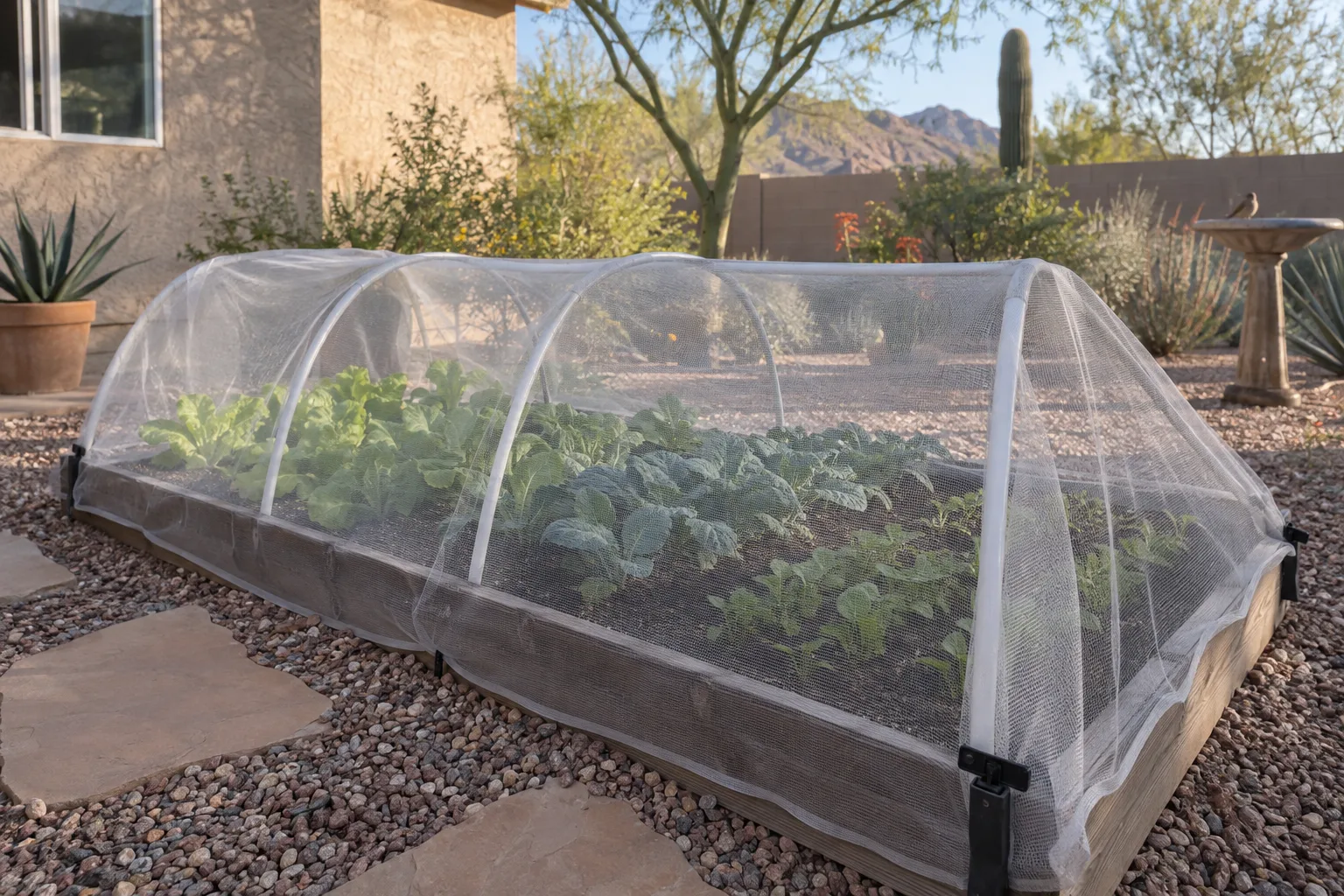
Quail can ruin a new seed bed in a morning. Lay a rigid mesh or row cover over the bed on a simple frame until sprouts are 2 to 3 inches tall. Keep the cover firmly anchored on every side. Loose plastic bird netting alone can tangle birds and does not stop a rabbit, which can chew through it.
5. Repellent sprays and granules
Repellents slow animals down, and they work as a backup to barriers. Products with a hot pepper (capsaicin) base and predator scent granules are the common choices, and both need reapplying every 1 to 2 weeks and after rain or irrigation. Read the label before use on anything you will eat, and check the waiting period before harvest. Keep pets and children away until the product has dried. Gardener results vary widely.
6. Motion-activated sprinklers
These hook up to a hose and give a short burst of water when something enters the detection zone. Rabbits and quail tend to learn to avoid the spot after a few surprises, though results depend on the animal and the yard. Aim the sensor at the gap the animal uses most. Lights and ultrasonic devices see mixed results because animals get used to them quickly.
7. Plants that animals tend to leave alone
Aromatic and bitter plants get browsed less, but none are guaranteed. Autumn sage (Salvia greggii), lantana (Lantana camara), Texas sage (Leucophyllum frutescens), rosemary (Salvia rosmarinus), society garlic (Tulbaghia violacea) and desert marigold (Baileya multiradiata) are often reported as rabbit-resistant here. The evidence comes mostly from gardener experience, not controlled trials, and a hungry animal will eat almost anything. Young plants are the most tempting, so cage them anyway for their first season. These are varieties we commonly carry, and availability changes week to week and season to season.
Check that any lantana you choose is a sterile or low-seeding selection so it does not spread into nearby desert. Our herbs, vegetables and berries page covers the edibles you may want to wrap in cages.
8. Remove the attractions
Animals return to yards that reward them. Pick up fallen fruit, keep pet food indoors, cover compost, and fence off open water. Do not feed wildlife on purpose. Javelinas and rabbits remember where food was, and a yard with no easy meal gets fewer repeat visits.
In what order should I set up protection?
Work from the biggest barrier to the smallest detail, and do it on planting day. A short checklist keeps the job from stretching into a weekend.
- Watch the yard for a few mornings and note tracks, droppings and which plants were hit.
- Build or repair the perimeter fence before planting, and check that gates latch.
- Plant, then place a hardware cloth cage on each high-value transplant right away.
- Cover seeded rows with mesh or row cover, anchored at every edge.
- Apply a repellent around the edges, set up the sprinkler, and put a reminder on your phone to reapply every 7 to 10 days.
Our gardening calendars help you time planting so tender growth is not sitting exposed longer than it needs to be.
How long do young plants need protection?
Most plants need cages for 6 to 8 weeks, or until the stem is about as thick as your thumb and turning woody. At that point, light nibbling will not kill the plant. Perimeter fencing is worth keeping in place year-round, since wildlife visits in every season.
Shrubs and trees you want to grow large can move from a small cage to a taller one instead of going unprotected. Bark and tender new shoots stay attractive for a full season or more on some plants, so judge by how the plant looks, not just the calendar.
When should I call for help with wildlife?
Call a wildlife professional if animals keep breaching your barriers or you see signs of aggressive behavior. Rules about trapping, relocating or harming wildlife are set by the Arizona Game and Fish Department, so contact them before doing anything beyond fencing and deterrents. Do not approach javelinas or corner them.
If damage keeps repeating after you have layered several methods, bring photos of the damage and your yard layout to us. We can suggest plant choices and container options that fit your site.
Frequently asked questions
Can bird netting protect seedlings from rabbits?
No, not reliably. Rabbits can chew through plastic netting, and birds and other animals can become tangled in it. Rigid hardware cloth or a firm mesh stretched over a frame is safer and lasts longer. Anchor every edge so an animal cannot push underneath.
Are javelinas dangerous to gardeners?
Javelinas usually avoid people, but they can act defensively when cornered or with young nearby. Keep your distance, do not feed them, and give them a clear path to leave. Make noise from a safe spot if one wanders into the yard, and keep pets inside or leashed.
Do ultrasonic devices keep animals out?
Results are mixed, and evidence for ultrasonic devices is limited. Some gardeners report a short-term effect, but animals tend to get used to them. If you try one, treat it as an extra layer, move it every week or two, and keep cages and fencing in place.
Are repellents safe around pets?
It depends on the product, so read the label before you spray. Many repellents warn against pets and children contacting the product until it dries. Predator scent granules and pepper sprays can irritate noses and eyes. When in doubt, ask your veterinarian or a product maker before applying.
Does monsoon season change how I protect plants?
Yes, mainly through repellents and soil. From roughly July through September, rain washes off sprays and granules, so reapply after each storm. Soft wet soil is also easier for rabbits and squirrels to dig, so check the base of fences and cages for gaps after heavy storms.
Is layered wildlife protection worth the effort in your yard?
Yes, if you are planting vegetables, new perennials or fruit trees where rabbits, quail or javelinas pass through. Cages and fencing are the core, and the rest is backup. If your plants sit on a high, enclosed patio, or you grow only spiny or aromatic plants, cages and fencing may be enough or even unnecessary. Anyone unwilling to check barriers weekly will lose plants regardless. Stop by our Queen Creek nursery and we will help you sort out what your yard needs.