
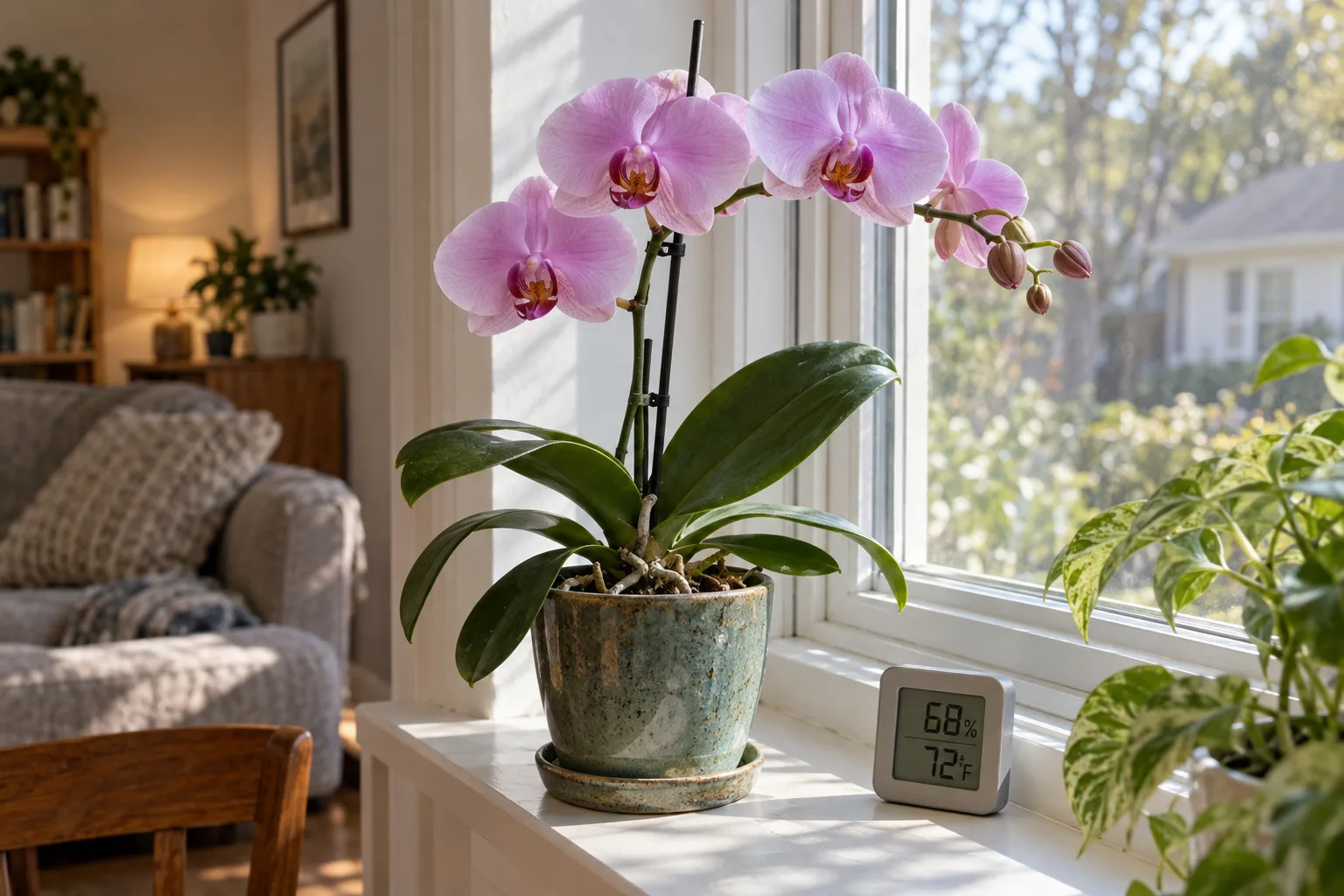
To protect indoor orchids from Arizona’s winter dryness, raise the humidity around them to roughly 40 to 60 percent. Group the plants, use a pebble tray or small humidifier, keep them away from heating vents, and water by checking the bark rather than the calendar.
Key takeaways
- Most popular orchids want about 40 to 70% relative humidity, while heated homes in winter can fall to 15 to 25%.
- A basic hygrometer shows your real numbers, so check it near the plants for several days before changing anything.
- Keep orchids at least a few feet from heating vents and out of drafts near exterior doors.
- Water when the bark is dry an inch down, and flush the pot with low-mineral water about once a month.
- A 10 to 15°F drop between day and night helps many orchids set flower spikes, so avoid heating the house to 75°F overnight.
Why is winter so hard on indoor orchids in Arizona?
Heating systems pull moisture from indoor air, and winter windows stay shut. Readings of 15 to 25% relative humidity are common in East Valley living rooms in December and January. Orchids like Phalaenopsis and Cattleya come from humid tropical and subtropical forests and expect far more moisture than that.
Low humidity shows up as brown, crispy leaf tips, shriveled aerial roots and buds that drop before opening. The bark also dries faster than usual. That tempts owners to water too often while cool temperatures slow the roots, which invites rot. Humidity is the root problem to solve first.
Which orchids handle dry indoor air best?
Phalaenopsis (moth orchids) and Oncidium tolerate dry air better than most, so they are the easiest to start with. Humidity-hungry types need more effort. The table below summarizes common genera, using ranges that growers generally quote.
| Orchid | Humidity range | Effort in a dry winter |
|---|---|---|
| Phalaenopsis | 40 to 70% | Moderate |
| Oncidium | 40 to 60% | Moderate |
| Cattleya | 40 to 60% | Moderate, needs bright light and airflow |
| Dendrobium | 50 to 70% | Higher, though nobile types like a cool, drier rest |
| Zygopetalum | 50 to 70% | Higher |
| Miltoniopsis (pansy orchid) | 60 to 80% | Very high |
Thick, waxy leaves usually mean better tolerance of dry air. Thin-leaved types such as Miltoniopsis need a humid microclimate or may not be worth the struggle in a heated home. Our houseplant department shows the tropical plants we commonly carry, though availability changes week to week and season to season.
Where in the house should orchids sit in winter?
The best spot is a bright, indirect window in a naturally humid room, such as a bathroom or kitchen with an east-facing window. Shower and cooking steam lift humidity several times a day. A north or east window gives gentle light without scorching leaves.
Keep pots away from heating vents, which blow hot, dry air straight onto roots and leaves. Stay clear of drafty garage and exterior doors too, where nights can turn cold. West windows can swing sharply in temperature as the sun drops.
How do I raise humidity around my orchids?
Start by measuring, then add the simplest fixes first. A small humidifier is the most effective step, and the others help at the edges.
- Place a digital hygrometer near the plants and read it morning and evening for a few days.
- Set each pot on a tray of pebbles with water just below the top of the stones. The pot must stay above the waterline. Refill every few days.
- Group orchids and other tropical houseplants together, leaving a little space between pots for airflow.
- Run a small cool-mist humidifier a few feet away, aiming for about 50 to 60% in the immediate area.
- For one prized plant, try a glass cloche or open-front terrarium to hold humidity around it.
Misting gives only a brief lift. If you mist, do it in the morning so leaves dry before evening, and keep water off open blooms.

What water should I use for orchids and humidifiers?
Use distilled water or collected rainwater whenever you can. Our tap water is hard and alkaline, and it leaves white mineral crust on bark, pot rims and leaves. Ultrasonic humidifiers filled with hard water spread that dust onto nearby foliage.
Flush each pot with plenty of low-mineral water about once a month to wash out built-up salts. Clean the humidifier reservoir weekly. Many local gardeners catch monsoon rain for this purpose, since it costs nothing and stores well in a clean, covered container.
How often should I water orchids in dry winter air?
Water when the bark is dry about an inch down and the pot feels light. Dry air speeds evaporation, but cool weather slows root uptake, so a fixed schedule fails. Check every few days instead.
When it is time, water slowly at the sink until it runs freely from the drainage holes. Let the pot drain fully before it returns to its tray. Plump, green-tipped aerial roots are hydrated. Silvery, shriveled ones need water or more humidity. Mushy, hollow, dark roots point to rot, which means trimming them with sterile scissors and repotting in fresh, dry bark.

What winter problems should I watch for?
Brown, crispy leaf tips
This is usually low humidity. Raise it, and trim only the dead tip with clean scissors.
Bud blast
Buds drop from sudden humidity swings, cold drafts or ethylene gas from ripening fruit. Keep the plant away from the fruit bowl.
Shriveled pleated leaves or pseudobulbs
These signal dehydration. Check whether the roots are firm and white, then raise humidity.
Root rot
Overwatering in cool conditions is the usual cause. Cut away soft roots and repot in fresh bark.

How do light, temperature and feeding change in winter?
Shorter days and lower sun angles reduce light through windows, so an orchid that was happy in October may be underlit by December. Leaves that turn deep forest green instead of medium green often mean too little light. A south or east window helps, and a grow light on a timer can fill the gap.
Many orchids set flower spikes after a night temperature drop of 10 to 15°F below daytime. Letting the house cool to roughly 60 to 65°F at night helps. Feed less in winter, using a quarter-strength balanced fertilizer every other week, or pause if growth has stopped. Water plain first so salts do not burn dry roots.
Frequently asked questions
Can I put my orchid outside on mild winter days?
Only on mild days and only in shade. A covered patio between about 55 and 75°F can add light and humidity. Frost does reach the East Valley in winter, and most orchids are damaged near 50°F or below, so bring them in well before sunset.
Why has my orchid not bloomed in over a year?
The usual causes are steady indoor temperatures and weak light. A Phalaenopsis kept at 72 to 75°F around the clock may never get its cool-night signal. Try nights near 58 to 65°F for several weeks in fall or early winter, and move it to a brighter window.
Should I repot orchids in winter?
Usually not. Repot after blooming, when new roots start, which here often means late winter into spring. Fresh bark stays wet longer in cool weather and raises rot risk. Repot in winter only if the bark has fully broken down or roots are rotting.
Is fertilizer needed in December and January?
Not always. If the plant has stopped making new leaves or roots, you can skip feeding in those two months. Otherwise use a quarter-strength balanced fertilizer about every two weeks, applied after plain watering so the salts do not concentrate on dry roots.
Do orchids need a humidifier or is a pebble tray enough?
A pebble tray adds a small local lift, enough for tolerant orchids like Phalaenopsis in a bathroom or kitchen. A humidifier works better in a dry living room or for humidity-hungry types. Use your hygrometer to decide, aiming for at least 40%.
Are orchids worth the winter effort in a dry Arizona home?
Yes, for Phalaenopsis and Oncidium, which cope with modest humidity and give months of bloom for a hygrometer, a tray and a little attention. Skip Miltoniopsis and other high-humidity types if you do not want to run a humidifier daily. If your house stays at 15% and you will not manage the air, choose tougher houseplants. Come see our orchid and houseplant selection in Queen Creek and talk through your windows and rooms with us.