

To propagate roses in Arizona, take cuttings from healthy stems between late October and mid-December, when daytime highs sit in the 70s and 80s. Cool weather slows moisture loss from the leaves and gives cuttings months to root before summer heat arrives.
Key takeaways
- Take 6 to 8 inch cuttings from pencil-thick stems between late October and mid-December, after the fall growth has firmed up.
- Check for a plant patent number (“PP” on the tag) before copying any purchased rose; old garden, China and species roses are the easier choice.
- Root cuttings in a fast-draining mix such as 2 parts perlite to 1 part coco coir, never in native caliche soil.
- Expect roots in roughly 4 to 8 weeks, then pot up and plant in the ground in February or March.
- Keep cuttings out of afternoon sun and water only when the top inch of mix feels dry.
When is the best time to propagate roses in Arizona?
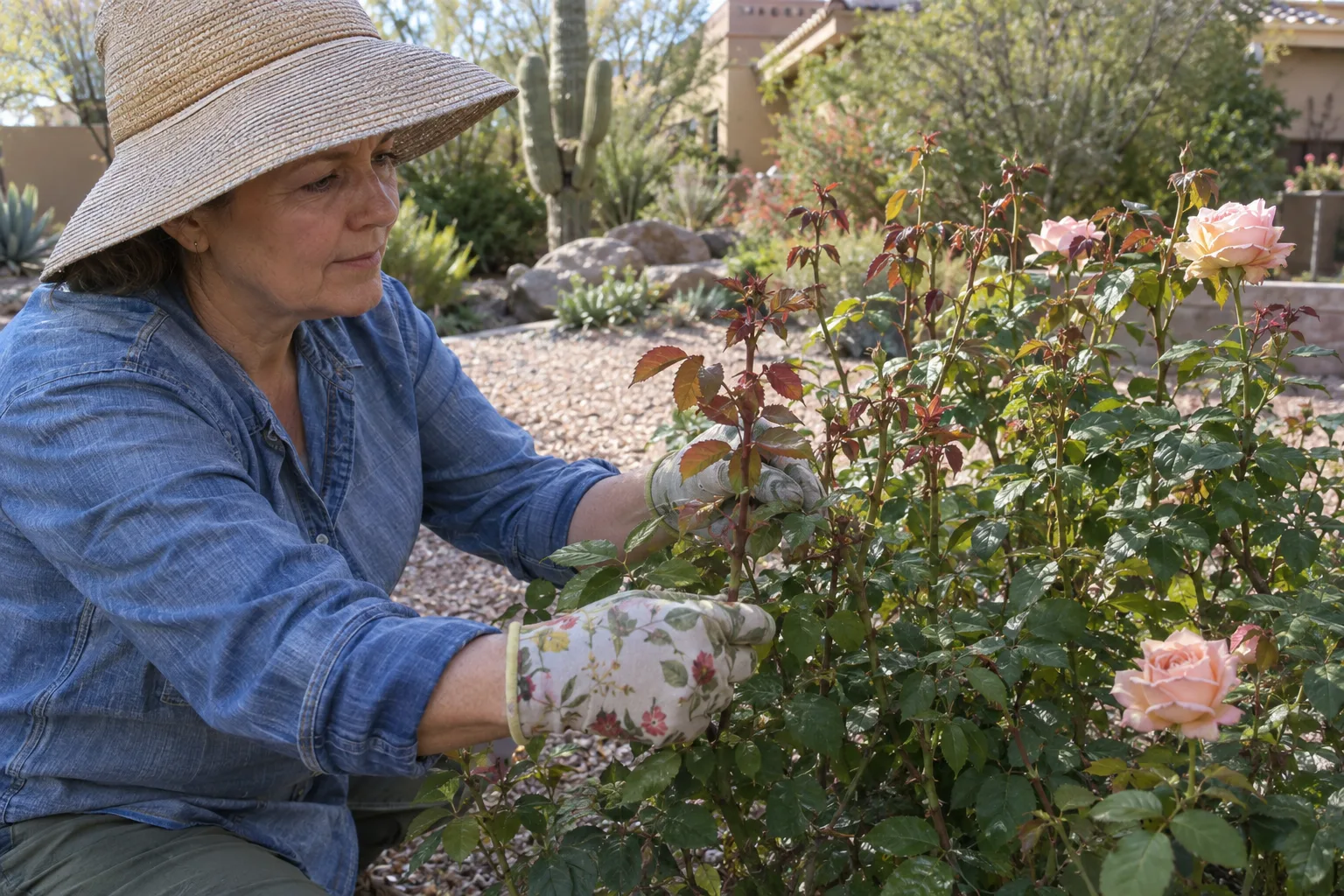
Late October through mid-December works best in the low desert. After the monsoon ends, roses push a second flush of growth that firms up into semi-hardwood by late fall, meaning stems that are flexible but no longer soft, and daytime highs have settled into the 70s and 80s. Cuttings lose less water at those temperatures and have four to five mild months to build roots.
Summer is a poor time. Cuttings taken in July or August face highs above 110°F and surface soil that runs far hotter, so even under shade cloth most fail. Spring cuttings can root, but they have a much shorter runway before the heat of May and June. Our gardening calendars show what else belongs on the fall to-do list.
Which roses are worth propagating?
Old garden roses, China roses and species roses are the best candidates. Most grow well on their own roots, root readily from cuttings, and are not under patent.
Many modern hybrid teas, floribundas and grandifloras carry plant patents, which are issued by the U.S. Patent and Trademark Office, and the patent holder controls propagation while the patent is active. Look for a “PP” number on the plant tag, and check the patent office listing or ask the grower if you are unsure. Roses you know to be old or unpatented are the safe starting point.
Roses often recommended for cuttings in the low desert include climbing Cecile Brunner, Louis Philippe, Mutabilis and Lady Banks (Rosa banksiae). Lady Banks blooms once in spring and can reach 20 feet or more, so give it room. You can see what we grow on our plants page, though availability changes week to week and season to season.
What do you need to root rose cuttings?
You need clean cutting tools, rooting hormone, small pots and a light, fast-draining mix. None of it is expensive, and a greenhouse is unnecessary.
- Sharp bypass pruners: wipe the blades with rubbing alcohol between plants so you do not spread disease.
- Rooting hormone with IBA: gel or powder both work, and gel tends to stay on the stem better in dry air.
- Pots with drainage holes: 4 to 6 inch plastic pots hold moisture longer than terracotta, which dries fast in low humidity. Our pottery and planters page shows the container range.
- Rooting mix: 2 parts coarse perlite to 1 part coco coir drains well and still holds some moisture. Avoid garden soil, which compacts in a pot and can carry disease.
- Clear bag or humidity dome: it keeps the air around the leaves humid while roots form.
- Labels and a marker: cuttings look alike after a few weeks.
How do you take and root a rose cutting?
Cut a 6 to 8 inch piece of firm, healthy stem, strip the lower leaves, dip the base in rooting hormone and set it in moist mix under a humidity cover. The steps below take about 15 minutes per cutting.
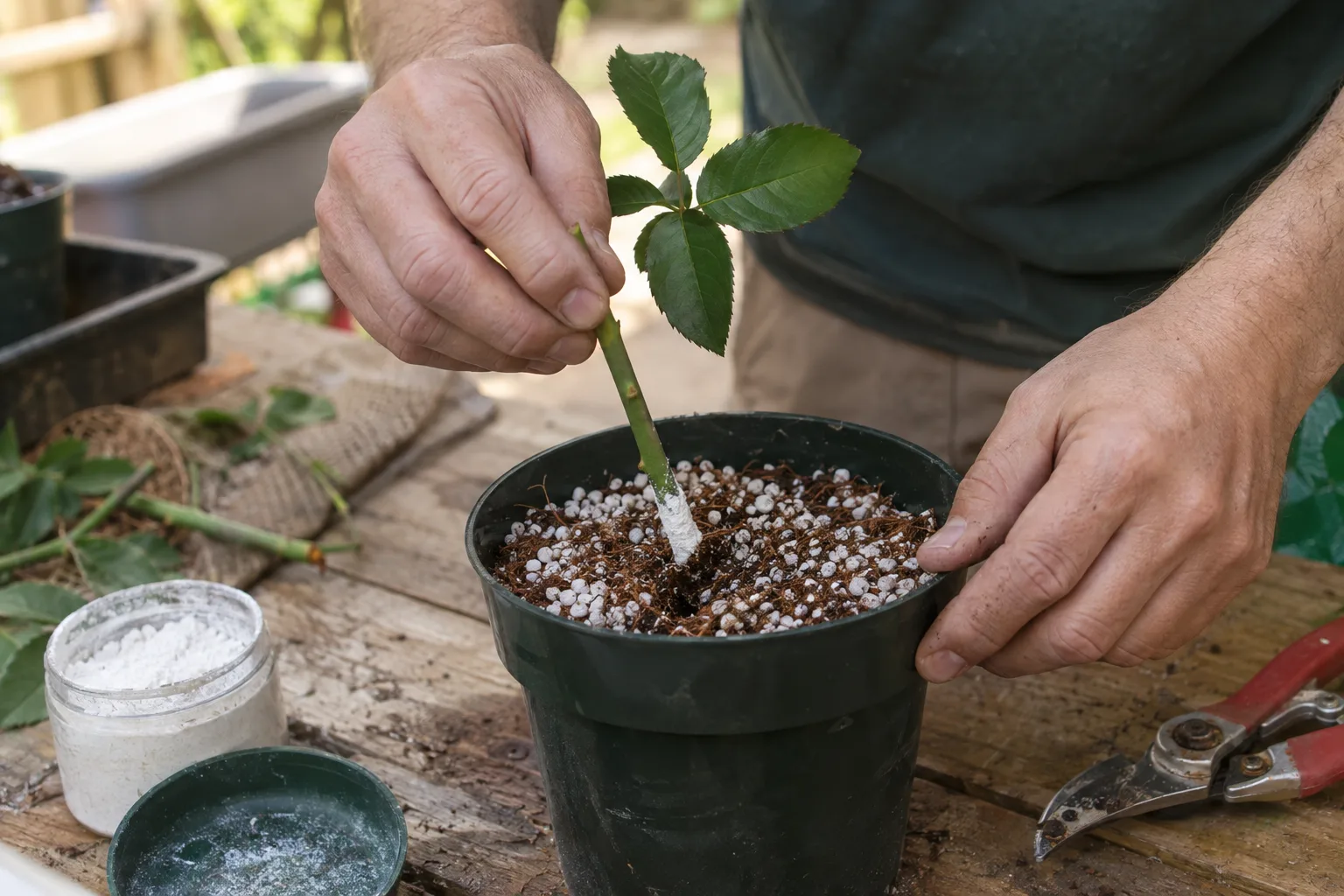
- Cut in the early morning, when the plant is fully hydrated. Choose a pencil-thick stem that has finished blooming, with firm green bark and no sign of disease or insects.
- Make the bottom cut just below a leaf node and the top cut just above one. A 45-degree angle on the bottom cut sheds water from the wound.
- Remove all leaves from the lower two-thirds. Leave two or three at the top, and cut large leaves in half to reduce water loss.
- Lightly scrape a 1 inch strip of bark on two sides at the base. This exposes the layer where roots form.
- Dip the bottom inch in rooting hormone and tap off the excess. Too much powder can slow rooting.
- Poke a hole in the pre-moistened mix with a pencil, then insert the cutting about one-third of its length and firm the mix around it.
- Cover the pot with a clear bag or dome. Set it where it gets bright light in the morning and shade after noon.
- Check the mix every 2 to 3 days. It should feel like a wrung-out sponge, and the cover should be lifted briefly to let air in.
How do you care for cuttings while they root?
Keep the mix barely moist, keep the pot out of afternoon sun, and wait. Most cuttings need 4 to 8 weeks to form roots, and slow ones take longer.
After about 4 weeks, give a cutting a very gentle tug. Resistance means roots have formed, and new leaf growth is another good sign. A firm, green stem is still alive even if it has dropped its leaves.
Once roots form, harden the cutting off over 7 to 10 days by leaving the cover off for longer each day. Going straight from a humid dome to dry desert air often causes leaf drop. After that, move the cutting into a 1-gallon pot of quality potting mix and grow it in a protected spot for another 4 to 6 weeks.
Overwatering is the most common problem at this stage. Poke a finger an inch into the mix and water only when it feels dry, which in cool months may be every 4 to 6 days. Skip high-nitrogen fertilizer until the plant has settled into its final spot.
When can I plant rooted cuttings in the ground?
February or March is the usual window for cuttings started in the fall. That gives young roses three to four months of mild weather to anchor before the heat of late May.
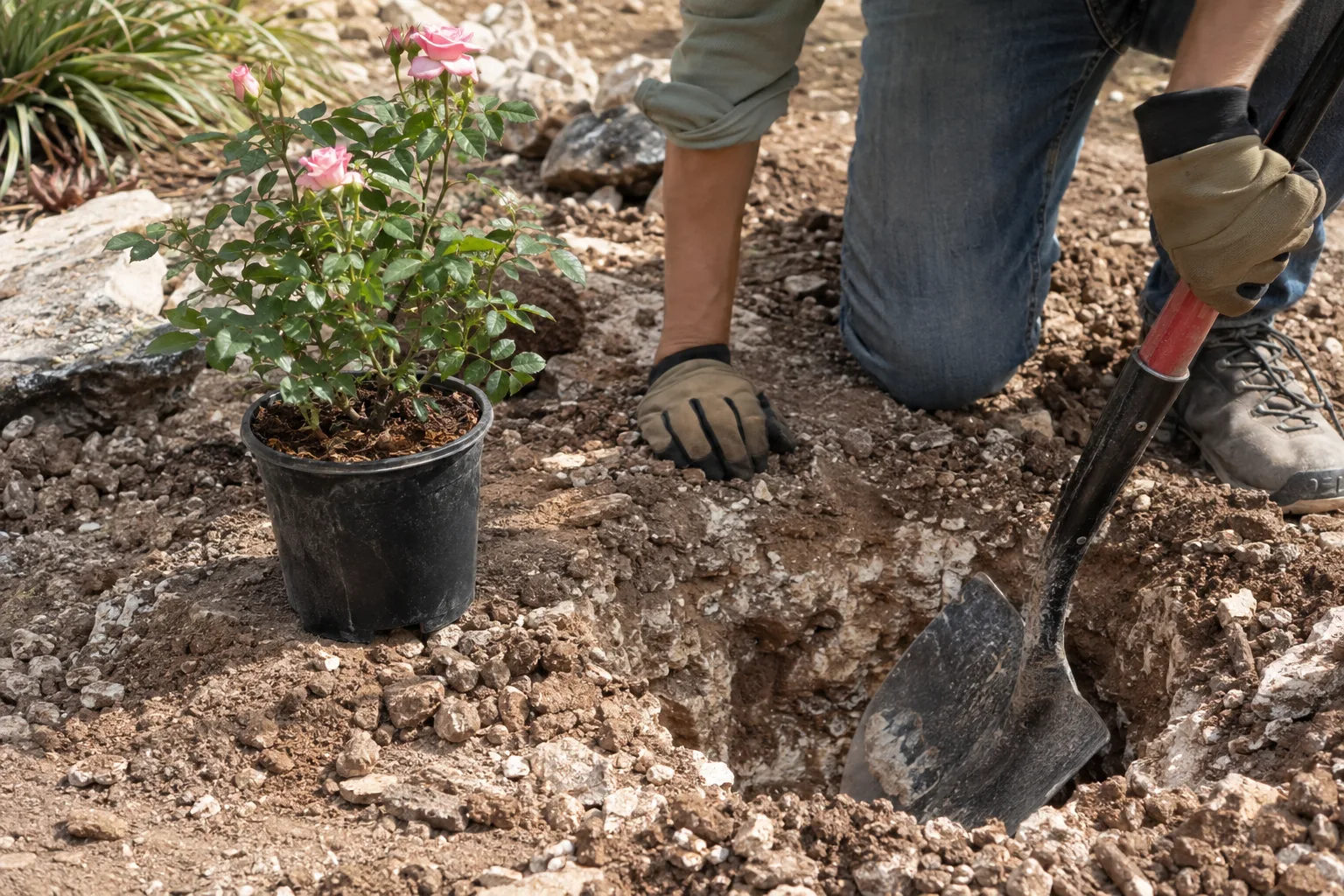
Dig the hole at least 18 inches deep and 24 inches wide, and break through any caliche layer you hit so water can drain. Queen Creek and East Valley soil is typically alkaline, often with a pH between 7.5 and 8.5, so blend about 30 percent native soil with an amended planting mix. That blend lets roots grow out into the surrounding ground over time.
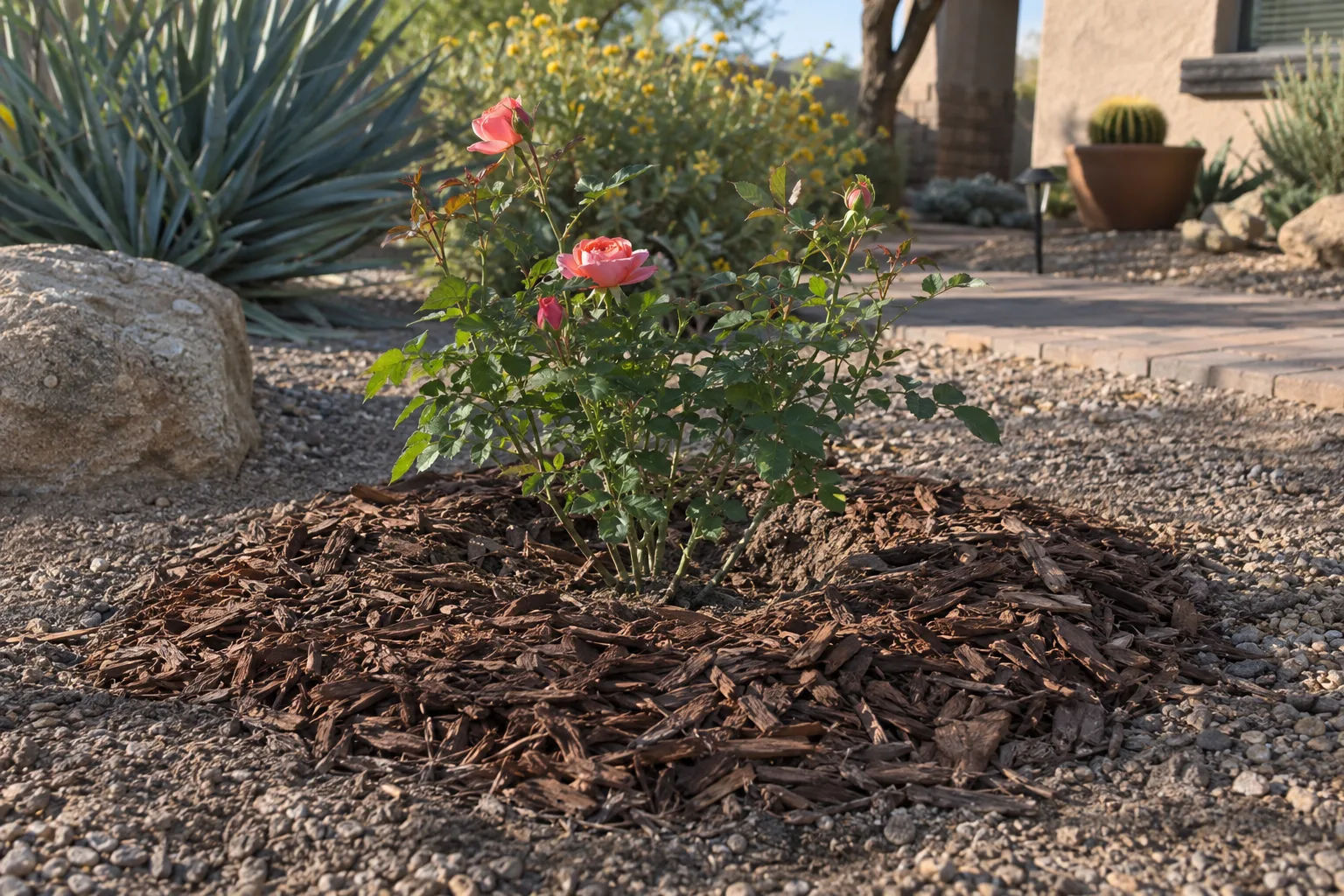
Plant at the same depth the rose grew in its pot. Water well, then add 3 to 4 inches of organic mulch, keeping it away from the crown. Wait a few weeks after a frost threat passes if you can; young plants are tender. Check our classes and events page for any gardening workshops on the schedule.
What mistakes kill rose cuttings?
Heat, soggy mix and disease cause most failures. All three are avoidable.
- Rooting in midsummer: highs above 110°F dry cuttings out faster than a humidity dome can compensate.
- Using garden soil in pots: native soil compacts and holds too much water around a cutting with no roots.
- Placing pots in afternoon sun: even November sun can cook an unrooted cutting under plastic.
- Skipping hardening off: a sudden move out of the dome causes leaf drop and sets growth back by weeks.
- Taking cuttings from sick plants: powdery mildew, rust and black spot can carry into the new plant, so propagate only from healthy wood.
Frequently asked questions
Do I need rooting hormone for rose cuttings?
No, but it helps. Roses are among the easier shrubs to root, and some China and species roses root without it. Hormone improves both speed and success rate, especially in our dry air. It is worth using on slower roses, including larger-flowered types, where the odds are lower.
What is the difference between own-root and grafted roses?
An own-root rose grows entirely on roots made by its own cutting, while a grafted rose is joined to a separate rootstock such as Dr. Huey. If an own-root rose freezes back, it regrows as the same variety. If a grafted rose dies back below the graft, the rootstock can take over.
Can I root rose cuttings in water?
Some roses will form roots in a glass of water, but the roots are often weak and struggle when moved to soil. A perlite and coco coir mix produces sturdier roots that handle potting better. If you try water, change it every few days and move the cutting to mix as soon as roots appear.
Will frost hurt new cuttings and young plants?
Light frost can damage tender new growth, and young plants have less reserve than established roses. Cover them with frost cloth on nights forecast near 32°F, or keep potted cuttings near a south-facing wall. Frost risk in our area is highest in January and early February, so plan transplanting around it.
How do I know a cutting has failed?
A failing cutting yellows, then softens, then turns black or mushy, usually over 2 to 4 weeks. Nick the stem lightly with your fingernail. Green and firm tissue means it is alive, and brown or gray tissue means it is dead. Leaf drop alone is not failure, since many cuttings drop leaves before rooting.
Is propagating your own roses worth the effort?
Yes, if you have a healthy old garden, China or species rose you love and can wait until spring to see results. Cuttings cost almost nothing and produce plants that are already proven in our soil and heat. Skip it if you want a specific modern hybrid tea blooming this season, if the variety is patented, or if you cannot check pots every few days. Visit us at the nursery in Queen Creek and we will help you choose a rose for your yard.
