
You can propagate lipstick plants in Arizona seven ways, but stem cuttings in a perlite mix under a humidity dome root most reliably. Take them from late February through April, indoors, in bright indirect light.
Key takeaways
- Take cuttings from late February through April, with October and November as a second choice.
- Cut stem tips 4 to 6 inches long, just below a leaf node, and root them in a light perlite-based mix.
- Cover cuttings with a clear bag or dome for 3 to 4 weeks, because indoor air in winter can fall below 20% humidity.
- Most cuttings root in about 2 to 6 weeks, and a rooted plant usually needs a year or more to bloom.
- Keep rooted plants indoors or in deep shade, and away from air conditioning vents and summer heat.
When should you propagate lipstick plants in Arizona?
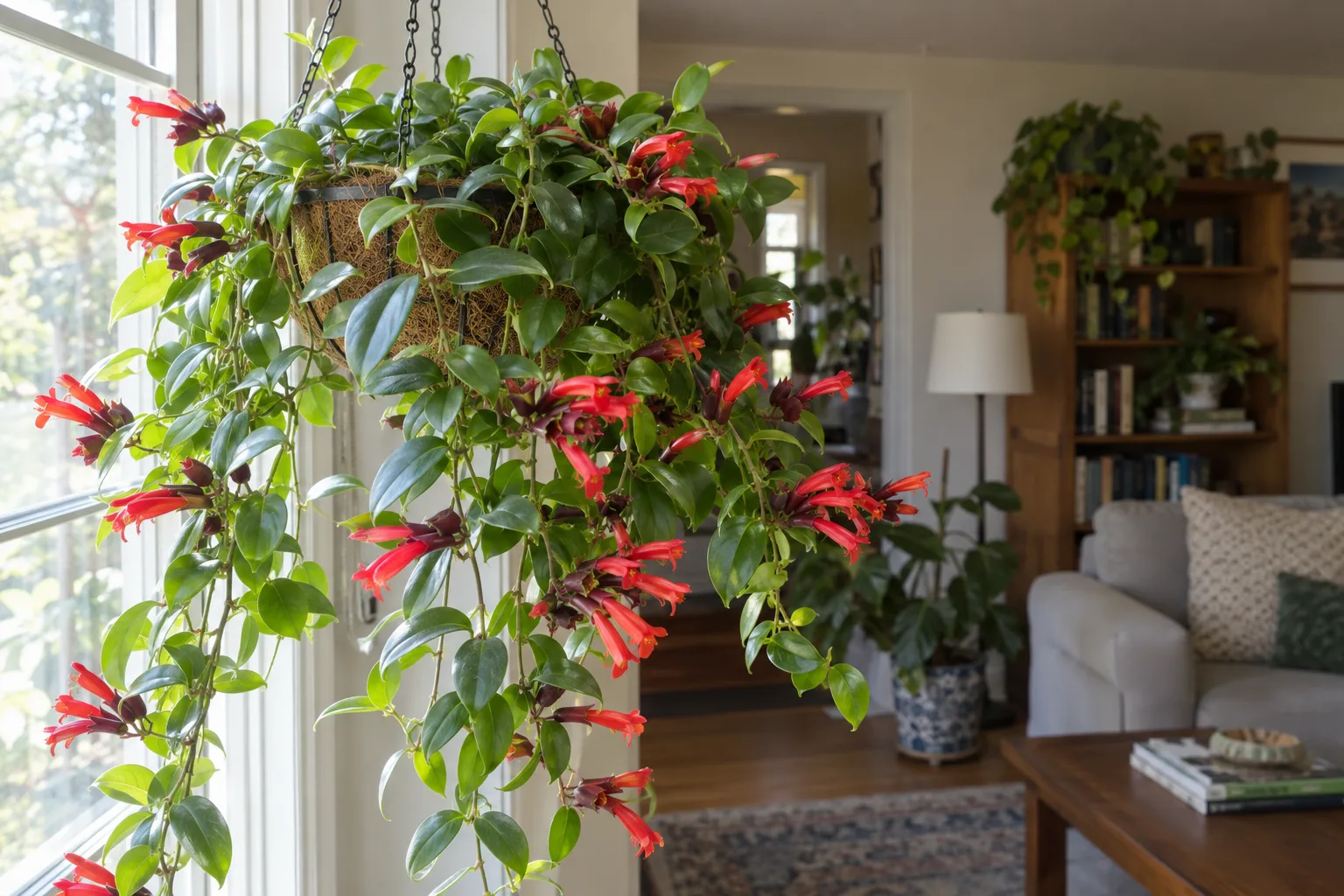
Late February through April is the best window, with October and November as a second choice. Lipstick plants (Aeschynanthus radicans) are tropical epiphytes that do best as houseplants in the low desert, and they start pushing new growth as days lengthen in late winter. Cuttings taken then have several weeks to root before summer.
Skip July and August. Warm window sills and swings in indoor humidity make rot more likely than roots. Cuttings taken in fall root slowly through winter and usually bloom a year or more later. Our gardening calendars help you plan the outdoor jobs that compete for your time in those same months.
What do you need to propagate lipstick plants?
You need a sharp clean blade, a light perlite-based mix, small pots with drainage holes and a clear cover. Everything on the list is inexpensive, and most of it is already in a typical garage or kitchen.
- Scissors or a blade wiped with rubbing alcohol before each cut, since dull or dirty tools crush stems and carry rot.
- A mix of equal parts perlite and peat moss, or straight perlite. Heavy potting soil holds too much water around a cut stem.
- Pots 2 to 4 inches wide with drainage holes. Small pots and planters work well, and a decorative pot can wait until the cutting has roots.
- A clear plastic bag, humidity dome or clear storage bin to hold moisture around the leaves.
- A spray bottle for misting inside the cover.
- Rooting hormone powder or gel, which is optional but speeds up rooting.
- A bright spot out of direct sun, such as a few feet from an east-facing window.
Which of the seven propagation methods should you use?
Stem tip cuttings in a perlite mix are the best choice for most people. Layering and division carry the lowest risk when you already own a large, full plant. The other methods suit particular situations, and each one is covered below.
Method 1: Stem tip cuttings in a perlite mix
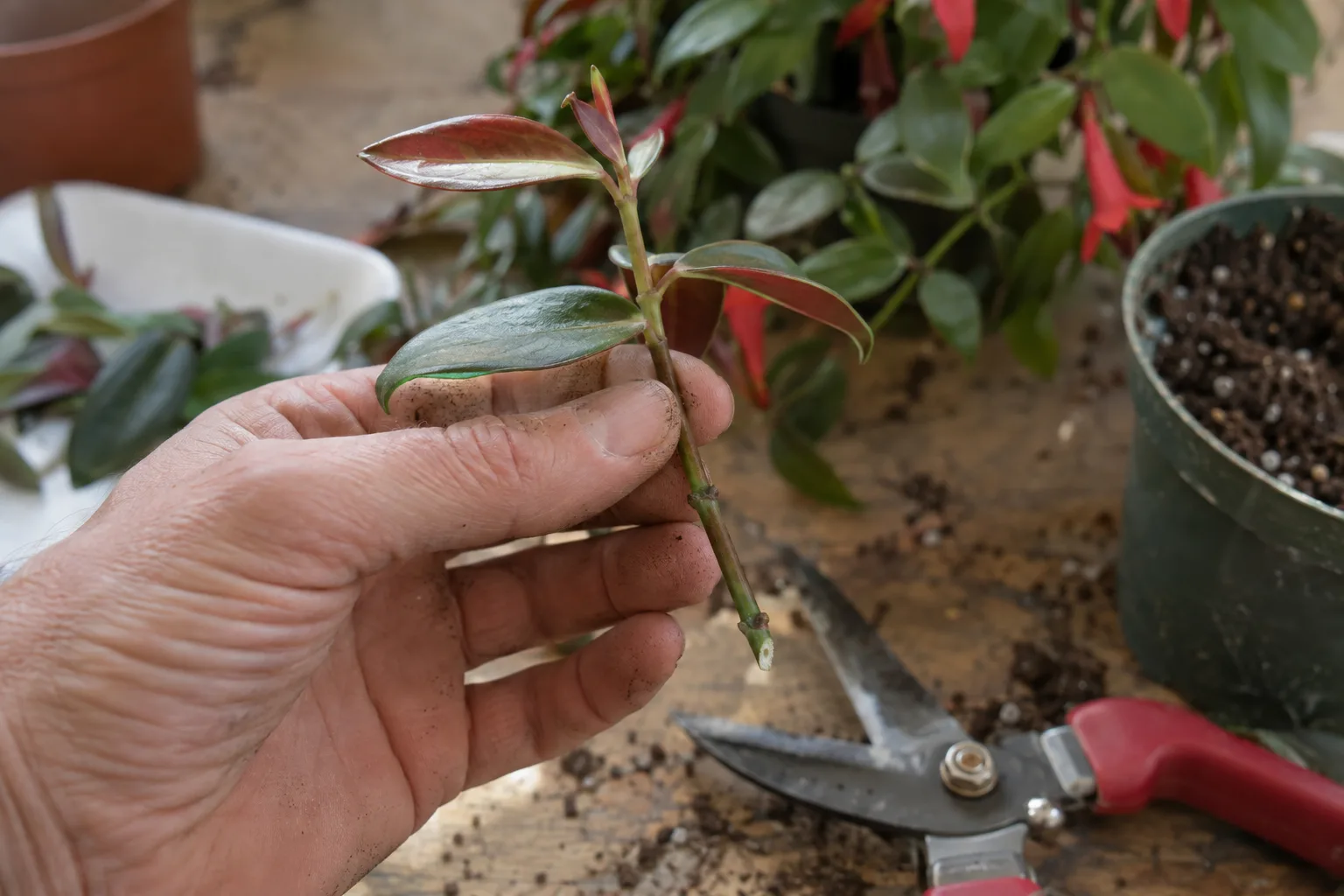
Cut a 4 to 6 inch tip just below a node, strip the lower leaves, and insert the stem about 1 inch deep into barely moist mix. Cover it. Roots usually form in about 3 to 6 weeks, and this method gives the most dependable results for the least effort.
Method 2: Stem cuttings in water
Place a 4 inch cutting in room-temperature water with only the bottom inch submerged, and change the water every 3 to 4 days. Roots often show in 2 to 4 weeks. Move the cutting into mix once the roots are 1 to 2 inches long, because longer water roots break easily and adjust slowly to soil.
Method 3: Layering
Pin a trailing stem, still attached to the parent plant, onto the surface of a small pot of damp mix set beside it. A bent paper clip holds it in place. Roots form at the contact point in about 4 to 6 weeks, and then you snip the stem free. The cutting never loses its water supply, which is why layering works so reliably.
Method 4: Leaf-bud cuttings
Take one leaf with a short piece of stem attached, including the bud at the leaf joint. Without that bud, the leaf may root but will not send up a new shoot. Insert it at a shallow angle in damp perlite. Expect roughly 6 to 8 weeks, which makes this a good choice when you have little material to work with.
Method 5: Division
A full plant with several crowns can be split when you repot it. Unpot it, tease the root mass into two or more sections with clean hands or scissors, and pot each piece separately. Early spring is the best time. Division gives you established plants right away, though only a large, healthy parent should be divided.
Method 6: Seed
Lipstick plants can form long, slender seed pods after flowering, but indoor plants do not always set seed. Sow the seed on the surface of damp seed-starting mix and cover the tray with clear plastic. Seedlings grow slowly and may take 1 to 2 years to bloom. Stem cuttings reach a flowering plant far sooner.
Method 7: Cuttings in a closed propagation box
Set a tray of cuttings in perlite and cover the whole tray with a clear storage bin. This is the same idea as a bag or dome, scaled up for 10 or more cuttings at once. Vent the lid briefly every few days to cut down on mold, and mist the inside when the walls look dry.
How do you root a stem tip cutting step by step?
Take a 4 to 6 inch cutting, plant it in damp perlite mix, and keep it covered for 3 to 4 weeks. The steps below cover the details, and the same sequence works for the box method too.
- Water the parent plant the day before so the stems are firm and full of moisture.
- Wipe your blade with rubbing alcohol and cut a tip 4 to 6 inches long, just below a node.
- Remove the leaves from the lower half of the stem and dip the cut end in rooting hormone, tapping off the excess.
- Fill a small pot with mix, dampen it, and poke a planting hole with a pencil so the hormone does not rub off.
- Set the cutting about 1 inch deep and firm the mix lightly around it.
- Cover the pot with a clear bag held off the leaves by a few sticks, or use a dome.
- Place it in bright indirect light at roughly 65 to 80°F.
- After 3 weeks, tug gently. Resistance means roots have formed. Open the cover for a few hours a day over a week, then remove it.

How do you keep cuttings from drying out in low-desert air?
Cover them. A cutting has no roots, so its leaves lose water faster than the stem can replace it, and the dry air from air conditioning or an evaporative cooler makes that gap wider. Indoor humidity in winter can drop below 20%, while lipstick plants prefer something closer to 50% or more.
Mist the inside of the cover every couple of days and keep the mix barely moist, never soggy. Keep the pot out of direct sun, even through glass, because a covered cutting heats quickly. Place it away from vents, too. A small humidifier in the room, or a group of plants set together, raises humidity a little more for established plants.
What mistakes make lipstick plant cuttings fail?
Most failures come from dry leaves above and wet stems below. A cutting in soggy mix with no cover can rot at the base while its leaves shrivel, so the fix is a cover plus a fast-draining mix.
- Skipping the cover, which lets dry indoor air wilt the leaves within a day or two.
- Using garden soil or heavy potting mix. Our alkaline, caliche-heavy native soil is a poor medium for a tropical cutting.
- Placing the pot in direct sun through a window.
- Setting cuttings near an air conditioning vent.
- Taking cuttings shorter than about 3 inches, which cannot feed themselves while they grow roots.
- Propagating in July or August when window sills run warm.
How do you care for rooted cuttings through the first summer?
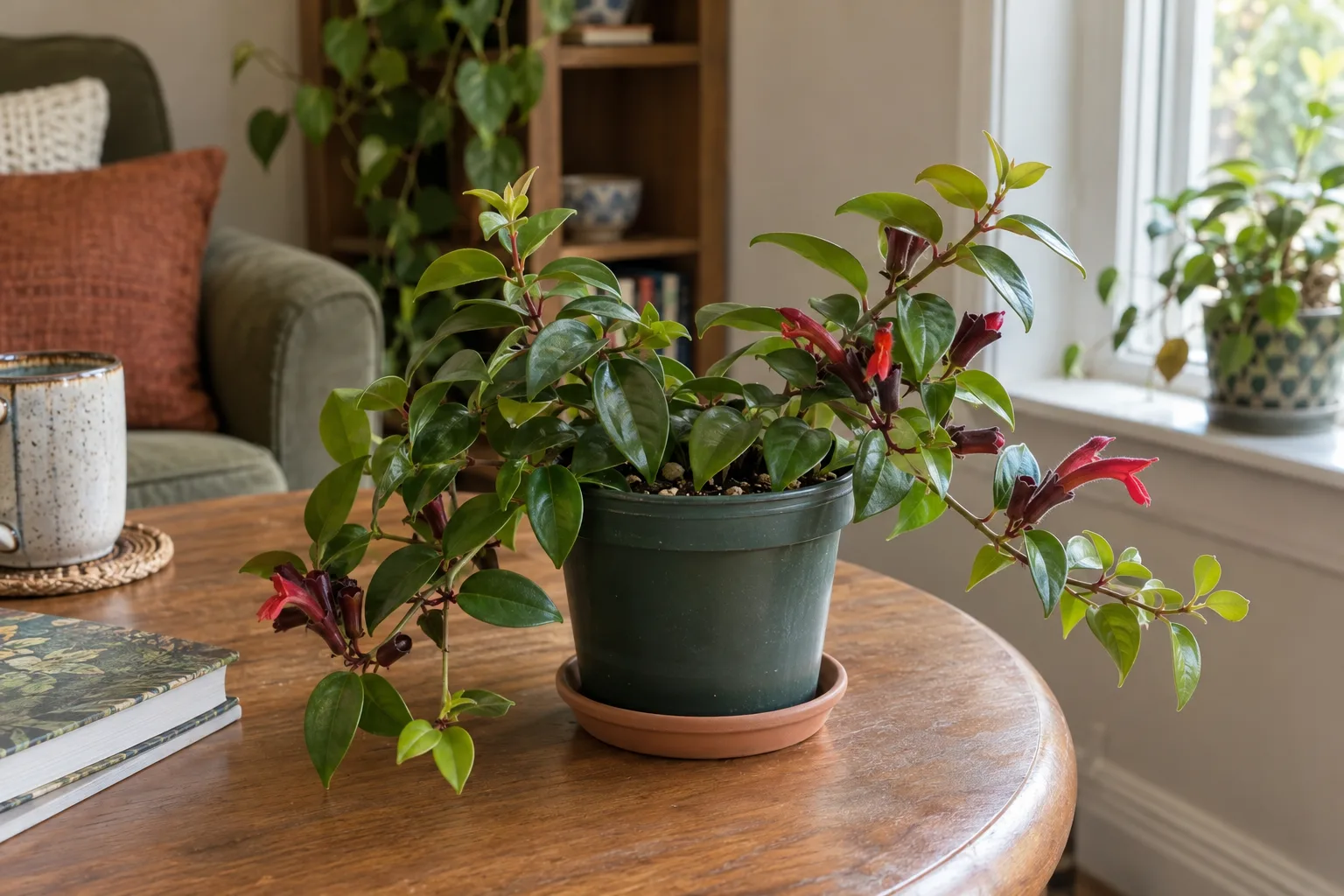
Treat them as indoor plants. Once a cutting is rooted, move it into a 4 inch pot with a mix of potting soil, perlite and orchid bark, and keep it in bright indirect light well away from vents. Water when the top inch of mix feels dry, which in an air-conditioned home may be about every 5 to 7 days.
Feed with a balanced liquid fertilizer at quarter strength every two weeks from spring through early fall. Hard water leaves white mineral crust on pots and leaves, so flush the pot with clean water about once a month. Check our classes and events page for upcoming workshops.
Frequently asked questions
Can lipstick plants live outside in the low desert?
Only in deep shade on a covered patio during mild weather. Summer highs above 110°F and winter frost both damage them. Bring them indoors before nights approach roughly 50°F, and keep them inside for the summer. Most Queen Creek gardeners get the best results keeping them indoors all year.
Why hasn’t my propagated plant bloomed yet?
Young plants usually need a year or two of growth before they bloom. Low light and heavy nitrogen feeding delay flowers, because they push leaf growth instead. Cooler nights of roughly 55 to 60°F in winter, followed by brighter light in spring, often help trigger buds.
Do I need rooting hormone?
No, but it helps. Many healthy stem tips will root without it, and water cuttings rarely use it. In dry indoor air, a little powder or gel on the cut end speeds up root formation, so it is a reasonable addition when you want a higher success rate.
What water should I use on cuttings?
Filtered or collected rainwater is the best choice for misting and watering cuttings. Our tap water is hard and leaves mineral spots on leaves, which stress tender cuttings more than established plants. Established plants handle tap water well if you flush the pot monthly.
Can I take cuttings from a plant that is in bloom?
Yes, but pick stems without flowers where you can. Remove any buds or blooms from the cutting so it puts its energy into roots. A stem that is carrying flowers has less left to spend on rooting, and it dries out faster under a cover.
Is propagating a lipstick plant worth the effort in a dry-air home?
Yes, if you have a bright spot out of direct sun and can keep cuttings covered for about a month. Stem tip cuttings cost little and give you plants for a shelf or a gift. Skip it if your only light is a dim room or a hot west window, or if you will not check moisture every couple of days. Visit us in Queen Creek and talk through your setup with our staff.