Basil, heirloom tomatoes, specialty peppers, Mexican mint marigold, desert marigold, globe mallow, aloe and nasturtium are eight profitable plants to grow and sell in Arizona. Each sells to East Valley gardeners between February and May and grows well from seed, cuttings or pups.
Key takeaways
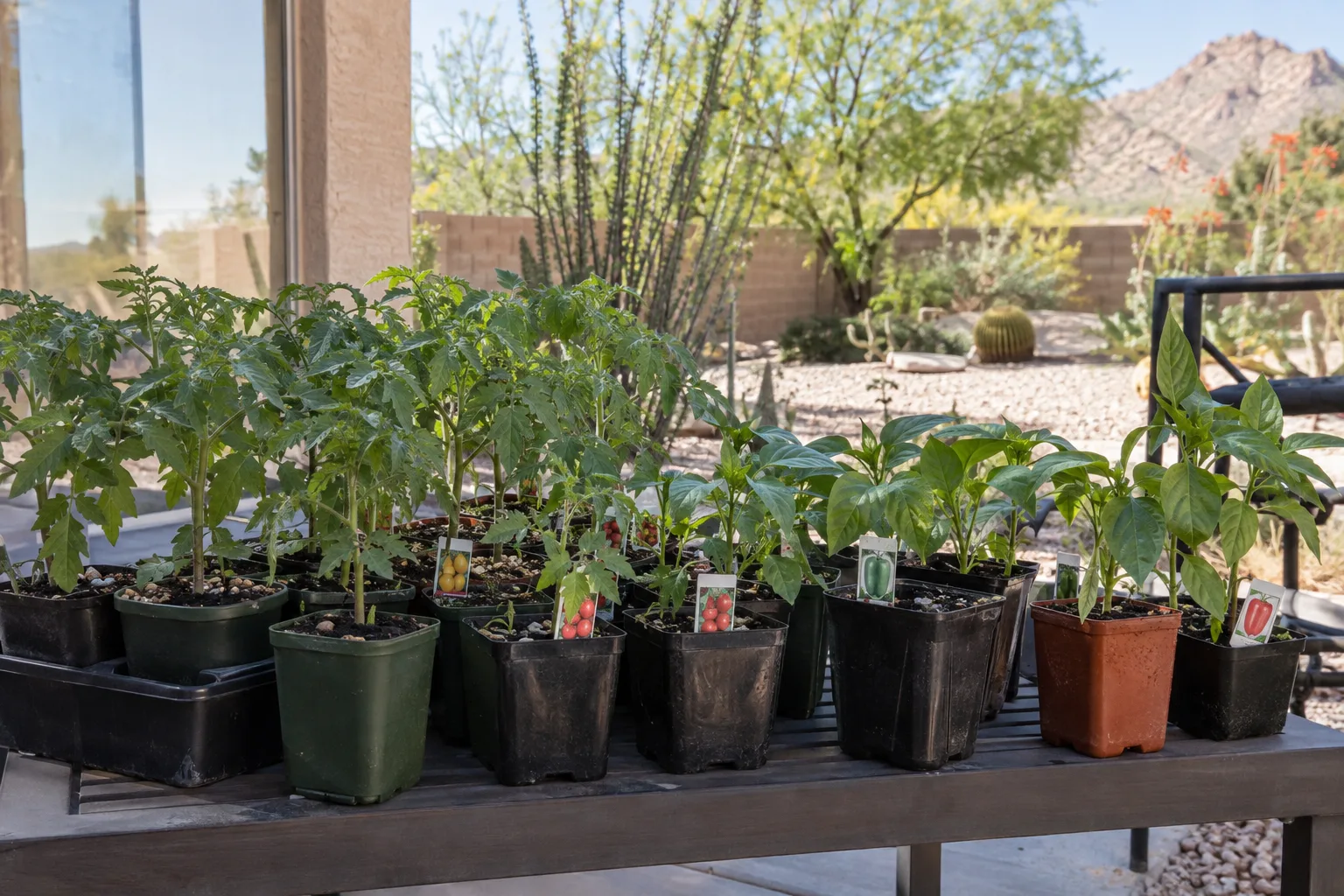
- Start tomato seed indoors 6 to 8 weeks before your sale date, which puts sowing in December and January for February and March sales.
- Pepper seed needs 8 to 10 weeks and soil near 80 to 85°F to germinate well, so a seedling heat mat pays for itself.
- Sow desert marigold and globe mallow seed from October through December if you want sellable plants in spring.
- Pot aloe pups in gritty cactus mix after frost risk passes, and let the mix dry between waterings.
- Contact the Arizona Department of Agriculture about nursery licensing before you sell plants on a regular basis.

What makes a plant worth growing to sell in Arizona?
A plant earns its bench space when it grows quickly from seed, cuttings or pups, costs little to produce, and fits what East Valley gardeners are already shopping for. Buyers here shop hardest from February through April, before daytime highs pass 100°F, so your plants need to be ready by then.
Heat tolerance matters. A buyer whose basil or tomato collapses in May will not return, so choose plants that handle alkaline soil, hard water and the first hot days. Microgreens also sell well from a spare room, and the questions below cover them.
Which herb and vegetable starts sell best in spring?
Basil, tomatoes, peppers and Mexican mint marigold lead the list because gardeners want food from small pots and want it quickly. Many of these are varieties we commonly carry in our herbs, vegetables and berries department, though availability changes week to week and season to season.
Basil (Ocimum basilicum)
Basil reaches 1 to 2 feet tall and wide in full sun and wants regular water. Genovese, Thai and lemon types are familiar to home cooks. The drawback is weather at both ends: frost kills it, and plants decline once temperatures stay above about 100°F, so sell it as early as the frost risk allows. Sow seed indoors 4 to 6 weeks ahead.
Heirloom tomatoes (Solanum lycopersicum)
Heirloom tomatoes such as Cherokee Purple, Brandywine and Black Krim grow 3 to 6 feet tall, need full sun and want deep, regular watering. Transplants go in from February to mid-March so fruit sets before summer. The drawback is heat, since blossoms drop when daytime highs top roughly 90°F and nights stay above about 75°F. Label every variety clearly.
Specialty peppers (Capsicum annuum and related species)
Peppers such as shishito, Jimmy Nardello and habanero grow 2 to 3 feet tall in full sun, with afternoon shade helping in late spring. They want regular water. The drawback is time, because seed germinates slowly and prefers soil near 80 to 85°F. Allow 8 to 10 weeks from sowing to a sellable transplant, and use a heat mat.
Mexican mint marigold (Tagetes lucida)
Mexican mint marigold, sometimes sold as Texas tarragon, grows 2 to 3 feet tall in full sun and needs only occasional deep watering once established. Its leaves taste of anise and stand in for French tarragon, which struggles in our heat. The drawback is frost, which burns the tops, though plants often resprout from the base when weather warms.
Which desert-adapted plants and flowers are worth propagating?
Desert marigold, globe mallow, aloe and nasturtium cost little to produce and match what gardeners here want: color, low water use and flowers for pollinators. Our annual flowers and foliage department shows the kind of seasonal color that sits alongside them in a bed. These are the easy ones.
Desert marigold (Baileya multiradiata)
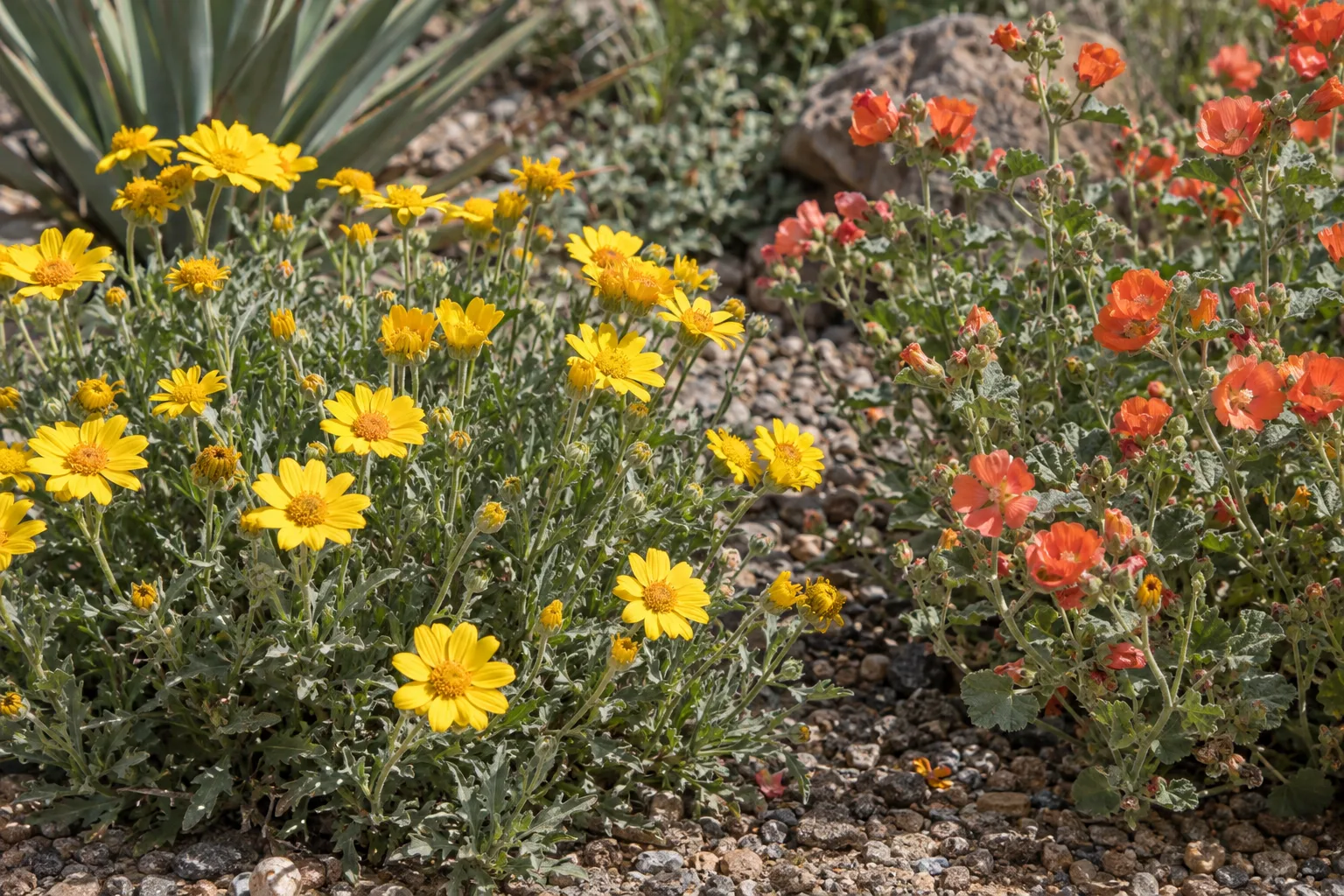
Desert marigold grows 1 to 2 feet tall and wide in full sun and needs little water once rooted. Sow seed from October through December for spring sales. The drawback is a short life and a thin look in summer heat, though it reseeds readily in a gravel bed.
Globe mallow (Sphaeralcea ambigua)
Globe mallow grows 2 to 4 feet tall in full sun, takes low water and carries orange flowers in spring. It is native to the Southwest. The drawback is a sprawling, leggy shape that a cutback after bloom tidies up. Sow seed in fall for plants ready by February or March.
Aloe (Aloe vera)
Aloe grows 2 to 3 feet tall and wide in bright light, with afternoon shade helping in summer. Water deeply, then let the mix dry for a week or two. A mature plant sends up pups you can separate and pot in cactus mix once frost risk passes. The drawback is cold and wet, since frost scars leaves and soggy soil rots roots.
Nasturtium (Tropaeolum majus)
Nasturtium forms a mound about 1 foot tall, with trailing stems reaching 2 to 3 feet. It likes sun to part shade and moderate water. Leaves and flowers are edible and taste peppery. Sow seed in December or January for February and March sales.
The drawback is heat, since plants fade once highs stay above roughly 90°F, and aphids like them. If you sell nasturtiums as edibles, treat them only with products labeled for food plants and follow the label.
When should you start seeds to sell in February to April?
Work backward from your sale date: tomatoes need 6 to 8 weeks, peppers 8 to 10 and basil 4 to 6. The University of Arizona Cooperative Extension publishes a vegetable planting calendar for Maricopa County that lists the planting windows for our area, and our gardening calendars cover the rest of the year.
| Plant | Start from | Sow or pot up | Ready to sell |
|---|---|---|---|
| Heirloom tomato | Seed indoors | Mid-December to January | February to March |
| Specialty pepper | Seed indoors with heat mat | December to January | March to April |
| Basil | Seed indoors | January to early February | March to April |
| Mexican mint marigold | Seed indoors | January to February | March to April |
| Desert marigold | Seed | October to December | February to April |
| Globe mallow | Seed | October to December | February to April |
| Aloe | Pups | March to April | April to May |
| Nasturtium | Seed | December to January | February to March |
Build in a spare week in case germination runs slow or you need a second sowing.
What soil and containers work best for starts?
Bagged potting mix beats native soil for growing starts, because Queen Creek soil is alkaline, compacted and often sits on a layer of caliche that drains poorly in a pot. Use a standard potting mix for herbs and vegetables, and cut it with extra perlite or buy cactus mix for aloe and the desert natives.
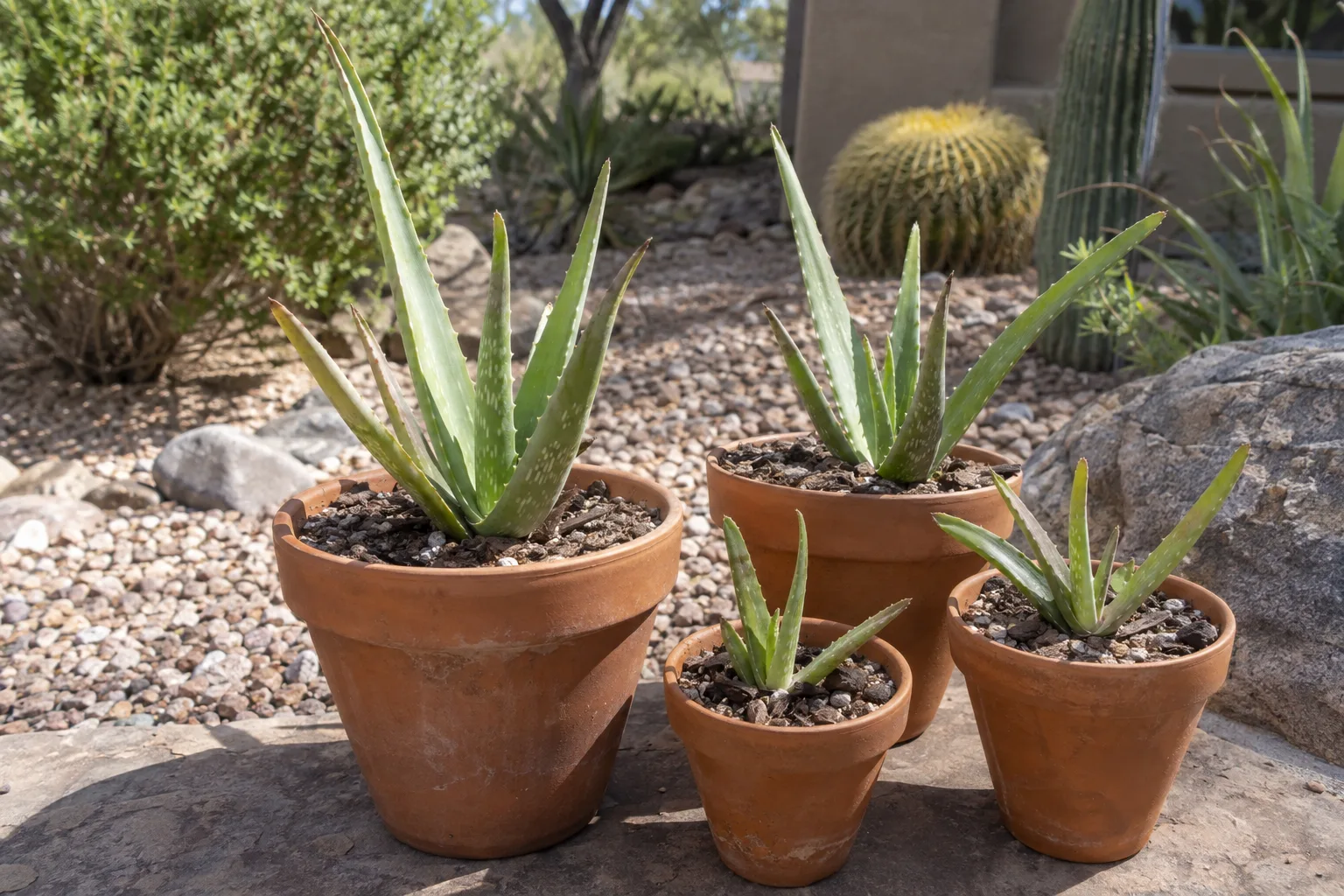
Hard irrigation water leaves mineral crust on pot rims and soil, so water until it drains from the bottom. Presentation affects what buyers will pay. Terra cotta and glazed containers from our pottery and planters department make succulents and herbs look like gifts.
Do you need a license to sell plants in Arizona?
It depends on how and where you sell. The Arizona Department of Agriculture licenses nurseries and plant dealers, and whether a small backyard seller needs a license can turn on how often you sell, so contact the department before your first sale. We cannot give legal advice, and rules and fees change.
Farmers markets set their own vendor requirements and may ask for proof of licensing, so ask the market manager early. Your city or town may also have business or sales tax rules to check.
Where can you sell homegrown plants in the East Valley?
Local farmers markets, neighborhood social media groups and plant swaps are the usual first stops, and restaurants and caterers buy edible flowers and herbs directly. Markets vary in how many plant vendors they accept, so ask the manager which plants are missing from their lineup.
A specialty such as heirloom tomatoes or desert natives gets noticed faster than a generic herb table. Check our classes and events page to see what gardening workshops are scheduled.
Frequently asked questions
Can you grow microgreens to sell all year?
Yes, because microgreens grow indoors in a spare room or garage and need no outdoor heat tolerance. Radish, sunflower, pea and broccoli are common choices, ready to cut in roughly 7 to 14 days. Use shallow trays, light watering and steady airflow to limit mold, and sell trays or cut greens the same week.
Can you grow vegetables to sell in the summer?
Most outdoor vegetables slow down or stop when highs stay above 105°F to 110°F, so summer works better for planning and propagation. Heat lovers such as Armenian cucumber, black-eyed peas and sweet potato can produce through the heat with shade and deep watering. Plan on fall transplants from September.
How do you harden off starts before selling them?
Harden off starts over 7 to 10 days so they do not scorch. Begin with 2 hours of morning sun or bright shade, then lengthen the exposure each day until plants take full sun. Keep them watered, since small pots dry out quickly in low humidity and wind.
How should you price plants you grow?
Price each plant at a multiple of what it costs you. Add seed, potting mix, container, tag, water and your time, then multiply; a common rule of thumb is three to four times material cost. Beginners often underprice from nervousness, and fair prices for healthy, labeled plants sell as readily as bargains.
Does hard water hurt seedlings?
Hard water leaves a white mineral crust on pots and soil, and it slowly raises the pH of container mix. Water thoroughly until it drains from the bottom, and flush each pot with extra water now and then. Collected rain or filtered water works well for seedlings if you have it.
Is selling backyard plants worth it for you?
It is worth it if you have a bright spot, a few hours a week from December through April, and patience for small margins. Basil, tomatoes and aloe make the easiest first sales, and desert natives suit sellers who like low water plants. Skip it if you want fast income or cannot water small pots daily, because spring seedlings dry out quickly. Visit us in Queen Creek to talk through your plan and see what is growing.