English lavender, purple coneflower, black-eyed Susan, daylily and Russian sage are popular perennials that cause trouble in Arizona gardens. Summer heat above 110°F, alkaline soil and monsoon moisture shorten their lives in the low desert, though each has a tougher substitute.
Key takeaways
- All five perennials bloom well in March and April, then decline as highs climb past 105°F to 110°F between June and September.
- Native soil here is often pH 7.5 to 8.5, and caliche commonly sits 12 to 24 inches down, so yellow leaves and root rot are the usual failures.
- Planting from October through mid-November gives roots a full cool season before the first summer.
- Autumn sage, globe mallow, desert marigold, blackfoot daisy and Parry’s penstemon each stand in for one of the five on far less water.
- Established desert perennials usually need a deep soaking about every 7 to 14 days in summer, with the soil drying out in between.
Why do popular perennials fail in the Arizona low desert?
They fail because plant tags describe cooler, wetter and more acidic places than ours. A USDA zone number reports only the winter minimum, and in Queen Creek that means a few frosty nights. It says nothing about July lows that stay in the 80s or the monsoon that runs from roughly July through September. Zone numbers hide the real problem.
Soil adds a second layer. Native soil here is alkaline, often around pH 7.5 to 8.5, which locks up iron and shows as yellow leaves with green veins. Caliche, a cemented calcium carbonate layer, often sits 12 to 24 inches down and holds water in the root zone after a storm. Hot, wet roots rot quickly. If you want perennials built for these conditions, our plants department shows the kinds of shrubs and perennials we commonly carry, and availability changes week to week and season to season.
Which five perennials cause the most trouble here?
These five are sold everywhere, look wonderful in a spring nursery display and disappoint by August. Each profile below gives mature size, light, water and the main drawback in our climate.
English lavender (Lavandula angustifolia)
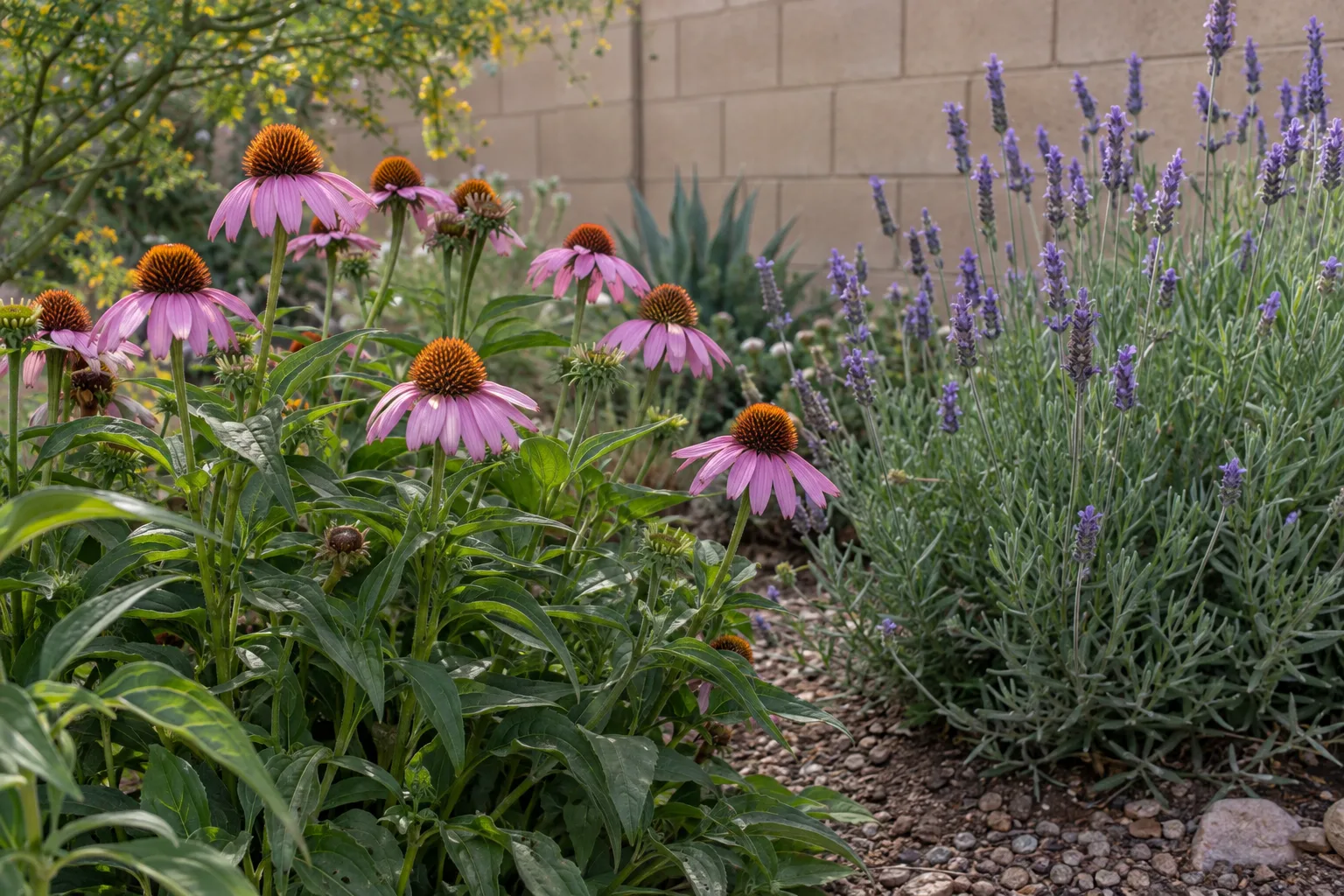
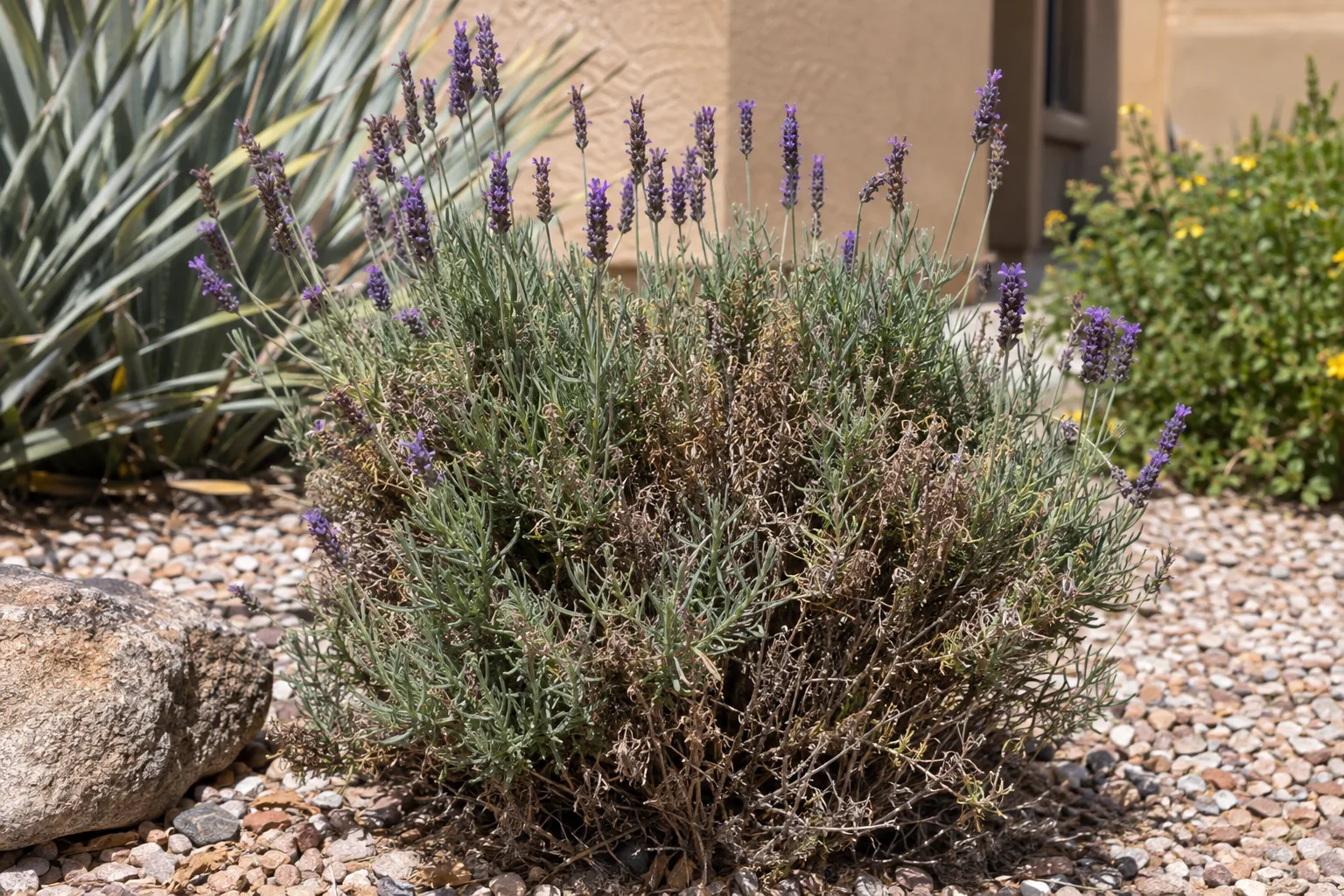
English lavender grows 2 to 3 feet tall and wide, wants full sun and little water, and comes from cool Mediterranean hillsides. It often looks excellent through its first winter and spring. Then June heat and monsoon humidity arrive, roots rot in soil that stays damp, and many plants are brown and woody by late summer. The drawback is a short life here.
Purple coneflower (Echinacea purpurea)
Purple coneflower reaches 2 to 4 feet tall and about 2 feet wide, likes full sun and moderate water, and is a native of prairies in the central and eastern United States. It blooms heavily in March and April. Many plants then go dormant or struggle in alkaline soil and summer heat, and some never return the next spring. The drawback is unreliable return.
Black-eyed Susan (Rudbeckia hirta)
Black-eyed Susan grows 1 to 3 feet tall, wants full sun and steady moisture, and is a short-lived perennial even in its home range. Here it usually behaves like an annual. Reflected heat from block walls and gravel scorches the foliage by July, and the plant sets seed early and fades. The drawback is a single season of good looks.
Daylily (Hemerocallis hybrids)
Daylilies grow 1.5 to 3 feet tall, accept full sun to part shade and want regular water. They survive in the East Valley, but the foliage yellows and flops in summer heat, and the leaf tips can burn where irrigation water is hard or high in salts. The drawback is a high water bill for foliage that looks tired for much of the year.
Russian sage (Perovskia atriplicifolia)
Russian sage reaches 3 to 5 feet tall and 3 to 4 feet wide, loves full sun and needs little water once established. It handles heat and dry air well, and some gardeners get several good years from it. Heavy, slow-draining soil and monsoon rain invite root rot, and mild winters can leave it leggy and woody. The drawback is its demand for sharp drainage.
What should I plant instead?
Choose perennials that evolved in the Southwest or in similar dry, alkaline regions. The table pairs each troublemaker with a substitute that gives a similar look or role. Baja ruellia (Ruellia peninsularis) is another purple-flowered option that tolerates full sun and heat.

| Trouble perennial | Desert-adapted substitute | Bloom window | Water once established |
|---|---|---|---|
| English lavender | Autumn sage (Salvia greggii) | Spring and fall, with a pause in peak summer | Low |
| Purple coneflower | Globe mallow (Sphaeralcea ambigua) | Spring into early summer | Low |
| Black-eyed Susan | Desert marigold (Baileya multiradiata) | Spring through fall | Very low |
| Daylily | Blackfoot daisy (Melampodium leucanthum) | Spring through fall | Very low |
| Russian sage | Parry’s penstemon (Penstemon parryi) | Late winter to spring | Low |
These are the kinds of plants we commonly carry, though availability changes week to week and season to season. Each has a drawback too. Penstemon goes quiet after spring bloom, and desert marigold self-seeds where you may not want it.
When should I plant perennials in Queen Creek?
Plant from October through mid-November, or from late February through March. Fall soil is still warm enough to push root growth, while cooler air spares the leaves, so roots spread all winter and are ready for the first summer. Late winter planting gives plants a shorter head start.
April and May planting leaves only a few weeks before 100°F days arrive. Summer planting is hard on every plant. Frost can still hit in winter, so cover tender new plants on nights forecast near freezing. Our gardening calendars lay out what to plant and do in each month.
How do I prepare soil and drainage before planting?
Dig the planting hole deeper than the root ball and look for caliche, which appears as a white or tan, concrete-like layer. If you hit it, break through with a digging bar or pick, or plant in a raised bed or a container instead. Fill the hole with water and check it later. Water still standing after a day signals poor drainage.
Desert natives do best in lean soil, so loosen the native soil and skip heavy amendment. Perennials that like richer ground can take about 20 to 30 percent compost blended into the backfill. A 2 to 3 inch layer of decomposed granite keeps roots cooler without holding extra moisture against the crown. For plants that dislike wet feet, a large pot or planter with fast-draining mix is a workable fix.
How often should I water desert perennials?
Water deeply and infrequently once the plant is established. A common starting range is every 7 to 14 days in summer and every 3 to 4 weeks in winter, adjusted for plant type, soil and exposure. Newly planted perennials need more frequent water for the first several weeks.
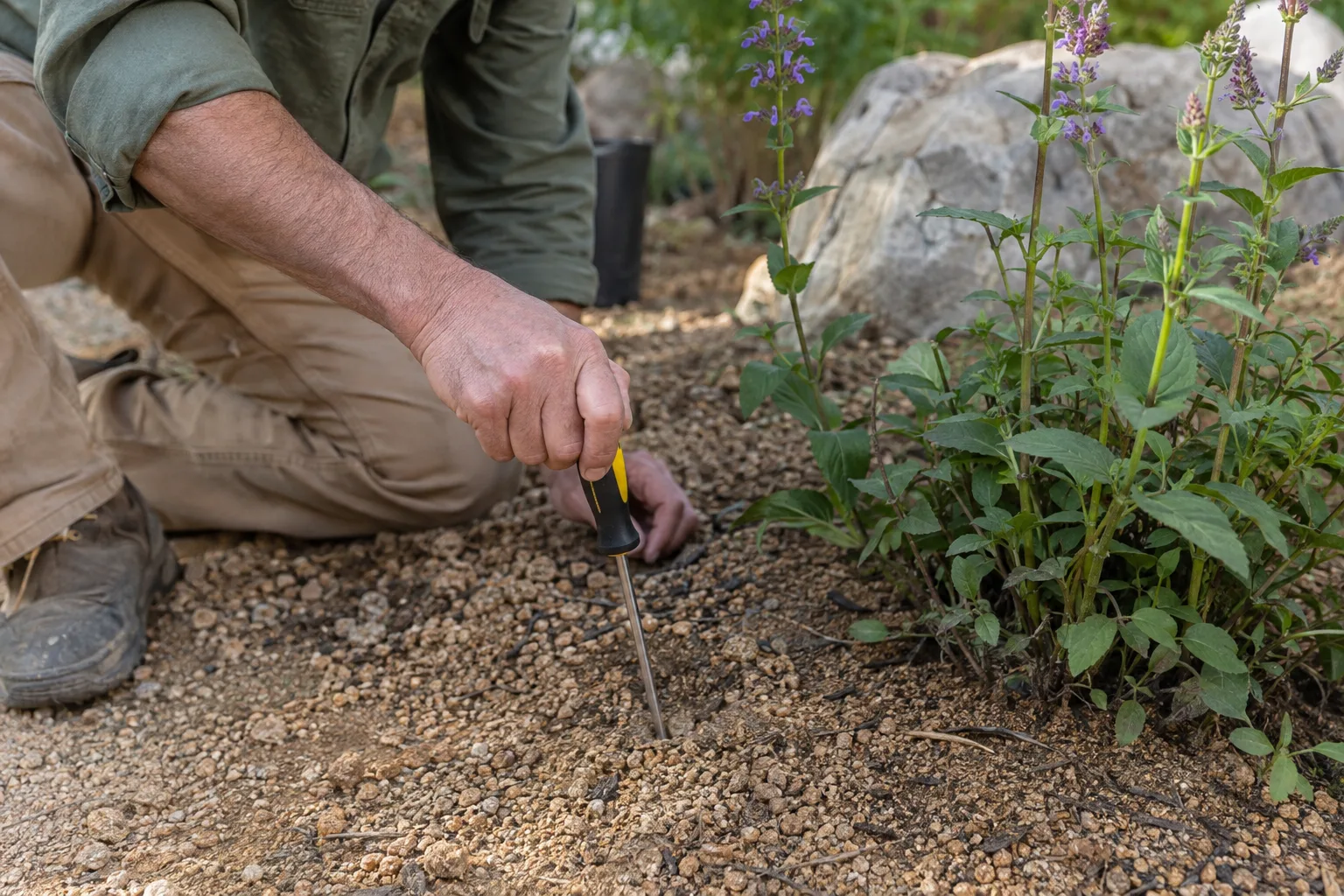
Check before you water. Push a screwdriver 6 inches into the soil, and if it comes out with moist soil clinging to it, wait a few more days. Overwatering kills more perennials here than thirst does, and the damage often shows up as sudden wilting in the heat. To learn more, see what is coming up on our classes and events page.
Frequently asked questions
Can I still grow lavender in Queen Creek?
Yes, with realistic expectations. Spanish lavender (Lavandula stoechas) and toothed lavender (Lavandula dentata) tolerate heat better than English lavender. Give them a raised bed or pot with sharp drainage, afternoon shade from a wall, and expect to replace them every few years.
Is it worth trying one of these five anyway?
It can be, as a seasonal treat. Black-eyed Susan and coneflower give cheerful spring color in a pot with afternoon shade, and you can replace them in fall. Treat them as short-term plantings, and do not count on them to anchor a bed through summer.
Does hard water hurt perennials?
Hard water can leave salts in the soil and burn leaf tips, especially on sensitive plants like daylilies. Deep, infrequent watering pushes salts below the root zone better than frequent light sprinkling. Drip irrigation that wets the soil, not the leaves, also reduces the tip burn you see on foliage.
Should I add compost to the planting hole?
For desert natives, add little or none. Plants like globe mallow, desert marigold and penstemon evolved in lean, alkaline soil, and rich backfill holds water around the roots. For non-native perennials, blend compost with the native soil so the roots do not stall at a sharp boundary.
Should you skip these five perennials entirely?
Skip them if you want low-effort color that holds through August, because all five need more water, drainage or cool weather than our summers allow. They still make sense as a cool-season treat in a pot with afternoon shade, or for a gardener who enjoys replanting each fall. Anyone planning a long border or a large bed will get better results from desert-adapted perennials. Stop by our Queen Creek nursery and we will help you match plants to your yard.