
To stop pre-chilled bulbs sprouting too soon in Arizona, keep them refrigerated until soil at 4 to 6 inches cools to about 55°F or lower, usually December to early January, then plant deep and mulch right away.
Key takeaways
- Keep bulbs in the refrigerator at about 35 to 45°F, away from apples, pears and other ripening fruit, until the morning you plant.
- Plant when early-morning soil at 4 to 6 inches reads about 55°F or lower, which in the East Valley is typically late November to early January depending on the bulb.
- Set bulbs about an inch deeper than the package directs, and cover the bed with 2 to 3 inches of mulch the same day.
- Choose a spot shaded from afternoon sun, or use a pot you can move during a warm spell.
- Treat tulips and hyacinths as one-season color, because our summers are too hot for them to rebloom reliably.

Why do pre-chilled bulbs sprout too soon in the low desert?
Bulbs sprout early because a bulb that has finished its cold treatment reads any sustained warmth as spring. Tulips, hyacinths and crocus sold as pre-chilled have already been through their cold period, so warm soil is the only trigger left. Queen Creek winter afternoons often reach the 60s and 70s, and a bed beside a south-facing block wall can hold that heat well into the evening.
Soil temperature counts for more than air temperature. Sprouts that appear in December spend the bulb’s stored energy on leaves, and the flower that follows is short, weak or missing. Early foliage is also tender, so an occasional frost or a run of 80°F days in February can damage it.
Pre-chilled bulbs are one of several cool-season color choices. If the timing sounds like more work than you want, our annual flowers and foliage department covers winter color that is easier to manage, and what we have changes with the season.
When should I plant pre-chilled bulbs in Queen Creek?
Plant when early-morning soil at 4 to 6 inches reads about 55°F or lower, which in most East Valley yards falls between late November and early January. Tulips go in last because they tolerate warm soil least. Hyacinths and daffodils can go in earlier, and crocus land in between.
| Bulb | Typical planting window | Typical package depth |
|---|---|---|
| Daffodil (Narcissus) | November to early December | 5 to 6 inches |
| Hyacinth (Hyacinthus orientalis) | Late November to mid-December | 4 to 5 inches |
| Crocus (Crocus) | Early December | 3 to 4 inches |
| Tulip (Tulipa) | Late December to mid-January | 5 to 6 inches |
Treat these dates as a starting point and let the thermometer decide. Planting in October, when daytime highs are still in the 90s, is a common reason bulbs come up in the wrong month. For month-by-month timing of other cool-season plantings, see our gardening calendars.
How do I check soil temperature before planting?
Push a soil thermometer 4 to 6 inches into the bed first thing in the morning, before the sun warms the surface. Repeat for several mornings in a row. One cool reading after a cold night tells you little, since soil can warm back up within days.
The supplies are few: a soil thermometer, compost, mulch such as shredded bark, a low-nitrogen bulb fertilizer, and paper or mesh bags for storage. A sunny bed and a shaded bed in the same yard can read several degrees apart, so test the exact spot where the bulbs will go.

How do I store bulbs until planting day?
Keep bulbs in a paper or mesh bag in the refrigerator crisper drawer at about 35 to 45°F until the morning you plant. Plastic traps moisture and invites mold. Apples, pears, avocados and other ripening fruit release ethylene gas, which can damage the flower inside the bulb, so give the bulbs their own drawer or shelf.
Check the bag every 10 days or so and throw out any bulb that feels soft or smells musty, since rot spreads to its neighbors quickly. A short, firm white root nub at the base is fine. If shoots or longer roots appear before the soil is cool enough, plant that bulb in a pot and keep it in shade.
Buying bulbs close to your planting date shortens the wait in the fridge.
How do I plant pre-chilled bulbs so they stay dormant longer?
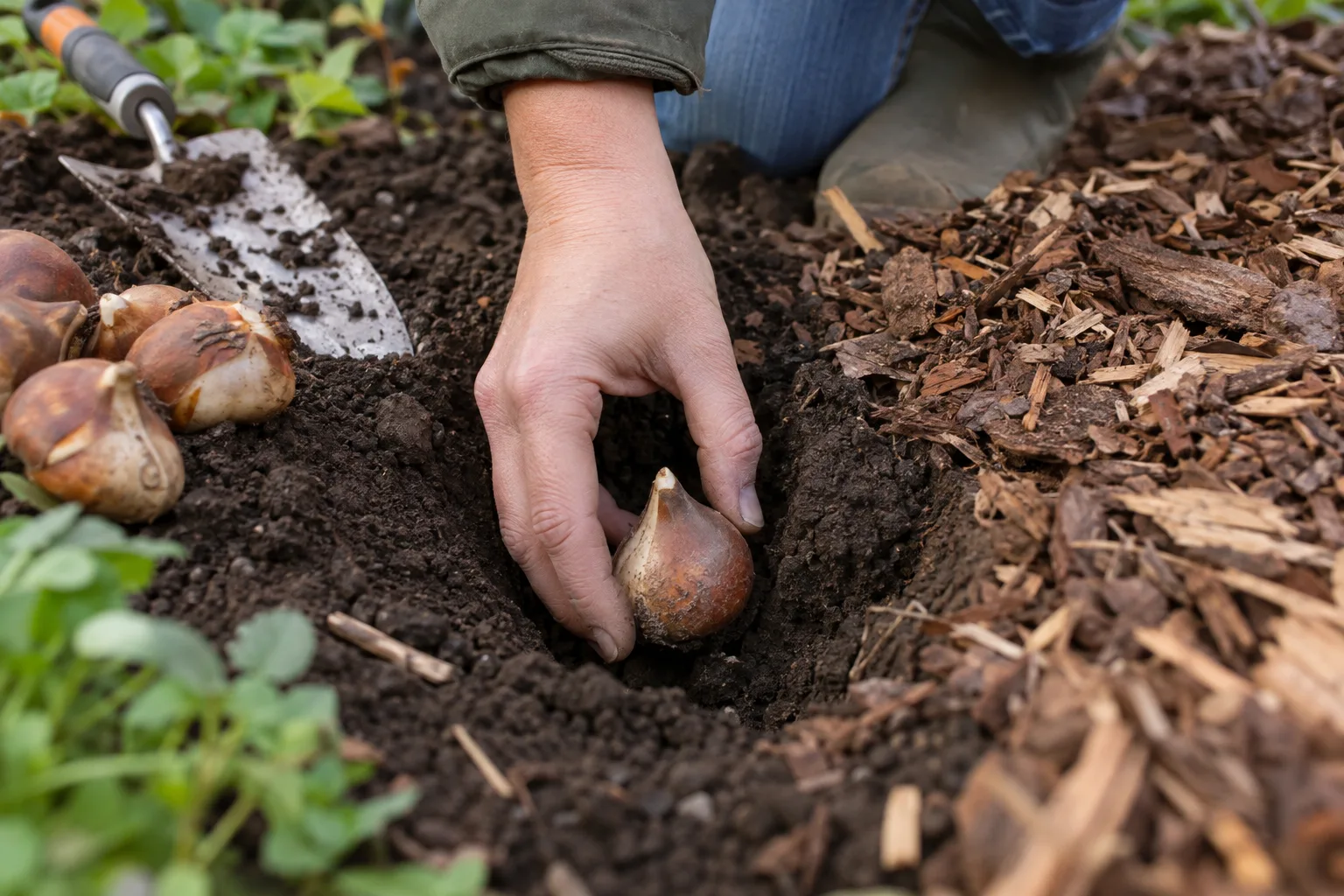
Plant them in a cool, shaded spot, a little deeper than usual, and mulch the bed the same day. The goal is to keep each bulb cool and settled for as long as possible after planting. These steps work for in-ground beds.
- Choose a bed with morning sun and shade from afternoon sun, such as the east side of a wall or the area under a deciduous tree. Avoid the hot south and west sides of the house.
- Confirm the morning soil reading is about 55°F or lower at 4 to 6 inches deep.
- Loosen the soil 10 to 12 inches deep and mix in 2 to 3 inches of compost. Our alkaline soil and caliche drain slowly, so fill a test hole with water first. If it is still standing after a few hours, pick another spot or use a container.
- Scatter a low-nitrogen bulb fertilizer in the bottom of the hole, following the label. Heavy nitrogen pushes leaves at the expense of flowers.
- Set each bulb pointed end up at the depth in the table plus about an inch, spaced a few inches apart.
- Backfill and water once, deeply, to settle the soil around the bulbs. After that, water only when the top 2 to 3 inches of soil feel dry.
- Spread 2 to 3 inches of mulch over the bed that day, keeping it from piling against any shoots.
- Check the bed every few days for the first month. Green shoots within the first two weeks mean the soil is too warm.
What should I do if bulbs sprout during a warm spell?
Add mulch, shade the bed and hold back water and fertilizer until the weather cools. Early shoots are not always lost. Many bulbs still flower when the spell passes, though the display may be shorter. A run of 78 to 80°F days in late January or February is the usual trigger in the East Valley.
- Add another 1 to 2 inches of mulch around the shoots, not against them.
- Drape 30 to 40 percent shade cloth over the bed during the warm days, and remove it when highs drop back.
- Move potted bulbs to a north-facing porch or other shaded spot.
- Skip fertilizer, which pushes even faster growth.
- Cover shoots with frost cloth on nights forecast near freezing, since winter frost does reach the low desert occasionally.
Are containers a better choice for pre-chilled bulbs?
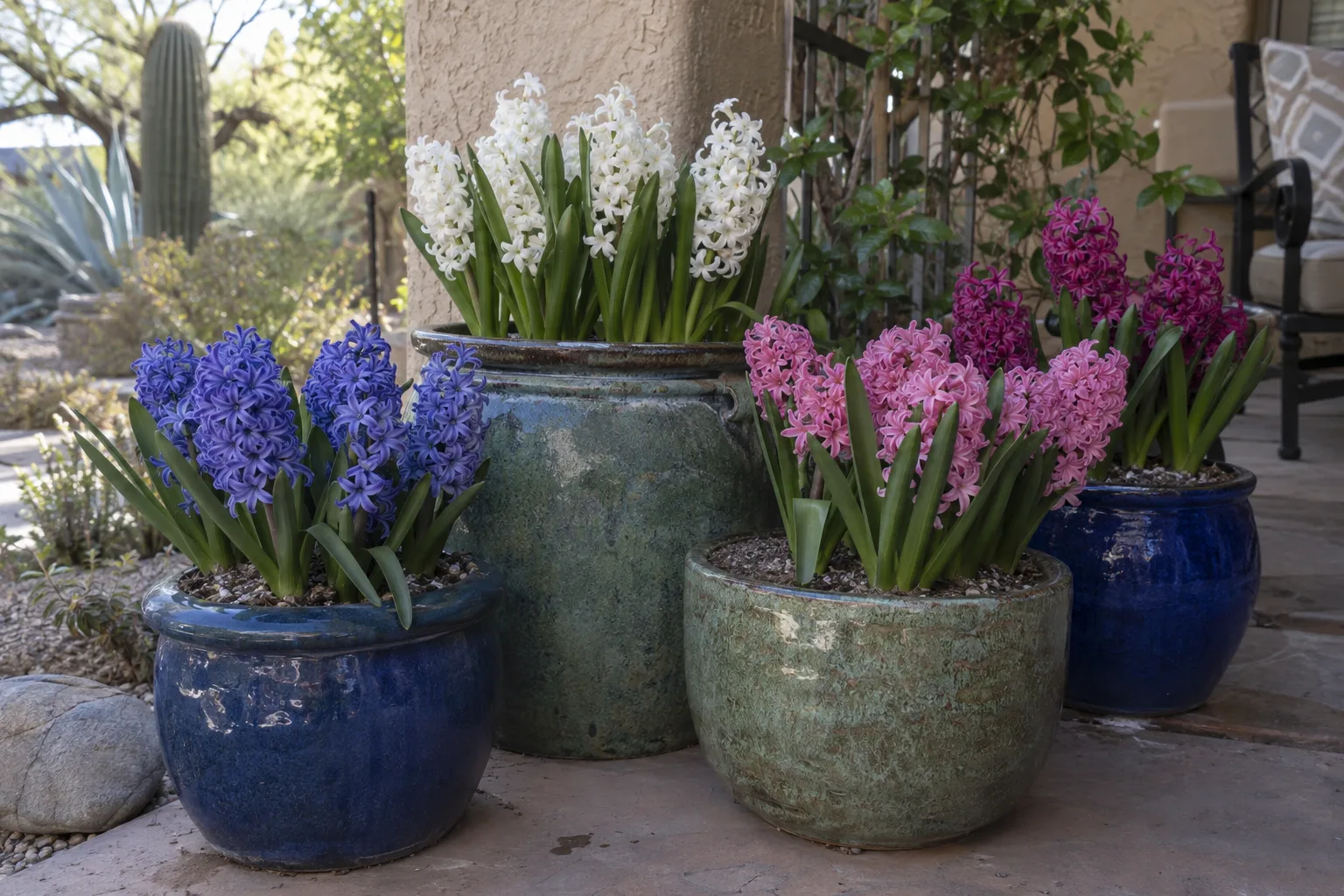
Containers give you the most control, because you can move them out of the sun the moment the weather warms. They also bypass caliche and clay completely. Use fresh potting mix, never garden soil, and choose pots at least 10 to 12 inches deep for tulips and daffodils. Shallower pots suit crocus and small hyacinths.
Pot material matters here. Terracotta dries out fast in low humidity, while glazed ceramic and thick plastic hold moisture longer. Group pots together in shade so the soil stays cooler than it would in an open, sunny yard. Browse our pottery and planters for containers with drainage holes, and make sure the bottom of any pot is never sitting in standing water.
Which mistakes cause bulbs to sprout early?
Most early sprouting traces back to a handful of habits that are easy to fix next season.
- Planting in October or early November, before the soil has cooled.
- Storing bulbs next to ripening fruit or in a sealed plastic bag.
- Planting at package depth in a warm bed, with no mulch over the top.
- Choosing a bed against a south- or west-facing wall.
- Feeding with a high-nitrogen fertilizer, or watering on a fixed schedule through cool weather.
When we schedule gardening workshops, you can find them on our classes and events page.
Frequently asked questions
Can I save tulip and hyacinth bulbs for next year?
Usually not. Summer soil in the low desert stays hot for months, which stops most tulips and hyacinths from rebuilding the flower inside the bulb. Most gardeners treat them as one-season color and replace them each fall. Daffodils are the exception, and they sometimes return when planted where they get afternoon shade in summer.
Which bulbs bloom here without any chilling?
Paperwhite narcissus need no chilling and can be planted in the fall or forced in pebbles and water indoors. Ranunculus grow from tuberous roots rather than true bulbs and are commonly planted in October and November. Both are easier choices if you do not want to manage refrigerator space or soil temperature readings.
Why did my tulips produce leaves but no flowers?
Warm planting soil is the most common cause. Bulbs planted before the ground cooled rushed through growth and spent their energy on foliage. Too little chilling, shallow planting and heavy nitrogen fertilizer can also produce leaves without blooms. Next season, check soil temperature, plant deeper, mulch right away and use a low-nitrogen fertilizer.
How often should I water pre-chilled bulbs?
Water only when the top 2 to 3 inches of soil feel dry, which in cool winter weather often works out to about once a week or every 7 to 10 days. Overwatering rots bulbs, especially in clay or caliche. After the leaves yellow following bloom, cut back on water almost entirely.
How long until pre-chilled bulbs bloom after planting?
Expect roughly 6 to 10 weeks from planting to bloom, depending on the bulb and how cool the weather stays. Hyacinths and daffodils often flower first, while tulips take longest. A cool January and February gives you the longest display, and a warm spell shortens it.
Are pre-chilled bulbs worth the effort in a Queen Creek yard?
They are worth it if you want several weeks of tulips or hyacinths in a shaded bed or a movable pot, and you are willing to check a thermometer and clear some refrigerator space. They are not worth it if you want color that returns every year or you cannot plant until the weather is already warming. Daffodils and cool-season annuals suit those yards better. Stop by our nursery in Queen Creek and we will help you choose.