
Poinsettias wilt faster in Arizona homes because dry indoor air, heating vents and hot window light pull water from the leaves quickly, while foil sleeves and overwatering rot the roots. Fix the placement, check the soil before watering, and drain the pot.
Key takeaways
- Water only when the top inch of soil feels dry, then empty the saucer within 30 minutes.
- Remove or punch open the foil sleeve the day you buy the plant, because trapped water can rot roots within days.
- Give it bright, indirect light and 65 to 72°F, about 3 to 4 feet back from a south or west window and away from vents.
- Temperatures below 50°F cause leaf drop, so protect the plant on the car ride and near drafty doors.
- Move a poinsettia outdoors only after frost danger has passed, into a spot with afternoon shade.
Why do poinsettias wilt faster in Arizona homes?
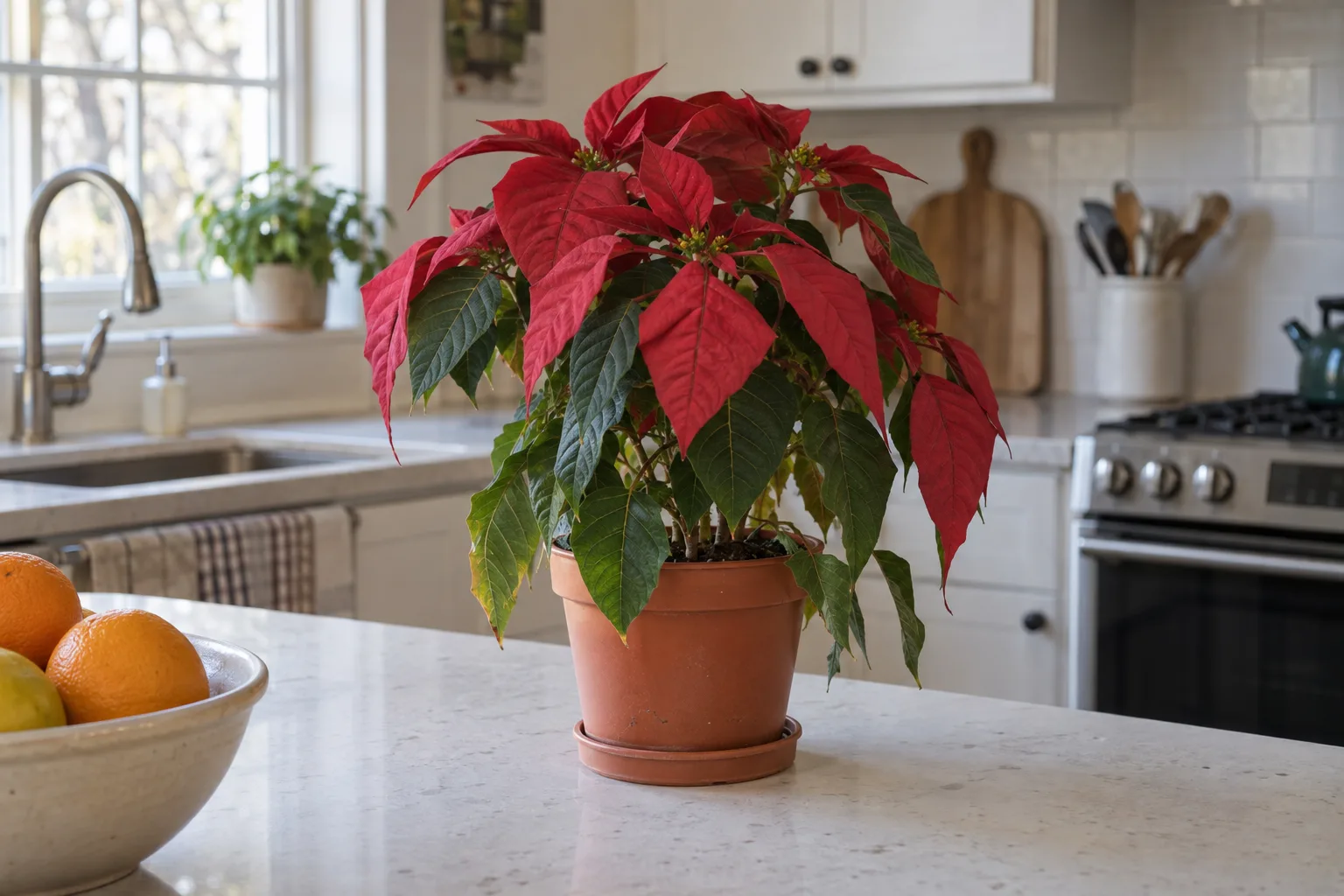
Three things speed up water loss here: very dry indoor air, strong winter sun through glass, and warm air blowing from vents. Roots cannot keep up with the leaves, so the plant droops even when the soil is damp.
Euphorbia pulcherrima comes from the seasonally dry forests of southern Mexico, where it grows as a large shrub in moderate humidity and filtered light. A Queen Creek living room with the heat running can sit well below 30% relative humidity, far drier than the plant prefers. The shift from a humid greenhouse to that air is a shock all by itself.
Cold is the other trigger. A poinsettia carried across a chilly parking lot or left in a cool car can lose leaves within a day or two once it warms up indoors.
If you are shopping for other indoor plants that handle dry air better, browse our houseplants to compare options.
How can I tell a thirsty poinsettia from an overwatered one?
Check the soil with your finger. A thirsty plant has dry soil an inch down, a light pot and evenly drooping leaves that perk up within a few hours of watering. An overwatered plant has damp soil and stays limp.
Overwatering shows up as yellowing lower leaves, leaf drop, a musty smell from the pot and soft, brown roots. Healthy roots are white to light tan and firm. Wilting that looks like thirst but does not improve after a drink usually points to rot or to a cold or hot blast of air.
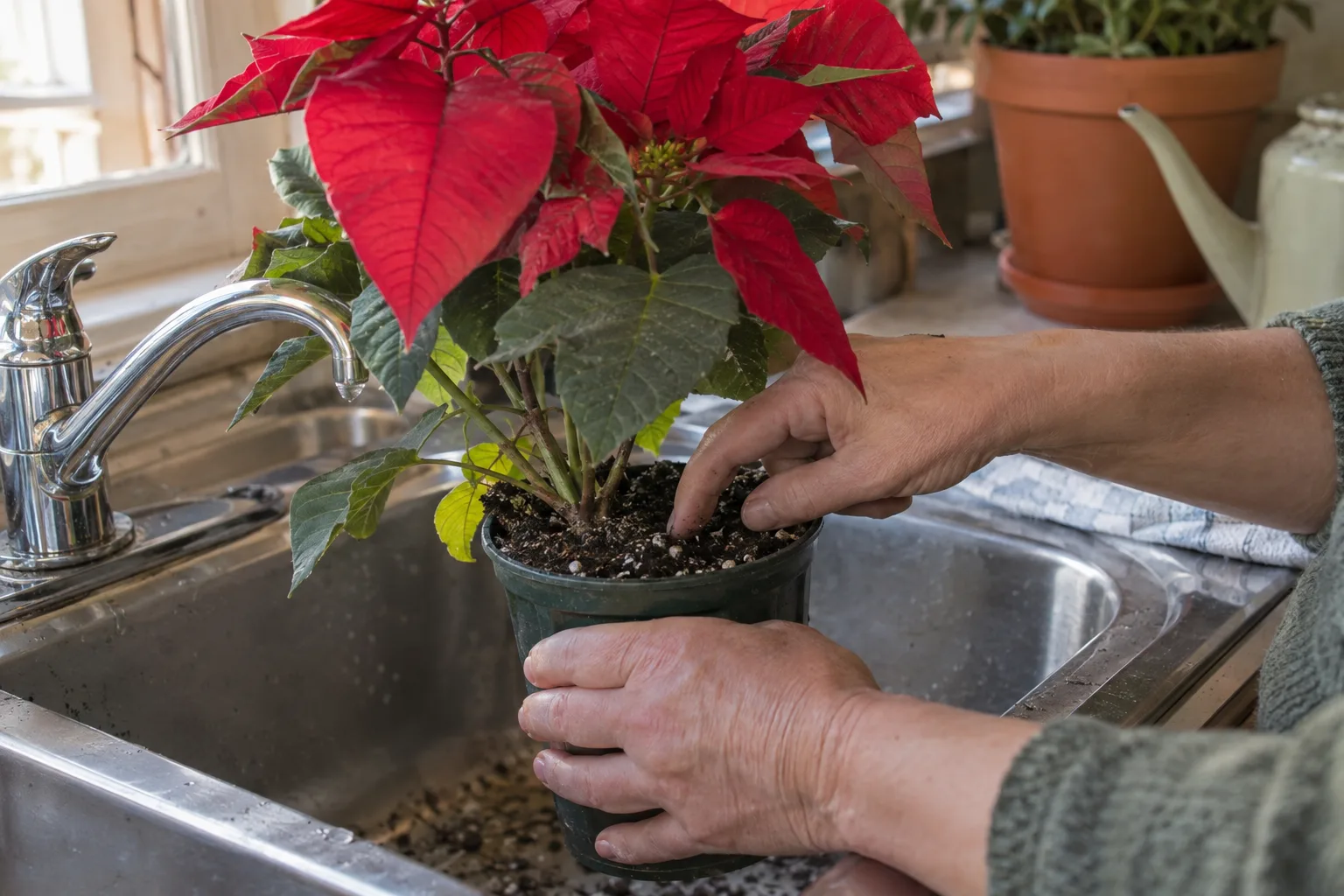
Dry homes can pull moisture from the top of the mix quickly, so the surface looks dry while the lower pot stays wet. That is why the finger test beats a calendar. In a heated room, expect to water roughly every 4 to 7 days, and adjust from there. Water slowly at the sink until it runs from the drainage holes, then let it drain fully.
What is the fastest way to revive a wilting poinsettia?
Work through the likely causes in order: drainage, soil moisture, light and heat, then roots. Most plants that have not started to rot recover within a day or two once the stress is removed.
- Take off the foil or plastic sleeve. It holds water against the pot, so the roots sit wet.
- Push a finger 1 to 2 inches into the soil. If it is dry, water at the sink until water drains freely.
- If the soil is soggy and smells musty, let it dry and move on to step 5.
- Place the plant in bright, indirect light at 65 to 72°F, away from vents, heaters and cold glass.
- If it has not improved after 24 hours, slide the plant out of its pot. Trim brown, mushy roots with clean scissors and repot in fresh, well-draining potting mix.
- Hold off on fertilizer until it stands upright and pushes new leaves.
If you want a decorative cover, set the plain nursery pot inside a bigger one, then lift it out to water and drain. Our pottery and planters include pots with drainage holes and matching saucers.
Where should I put a poinsettia in my house?
Put it in bright, indirect light, like an east window or a spot a few feet back from a south or west window. Keep it out of the path of heating and cooling vents.
Direct winter sun through glass can heat the air around the leaves well past what the plant tolerates, so a south or west window needs a sheer curtain or some distance. Interior rooms without windows are too dim, and the bracts fade and the plant declines. Cold drafts near an exterior door cause sudden leaf drop, especially when temperatures dip below 50°F.
| Location | Light | Verdict |
|---|---|---|
| East window | Bright morning light | Best choice |
| South or west window | Strong, hot through glass | Works 3 to 4 feet back or behind a sheer curtain |
| Near a vent or heater | Varies | Avoid, hot dry air strips leaves |
| Interior room, no window | Too dim | Avoid |
A pebble tray raises humidity near the plant. Fill a shallow tray with pebbles, add water below the pebble tops, and set the pot on the stones so the roots stay out of standing water.

Does hard water in Queen Creek hurt poinsettias?
It can over time. Our tap water is hard and alkaline, and repeated watering leaves a white mineral crust on the soil and pot rim. Poinsettias prefer a slightly acidic potting mix, so heavy buildup can slow their growth and dull the foliage.
Over a holiday season this is rarely the main problem. Once a month or so, run water through the pot until it drains freely, which flushes out some of the salts, and then empty the saucer. If you plan to keep the plant for months, use filtered water now and then.
Can I plant a poinsettia outside in Queen Creek?
Yes, but only after frost danger passes and only in a protected spot. Poinsettias are frost tender, and the East Valley gets an occasional winter frost, so the plant should stay indoors until then.
Check our gardening calendars for the right timing in spring. Choose a place with morning sun and afternoon shade, such as the east side of the house. Our alkaline soil and caliche drain poorly, so dig a wide hole, mix in compost and plant slightly high. Summer highs above 110°F stress the plant, so give it shade and regular water.
Getting it to color again for the holidays takes work. It needs about 12 to 14 hours of complete darkness each night starting around late September, and even a porch light can interrupt the cycle.If you are weighing outdoor shrubs instead, our plant selection is a good place to start.

Frequently asked questions
Are poinsettias poisonous to pets?
The ASPCA lists poinsettias as mildly toxic to cats and dogs, usually causing drooling, vomiting or mouth irritation. The milky sap can also irritate skin. Keep the plant out of reach, and call your veterinarian or a pet poison hotline if your pet eats a large amount or seems unwell.
How long should a poinsettia last indoors?
A healthy poinsettia usually holds its colored bracts for about 4 to 8 weeks indoors, sometimes longer with good light. The bracts are the colored leaves, and the tiny yellow flowers in the center are cyathia. If most cyathia have already dropped at purchase, expect the color to fade sooner.
Should I mist my poinsettia?
Misting adds almost no lasting humidity and leaves water on the bracts, which can invite gray mold in still air. A pebble tray or a small humidifier a few feet away raises humidity more steadily. Grouping several plants together helps a little. Keep the bottom of the pot out of standing water.
Should I fertilize a poinsettia in bloom?
No, skip fertilizer while the plant is in color. A poinsettia sold in bloom has already been fed, and extra feeding on a stressed plant pushes soft growth it cannot water. If you keep it past winter, start a balanced fertilizer in spring when new green growth appears, following the label.
Is a poinsettia worth keeping past the holidays here?
Keep it if you enjoy a project and have a frost-protected, partly shaded spot. A poinsettia makes a decent shrub in the low desert once winter ends, though it is fussier than most plants sold for our yards. Skip the effort if you want guaranteed red bracts next December, because the darkness routine is demanding. Enjoy it as a seasonal plant, compost it afterward, and buy a fresh one next year. Stop by our Queen Creek nursery and we can help you pick a healthy plant.