
Ten poinsettia care mistakes cause most holiday failures in Arizona homes: buying a stressed plant, cold car rides, drafts, poor light, dry air, trapped foil, bad watering, hard water, early feeding and tossing it in January. Each has a fix.
Key takeaways
- Keep a poinsettia between 60 and 70°F, away from exterior doors, vents and drafty windows, because temperatures below 50°F trigger leaf drop.
- Give it bright, indirect light for at least 6 hours a day, and water only when the top inch of soil feels dry.
- Remove the foil sleeve or punch large drainage holes, and empty the saucer within 30 minutes of every watering.
- Hold fertilizer until the colored bracts fade, usually late January or February, and only if you plan to keep the plant.
- Reblooming needs 14 hours of uninterrupted darkness each night, starting around October 1 and lasting 8 to 10 weeks.

What mistakes happen before a poinsettia gets home?
Two of them do: buying a plant that is already stressed, and letting it get cold on the ride home. Both are easy to prevent, and both decide how long the plant keeps its color.
Mistake 1: Buying a plant that is already stressed
Check the true flowers first. These are the small yellow or green buds, called cyathia, clustered in the center of the colored bracts, and when they are tight and closed the plant has several weeks of display left, while open ones dropping pollen mean peak color is nearly over. Then look over the rest of the plant:
- Bracts fully colored, with no yellow or brown edges
- Leaves dark green and firm all the way down to the soil line
- Soil slightly moist, not bone dry and not soggy
- No sign the plant has stood outside on a cold night
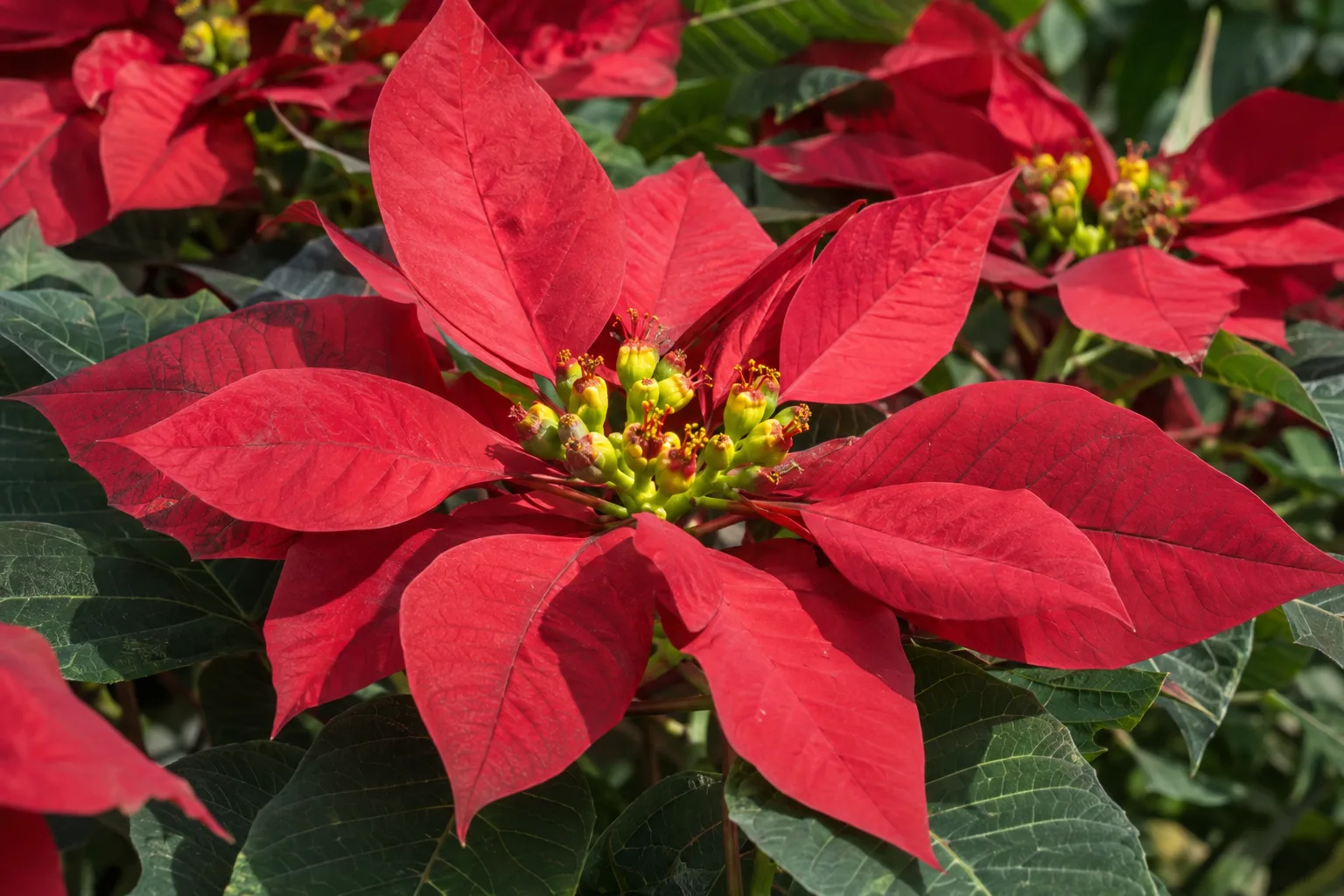
A fresh plant often lasts 6 to 8 weeks indoors, compared with 2 to 3 weeks for one sold at full bloom. Pass on tired ones.
Mistake 2: Skipping protection on the drive home
Poinsettias come from southern Mexico and suffer below 50°F. December evenings in Queen Creek often fall into the 40s, so even a short wait in a cold parking lot or an unheated trunk can start leaf drop within a day or two. Ask for a paper or plastic sleeve when it is below about 55°F, warm the car first, and drive straight home. Never leave the plant in the car overnight.
Where should a poinsettia sit in an Arizona house?
Put it in a bright room that holds steady between 60 and 70°F, a few feet from an east or south window, and away from vents and exterior doors. Three mistakes come from getting that spot wrong.
Mistake 3: Parking it near drafts and vents
A poinsettia reacts to sudden temperature swings by dropping leaves. A forced-air vent blows dry air across the foliage all day, and a front door lets in 40°F air each time it opens on a winter night. Move the plant away from both. Single-pane windows and entryways are also cold spots after dark.
Mistake 4: Giving it the wrong light
Poinsettias need bright, indirect light for at least 6 hours a day to hold their color. An east window works well, and a south window works if the plant sits back a few feet, because midday sun through glass can fade or scorch the bracts. A dim corner is just as risky, since the plant stretches and loses leaves within a couple of weeks. A day or two on a dining table during a party is fine.
Mistake 5: Ignoring dry indoor air
Winter air in the low desert is dry, and a house with the heat or air conditioning running is drier still. Crispy leaf edges and early bract drop are the usual signs. Set the pot on a tray of pebbles with water below the pot base, run a small humidifier nearby, or group the plant with other houseplants to raise the humidity around it a little. Keep the pot itself out of standing water.
How should I water a poinsettia in the low desert?
Water thoroughly when the top inch of soil feels dry, let the pot drain completely, and never leave it standing in water. Three mistakes undermine that routine: the foil wrapper, watering by the calendar, and untreated hard water.
Mistake 6: Leaving the foil wrapper on
Foil and plastic sleeves hold water at the bottom of the pot with nowhere to go. The roots sit in that pool, lose oxygen, and begin to rot within a week or two in a warm house. Remove the wrapper, or punch several large holes in the bottom and set the plant on a saucer. A pot and saucer from our pottery and planters section works if you want something that looks better than plastic. Squeeze the base of any wrapper you keep to check for pooled water.

Mistake 7: Watering on a schedule instead of by touch
In a warm, dry house a 6-inch pot may need water every 4 to 7 days, and a larger pot holds moisture longer. Push a finger an inch into the soil instead of trusting the calendar. If it is dry, water until liquid runs from the drainage holes, then empty the saucer within 30 minutes. Soft stems and yellowing leaves point to too much water. Wilting points to too little.
Mistake 8: Using hard tap water without ever flushing
East Valley tap water is hard and alkaline, and the minerals build up in a small pot over weeks. A white crust on the soil surface is the first sign, and yellow leaves with green veins can follow when the plant struggles to take up iron. Every few waterings, run water slowly through the pot until it drains out freely, using two to three times the pot volume. Rainwater or distilled water now and then also helps.
Should I fertilize a poinsettia while it is in color?
No. Feeding during bloom is the ninth mistake on the list. Growers prepare the plant to color up before it reaches you, and extra fertilizer at this stage pushes new green leaves instead of extending the display.
If you plan to keep the plant, wait until the bracts fade, usually late January or February. Then use a balanced, water-soluble houseplant fertilizer at the label rate every 2 to 4 weeks as new growth starts. If the plant is only a holiday decoration, skip fertilizer altogether.
How can I tell which mistake is hurting my poinsettia?
Match the symptom to the likely cause, then fix that one thing first. Changing five things at once makes it hard to see what helped.
- Yellow leaves that drop, with soft stems: too much water or a trapped foil wrapper (mistakes 6 and 7).
- Heavy leaf drop within a day or two: cold exposure or a draft (mistakes 2 and 3).
- Crispy leaf edges: dry air or a pot that dried out completely (mistakes 5 and 7).
- Faded or scorched bracts: direct sun through glass (mistake 4).
- Yellow leaves with green veins: mineral buildup from hard water (mistake 8).
- Tall, thin growth with leaf loss: too little light (mistake 4).
If the stems turn black and mushy at the base or the soil smells sour, rot has set in and recovery is unlikely. Send us a photo through our contact page and we can help you work out what went wrong for next time.
Can I keep a poinsettia after the holidays?
Yes, and tossing it in January is the tenth mistake. A poinsettia is a frost-tender shrub that can live for years, though it needs a bright indoor spot through winter and a protected spot outdoors once the weather warms.
Keep it in its bright window through the cold months, watering only when the top inch is dry. After the last frost has passed (our gardening calendars are a good place to check timing), cut it back to about 4 to 8 inches and move it outdoors to a spot with morning sun and afternoon shade. Summer highs above 110°F will scorch it in full sun, so keeping it in a pot lets you move it as the seasons change. In frost-protected ground it can reach 6 to 10 feet.

To rebloom, start around October 1. Give the plant 14 hours of complete, uninterrupted darkness each night, in a closet or under a box, and bright light for the remaining hours. Keep that up for 8 to 10 weeks. Even a lamp turned on in the dark period can delay color, so be strict about it.
Frequently asked questions
Will frost kill a poinsettia planted in the ground in Queen Creek?
Yes, frost damages poinsettias, and Queen Creek gets occasional winter frost. A plant in the ground needs a protected spot, such as against a south or east wall or under an overhang, and a cover on nights forecast near freezing. Many gardeners keep them in pots so they can move the plant inside on cold nights.
Should I repot a poinsettia right after buying it?
Usually not. The plant is in bloom and repotting adds stress, so leave it in its original pot through the holidays. If roots circle the inside of the pot by spring, move it up one size into a well-draining potting mix. Make sure the new pot has drainage holes.
Is some leaf drop normal on a new poinsettia?
A few lower leaves dropping in the first week or two is normal while the plant adjusts to your home. Heavy drop, or leaves falling from the whole plant, points to a problem such as cold, a draft or soggy roots. Check temperature and drainage first, because those two causes act fastest.
Can a poinsettia sit on a patio table during a holiday party?
For a few daytime hours, yes. December days in Queen Creek often reach the 60s or low 70s, which a poinsettia tolerates in bright shade. Bring it inside before sunset, since nights regularly drop into the 40s, and keep it out of direct afternoon sun.
Is a poinsettia worth keeping alive in an Arizona home?
For most households, yes, as a holiday plant that holds color for six weeks or more once you avoid the mistakes above. Keeping it for a second season pays off only if you have a bright window, a frost-protected spot outdoors and patience for the October darkness routine. If that sounds like too much, enjoy it through the season and compost it in January. A Christmas cactus often suits dry-air homes better. Stop by our Queen Creek nursery and ask us about holiday plants.