
The most common plum tree mistakes in Arizona are planting a high-chill variety, siting the tree in reflected heat, watering shallowly, ignoring alkaline soil, pruning badly, overfeeding nitrogen, and leaving blossoms exposed to frost. Each one is fixable.
Key takeaways
- Choose a plum rated for roughly 250 to 400 chill hours, because varieties that need 700 or more bloom unevenly and set little fruit in the low desert.
- Give the tree at least 8 hours of sun, but keep it out of reflected heat from west-facing walls and concrete on summer afternoons.
- Water deep and less often, wetting the soil 18 to 24 inches down on a young tree, and move emitters outward as the canopy grows.
- Yellow leaves with green veins usually mean iron chlorosis from alkaline soil (often pH 7.5 to 8.5), which chelated iron can correct.
- Cover the tree with frost cloth when a January or February forecast calls for lows near 28°F, especially once blossoms open.

Which plum varieties work in the low desert?
Pick a low-chill plum, one that needs roughly 250 to 400 hours below 45°F. Mistake 1 is planting a variety bred for cold climates, which can need 700 hours or more to wake up properly. Our winters deliver a few hundred at most, so a high-chill tree blooms unevenly, drops flowers and sets little fruit. It can look healthy and still produce almost nothing.
Santa Rosa, Methley and Beauty are Japanese-type plums often grown in the East Valley. They are the kind of tree we commonly carry, though availability changes week to week and season to season, so browse our fruit trees and ask us what is available.
| Variety | Approximate chill hours | Pollination note |
|---|---|---|
| Santa Rosa | 300 to 400 | Often sets some fruit alone, more with a partner |
| Methley | 250 to 300 | Self-fertile, and can pollinate other plums |
| Beauty | 250 to 300 | Usually fruits more heavily with a second variety nearby |
Always read the tag for the chill-hour rating before you buy. If the tag lists none, ask. A tree with the right rating is the single biggest step toward fruit, because no amount of fertilizer or water makes up for a tree that never gets enough cold.
Where should I plant a plum tree in Queen Creek?
Plant it in a spot with 8 or more hours of sun that is shielded from the hottest afternoon reflection. Mistake 2 is tucking a young tree against a west-facing block wall or beside a patio, where July surfaces can pass 130°F and bake the bark and leaves. Scorched leaf edges and cracked bark are the usual result.
The east or southeast side of a wall, or a spot that gets shade after about 2 or 3 in the afternoon, works better. Young trunks sunburn easily, and many growers paint them with diluted white interior latex paint to reflect the sun.
Drainage matters as much as light. Dig a hole about 24 inches deep, fill it with water and check it later. If water is still standing the next day, the site has poor drainage or caliche, and the roots will suffer through monsoon storms. Choose another spot or break through the layer first.

How often should I water a plum tree in Arizona?
Water deeply and infrequently, enough to wet the soil 18 to 24 inches down around a young tree and deeper around a mature one. Mistake 3 is a short daily drip cycle, which keeps moisture in the top few inches and teaches roots to stay shallow, where summer heat above 110°F dries them fast.
Established trees generally want a deep soak about once a week in the hottest months and every two to three weeks in winter. Sandy and clay-heavy soils differ, so check instead of guessing. Push a long screwdriver or soil probe into the ground a day after watering. If it slides in easily to the depth you want, the schedule works.
As the canopy spreads, move the emitters outward so they sit near the drip line, where the feeder roots are. Steady moisture while fruit is sizing in spring also helps prevent splitting. Skipping water for weeks and then flooding the tree causes the same split fruit.
Why are my plum tree leaves turning yellow?
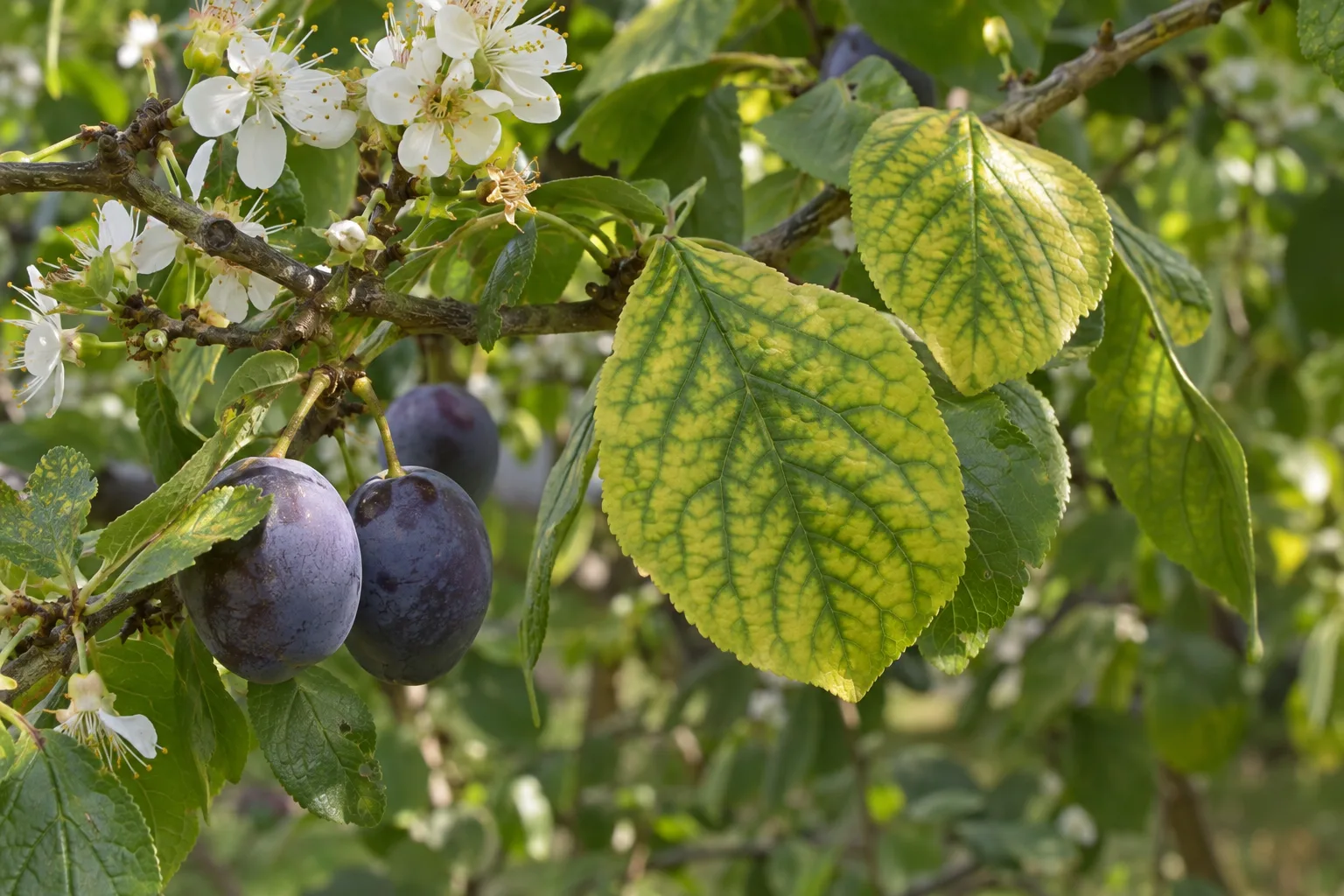
Yellow leaves with green veins, usually on new growth, point to iron chlorosis. Mistake 4 is ignoring the soil. Most of our ground is alkaline, often pH 7.5 to 8.5, and at that level the iron is present but locked up where the roots cannot take it in.
Chelated iron labeled for high-pH soil gives the tree a form it can use, applied at the rate on the label. Ordinary iron sulfate works poorly in alkaline ground. Sulfur can lower pH over time, but caliche soils resist change, so treat it as a slow project and not a quick fix. Send photos of the leaves through our contact page if you want a second opinion.
Caliche is the other soil trap. This cement-like layer often sits 12 to 30 inches down and stops roots from anchoring. Before planting, break through it with a digging bar or tile spade so water drains below the root ball. Backfill mostly with the native soil you removed, mixed with a modest amount of compost.
When should I prune a plum tree in Arizona?
Prune in winter while the tree is dormant, roughly late January to February, just before buds swell. Mistake 5 is either never pruning or cutting hard at the wrong time. An unpruned plum becomes a dense tangle that shades its own fruiting wood, and crowded branches stay damp enough to invite brown rot.
Aim for an open vase shape, with three to five main branches spreading from a short trunk. Remove dead wood, crossing branches and straight vertical water sprouts. Take no more than about a quarter of the canopy in a year. Young trees need only light shaping.
Skip heavy cuts in summer. Opening the canopy suddenly exposes bark that has been shaded, and it sunburns quickly under 110°F sun. Our classes and events page is a good place to look for hands-on fruit tree sessions.
How should I fertilize a plum tree here?
Use a balanced fruit tree fertilizer at the label rate, split between late winter and spring. Mistake 6 is reaching for a high-nitrogen lawn product, which pushes leafy shoots at the expense of flowers and fruit. The tree looks lush and sets very little.
- Late winter, as buds begin to swell: first feeding.
- Spring, as fruit begins to size: second feeding.
- Summer heat above 110°F: hold off on nitrogen, since soft new growth burns.
Look for a formula that includes micronutrients such as zinc and iron, which alkaline soil tends to lock up. Water the tree well before and after you apply fertilizer. Newly planted trees need little feeding in their first months while roots establish, so follow the product label for young trees.
How do I protect plum blossoms from frost?
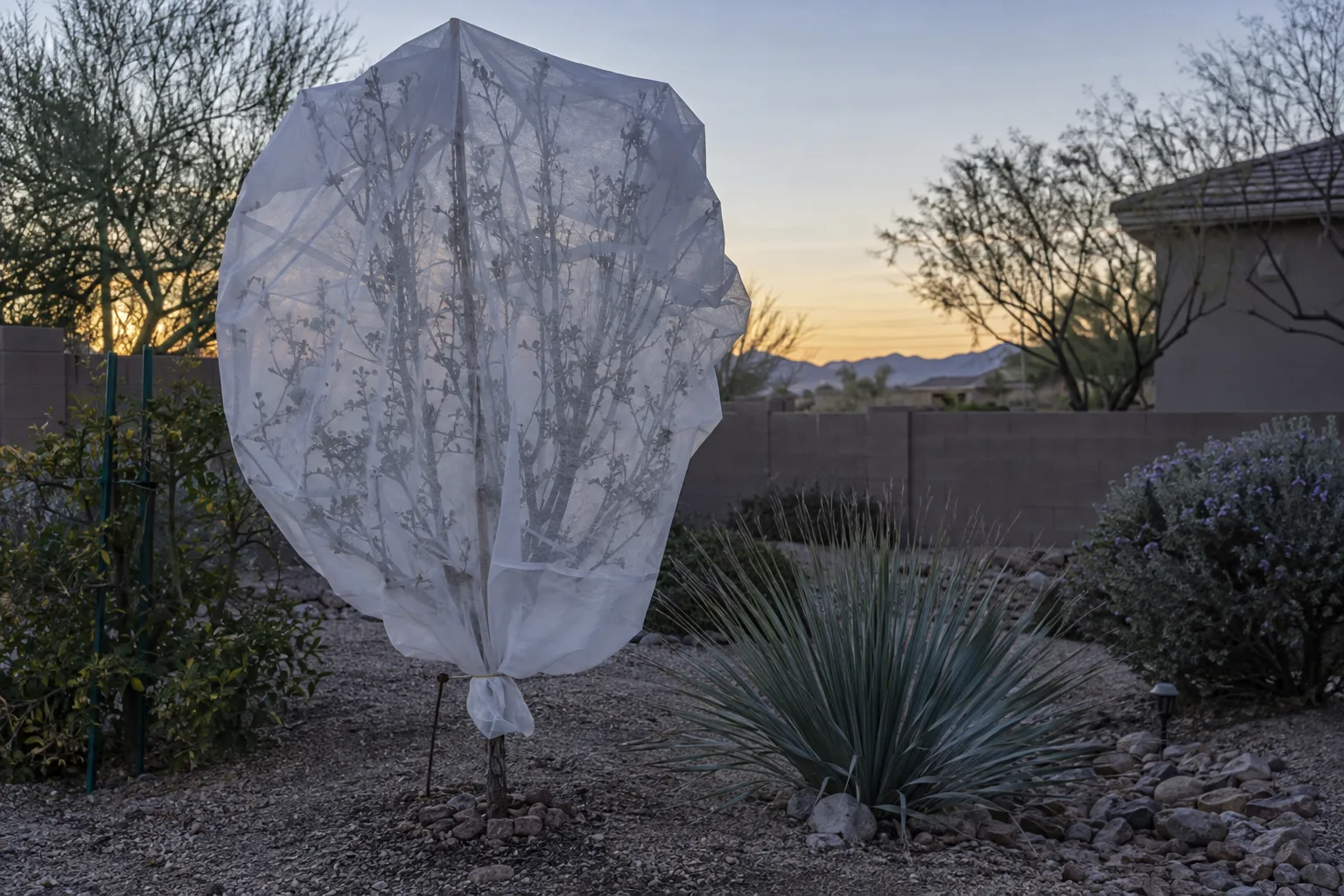
Drape frost cloth over the whole tree, down to the ground, on evenings when the forecast low is near 28°F or colder. Mistake 7 is assuming the desert never freezes. Plums often bloom in late January or February, and an open blossom hit by a hard freeze is a lost crop for that year.
Use frost cloth, not plastic, which traps moisture against the leaves and can cause its own damage. Take the cover off the next morning once temperatures climb. Young trees under about three years old are the most vulnerable, so keep cloth on hand from December through February.
Watch the forecast, because frost in the East Valley varies by neighborhood and low spots get colder. Our gardening calendars can help you plan seasonal timing for the year.
Frequently asked questions
Do I need two plum trees to get fruit?
It depends on the variety. Methley is self-fertile, so one tree can produce a crop. Santa Rosa and Beauty often set more fruit with a second compatible variety blooming nearby. If you have room, two low-chill varieties with overlapping bloom times usually give better fruit set and a larger harvest.
How long before a new plum tree bears fruit?
Most young plum trees begin bearing about two to four years after planting. Heavy early crops can stress the tree, so thin or remove fruit in the first year or two. Strong roots and branches built early pay off in larger, steadier harvests later.
Why does my plum fruit split?
Splitting usually follows uneven watering. When the soil dries out for weeks and then gets a big soak, or a monsoon downpour hits ripening fruit, the flesh swells faster than the skin can stretch. Keep moisture consistent through fruit sizing and pick plums as soon as they ripen.
How can I track chill hours at home?
Place a min-max thermometer in a shaded spot and log overnight lows through winter. Hours between about 32°F and 45°F count toward chill. The count will be rough, but it shows whether your yard sits at the low or high end of the range for the variety you chose.
Should I paint my plum trunk white?
Many growers paint young trunks with diluted white interior latex paint to reflect the sun and prevent sunburn on bark. It is most useful in the first few years, before the canopy shades the trunk. Mix it with water about one to one and brush it on the trunk and lower branches.
Is a plum tree right for a Queen Creek yard?
A plum is worth planting if you have a sunny spot with decent drainage, can break through caliche, and will water deeply on a schedule. A low-chill variety rewards that effort with fruit in late spring. Skip it if the only open space is against a west-facing wall with no afternoon relief, or if you will not protect blossoms on frost nights. Stop by the nursery in Queen Creek and we can talk through options for your yard.