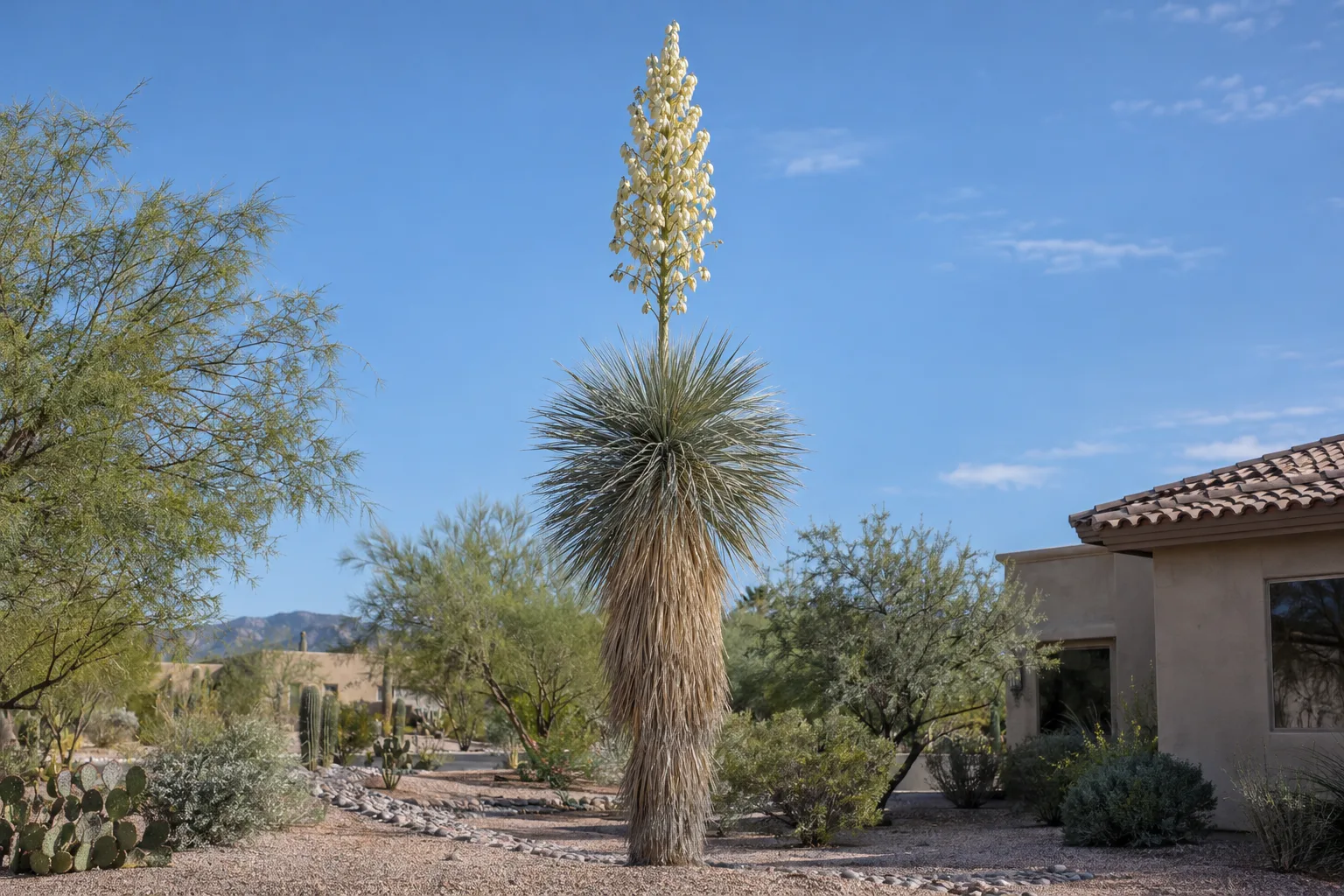
Low water once established. Water deeply but infrequently, allowing soil to dry thoroughly between waterings. Water new plantings more regularly while roots establish; reduce watering in winter.
Size
6-20 ft tall × 3-6 ft wide
Habit
Rosette succulent – tree-form
Toxicity
Toxic — Pets & Livestock
Description
A tree-like yucca native to the Southwest, with slender trunks crowned by narrow, flexible leaves edged with curling white fibers.
Blackfoot daisy, Desert marigold, Desert spoon, Red yucca, Santa Rita prickly pear
Toxic — Pets & Livestock
Foliage and roots toxic to pets and livestock if ingested (saponins)
Care Instructions
Light: Full sun; thrives in Phoenix heat when established.
Water: Low water once established. Water deeply but infrequently, allowing soil to dry thoroughly between waterings. Water new plantings more regularly while roots establish; reduce watering in winter.
Soil: Excellent drainage is essential; sandy or gravelly soil preferred. Tolerates alkaline soil but dislikes heavy, persistently wet soil.
Mature size: Typically 10–20 feet tall and 6–10 feet wide; very old specimens may grow taller.
Bloom: Mature plants typically bloom in late spring to early summer, though flowering may not occur every year. Unlike agaves, plants do not die after flowering.
Evergreen / deciduous: Evergreen.
Growth rate: Slow; supplemental deep watering can modestly increase growth.