Water deeply and regularly during warm weather, especially while fruit develops. Allow the upper few inches of soil to dry between waterings; reduce watering in winter. Avoid prolonged drought and standing water.
Size
10-20 ft tall × 10-20 ft wide (kept smaller with regular pruning)
Habit
Upright tree – multi-trunk
Toxicity
Non-toxic
Description
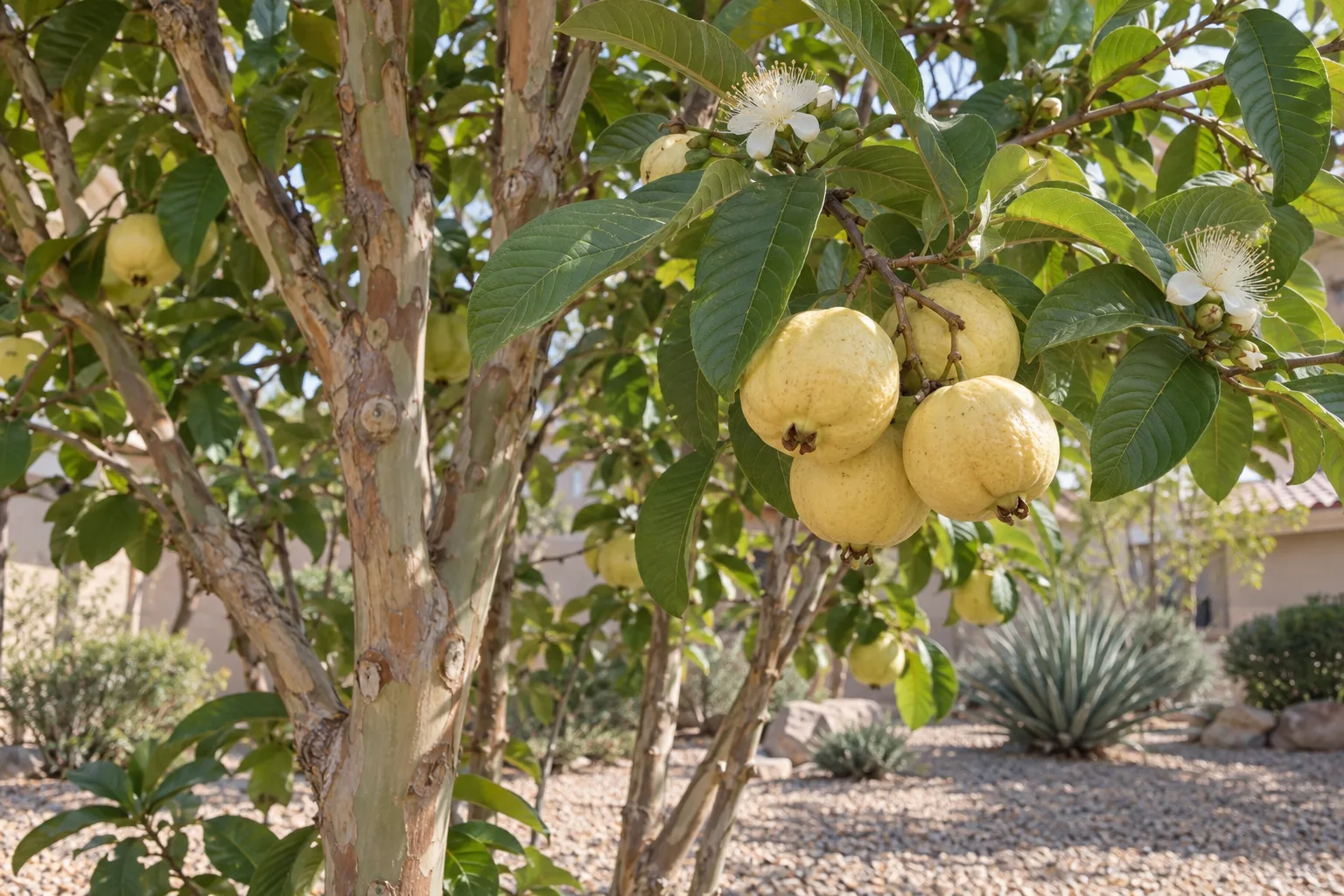
A tropical fruit tree with aromatic, white-fleshed guavas, textured green leaves, and attractive peeling bark. Best grown in a protected Phoenix microclimate because freezing temperatures can damage it.
Bloom Time
Spring to summer; may repeat bloom in warm climates
Deciduous / Evergreen
Evergreen
Special Features
Edible, Fragrant
Growth Rate
Moderate to fast
Growth Habit
Upright tree – multi-trunk
Mature Size
10-20 ft tall × 10-20 ft wide (kept smaller with regular pruning)
Light: Full sun to partial shade; morning sun with afternoon shade is ideal in Phoenix. Protect young trees from intense summer sun and reflected heat.
Water: Water deeply and regularly during warm weather, especially while fruit develops. Allow the upper few inches of soil to dry between waterings; reduce watering in winter. Avoid prolonged drought and standing water.
Soil: Well-drained soil with organic matter; slightly acidic to neutral soil is preferred. Tolerates some alkalinity, but Phoenix soils may cause iron deficiency. Mulch the root zone, keeping mulch away from the trunk.
Mature size: Typically 10–20 feet tall and 10–15 feet wide; can grow larger in frost-free conditions. Prune to maintain an accessible 6–10-foot fruiting tree.
Bloom: Usually spring through early summer, with additional flowering possible during warm weather. Fruit generally ripens about 4–6 months after flowering.
Evergreen / deciduous: Evergreen in frost-free conditions; may lose leaves during cold weather or drought.
Growth rate: Moderate to fast with adequate warmth, water, and nutrition; slower during cool weather.