

Honey-scented carpets of tiny flowers: ‘Snow Crystals’ white and ‘Clear Crystal’ in lavender and purple shades. The filler that ties a winter bed together — and the easiest cool-season annual we sell.
Sweet alyssum is the plant that finishes a planting: a low carpet of tiny four-petalled flowers along the front of a bed, between pavers, or spilling over the rim of a pot, smelling of honey on a warm winter afternoon and buzzing with hoverflies and bees. It is frost-proof, forgiving, and blooms from a fall planting right through to June — longer than almost anything else on the winter tables.
We commonly carry the large-flowered ‘Snow Crystals’ in white and the ‘Clear Crystal’ series in lavender shades and purple shades. The rest of the color tables are on our Annual Flowers & Foliage page.

These are the sweet alyssum varieties we commonly carry. Availability changes week to week and season to season, so call (480) 987-3308 or stop in to see what’s on the bench today.
The same large-flowered type in soft lavender.
Large-flowered alyssum in deep purple.
A tetraploid alyssum with flowers twice the size of the old ‘Carpet of Snow’, on a vigorous, heat-tolerant plant to eight inches. Pure white.
Looking for one that isn’t listed? Ask — we can usually suggest a close match or tell you when it tends to come around.
The care tag was written somewhere else. This is the Queen Creek version.
Set out from mid-October through March. Fall plantings bloom from November to June; spring plantings from March to June. Alyssum fades in the heat of late June and often returns from self-sown seed with the first cool nights in October. It takes frost to the low 20s.
Any well-drained soil; alyssum tolerates our alkaline ground and poor soil well. Water every three to four days in beds and two to three in pots through winter, daily for pots by May. It tolerates drying out better than staying wet.
Light — a balanced fertilizer at planting and after each shearing. Heavy feeding gives leaves and fewer flowers.
Full sun through the cool months, afternoon shade from May. In winter shade it gets thin and sparse.
Around February the first flush finishes and the plants go leggy with seed heads. Shear the whole planting back by half with hedge shears; it regrows and reblooms within two weeks. Repeat once more in April to carry it to June. Feed a bloom fertilizer lightly after shearing.
Nearly pest-free. Aphids occasionally in warm spells; the hoverflies the flowers attract usually handle them. Downy mildew in a cold, wet, crowded week — thin the planting. Alyssum is non-toxic to cats and dogs.
Snap a photo of the spot — sun direction, wall color, pot size — and we’ll pick a season-correct combination with you. Advice is free.
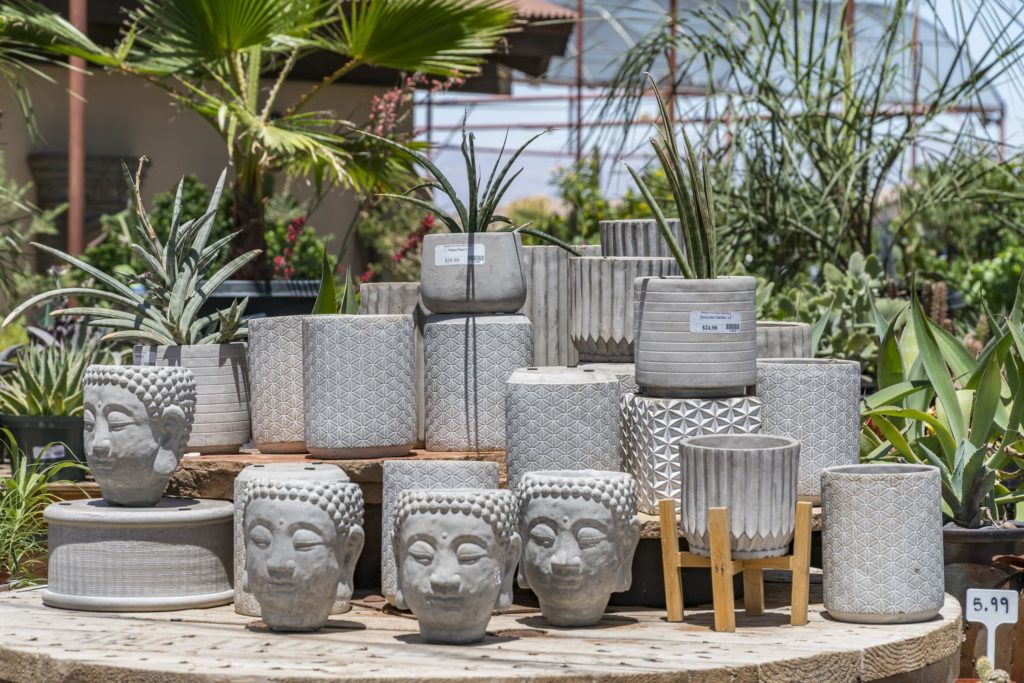
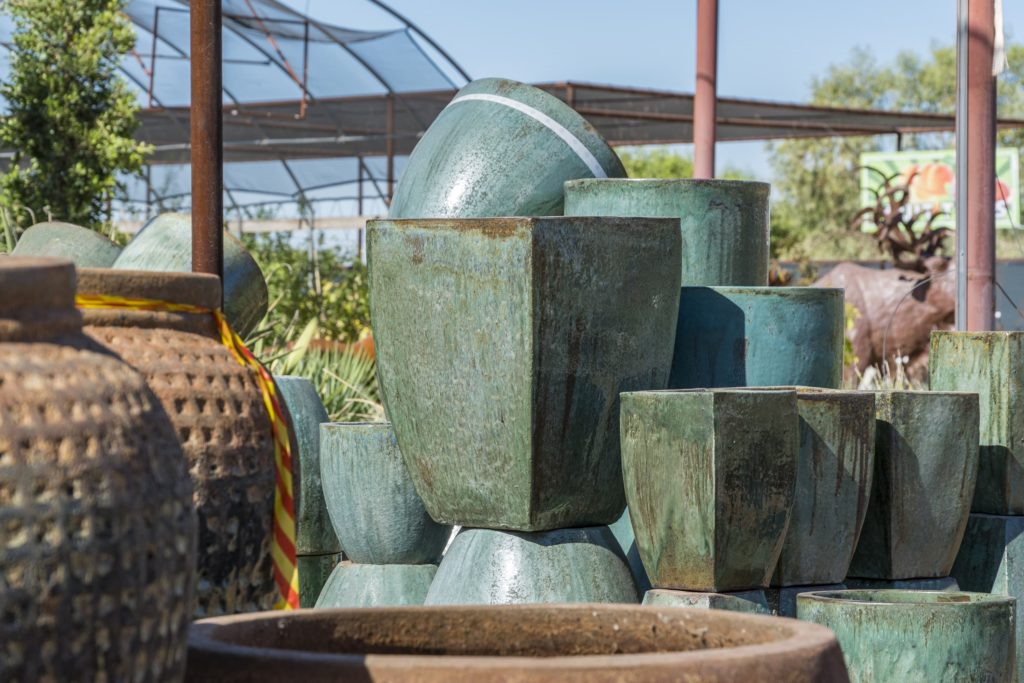
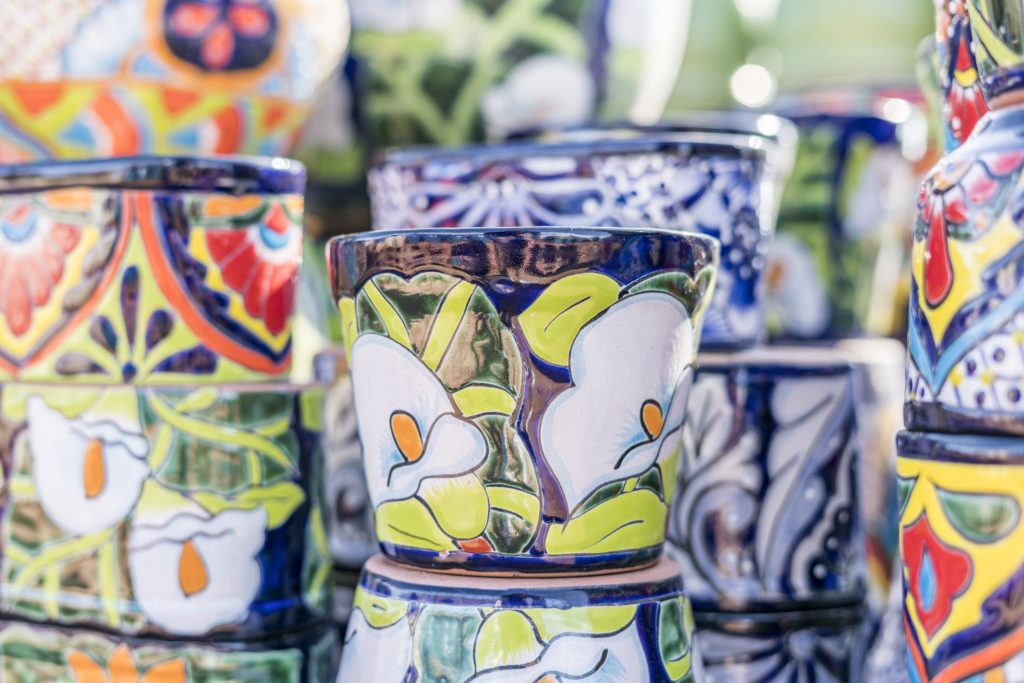
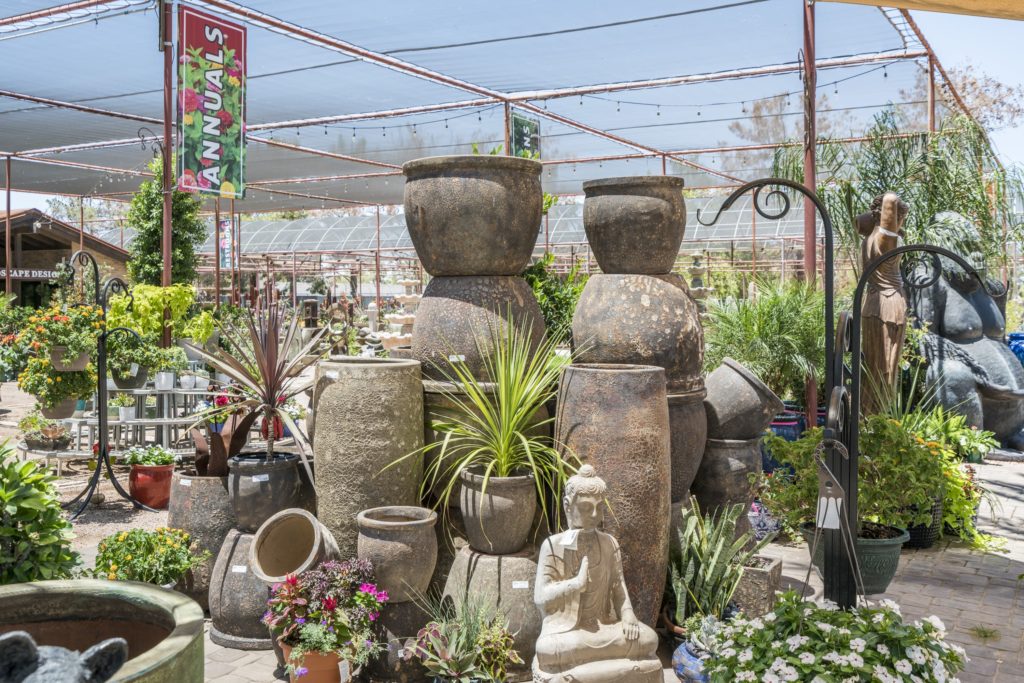
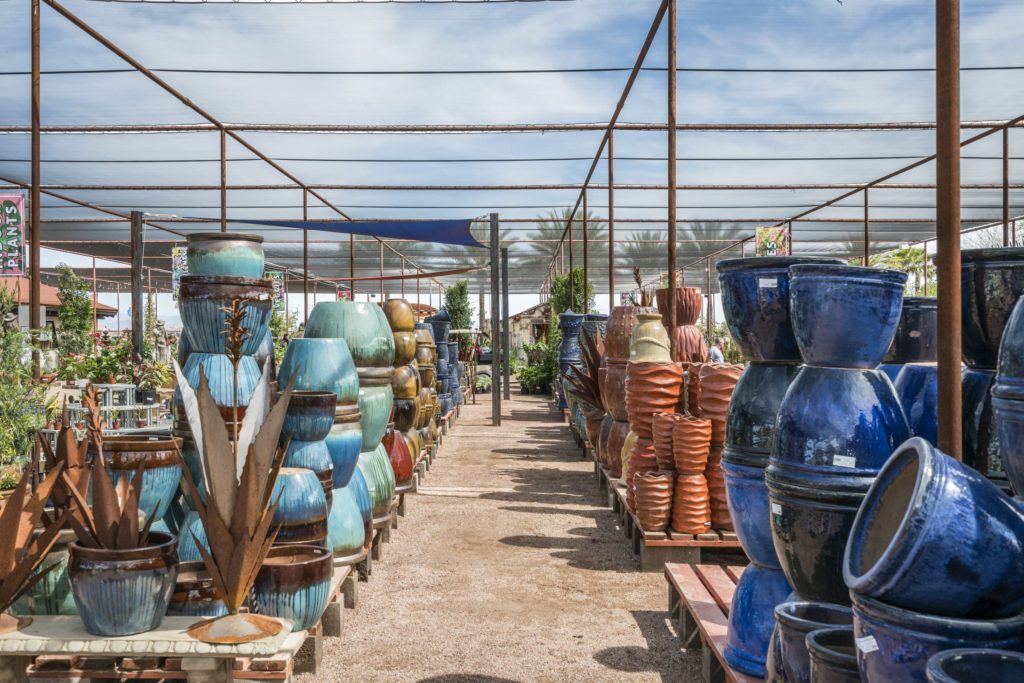
Annuals succeed or fail on what’s under them. We stock planting mix and compost for beds, potting mix for containers, bloom fertilizers including Tony’s Magic Mix and Magic Flower, starter fertilizer, drip fittings and frost cloth for the cold nights. The pottery yard has glazed and terracotta pots from 4-inch to whiskey-barrel size, window boxes and hanging baskets, and soil and mulch is sold by the bag or by the yard.

Mid-October through March. It blooms until June and often reseeds itself for the next fall.
It needs a haircut. Shear it back by half and feed lightly; it reblooms within two weeks. Do this in February and again in April.
Yes, to the low 20s. No protection needed.
Every three to four days in beds through winter, daily in pots by May. It prefers slightly dry to soggy.
Often — it self-sows, and seedlings appear in October. Leave a few plants to set seed in June.
Yes, sweet alyssum is non-toxic to cats and dogs.
Sweet Alyssum live on the annuals tables; any staff member can point you to them. Locally owned, and a short drive from San Tan Valley, Gilbert, Chandler and Mesa.