

Stromanthe sanguinea in the plain green form and the pink-cream-green ‘Triostar’, both. A prayer-plant relative with upright, paddle-shaped leaves backed in burgundy — the showiest of the family.
Stromanthe is the prayer plant that reads as a flowering plant from across the room: ‘Triostar’ carries long, paddle-shaped leaves streaked in pink, cream and green with wine-red undersides, held upright on a plant that reaches two or three feet. The plain green species is quieter but has the same handsome form and burgundy backs. Like its relatives calathea and maranta, it lifts its leaves at night.
It asks for what the whole family asks for in Arizona — humidity, filtered water and bright shade — and ‘Triostar’ wants the bright end of that range to keep its pink. The rest of the bench is on our Houseplants page.

These are the stromanthe varieties we commonly carry. Availability changes week to week and season to season, so call (480) 987-3308 or stop in to see what’s on the bench today.
The plain species: glossy dark green paddle leaves with burgundy backs on an upright, clumping plant. Slightly tougher than ‘Triostar’ and just as elegant.
Leaves variegated in pink, cream and green with deep red undersides, on upright stems to two or three feet. The most colorful prayer plant we carry. Bright indirect light keeps the pink; dim rooms turn it green.
Looking for one that isn’t listed? Ask — we can usually suggest a close match or tell you when it tends to come around.
The care tag was written somewhere else. This is the Queen Creek version.
‘Triostar’ keeps its pink and cream only in bright indirect light — near an east window, or filtered south light. In a dim room the new leaves come in mostly green. The plain species tolerates medium light. Neither takes direct sun, which scorches the leaves in an afternoon here.
Water when the top inch of mix is dry, every four to six days in summer indoors and weekly in winter, with filtered, distilled or rain water at room temperature; hard tap water browns the edges. Evenly moist, never soggy — a light, well-draining mix in a pot with a hole.
Spider mites in dry air — rinse the leaves every couple of weeks and treat early with insecticidal soap. Trim brown edges following the leaf shape; remove spent leaves at the base. Wipe the leaves occasionally so the colors show.
Stromanthe wants 50 percent humidity or more against our indoor 15–25. Pebble tray, grouping, a humidifier or a bright bathroom or kitchen window; and keep it completely out of the airflow from vents. Brown, crisping edges — especially on the cream parts of ‘Triostar’, which burn first — mean the air is too dry.
A peat- or coir-based mix with perlite. Repot every two years in spring, one size up, and divide crowded clumps then. Feed a balanced liquid fertilizer at quarter strength every three to four weeks from March through September; too much fertilizer browns the leaf edges.
Non-toxic to cats and dogs. Outdoors, deep shade and still air on a covered patio in the mild months only; sun, wind, summer heat and cold nights all damage it. Indoors year-round is the safe plan in Queen Creek.
Yellowing, spots, no new growth — snap a photo of the plant and its window and we’ll diagnose it at the bench. Advice is free.
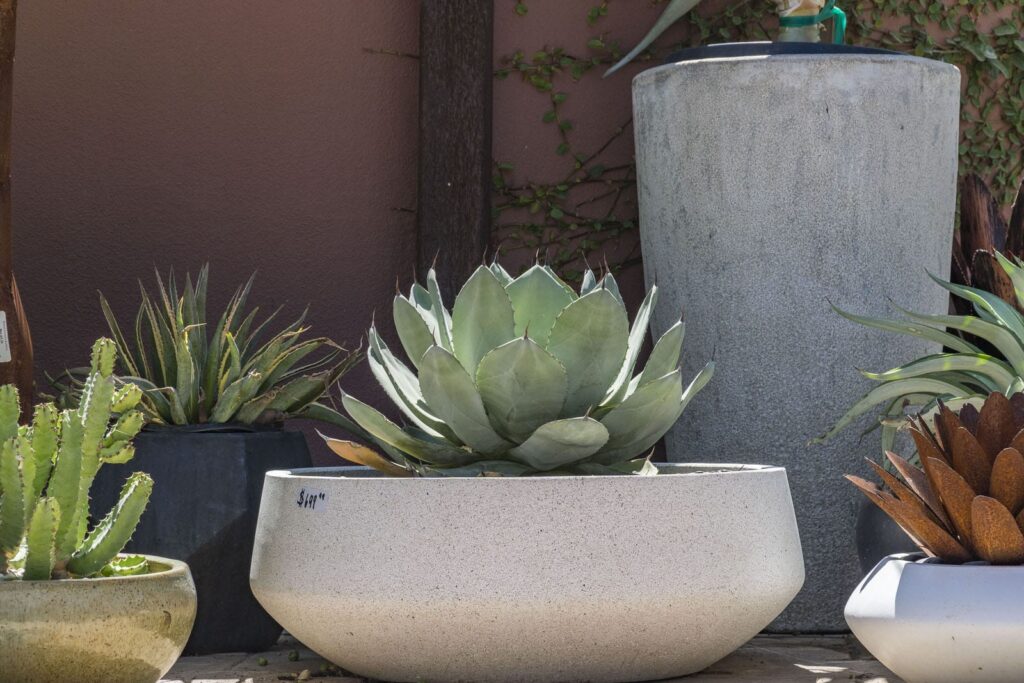
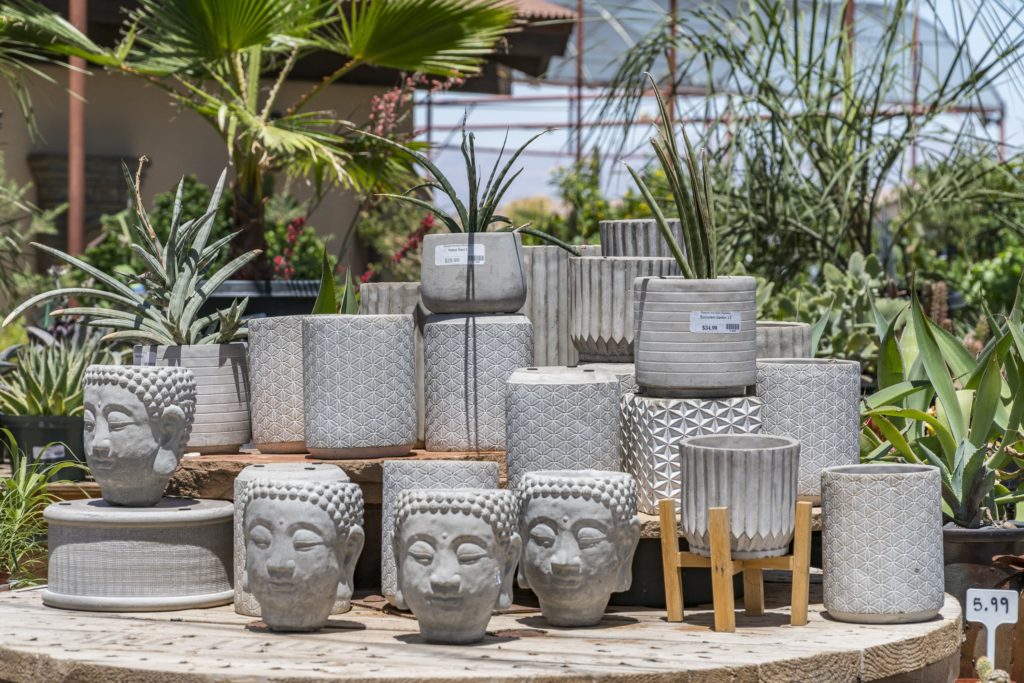
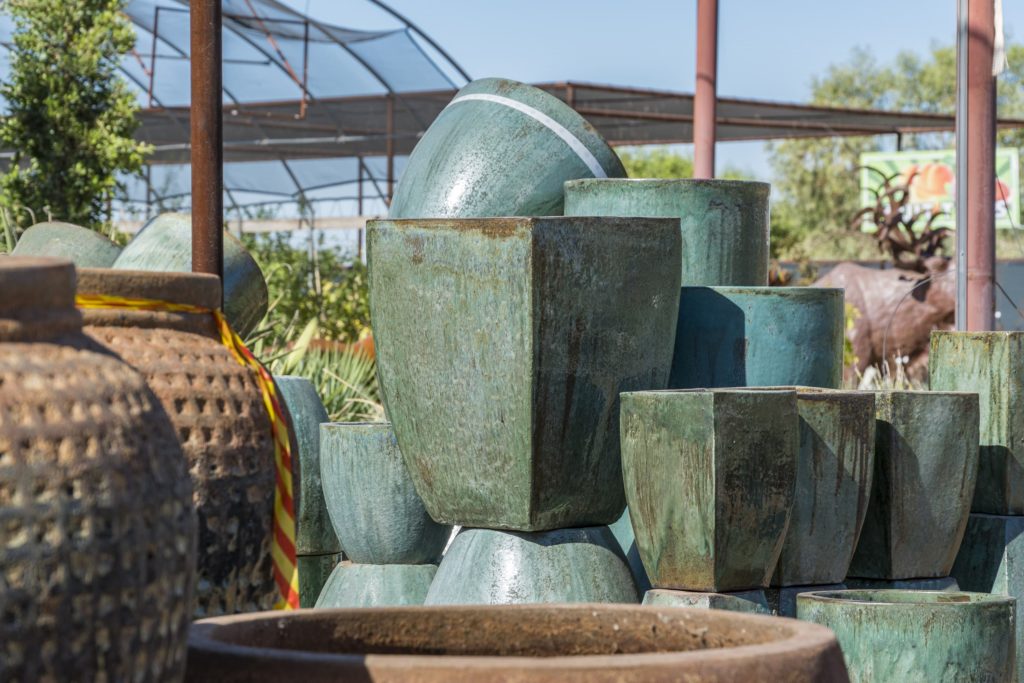
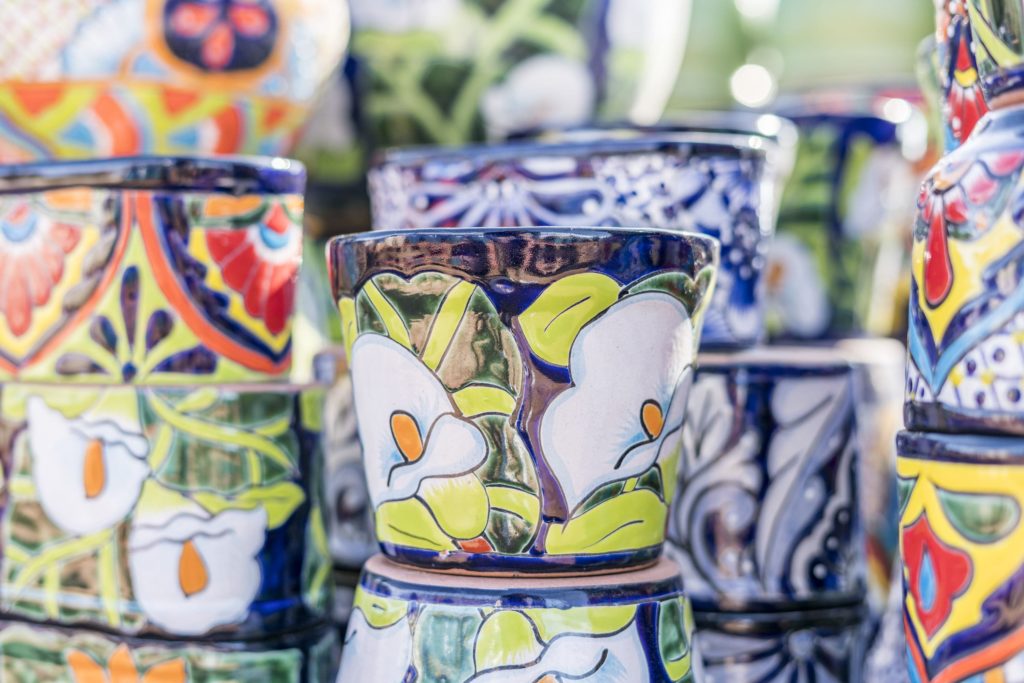
We stock indoor potting mix, orchid bark and perlite for the chunky blends aroids and epiphytes want, balanced houseplant fertilizers, insecticidal soap and neem for the usual mealybug and mite visits, and moss poles, hoops and saucers. The pottery yard has terracotta, glazed and lightweight pots from 4-inch up, plus hanging baskets and cache pots.

Too little light. Move it to bright indirect light near an east window, out of direct sun; new leaves will come in variegated again.
Dry air and hard water. Raise the humidity, move it away from vents, and use filtered or distilled water. The cream sections of ‘Triostar’ burn first.
Yes — like calathea and maranta, it is non-toxic to cats and dogs.
When the top inch is dry, every four to six days in summer indoors and weekly in winter, with filtered water. Evenly moist, never soggy.
Two to three feet tall and about as wide in a pot, over a couple of years. Divide the clump when it crowds the pot.
Only on a covered, fully shaded, wind-sheltered patio in spring or fall. It is an indoor plant here.
Stromanthe live on the houseplant bench; any staff member can point you to them. Locally owned, and a short drive from San Tan Valley, Gilbert, Chandler and Mesa.