Low to moderate water once established; water deeply, then let the upper few inches of soil dry. Irrigate more regularly during Phoenix summers for attractive foliage and continued flowering.
Size
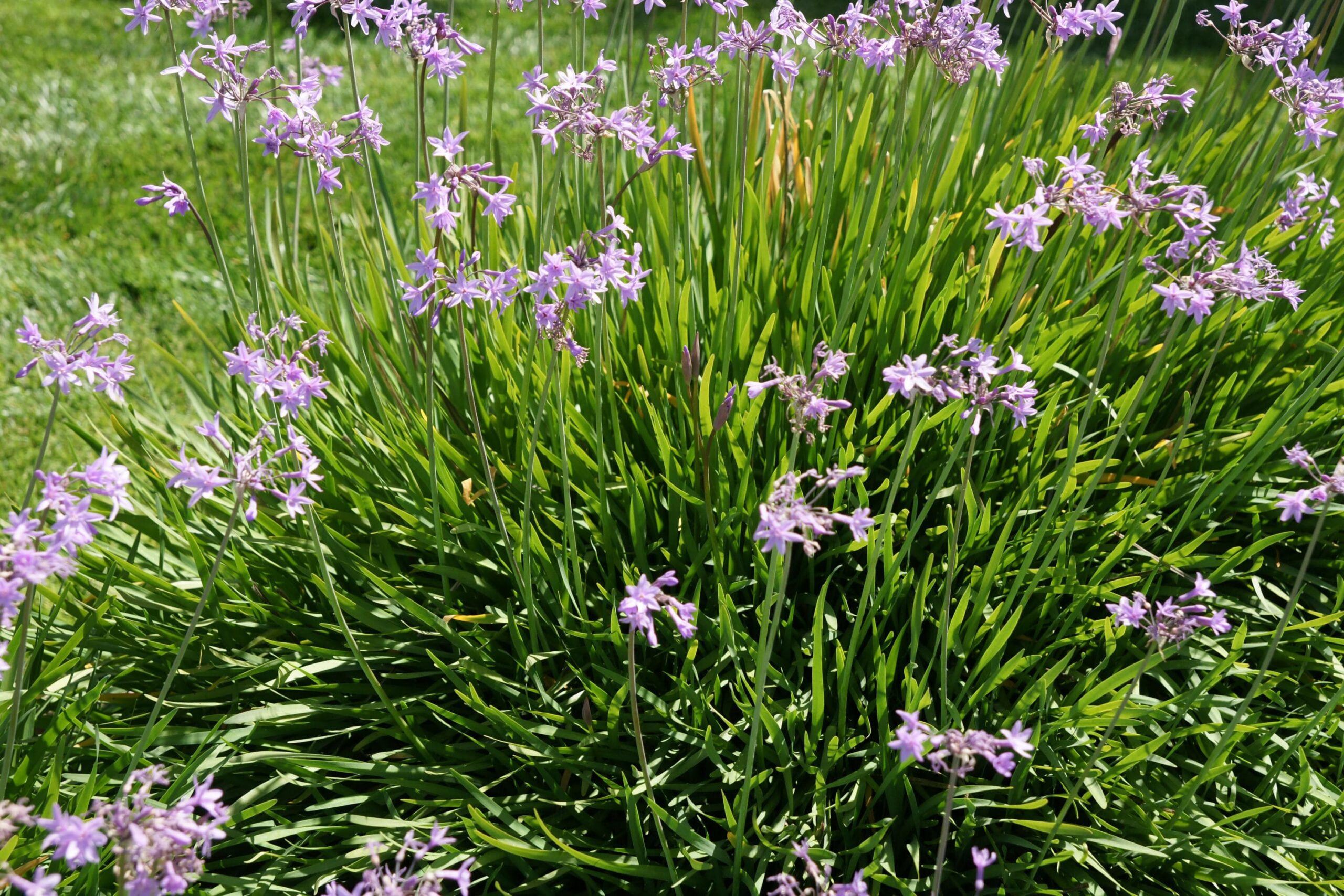
1-2 ft tall × 1-2 ft wide
Habit
Perennial clump
Toxicity
Toxic — Pets & Humans
Description
A clump-forming perennial with narrow, grasslike leaves that smell of garlic when crushed and slender stalks bearing lavender flowers.
Autumn sage, Blackfoot daisy, Bulbine, Red yucca, Trailing lantana
Toxic — Pets & Humans
Toxic to pets if ingested in quantity (garlic-family compounds, GI upset); leaves/flowers edible to humans in small amounts
Care Instructions
Light: Full sun to partial shade; morning sun with afternoon shade is ideal in Phoenix, especially near heat-reflecting walls.
Water: Low to moderate water once established; water deeply, then let the upper few inches of soil dry. Irrigate more regularly during Phoenix summers for attractive foliage and continued flowering.
Soil: Well-drained sandy or loamy soil; tolerates moderately alkaline soil. Avoid persistently wet soil and poorly drained clay.