

Frost-hardy spikes of color for winter: dwarf ‘Snaptastic’ for spring, and the mid-height ‘Sonnet’ and ‘Speedy Sonnet’ series for fall — every color but blue. Plant October through January.
Snapdragons are the vertical element of the Queen Creek winter garden — spires of velvety, hinged flowers in white, yellow, bronze, rose, crimson and magenta that shrug off frost and bloom from a fall planting through April. They pair with pansies and alyssum in beds, stand as the thriller in a winter pot, and cut for the house. The one thing to know is timing: fall-planted snaps bloom for six months; spring-planted ones bolt and are done in six weeks.
We commonly carry the ‘Sonnet’ series — mid-height, sturdy, the best bedding snapdragon — in crimson, rose, white, yellow and mix, plus ‘Speedy Sonnet Bronze’ and tall ‘Rocket Mix’ for cutting; and the dwarf ‘Snaptastic’ series. The rest of the color tables are on our Annual Flowers & Foliage page.

These are the snapdragon varieties we commonly carry. Availability changes week to week and season to season, so call (480) 987-3308 or stop in to see what’s on the bench today.
18–30 inches
The all-purpose bedding snapdragon: 18–20 inches, strong stems, early and long-blooming, in a full color mix.
‘Sonnet’ in deep velvety crimson.
‘Sonnet’ in clear rose-pink.
‘Sonnet’ in pure white — the mixer for every winter bed.
‘Sonnet’ in bright yellow.
An earlier-flowering ‘Sonnet’ in a warm bronze-orange, first to bloom after an October planting.
The tall cutting snapdragon: 30-inch spikes for the vase in mixed colors. Stake or mass-plant against wind.
dwarf, 10–12 inches
A dwarf, well-branched series at 10–12 inches with many spikes per plant — for pot edges and front-of-border.
‘Snaptastic’ in scarlet.
‘Snaptastic’ in hot magenta-pink.
‘Snaptastic’ in golden yellow.
Looking for one that isn’t listed? Ask — we can usually suggest a close match or tell you when it tends to come around.
The care tag was written somewhere else. This is the Queen Creek version.
Set out snapdragons from mid-October, once highs are under 95°F, through January. October and November plantings bloom from December to April or May; January plantings from March. A spring planting (‘Snaptastic’ in March) gives a quick six-week show and then bolts in the heat. Snapdragons take frost to the mid-20s without damage.
Well-drained soil amended with compost; snapdragons rot in heavy, wet ground after winter rain. Water every three to four days in beds and every two to three in pots through the cool season, stretching to weekly in the coldest weeks; daily for pots by April. Water at the base — wet leaves invite rust.
Orange-brown pustules on the undersides of leaves are snapdragon rust, which shows up in still, humid weeks in late winter. Space plants for airflow, water at the base in the morning, remove infected leaves, and pull badly affected plants. ‘Sonnet’ has reasonable tolerance.
Full sun through winter — the December sun is gentle and snaps in shade grow leggy and bloom half as much. By April, afternoon shade extends the season a few weeks.
When a young plant is four to six inches tall, pinch out the first flower spike; it branches into four or five spikes instead of one. As spikes finish, cut them back to a side shoot and a new flush follows in two to three weeks. Feed a bloom fertilizer every two to three weeks.
Tall ‘Rocket’ and the larger ‘Sonnet’ plants need staking or close planting against spring wind. Frost is not a concern — light frost improves the color. Snapdragons are non-toxic to cats and dogs.
Snap a photo of the spot — sun direction, wall color, pot size — and we’ll pick a season-correct combination with you. Advice is free.
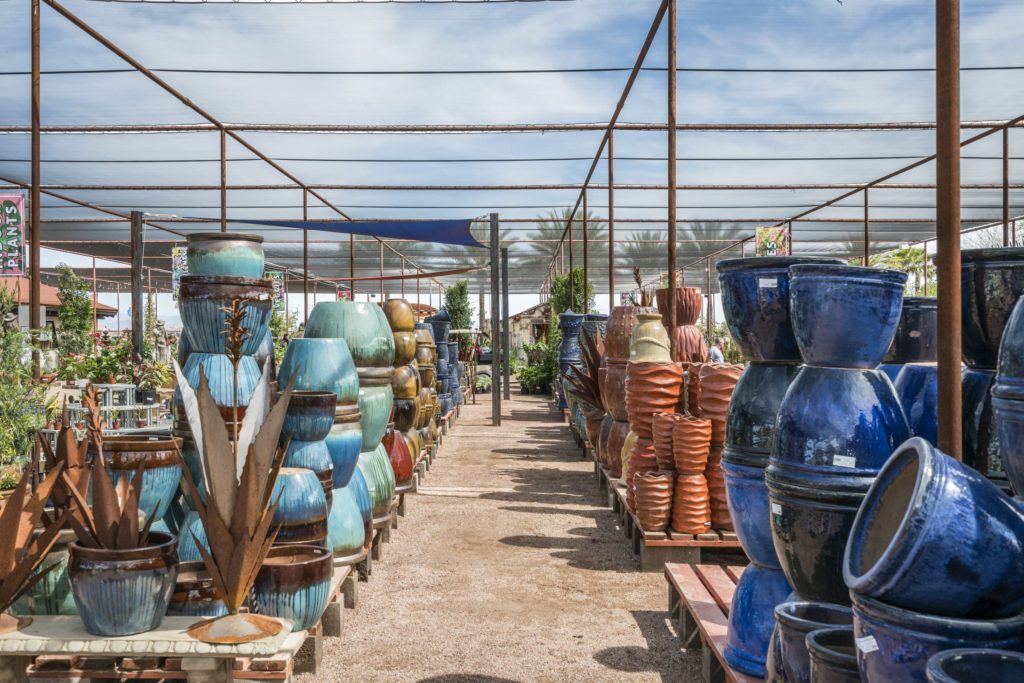
Annuals succeed or fail on what’s under them. We stock planting mix and compost for beds, potting mix for containers, bloom fertilizers including Tony’s Magic Mix and Magic Flower, starter fertilizer, drip fittings and frost cloth for the cold nights. The pottery yard has glazed and terracotta pots from 4-inch to whiskey-barrel size, window boxes and hanging baskets, and soil and mulch is sold by the bag or by the yard.



Mid-October through January for a long winter-to-spring bloom. Spring plantings flower briefly and bolt in the heat.
No — snapdragons take frost to the mid-20s and keep blooming. No cover needed.
Pinch the first spike on young plants to force branching, and cut finished spikes back to a side shoot. Feed every two to three weeks. Treated this way a plant produces flushes all winter.
Rust, a fungal disease of humid weeks. Improve airflow, water at the base, remove infected leaves, and pull the worst plants.
Every three to four days in beds and two to three in pots through the cool months, weekly in the coldest weeks, daily for pots by April.
Yes, they are non-toxic to cats and dogs.
Snapdragon live on the annuals tables; any staff member can point you to them. Locally owned, and a short drive from San Tan Valley, Gilbert, Chandler and Mesa.