Water deeply, then allow the upper few inches of soil to dry before watering again. Established trees may need irrigation every 7–14 days in summer and every 3–6 weeks in winter, adjusted for soil and weather. Wet the root zone approximately 2–3 feet deep; young trees need more frequent watering.
Size
12-15 ft tall × 12-15 ft wide
Habit
Upright tree – single-trunk
Toxicity
Toxic — Pets & Humans
Description
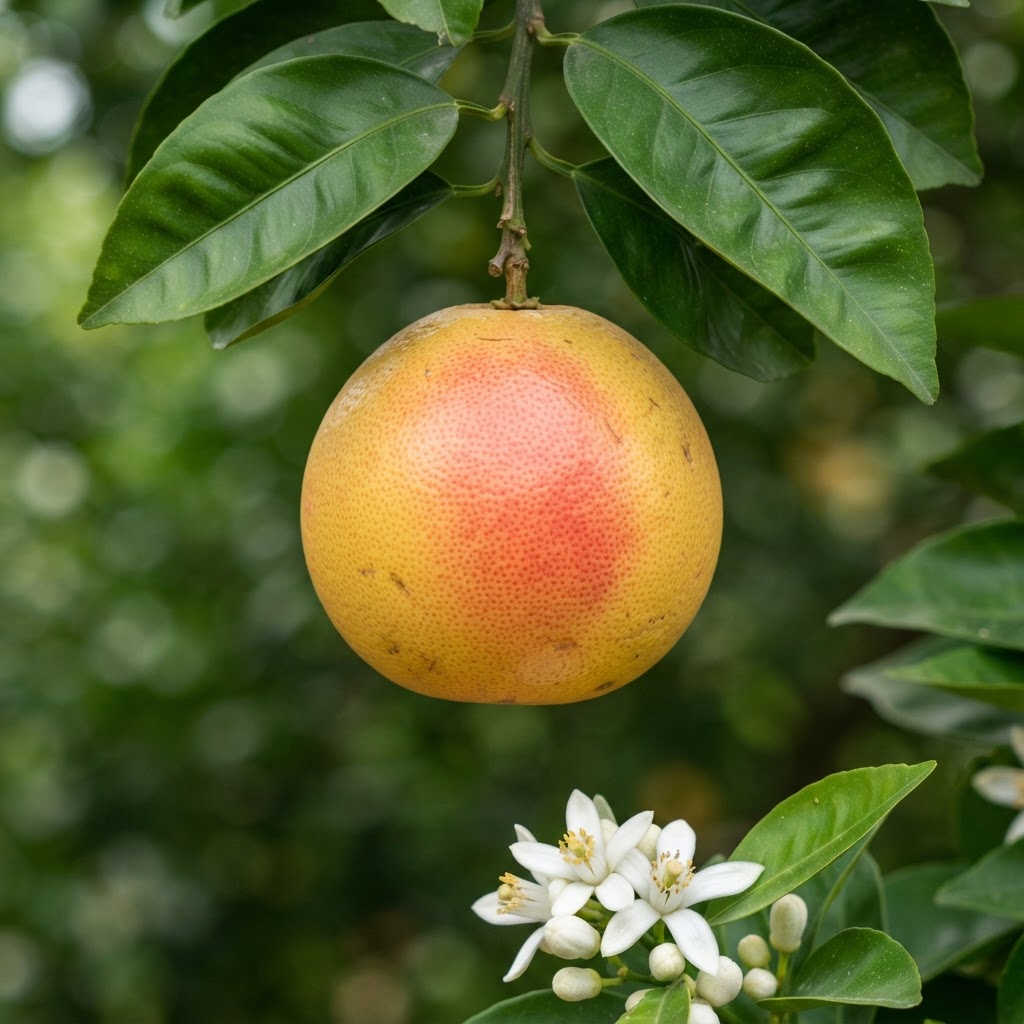
A productive grapefruit tree bearing large, yellow fruit with a pink blush and juicy, deep-red flesh. Fruit is sweet-tart and usually nearly seedless; Phoenix heat supports good flavor development.
Bloom Time
Spring
Deciduous / Evergreen
Evergreen
Special Features
Edible, Fragrant
Growth Rate
Moderate
Growth Habit
Upright tree – single-trunk
Mature Size
12-15 ft tall × 12-15 ft wide
Flower Color
White
Foliage Color
Dark green
Landscape Use
Edible / Orchard, Specimen / Accent
Garden Style
Edible Garden
Soil
Alkaline Tolerant, Sandy / Rocky, Well-Drained
Companion Plants
Calendula, Sweet alyssum, Trailing rosemary
Toxic — Pets & Humans
Fruit edible for humans; foliage and peel oils toxic to pets (mild GI upset)
Care Instructions
Light: Full sun, ideally at least 8 hours daily. Provide temporary afternoon shade for newly planted trees during extreme summer heat.
Water: Water deeply, then allow the upper few inches of soil to dry before watering again. Established trees may need irrigation every 7–14 days in summer and every 3–6 weeks in winter, adjusted for soil and weather. Wet the root zone approximately 2–3 feet deep; young trees need more frequent watering.
Soil: Well-drained sandy loam or loam preferred. Tolerates Phoenix’s alkaline soils with appropriate nutrient management. Avoid poorly drained sites; plant with the root flare at or slightly above grade and keep the graft union above soil.
Mature size: Typically 15–25 feet tall and 15–20 feet wide on standard rootstock; size varies with rootstock and pruning. Dwarfing rootstocks produce smaller trees.
Bloom: Primarily late winter through spring, commonly February–April in Phoenix. Fruit generally ripens from winter into spring and can remain on the tree after maturity.
Evergreen / deciduous: Evergreen.
Growth rate: Moderate to fast with adequate irrigation and nutrition.