Low to moderate water once established. Water deeply, then let the upper several inches of soil dry. Irrigate more frequently during establishment and extreme summer heat.
Size
1-1.5 ft tall × 3-6 ft wide
Habit
Groundcover – trailing
Toxicity
Toxic — Pets Humans & Livestock
Description
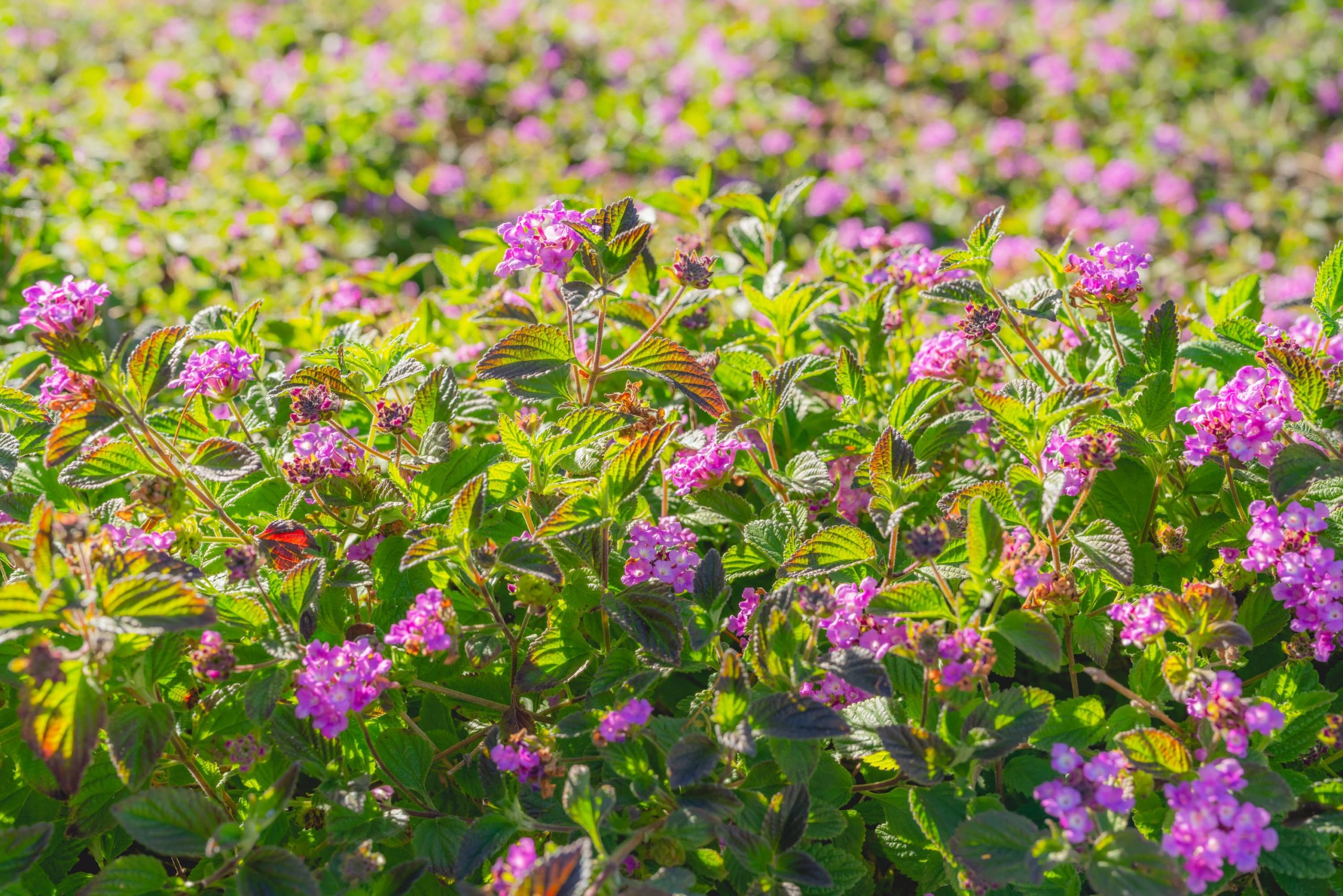
A heat-loving lantana with aromatic, textured foliage and clustered flowers. Confirm the botanical name: purple trailing lantana is usually Lantana montevidensis, not Lantana camara; the details below apply to Lantana camara.
Autumn sage, Blue grama, Damianita, Desert marigold, Red yucca
Toxic — Pets Humans & Livestock
Toxic to pets, livestock, and humans if ingested (foliage and unripe berries).
Care Instructions
Light: Full sun for best flowering; light afternoon shade can help during Phoenix’s hottest months.
Water: Low to moderate water once established. Water deeply, then let the upper several inches of soil dry. Irrigate more frequently during establishment and extreme summer heat.
Soil: Well-drained sandy or loamy soil; tolerates Phoenix’s alkaline soils. Avoid persistently wet soil and poorly drained planting sites.
Mature size: Typically 2–6 feet tall and 3–6 feet wide, depending on cultivar; dwarf selections remain smaller.
Bloom: Spring through late fall, with possible winter flowers in frost-free locations. Extreme heat or drought may temporarily reduce flowering.
Evergreen / deciduous: Evergreen in frost-free conditions; may lose leaves or die back during Zone 9b freezes.
Growth rate: Fast during warm weather with adequate irrigation.