Water deeply and regularly during establishment. Once established, allow the upper few inches of soil to dry between deep waterings. Increase irrigation during extreme summer heat and fruit development; drought tolerance does not mean reliable fruiting without irrigation.
Size
6-12 ft tall × 6-10 ft wide
Habit
Rounded shrub
Toxicity
Non-toxic
Description
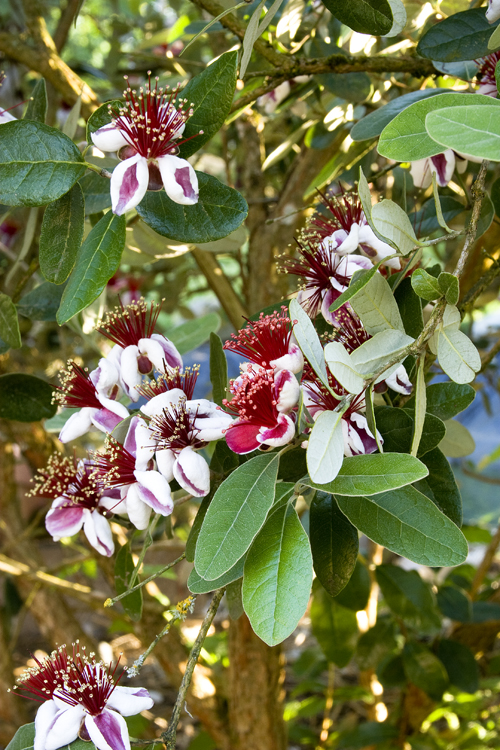
Pineapple guava (Feijoa sellowiana, also called Acca sellowiana) is a subtropical shrub or small tree with silvery-backed leaves, showy edible flowers, and aromatic green fruit with pineapple-like flavor.
Dwarf pomegranate, Society garlic, Trailing rosemary
Non-toxic
Non-toxic
Care Instructions
Light: In Phoenix, provide morning sun and afternoon shade; avoid reflected heat from west-facing walls or pavement.
Water: Water deeply and regularly during establishment. Once established, allow the upper few inches of soil to dry between deep waterings. Increase irrigation during extreme summer heat and fruit development; drought tolerance does not mean reliable fruiting without irrigation.
Soil: Well-drained soil, preferably slightly acidic to neutral. Tolerates some alkalinity, but Phoenix soils may cause nutrient deficiencies. Mulch the root zone, keeping mulch away from the trunk.
Mature size: Typically 10–15 feet tall and wide; may reach 20 feet under favorable conditions. Can be maintained smaller with pruning.
Bloom: Typically blooms in spring, often April–May in Phoenix. Fruit generally ripens in fall, though production can be inconsistent in extreme desert heat.
Evergreen / deciduous: Evergreen.
Growth rate: Slow to moderate, depending on irrigation, soil, and heat exposure.