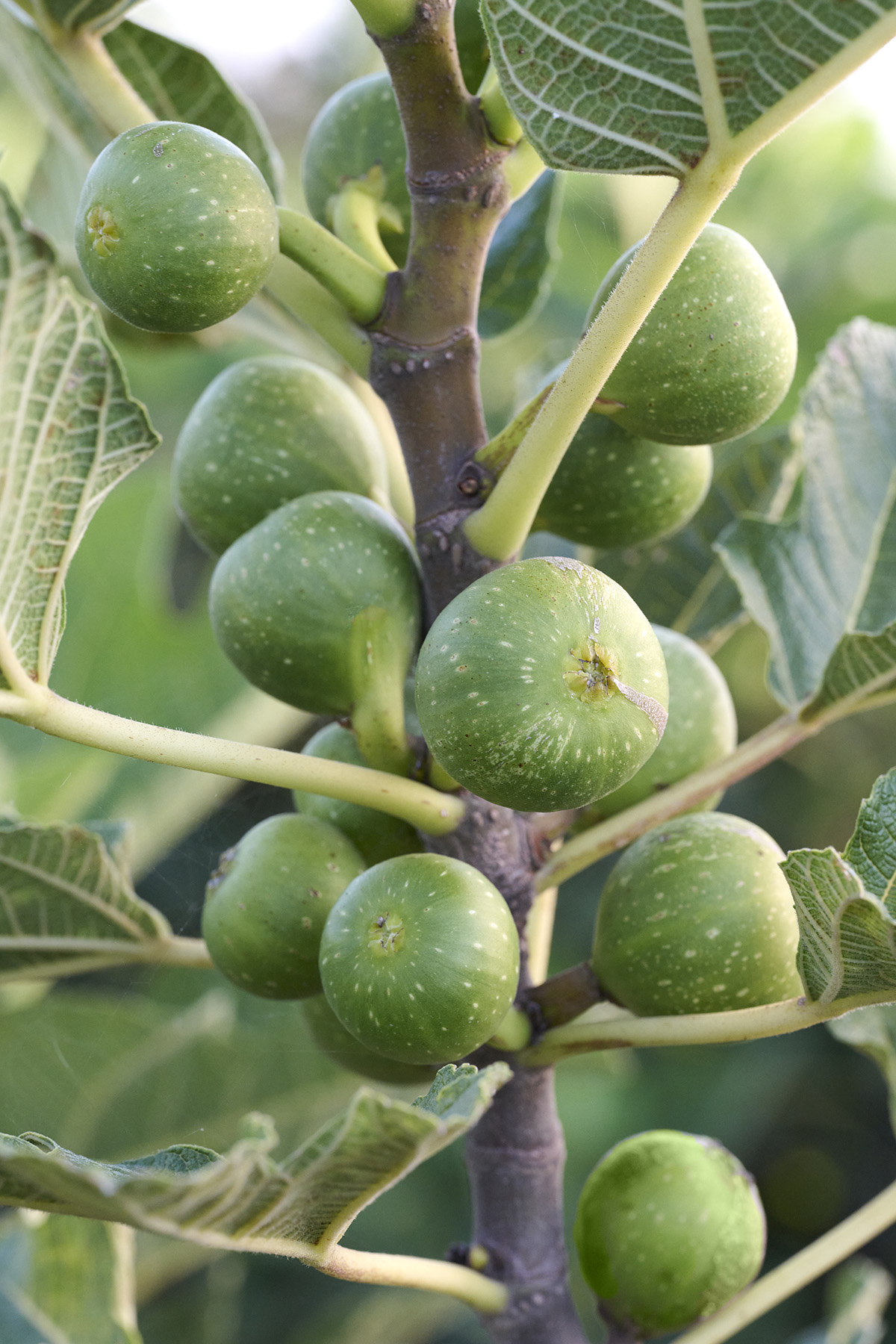
Water deeply and regularly during the growing season, especially while fruit develops and during extreme heat. Let the upper few inches of soil dry between irrigations; reduce watering substantially during winter dormancy.
Size
15-20 ft tall × 15-20 ft wide
Habit
Upright tree – multi-trunk
Toxicity
Toxic if Ingested; Sap Irritant
Description
A self-fruitful fig producing sweet, honey-flavored fruit with yellow-green skin and amber flesh. Well suited to Phoenix when provided adequate irrigation and protection from intense reflected heat.
Bloom Time
Insignificant flowers; fruit ripens summer to fall
Deciduous / Evergreen
Deciduous
Special Features
Attracts Bees / Pollinators, Heat Tolerant
Growth Rate
Moderate to fast
Growth Habit
Upright tree – multi-trunk
Mature Size
15-20 ft tall × 15-20 ft wide
Flower Color
None (grown for fruit)
Foliage Color
Medium green
Landscape Use
Container / Patio, Edible / Orchard, Foundation Planting
Sap is a skin/eye irritant; foliage and sap toxic to pets; ripe fruit is edible
Care Instructions
Light: Full sun; afternoon shade is beneficial in Phoenix, especially for young trees. Avoid hot west-facing walls.
Water: Water deeply and regularly during the growing season, especially while fruit develops and during extreme heat. Let the upper few inches of soil dry between irrigations; reduce watering substantially during winter dormancy.
Soil: Well-drained soil; tolerates sandy, loamy, and moderately alkaline soils. Avoid standing water and apply organic mulch, keeping it away from the trunk.
Mature size: Typically 15–25 feet tall and wide if unpruned; can be maintained around 10–15 feet with regular pruning.
Bloom: Flowers develop inside immature figs in spring and summer and are not externally visible. The main fruit crop ripens in summer to early fall; an earlier crop may occur on older wood.
Evergreen / deciduous: Deciduous.
Growth rate: Moderate to fast with adequate water and warmth.