Keep the root zone evenly moist but never saturated. Water deeply when the upper 1–2 inches of soil begin to dry; increase frequency during extreme heat and reduce substantially in cool weather.
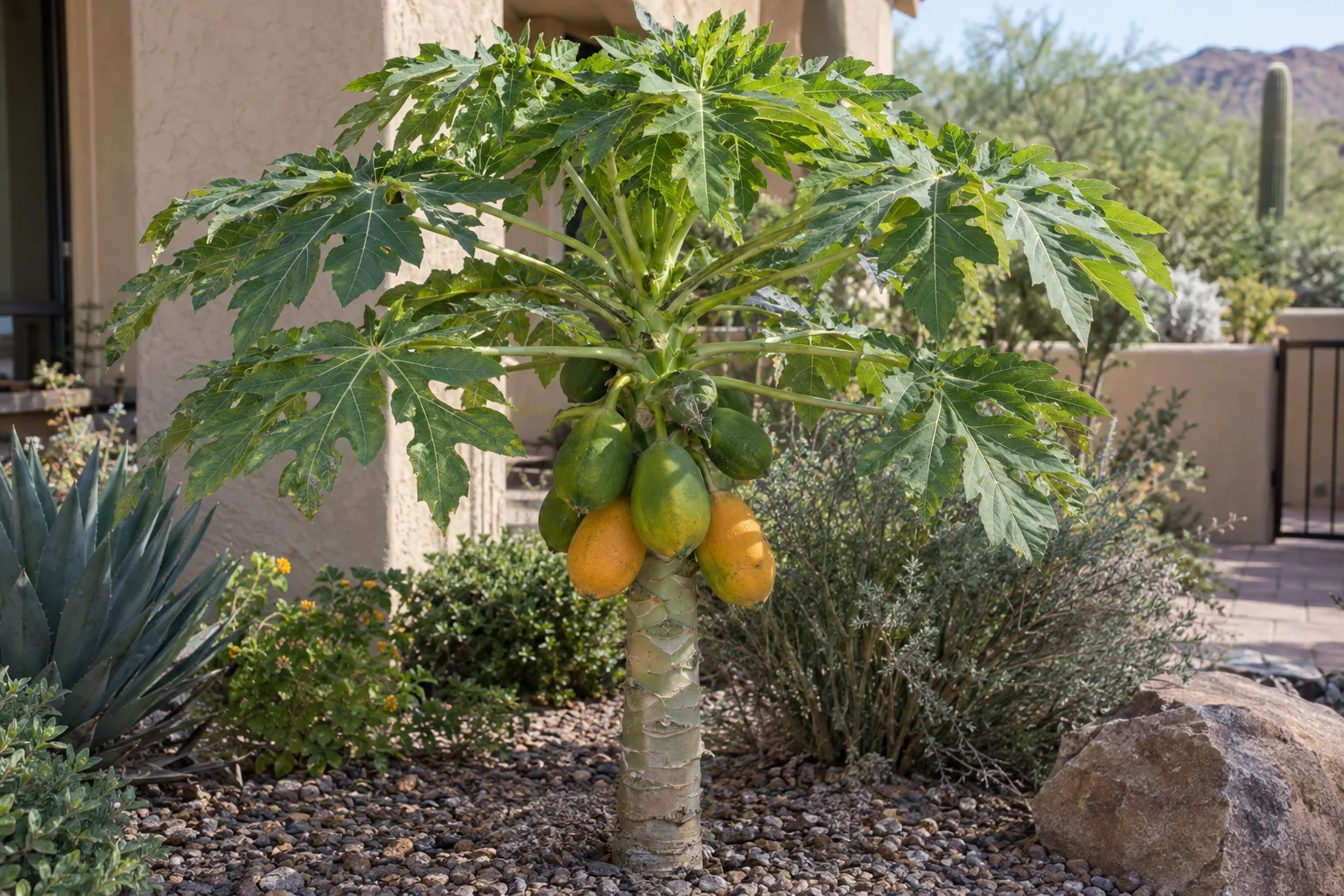
A frost-tender tropical fruit plant with a slender trunk, large lobed leaves, and edible papayas. ‘Hovey’ cultivar details are not well documented; in Phoenix Zone 9b, grow in a warm, protected microclimate.
Fruit edible; unripe-fruit latex is a skin/eye irritant
Care Instructions
Light: Full sun during cooler months; morning sun with afternoon shade is preferable during Phoenix summers. Shelter from reflected heat and drying winds.
Water: Keep the root zone evenly moist but never saturated. Water deeply when the upper 1–2 inches of soil begin to dry; increase frequency during extreme heat and reduce substantially in cool weather.
Soil: Fertile, organically enriched, exceptionally well-drained soil; slightly acidic to neutral preferred. Raised beds help prevent waterlogging. Mulch the root zone while keeping mulch away from the trunk.
Mature size: Typically 10–20 feet tall and 6–10 feet wide for papaya; reliable ‘Hovey’-specific dimensions are unavailable. Containers and winter damage may limit size.
Bloom: May begin flowering within 6–12 months under consistently warm conditions. Flowering can continue through warm weather, but cold and extreme heat interrupt flowering and fruit set.
Evergreen / deciduous: Evergreen in frost-free conditions; may lose leaves or die during cold weather in Zone 9b.
Growth rate: Fast in warm weather with adequate moisture and nutrition; slows markedly during cool weather.