Low water once established; water deeply, then let soil dry thoroughly. Water sparingly during extreme summer heat and cool winter weather; never keep roots continuously moist.
Size
1-2 ft tall × 2-3 ft wide
Habit
Clustering succulent
Toxicity
Toxic — Pets
Description
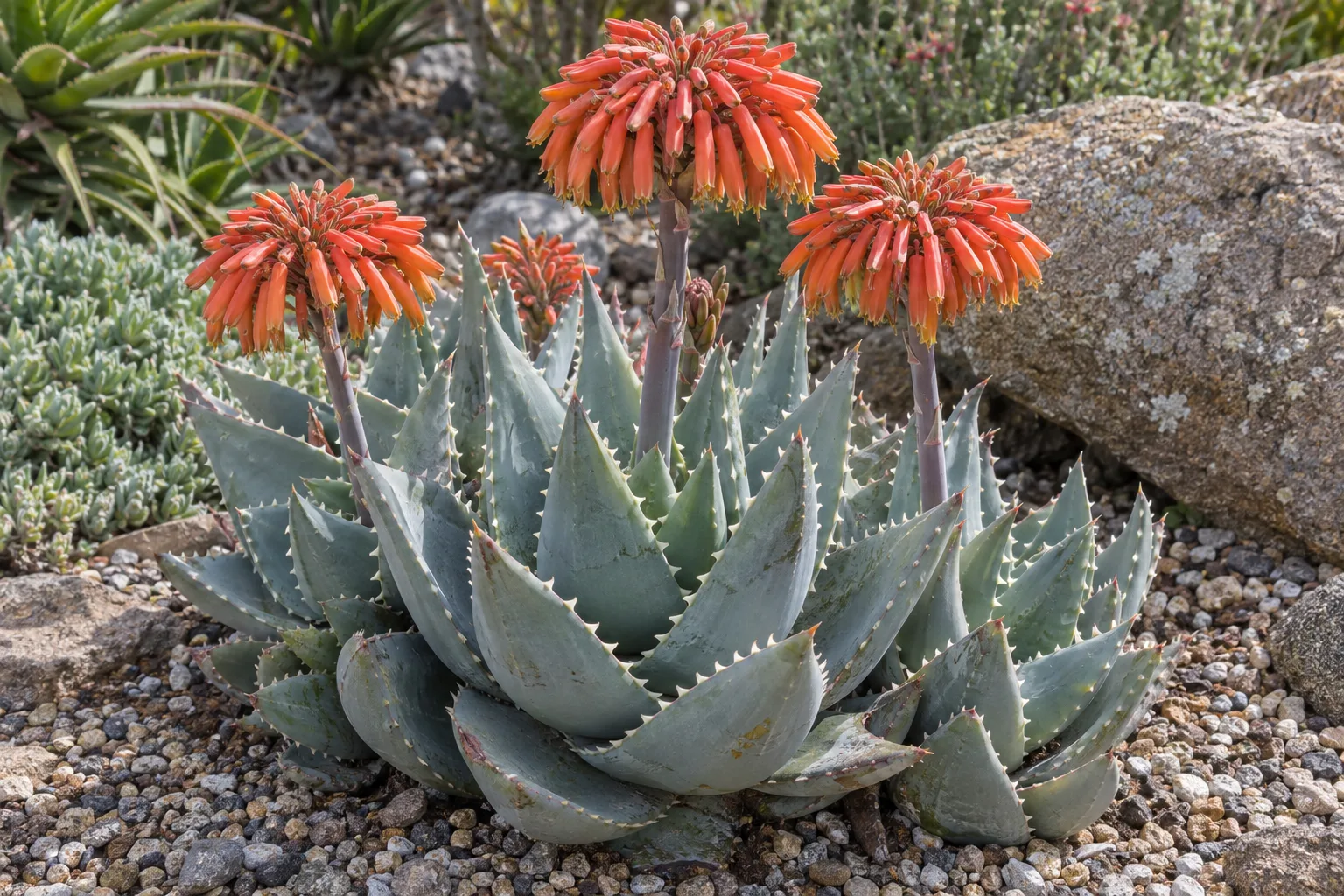
A clumping aloe with thick, blue-green leaves and pale marginal teeth. Identified here as Aloe perfoliata, also called mitre aloe; the trade name ‘Nobilis Blue’ may be used inconsistently.
Blue elf aloe, Elephant bush, Golden barrel cactus, Red yucca
Toxic — Pets
Toxic to pets if ingested
Care Instructions
Light: Morning sun with afternoon shade in Phoenix; avoid intense reflected heat and prolonged summer afternoon sun.
Water: Low water once established; water deeply, then let soil dry thoroughly. Water sparingly during extreme summer heat and cool winter weather; never keep roots continuously moist.
Soil: Very well-drained, gritty or gravelly soil. Use raised beds or containers with drainage holes where native soil drains poorly.
Mature size: Approximately 1–2 feet tall and 2–3 feet wide; older colonies can spread farther through offsets and trailing stems.
Bloom: Typically blooms in summer once mature; flowering varies with growing conditions.