Low to moderate water once established. Water deeply, then let the upper several inches of soil dry. Irrigate more frequently during establishment and extreme summer heat; reduce watering in winter.
Size
3-4 ft tall × 3-4 ft wide
Habit
Mounded – spreading shrub
Toxicity
Toxic — Pets Humans & Livestock
Description
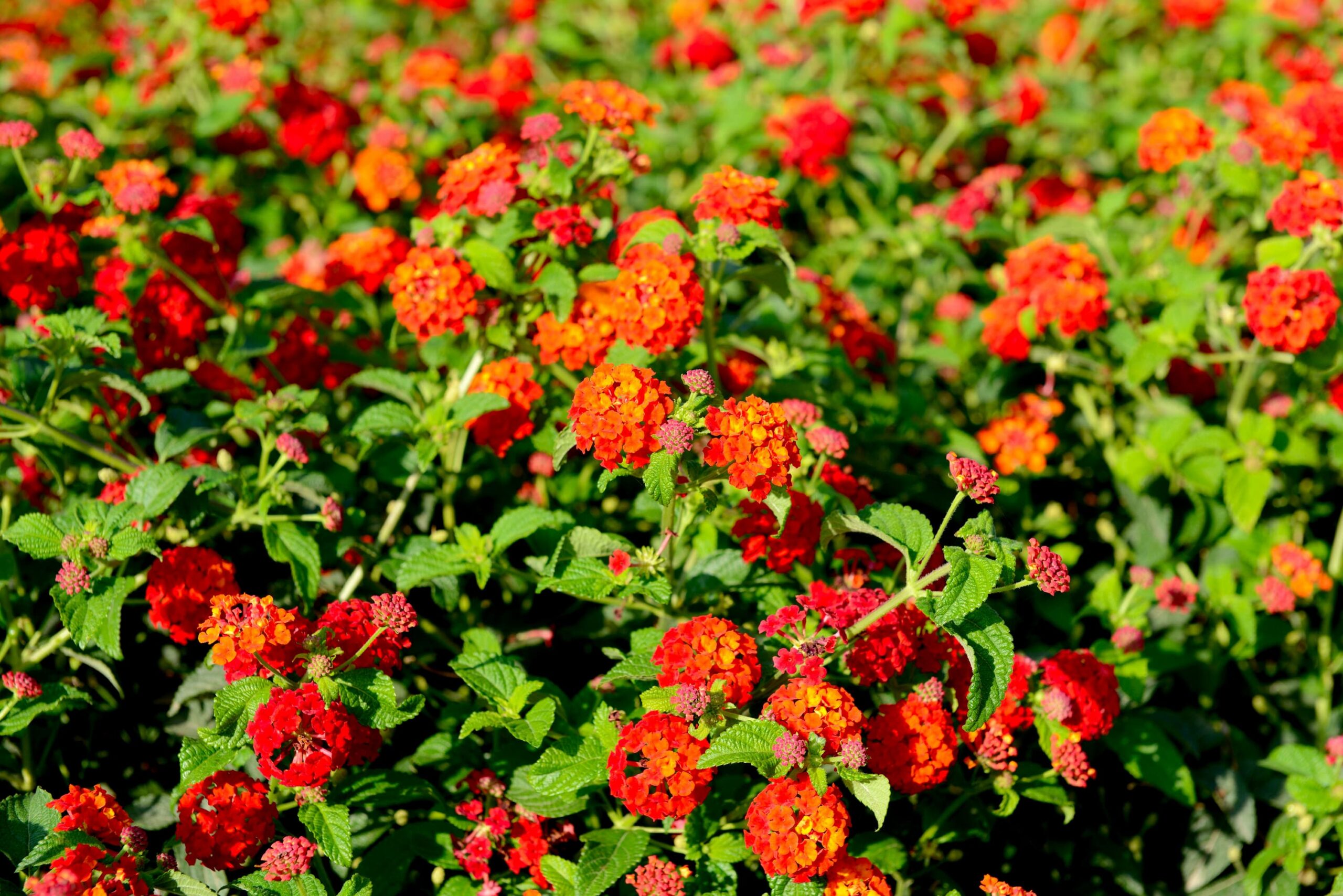
A heat-loving flowering shrub, Lantana camara ‘New Red’ produces clusters of orange and yellow flowers that mature to vivid red, creating a multicolored display.
Toxic to pets, humans & livestock; unripe berries especially toxic
Care Instructions
Light: Full sun for best flowering; tolerates light afternoon shade in Phoenix.
Water: Low to moderate water once established. Water deeply, then let the upper several inches of soil dry. Irrigate more frequently during establishment and extreme summer heat; reduce watering in winter.
Mature size: Approximately 3–4 feet tall and 4–6 feet wide.
Bloom: Blooms from spring through fall, sometimes into winter in frost-free locations.
Evergreen / deciduous: Evergreen in frost-free conditions; may lose leaves or die back during Zone 9b freezes, usually regrowing from surviving roots in spring.