

Split-leaf Monstera deliciosa, the trailing Swiss cheese vine M. adansonii in baskets, and the puckered dark-green ‘Peru’ — the three monsteras that do well in a bright Arizona room.
A monstera is the plant people buy when they want one big, architectural houseplant, and it delivers: fast growth, dramatic leaves that split and perforate as the plant matures, and a tolerance for indoor life that surprises first-time owners. In Queen Creek it wants what most tropicals want here — bright indirect light, a real pot with drainage, and protection from the air-conditioning vent — and in return it will outgrow its corner in two or three years.
We commonly carry three: the classic Monstera deliciosa, ready to climb a pole; M. adansonii, the Swiss cheese vine with its small perforated leaves; and ‘Peru’ (M. karstenianum), a compact climber with thick, deeply textured leaves that never split. Everything here is grown for indoor life; the rest of the bench is on our Houseplants page.

These are the monstera varieties we commonly carry. Availability changes week to week and season to season, so call (480) 987-3308 or stop in to see what’s on the bench today.
Monstera karstenianum: thick, rigid, deep-green leaves with a corrugated texture and no splits. A slower, compact climber for a shelf or a short pole, and the most drought-tolerant of the three.
Small, thin leaves full of oval holes on a fast, trailing vine — sold. Wants water a little more often than deliciosa and looks best trailing from a shelf or climbing a small trellis.
The split-leaf monstera. Give it a moss pole and bright indirect light and the new leaves come progressively larger and more fenestrated; without support it sprawls and the leaves stay juvenile. A young plant reaches ceiling height in a few years.
Looking for one that isn’t listed? Ask — we can usually suggest a close match or tell you when it tends to come around.
The care tag was written somewhere else. This is the Queen Creek version.
Monsteras split their leaves in response to light. A plant in a dim corner survives but produces small, solid leaves; the same plant a few feet from an east window, or across the room from a south window, produces the big fenestrated leaves people buy it for. Avoid direct sun through a west window in summer, which scorches leaves within days in our climate.
Deliciosa is a climber, and its aerial roots want something to grip. A moss pole or a plank, kept damp, turns a floppy plant into an upright one and triggers the larger, more divided leaves. Tie new growth loosely to the pole as it extends. Adansonii can trail from a basket or climb a small trellis; ‘Peru’ is happy either way.
A chunky aroid mix — potting mix with plenty of orchid bark and perlite — in a heavy pot with drainage, because a mature monstera is top-heavy. Repot every two years or when roots push out of the bottom. Feed a balanced liquid fertilizer at half strength monthly from March through October.
Push a finger in: water when the top third of the pot is dry, then soak thoroughly and let it drain. In an air-conditioned Queen Creek house that is about weekly in summer, every two weeks in winter. The most common monstera death we see is a plant in a decorative cache pot with no drainage, sitting in its own runoff. Take it out to water, or drill the pot.
Our indoor humidity sits around 15–25 percent for most of the year, and monsteras cope, but they show it with brown leaf edges if they also sit in the airflow of a vent. Keep them away from the register, group them with other plants, and wipe the leaves monthly — dust settles fast here and the big leaves collect it. Summer monsoon humidity is when they put on their best growth.
A fully shaded, covered patio works from March into May and October to the first 45°F night; summer sun and heat burn them even in shade, and frost kills them. All monsteras are toxic to cats, dogs and people if chewed. Prune leggy stems back to a node in spring; cuttings with an aerial root strike easily in water.
Yellowing, spots, no new growth — snap a photo of the plant and its window and we’ll diagnose it at the bench. Advice is free.
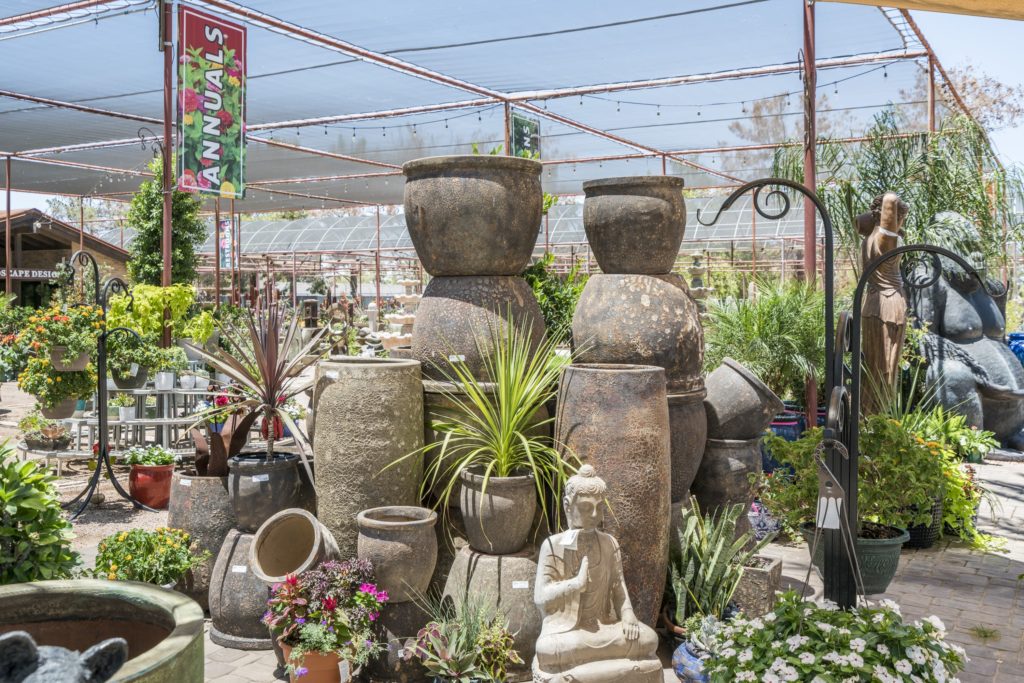
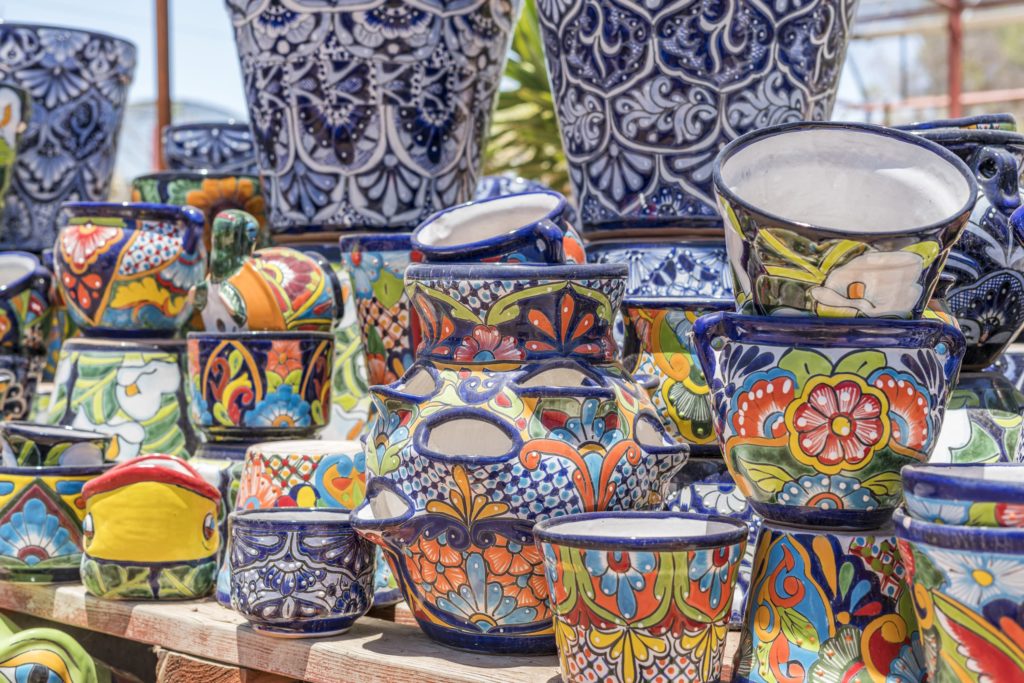
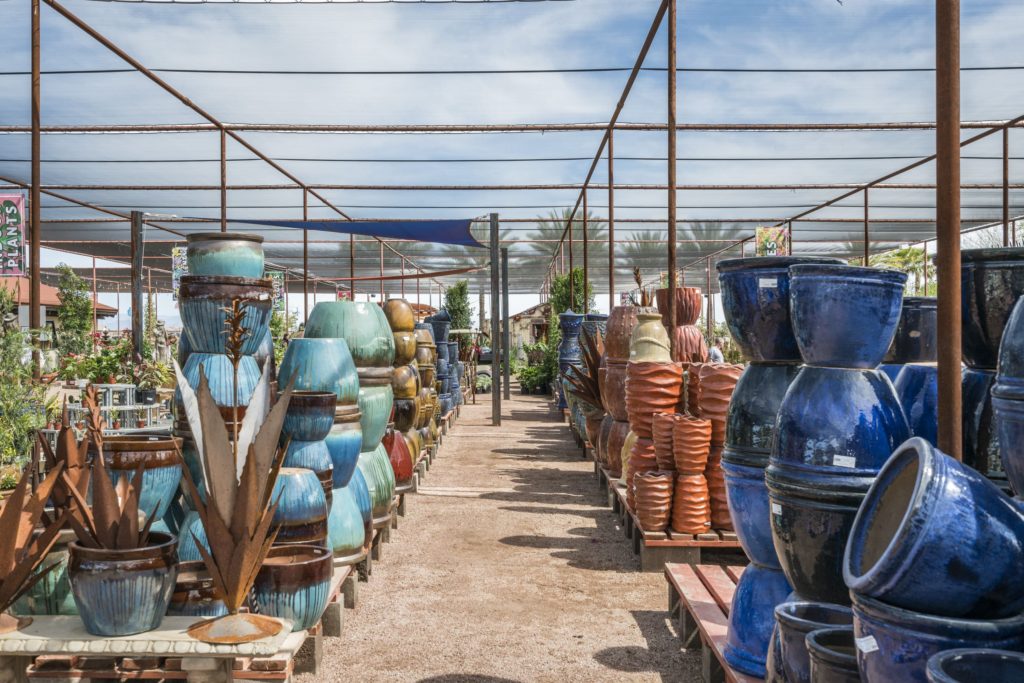
We stock indoor potting mix, orchid bark and perlite for the chunky blends aroids and epiphytes want, balanced houseplant fertilizers, insecticidal soap and neem for the usual mealybug and mite visits, and moss poles, hoops and saucers. The pottery yard has terracotta, glazed and lightweight pots from 4-inch up, plus hanging baskets and cache pots.
Age and light. Young plants make solid leaves; splits and holes come with maturity, and only when the plant gets bright indirect light and something to climb. Move it closer to a window (not into direct sun) and add a moss pole — the next few leaves will show the difference.
When the top third of the pot is dry: about weekly in summer with the air conditioning on, every two weeks in winter. Water deeply, let it drain fully, and never leave it sitting in a saucer or cache pot full of water.
Yes — all monsteras contain calcium oxalate crystals that cause mouth pain, drooling and vomiting if chewed. Keep them out of reach, or choose a pet-safe plant like a hoya or parlor palm instead.
Only on a fully shaded, covered patio in spring and fall. Direct sun scorches it, summer heat above 105°F stresses it even in shade, and any frost kills it. Most people keep it indoors year-round here.
Brown crispy edges are dry air, usually from sitting near an AC or heater vent, or from underwatering. Brown or black soft spots in the middle of a leaf mean root rot from staying too wet — check the drainage and let the mix dry out more between waterings.
Monstera live on the houseplant bench; any staff member can point you to them. Locally owned, and a short drive from San Tan Valley, Gilbert, Chandler and Mesa.