

Pachira aquatica with its braided trunk and glossy palmate leaves. A traditional housewarming gift and a genuinely easy plant — water it deeply, let it dry, and keep it out of the draft.
The money tree earns its reputation as a lucky plant by being hard to kill. Under the braided trunk is a tropical tree that stores water in its swollen base, tolerates the low humidity of an Arizona house, and grows steadily in ordinary bright indirect light. It is the plant we recommend most for a first apartment, a new office or a housewarming gift, because the only way to lose one is to drown it.
Ours have the classic five-stem braid. Give it a spot near an east window, water when the top half of the pot is dry, and expect it to reach four or five feet over several years. The rest of the bench is on our Houseplants page.

This is the money tree we commonly carry. Availability changes week to week and season to season, so call (480) 987-3308 or stop in to see what’s on the bench today.
Five stems braided into a single trunk topped with glossy, hand-shaped leaves. Sold at about eighteen inches tall; reaches four or five feet indoors over time. Bright indirect light; water deeply, then let the top half of the pot dry.
Looking for one that isn’t listed? Ask — we can usually suggest a close match or tell you when it tends to come around.
The care tag was written somewhere else. This is the Queen Creek version.
Money tree grows best near an east window or in bright filtered light from a south one. It tolerates medium light — a north room or an office — but grows slower and leans toward the window, so rotate it every couple of weeks. Direct afternoon sun through west glass in summer scorches the leaves.
A well-draining mix — potting mix with a generous share of perlite or cactus mix blended in — in a pot with a drainage hole, one size larger than the root ball. Repot every two to three years in spring. Heavy pots keep a tall plant upright.
It handles our dry indoor air well; brown leaf tips point to a vent or to hard-water salts, so flush the pot every couple of months. Feed a balanced liquid fertilizer at half strength monthly from March through October. Prune leggy stems in spring to keep it full.
This is where money trees are lost. Water thoroughly until it runs from the drainage hole, then let the top half of the pot dry out before watering again — every ten to fourteen days in summer indoors, every three weeks in winter. The trunk stores water; soggy soil rots the braid from the base and the plant collapses. Empty the saucer every time.
Money trees drop leaves when moved, chilled or blasted by a vent. Choose a bright, warm spot away from air-conditioning and heater registers and exterior doors, and leave it there. A plant that sheds after coming home refoliates within a few weeks once it settles.
Money tree is non-toxic to cats and dogs. Mealybugs and scale occasionally hide where the stems braid; check monthly and treat with insecticidal soap. Outdoors, a shaded covered patio in spring and fall only; it has no frost tolerance and burns in direct sun.
Yellowing, spots, no new growth — snap a photo of the plant and its window and we’ll diagnose it at the bench. Advice is free.
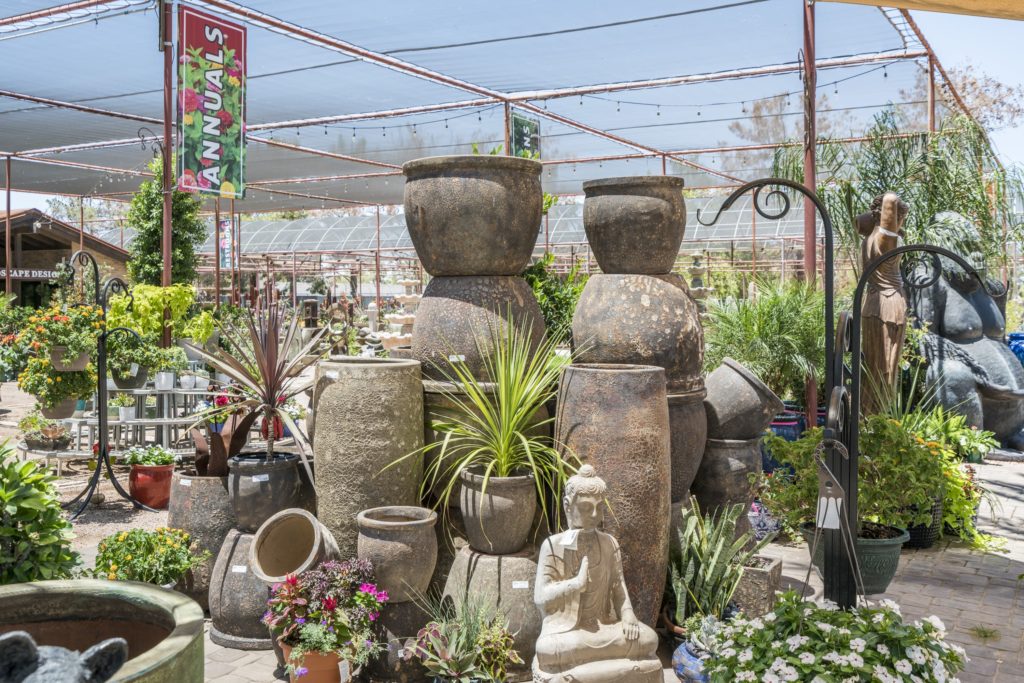
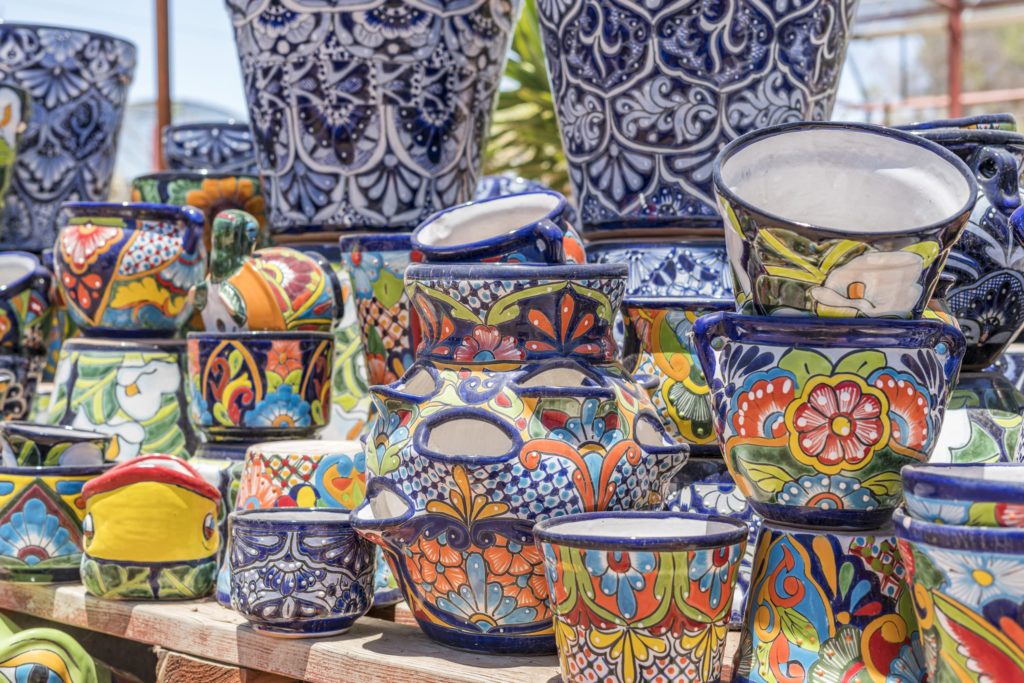
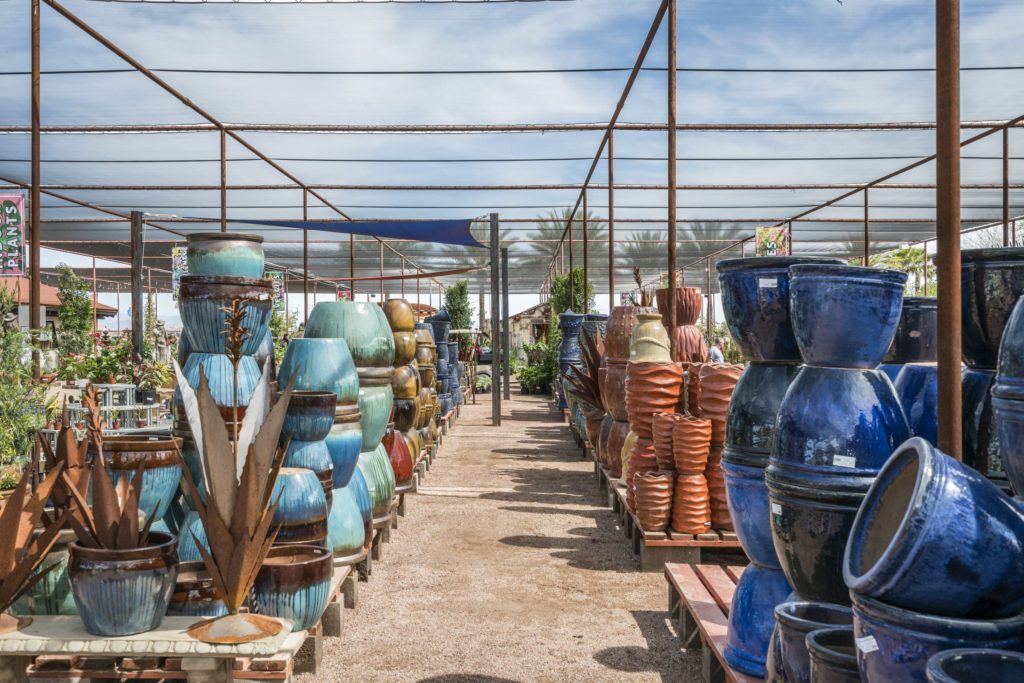
We stock indoor potting mix, orchid bark and perlite for the chunky blends aroids and epiphytes want, balanced houseplant fertilizers, insecticidal soap and neem for the usual mealybug and mite visits, and moss poles, hoops and saucers. The pottery yard has terracotta, glazed and lightweight pots from 4-inch up, plus hanging baskets and cache pots.
Overwatering first — check that the soil is drying out between waterings and that the pot drains. Otherwise it was moved, chilled or is sitting in a draft; it sheds when conditions change and regrows once settled.
Deeply, then let the top half of the pot dry: about every ten to fourteen days in summer indoors, every three weeks in winter. When in doubt, wait a few more days.
Yes — Pachira aquatica is non-toxic to cats and dogs.
Bright indirect light is best, but it tolerates medium light in an office or north room with slower growth. Keep it out of direct afternoon sun.
No. The braid was formed when the stems were young and flexible; it stays as it is. New growth comes from the top and can be pruned to shape.
On a shaded, covered patio in spring and fall. Direct sun scorches it and any frost kills it, so it lives indoors most of the year here.
Money Tree live on the houseplant bench; any staff member can point you to them. Locally owned, and a short drive from San Tan Valley, Gilbert, Chandler and Mesa.