

Peppermint, chocolate mint, mojito mint, orange mint and strawberry mint. Container plants, every one of them — and in a pot on a shaded patio, the easiest herb in the East Valley.
Mint is the herb people plant once and regret for a decade, because it runs underground and takes over any bed it touches. In a pot it is a different plant: a fragrant, forgiving perennial that tolerates shade, drinks whatever you give it, and bounces back from a hard cutback in two weeks. In Queen Creek it wants morning sun and afternoon shade, daily water in summer, and it goes briefly dormant in a hard frost before returning.
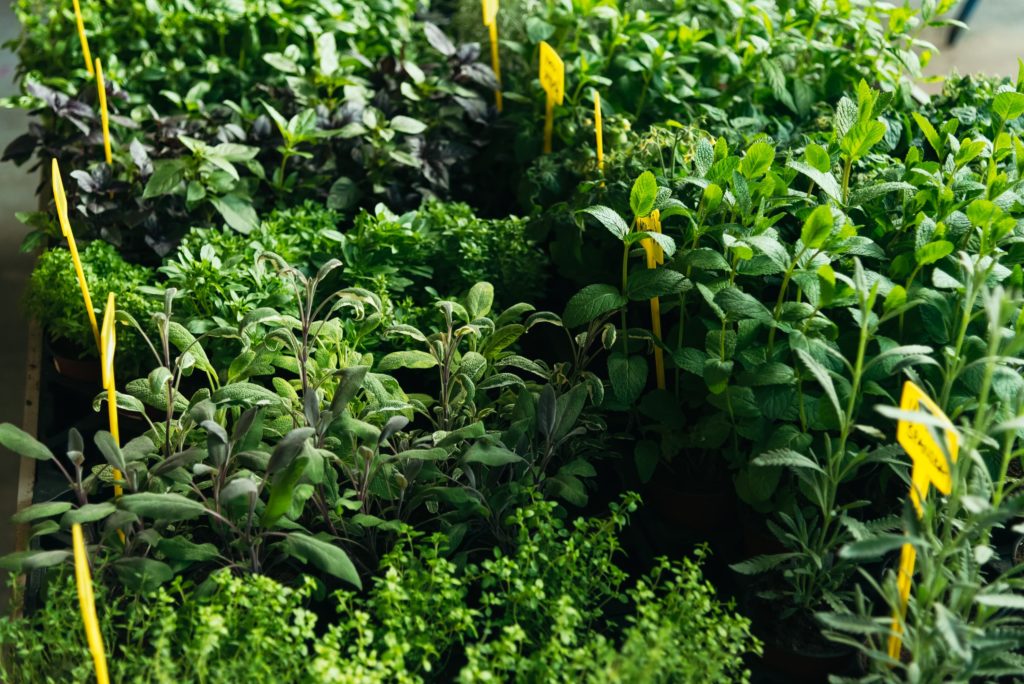
We commonly carry five: peppermint, chocolate, mojito, orange and strawberry mints. The rest of the edible benches are on our Herbs & Vegetables page.
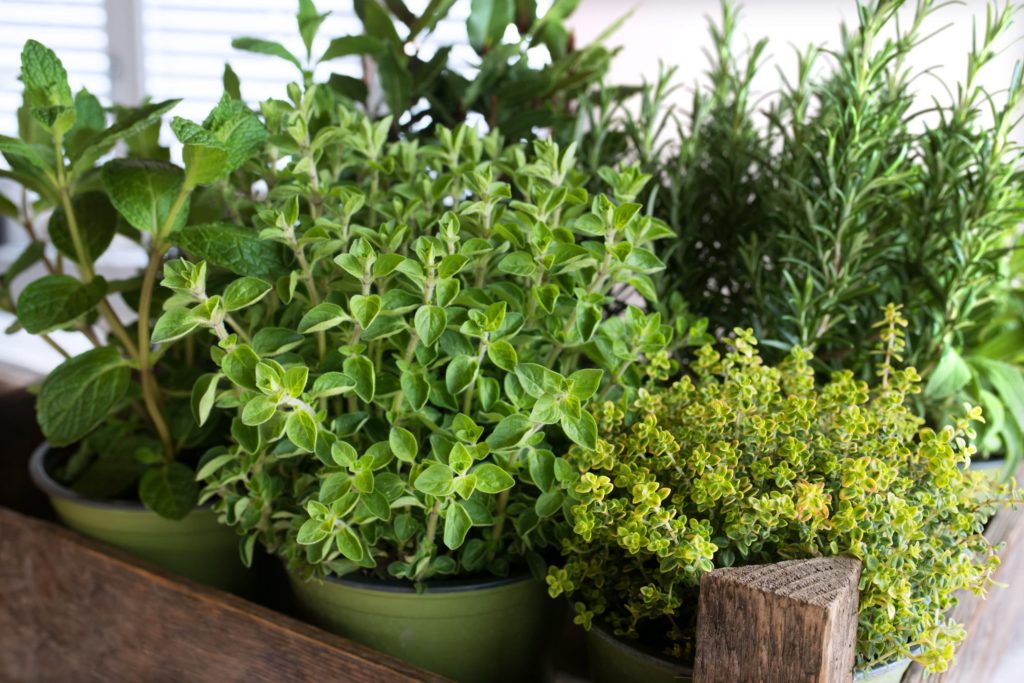
These are the mint varieties we commonly carry. Availability changes week to week and season to season, so call (480) 987-3308 or stop in to see what’s on the bench today.
A peppermint selection with dark stems and a scent that reads as chocolate mint. Same vigor, same care; the best-looking of the five.
The Cuban spearmint used in the cocktail: milder, sweeter and less menthol than peppermint, with rounder, brighter leaves. Fast in a pot.
A bergamot-scented mint with a citrus edge, for teas, fruit salads and cold drinks. Rounder leaves, red-tinged stems.
The strongest menthol flavor, for tea and desserts; dark stems and pointed leaves. Vigorous — one plant fills a 14-inch pot in a season.
A fruit-scented spearmint type with smaller leaves and a sweet aroma; for drinks and garnish. Slightly less rampant than peppermint.
Looking for one that isn’t listed? Ask — we can usually suggest a close match or tell you when it tends to come around.
The care tag was written somewhere else. This is the Queen Creek version.
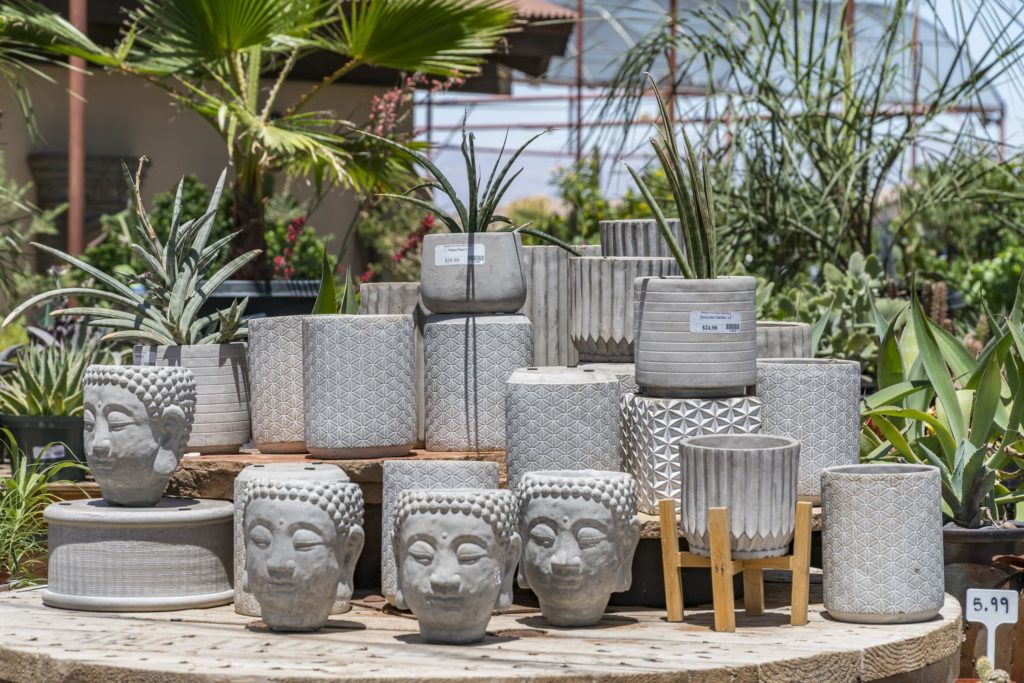
Plant mint in a pot, a half-barrel or a bed bounded by concrete on all sides. Runners travel a foot or more underground in a season and come up through neighboring plants. A 12- to 16-inch pot per plant is right; it will fill it within a season and want dividing every year or two.
Mint is a streamside plant. Pots need water daily in summer, sometimes twice on 110°F days, and every two to three days in the cool season. It wilts dramatically when dry and recovers fast, but repeated wilting browns the leaf edges. Use a moisture-retentive potting mix and a saucer in summer.
Mint is perennial here. A hard frost blackens the top growth; cut it back and it returns from the roots by February. Every year or two, in fall or early spring, knock the plant out of the pot, cut the root mass into quarters, and replant one piece in fresh mix — the center exhausts itself otherwise.
Mint takes full sun in the cool months and scorches in the afternoon sun of May through September. Morning sun and afternoon shade year-round is the simplest spot — a covered patio, the east side of the house, under a tree. In deep shade it grows leggy and mild.
Whenever the plant gets leggy, rusty or flowers, shear it to two inches above the soil. It regrows fresh within two weeks. Do this at least twice a summer and once in early spring. Harvest by cutting whole stems, not picking leaves, which keeps it bushy.
Orange pustules under the leaves are mint rust: cut the plant to the ground, remove the debris and let it regrow. Aphids and spider mites in dry heat; hose them off. Whiteflies on a crowded patio; insecticidal soap. Mint is non-toxic to cats and dogs in the amounts they nibble.
Photo of the bed, how much sun it gets and what you want to eat — we’ll match varieties and planting dates to it. Advice is free.
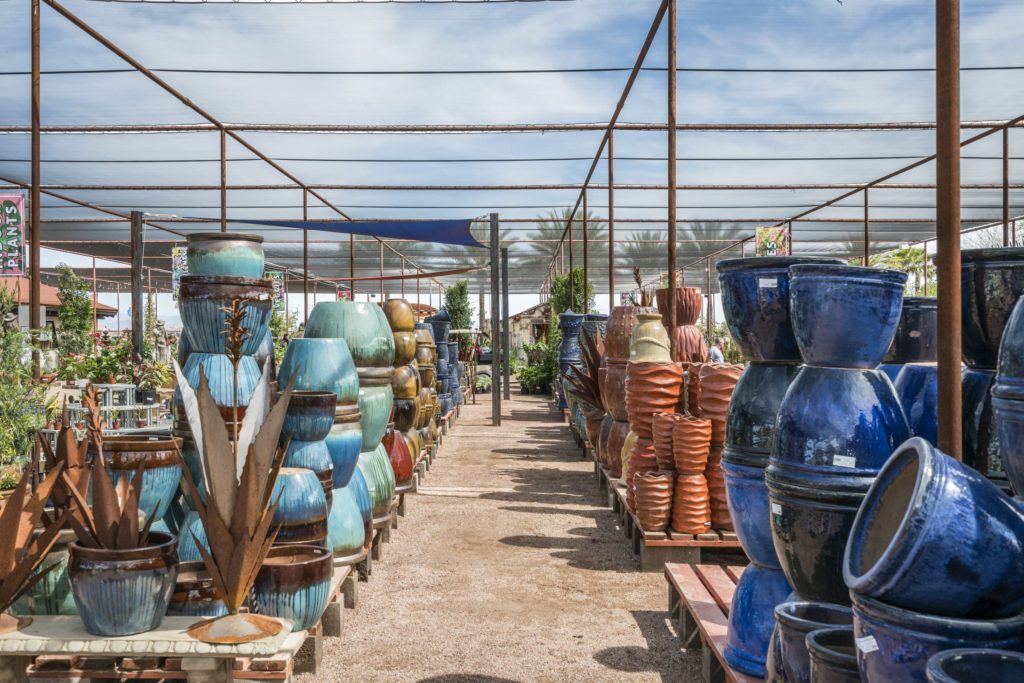
We stock raised-bed and vegetable planting mix, compost and steer manure by the bag or the yard, organic vegetable fertilizers, tomato cages and stakes, shade cloth for the May-to-September stretch, frost cloth for January, and drip fittings. The pottery yard has half-barrels and 15-gallon pots for patio vegetables, and soil and mulch is sold by the bag or by the yard.
Only where it is contained on all sides by concrete or a sunken pot. Otherwise it spreads by underground runners and takes over the bed and its neighbors. A pot is the answer.
Morning sun and afternoon shade. Full sun in summer scorches it; deep shade makes it leggy.
Daily in summer for pots, every two to three days in the cool season. It wants consistently moist soil.
It needs cutting back. Shear it to two inches above the soil and it regrows fresh in two weeks. Do this whenever it flowers or looks tired.
Yes. Frost may kill the top growth; cut it back and it returns from the roots by late winter.
Culinary mints are non-toxic to cats and dogs in small amounts.
Mint live on the herb and vegetable benches; any staff member can point you to them. Locally owned, and a short drive from San Tan Valley, Gilbert, Chandler and Mesa.