

The marigolds we commonly carry: compact French types — ‘Durango’, ‘Hero’, ‘Super Hero’, ‘Safari’, ‘Fireball’ — and the two-foot African pompoms ‘Antigua’ and ‘Taishan’. Two seasons here, spring and fall, not one long summer.
Marigolds are sold everywhere as the summer flower, and in the low desert that is the one season they struggle: planted in June they stall in the heat and spider mites move in. Plant them in February through April and again in September and October and they are as easy as their reputation — bright, fast, pest-resistant, and the classic edging for a vegetable bed. The French types stay under a foot; the African types make two-foot plants topped with tennis-ball pompoms.
We commonly carry the French ‘Durango’ series in five colors, ‘Hero’ and ‘Super Hero’, ‘Safari’ and the tall ‘Fireball’, plus African ‘Antigua’ and ‘Taishan’ in orange and yellow. The rest of the color tables are on our Annual Flowers & Foliage page.

These are the marigold varieties we commonly carry. Availability changes week to week and season to season, so call (480) 987-3308 or stop in to see what’s on the bench today.
under a foot
The workhorse French marigold: two-inch anemone-type flowers on a compact, heat-tolerant plant.
Clear yellow ‘Durango’; the one we also stock in fall.
Deep mahogany-red ‘Durango’ with a gold reverse.
Bicolor red-and-gold flowers.
All the ‘Durango’ colors in one pack.
Large-flowered crested French marigold in red and gold on a ten-inch plant.
‘Hero’ in a yellow crest with maroon guard petals.
An improved ‘Hero’ with more uniform, larger flowers; deep orange.
‘Super Hero’ in rich yellow.
‘Super Hero’ bicolor, orange with red flame.
The ‘Safari’ series: extra-large three-inch flat blooms on a compact plant.
‘Safari’ in mixed yellow, orange, red and bicolors.
pompom heads to two feet
A dwarf African type: three-inch orange pompoms on a compact 12-inch plant that doesn’t need staking.
‘Antigua’ in primrose yellow.
Vigorous African marigold with four-inch orange pompoms on a sturdy 14-inch plant; tolerates rain and heat well.
‘Taishan’ in bright yellow; also stocked in fall.
A tall, branching French marigold whose flowers open red and age through orange to gold, so the plant carries three colors.
Looking for one that isn’t listed? Ask — we can usually suggest a close match or tell you when it tends to come around.
The care tag was written somewhere else. This is the Queen Creek version.
Two windows in Queen Creek: mid-February through April, once frost is past, and September through mid-October, when the heat breaks. Spring plantings bloom until the heat stalls them in late June; fall plantings bloom until the first hard frost in December. Marigolds set out in May and June sulk, stop flowering and attract spider mites.
Ordinary garden soil amended with a little compost, or any potting mix; marigolds are not fussy and flower better slightly lean. Water every two to three days in beds, daily in pots by May, at the base rather than over the leaves — wet foliage in cool weather brings leaf spot. Mulch beds.
Spider mites are the marigold pest in dry heat: stippled, dusty leaves and fine webbing. Hose the undersides hard every few days and pull badly infested plants — they don’t recover in June. Slugs and snails after rain, rarely a problem here. Marigolds repel some nematodes and attract hoverflies, which is why they belong at the edge of the vegetable bed.
Full sun in both seasons — marigolds in shade grow tall and flower little. In late spring, afternoon shade stretches the season a few weeks; in fall they take all the sun there is.
Pinch spent flowers off weekly to keep new buds coming; African types especially stop if allowed to set seed. Feed lightly — a balanced fertilizer at planting and once a month after. Heavy nitrogen gives lush leaves and few flowers.
Marigolds are killed by frost; fall plantings end with the first hard freeze in late November or December. Cover on a light-frost night to buy a few weeks. Non-toxic to cats and dogs.
Snap a photo of the spot — sun direction, wall color, pot size — and we’ll pick a season-correct combination with you. Advice is free.
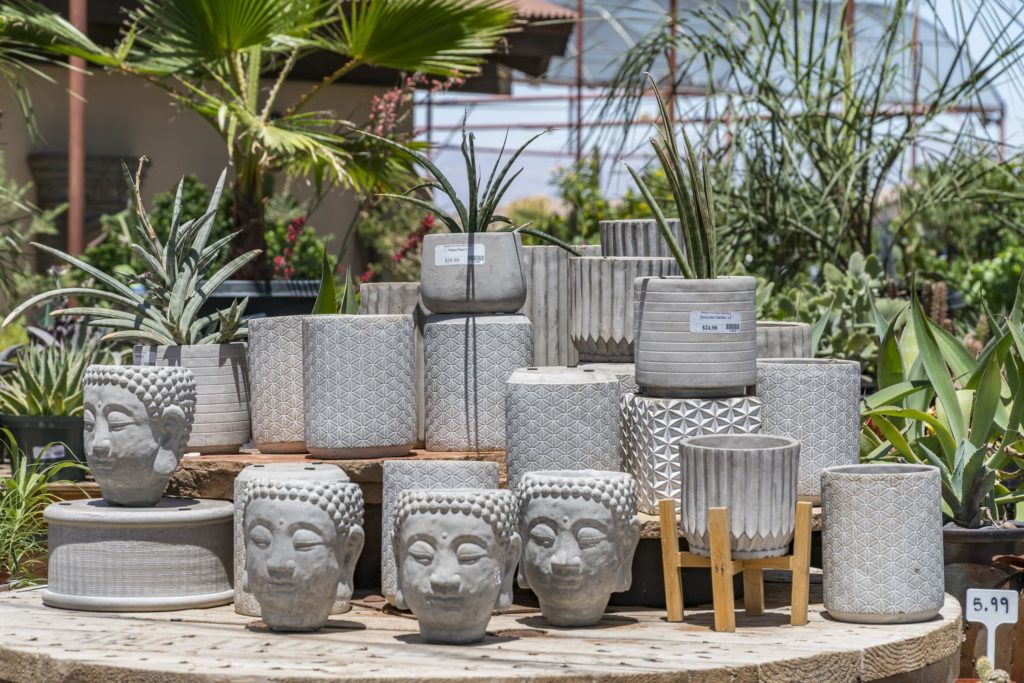
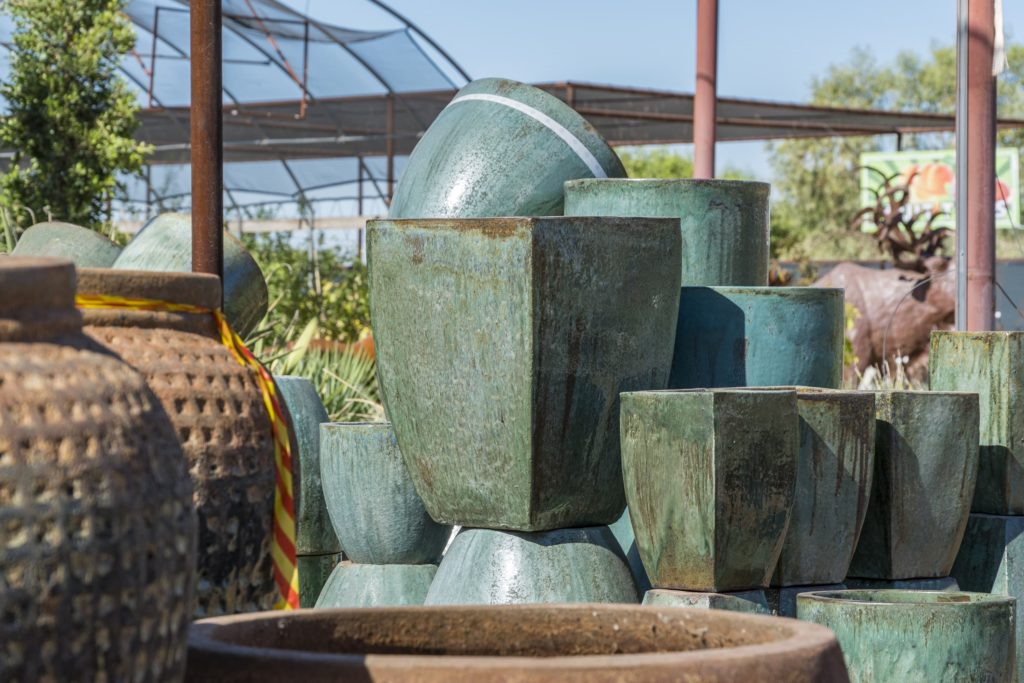
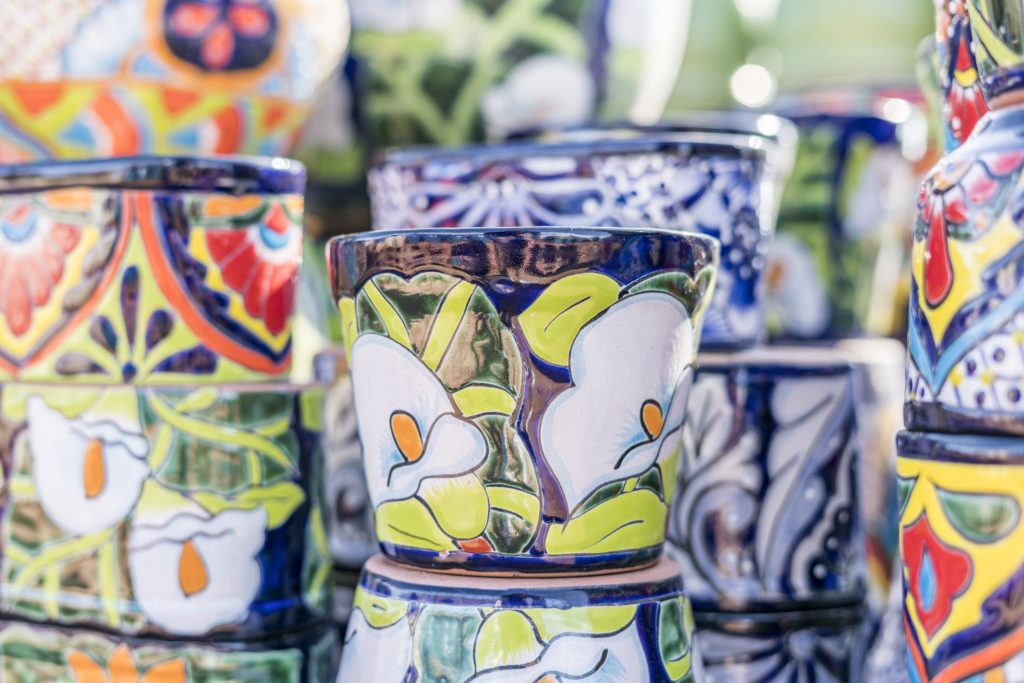
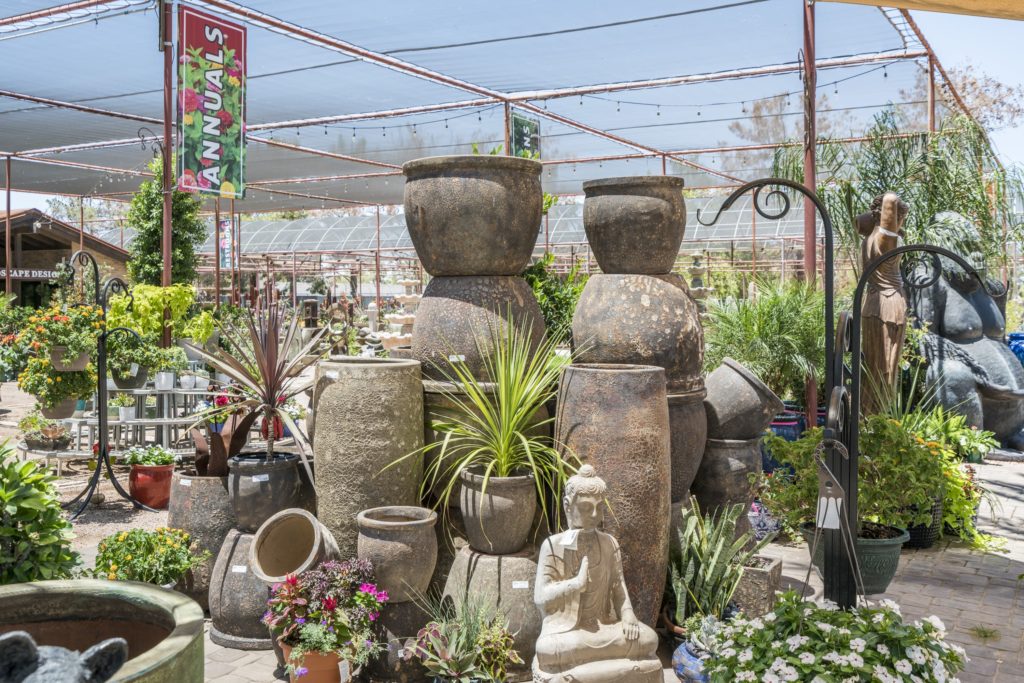
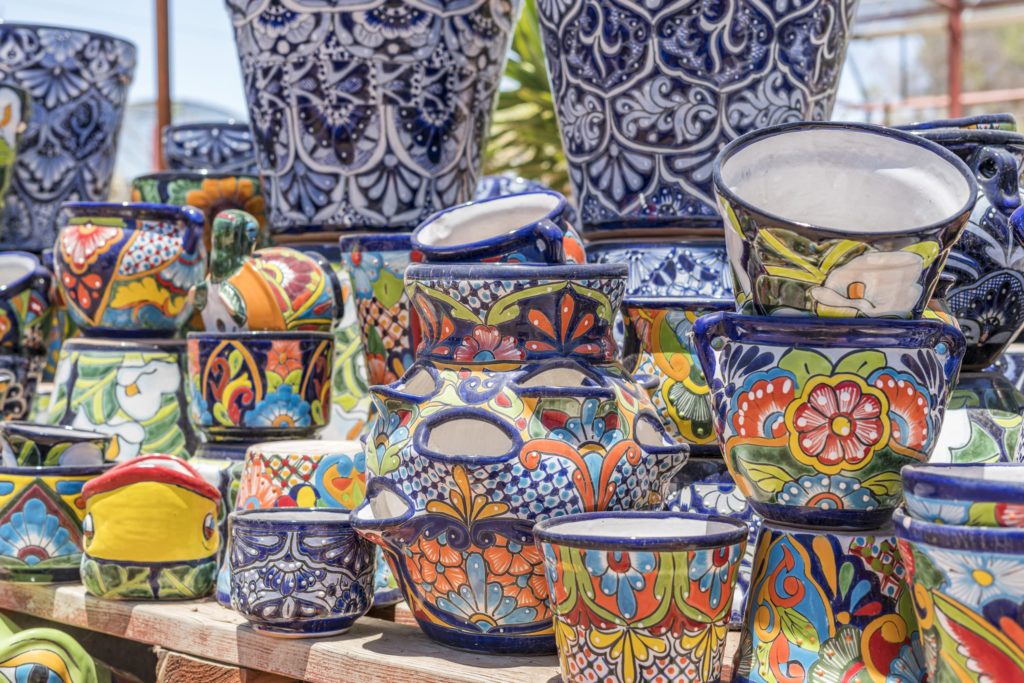
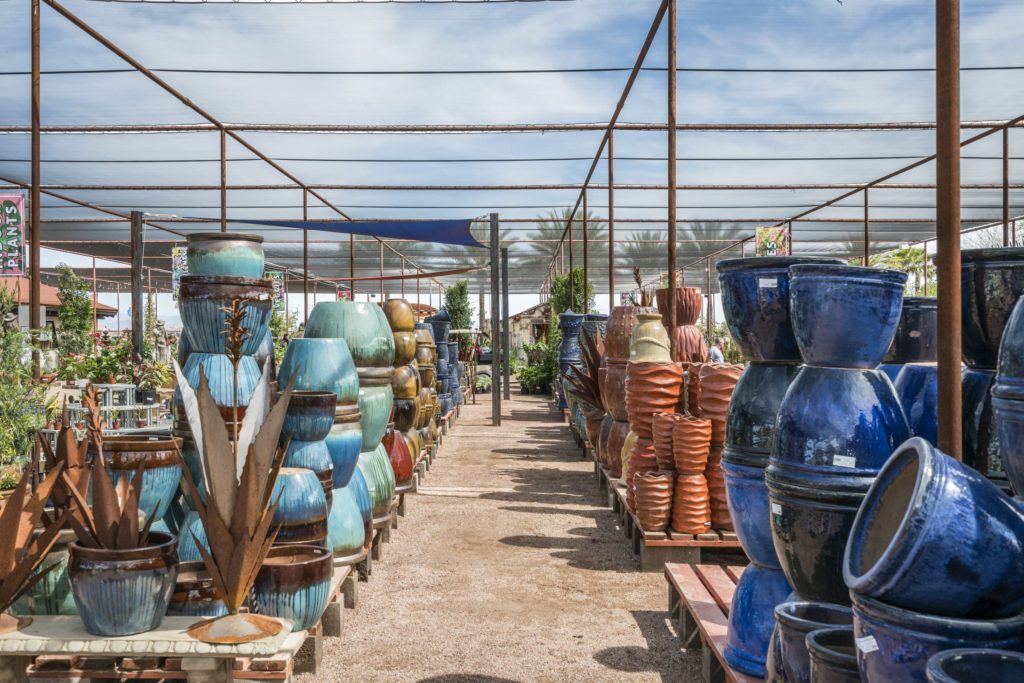
Annuals succeed or fail on what’s under them. We stock planting mix and compost for beds, potting mix for containers, bloom fertilizers including Tony’s Magic Mix and Magic Flower, starter fertilizer, drip fittings and frost cloth for the cold nights. The pottery yard has glazed and terracotta pots from 4-inch to whiskey-barrel size, window boxes and hanging baskets, and soil and mulch is sold by the bag or by the yard.
Mid-February through April, and again September through mid-October. Not in May or June — they stall in the heat.
Heat. Marigolds set out in late spring stop flowering once nights stay warm and often pick up spider mites. Pull them in July and replant in September.
French marigolds (‘Durango’, ‘Hero’, ‘Safari’) are compact, under a foot, with small flowers in reds, oranges and bicolors. African marigolds (‘Antigua’, ‘Taishan’) are taller with large yellow or orange pompoms. Both grow the same way.
Every two to three days in beds, daily in pots by May, at the base of the plant.
Yes — pinch off spent flowers weekly. It roughly doubles the bloom, especially on the African types.
Yes, garden marigolds (Tagetes) are non-toxic to cats and dogs, though the scent puts most off chewing them.
Marigold live on the annuals tables; any staff member can point you to them. Locally owned, and a short drive from San Tan Valley, Gilbert, Chandler and Mesa.