

The truest blue in the winter garden: bushy ‘Crystal Palace’ and ‘Palace Blue’, and the trailing ‘Regatta’ series in midnight blue, white and mix. Morning sun, afternoon shade, never let it dry out, and enjoy it October through April.
Nothing in the cool-season palette matches lobelia’s blue — a saturated cobalt on ‘Crystal Palace’ against bronze foliage, a clear sky blue on ‘Palace Blue’, midnight on ‘Regatta’. It is a small plant with hundreds of tiny flowers, used at the front of a bed, in the rim of a pot, or trailing from a basket, and in Queen Creek it is strictly a cool-season annual: planted in fall, in its glory in February and March, and dead the first week the highs stay above 90°F.
We commonly carry the bushy ‘Crystal Palace’ and ‘Palace Blue’, and trailing ‘Regatta Midnight Blue’, ‘Regatta White’ and ‘Regatta Trailing Mix’, all. Lobelia is toxic if eaten. The rest of the color tables are on our Annual Flowers & Foliage page.

These are the lobelia varieties we commonly carry. Availability changes week to week and season to season, so call (480) 987-3308 or stop in to see what’s on the bench today.
Deep cobalt-blue flowers over bronze-green foliage on a compact four-inch mound — the classic edging lobelia.
Clear sky-blue flowers over green foliage, same compact habit.
A trailing lobelia in deep navy-blue with a white eye, cascading eight to twelve inches from a basket rim.
Trailing ‘Regatta’ in pure white.
Trailing ‘Regatta’ in mixed blues, lilac, rose and white.
Looking for one that isn’t listed? Ask — we can usually suggest a close match or tell you when it tends to come around.
The care tag was written somewhere else. This is the Queen Creek version.
Set out from mid-October through February. Fall plantings bloom from December and peak in February and March; they die within days once highs stay above 90°F, usually in late April or May. A February planting gives six to eight weeks of bloom. There is no summer lobelia here.
Lobelia does not recover from wilting. Keep the soil evenly moist: every two days in beds and daily in pots and baskets, even in winter, in a mix that holds water. A dry weekend in March ends the season. Mulch beds; use a saucer under pots.
Lobelia takes light frost. On nights below 28°F cover baskets or move them under a roof; a hard freeze blackens the tops, and they regrow slowly.
Morning sun and afternoon shade, even in winter — lobelia in afternoon sun browns and dies weeks early. In a basket, hang it on the east or north side of the house.
Rich, moisture-retentive soil with compost, or a quality potting mix. A bloom fertilizer at half strength every two weeks. Plants that go leggy in February can be sheared by a third and fed; they refill in two to three weeks if the weather stays cool.
Aphids and slugs occasionally; otherwise pest-free. All parts of lobelia are toxic if eaten — keep it away from pets and small children.
Snap a photo of the spot — sun direction, wall color, pot size — and we’ll pick a season-correct combination with you. Advice is free.
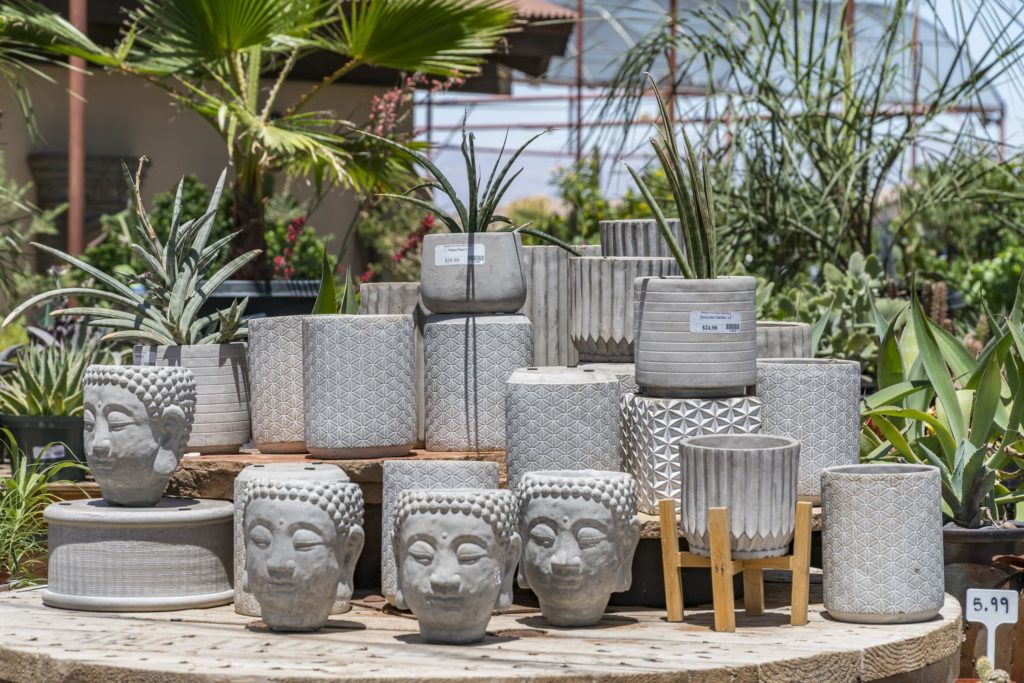
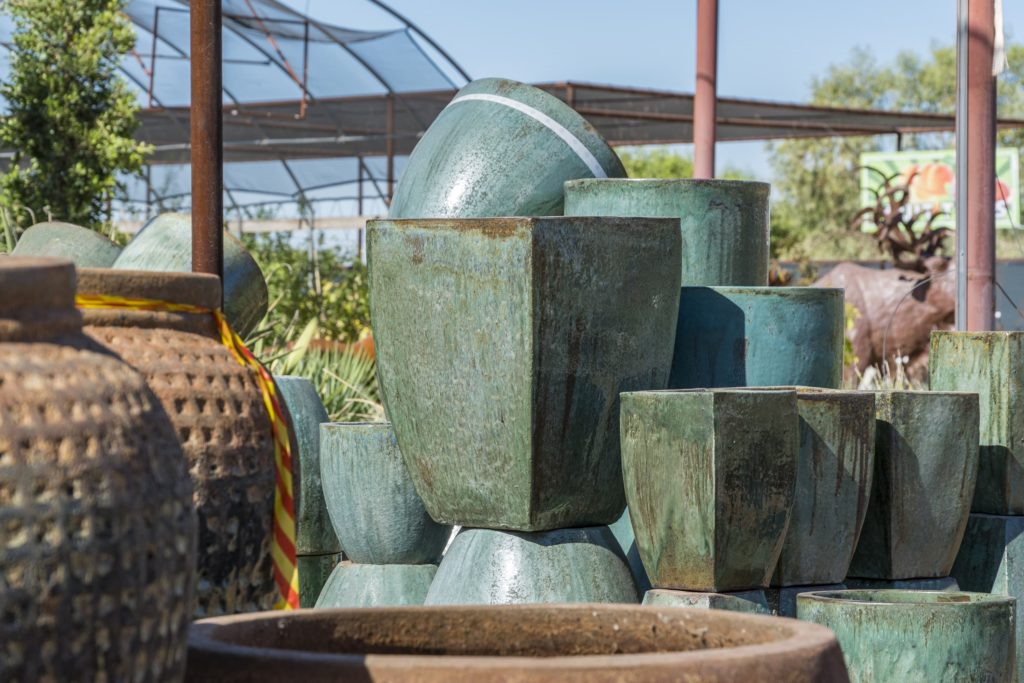
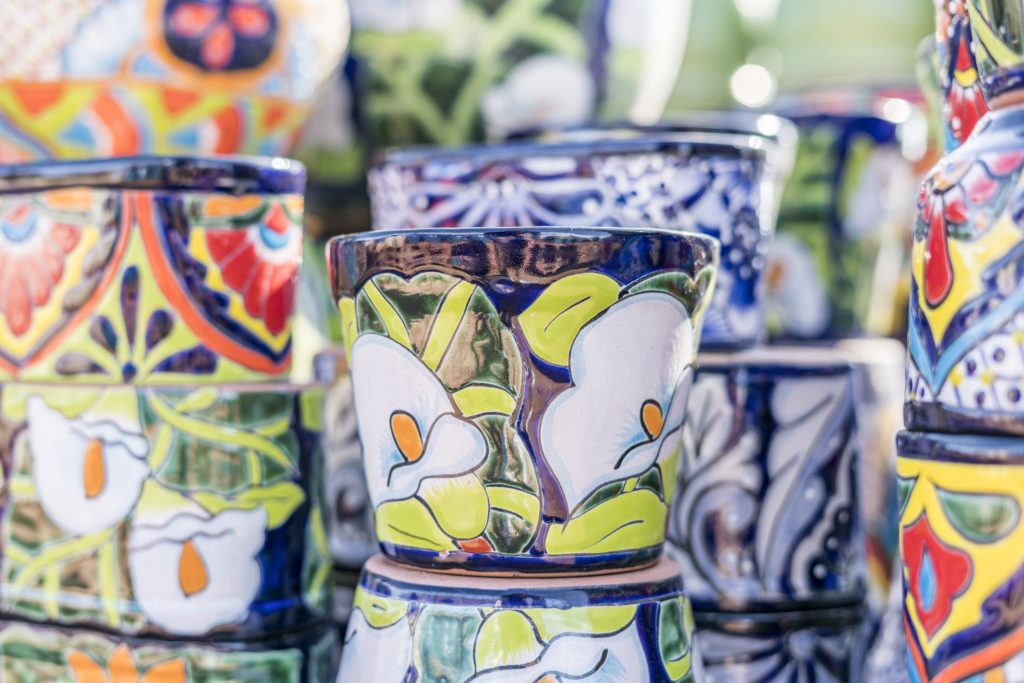
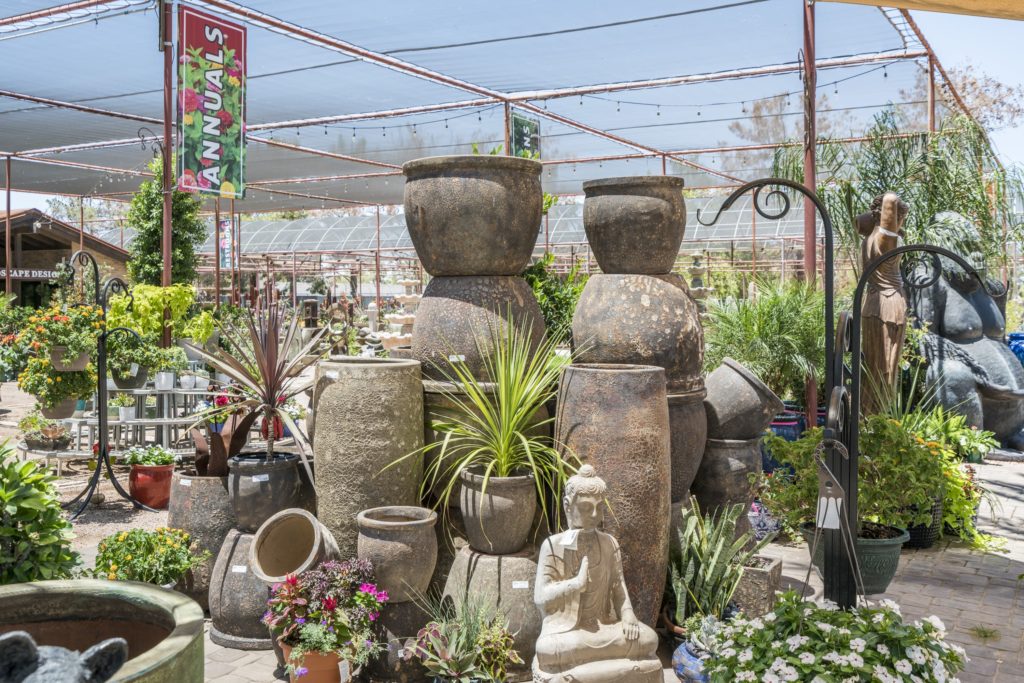
Annuals succeed or fail on what’s under them. We stock planting mix and compost for beds, potting mix for containers, bloom fertilizers including Tony’s Magic Mix and Magic Flower, starter fertilizer, drip fittings and frost cloth for the cold nights. The pottery yard has glazed and terracotta pots from 4-inch to whiskey-barrel size, window boxes and hanging baskets, and soil and mulch is sold by the bag or by the yard.
Mid-October through February. It peaks in February and March and dies when highs stay above 90°F.
It dried out once, or it got afternoon sun, or the heat arrived. Lobelia never recovers from a wilt; keep it moist and in morning-sun-only.
Every two days in beds and daily in pots and baskets, even in winter. Never let it dry out.
Morning sun only. Afternoon sun browns it quickly here.
No. It is a cool-season annual in the low desert. Replace it with a heat-tolerant trailer like portulaca or vinca in May.
No — all parts are toxic if eaten. Plant it out of reach.
Lobelia live on the annuals tables; any staff member can point you to them. Locally owned, and a short drive from San Tan Valley, Gilbert, Chandler and Mesa.