

Othonna capensis, also sold as ruby necklace — trailing purple stems strung with pickle-shaped leaves and small yellow daisies. A fast, easy spiller for baskets and succulent bowls.
Little pickles is one of the friendliest trailing succulents: bean-shaped blue-green leaves along purple-red stems that grow a foot or two a year, and cheerful yellow daisy flowers on and off through the warm months. In bright light the stems and leaves flush ruby, which is where the other common name comes from. It fills a hanging basket quickly and spills over the edge of a bowl planting.
Bright light with afternoon shade in summer, water only when dry, and cover on frosty nights — the same routine as the string succulents it is usually planted with. The rest of the bench is on our Succulents page.

This is the little pickles we commonly carry. Availability changes week to week and season to season, so call (480) 987-3308 or stop in to see what’s on the bench today.
Trailing stems to two feet with plump, pickle-shaped leaves that turn from green to ruby in bright light, and yellow daisies from spring through fall. Bright light, afternoon shade in summer, dry between waterings.
Looking for one that isn’t listed? Ask — we can usually suggest a close match or tell you when it tends to come around.
The care tag was written somewhere else. This is the Queen Creek version.
Bright light or morning sun brings out the ruby color and keeps the stems compact; in shade it stays green and lanky. Outdoors, give it sun until midday and shade after from May through September — afternoon sun scorches the leaves. Indoors, the brightest window you have.
Frost-tender. Move baskets under cover or indoors when nights approach 32°F; a light frost browns the tips and a hard one kills the stems back to the crown. It winters happily in a bright window.
A low-nitrogen succulent fertilizer at half strength once or twice in spring and summer. Trim long stems back in spring to thicken the crown; cuttings root easily in dry mix. Snip off spent flower stalks.
Water when the mix is fully dry and the leaves have lost a little plumpness: every week to ten days in summer for an outdoor basket in shade, every two to three weeks in winter. Drain completely. It rots in wet soil; a gritty cactus mix in a basket with drainage holes.
Fast-draining cactus and succulent mix with extra perlite or pumice. A hanging basket or a wide, shallow bowl lets it spill. Repot every two years or when it outgrows the container.
Toxicity is not well established, so keep it out of reach of pets that chew. Mealybugs and aphids occasionally; rinse or treat with insecticidal soap.
Stretching, mushy stems, a sunburned side — snap a photo of the plant and where it lives and we’ll sort it out at the bench. Advice is free.
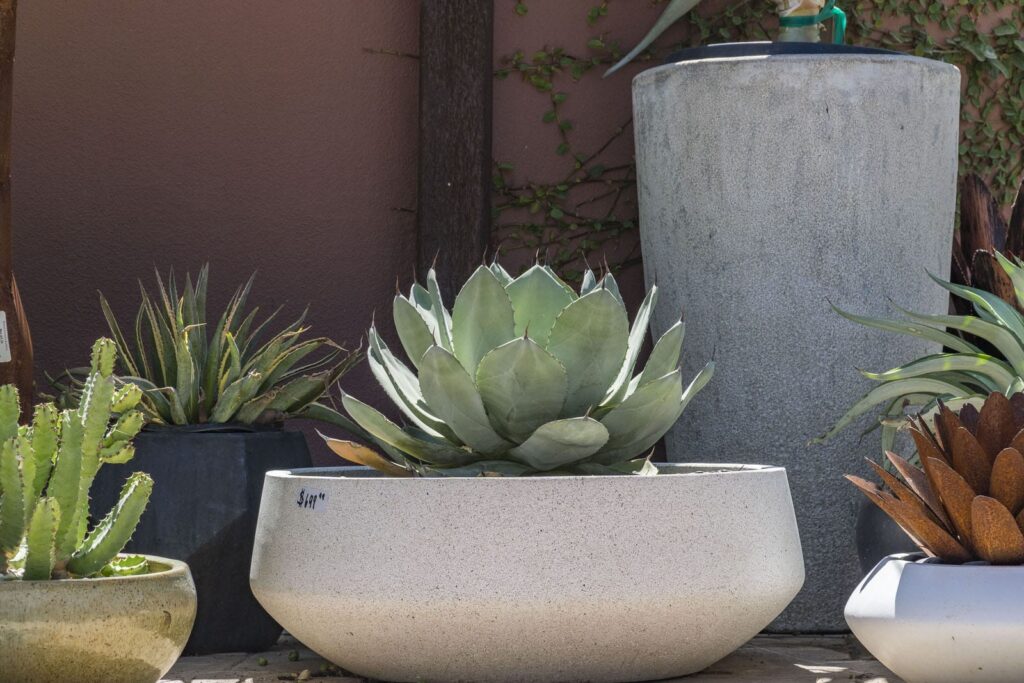
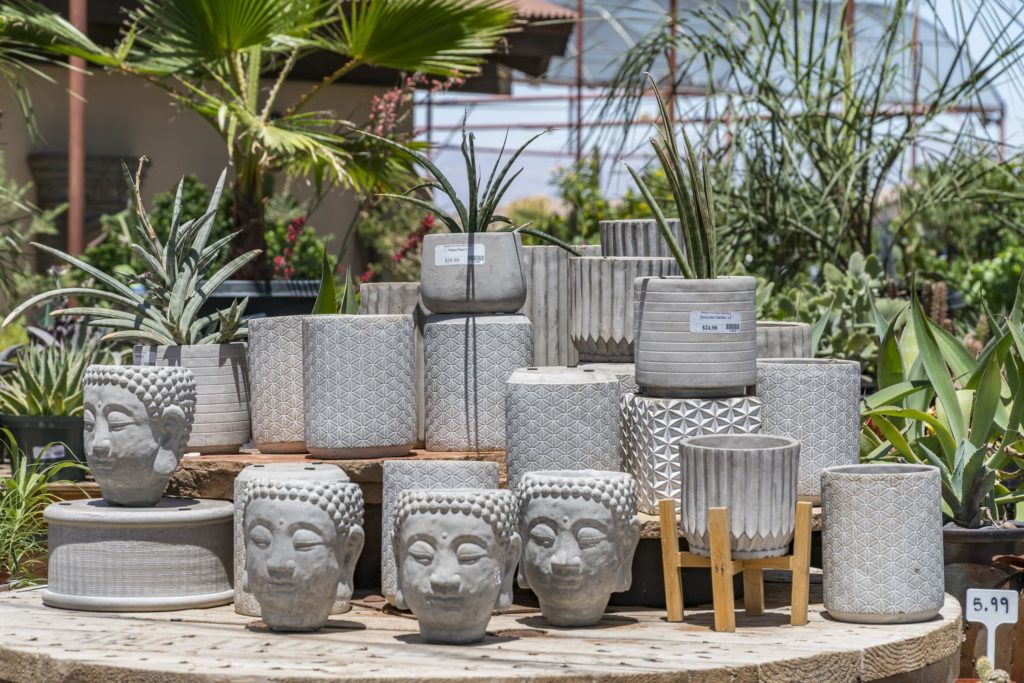
Succulents live or die on drainage. We stock cactus and succulent mix, pumice and grit to open it up further, slow-release low-nitrogen fertilizer, and the shallow terracotta and glazed pots that dry out the way they like. The pottery yard has bowls, strawberry jars and hanging baskets for the trailing types.

It needs bright light — morning sun outdoors or a very bright window. In shade it stays green, which is fine but less showy.
When the soil is completely dry — weekly to every ten days in summer outdoors, every two to three weeks in winter. Overwatering is the main risk.
Not on frosty nights. Bring baskets under cover or indoors when temperatures approach freezing.
Its toxicity is not well documented, so treat it as potentially harmful and keep it away from pets that chew plants.
Yes — small yellow daisies from spring through fall, more in bright light.
Morning sun, yes. Afternoon sun from May to September burns it; give it shade after noon.
Little Pickles live on the succulent bench; any staff member can point you to them. Locally owned, and a short drive from San Tan Valley, Gilbert, Chandler and Mesa.