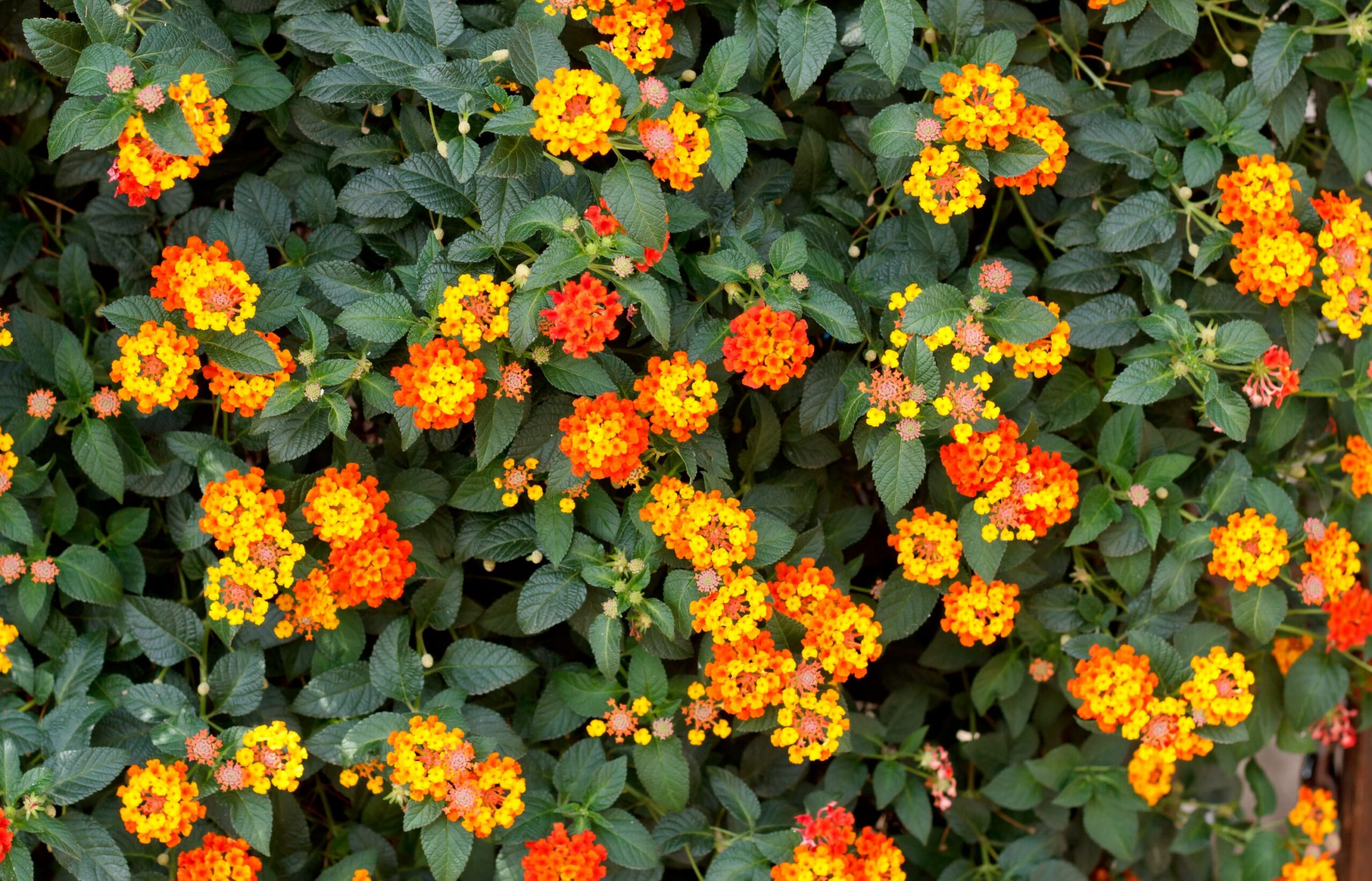
Lantana Radiation – Desert Horizon Nursery

Lantana Radiation

Lantana camara 'Radiation'
Categories:
Shrubs  ·  
Desert Shrubs
Light
Full sun
Water
Low to moderate once established. Water deeply, then allow soil to dry between irrigations; water more frequently during establishment and extreme summer heat.

Size
3-4 ft tall × 3-5 ft wide
Habit
Mounded – spreading shrub
Toxicity
Toxic — Pets Humans & Livestock
Description
A vigorous, heat-loving shrub with textured green foliage and vibrant flower clusters that transition from yellow to orange and red.
Bloom Time
Spring through fall; nearly year-round in frost-free conditions
Deciduous / Evergreen
Semi-evergreen
Special Features
Attracts Bees / Pollinators, Attracts Butterflies, Deer / Rabbit Resistant, Drought Tolerant, Heat Tolerant
Growth Rate
Fast
Growth Habit
Mounded – spreading shrub
Mature Size
3-4 ft tall × 3-5 ft wide
Flower Color
Yellow / orange / red
Foliage Color
Dark green
Landscape Use
Border / Bed, Container / Patio, Groundcover, Hedge / Screen, Pollinator / Wildlife Garden
Garden Style
Container / Patio, Hedge / Formal, Pollinator / Wildlife
Soil
Alkaline Tolerant, Sandy / Rocky, Well-Drained
Companion Plants
Autumn sage, Blackfoot daisy, Deer grass, Desert marigold, Red yucca
Toxic — Pets Humans & Livestock
Toxic to pets, humans & livestock if ingested
Care Instructions

Light: Full sun for best flowering; tolerates light afternoon shade in Phoenix.

Water: Low to moderate once established. Water deeply, then allow soil to dry between irrigations; water more frequently during establishment and extreme summer heat.


Soil: Well-drained soil; tolerates sandy, rocky, and alkaline soils. Avoid persistently wet soil.

Mature size: Typically 3–5 feet tall and 4–6 feet wide.

Bloom: Blooms repeatedly from spring through fall, often into winter in frost-protected Phoenix locations.

Evergreen / deciduous: Evergreen in frost-free locations; semi-evergreen or deciduous after frost in Zone 9b.

Growth rate: Fast during warm weather.