Deep, regular irrigation; not drought tolerant. Let the upper few inches of soil dry between waterings. Increase frequency during extreme heat and reduce in winter; irrigate beneath and beyond the canopy while keeping the trunk dry.
Size
12-15 ft tall × 10-12 ft wide
Habit
Upright tree – single-trunk – rounded canopy
Toxicity
Toxic — Pets
Description
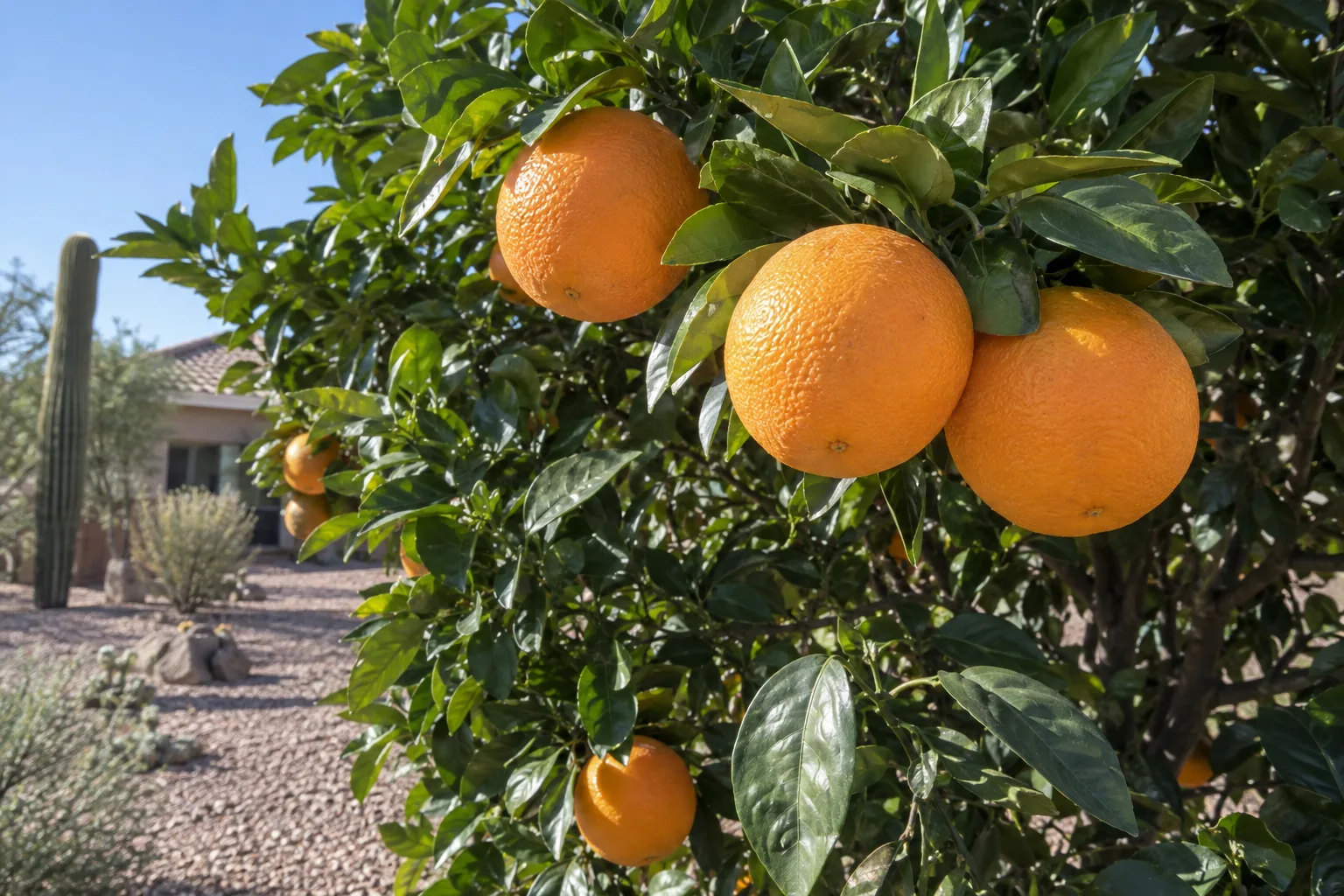
A late-maturing navel orange producing large, sweet, nearly seedless fruit with a small navel. Well suited to Phoenix with irrigation and protection from extreme heat while young.
Fruit edible; foliage and peel toxic to pets (citrus oils)
Care Instructions
Light: Full sun, ideally 6–8 hours daily; young trees benefit from light afternoon shade during Phoenix summers.
Water: Deep, regular irrigation; not drought tolerant. Let the upper few inches of soil dry between waterings. Increase frequency during extreme heat and reduce in winter; irrigate beneath and beyond the canopy while keeping the trunk dry.
Soil: Well-drained loam or sandy loam preferred; tolerates alkaline soil but may develop nutrient deficiencies. Avoid waterlogged soil and keep the root flare above finished grade.
Mature size: Usually 15–25 feet tall and 12–20 feet wide on standard rootstock; dwarfing rootstocks and pruning can maintain a smaller tree.
Bloom: Fragrant spring blossoms, generally February–April in Phoenix. Fruit matures mainly in late winter through spring and holds well on the tree.
Evergreen / deciduous: Evergreen.
Growth rate: Moderate with adequate water and nutrition.