Water deeply, then allow the upper few inches of soil to dry. Established in-ground trees generally need watering every 7–14 days in summer and every 3–4 weeks in winter, adjusted for soil and weather. Young trees and containers need more frequent watering; keep water away from the trunk.
Size
8-10 ft tall × 8-10 ft wide
Habit
Upright tree – single-trunk – compact
Toxicity
Toxic — Pets & Humans
Description
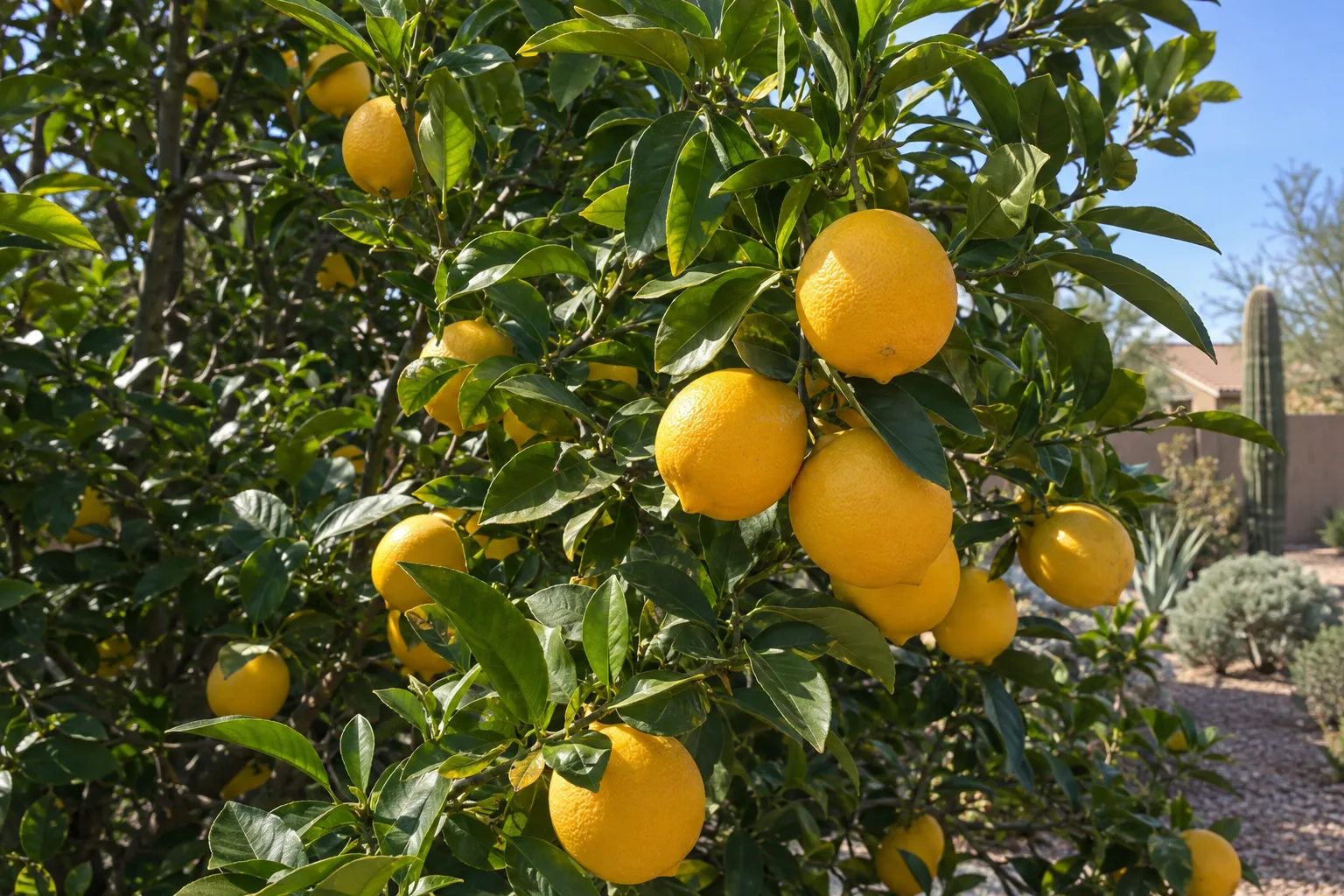
A compact citrus tree producing thin-skinned, golden-yellow fruit with a sweeter, less acidic flavor than standard lemons. Improved Meyer is a virus-free selection of the original Meyer lemon.
Bloom Time
Spring; may rebloom in fall
Deciduous / Evergreen
Evergreen
Special Features
Edible, Fragrant
Growth Rate
Moderate
Growth Habit
Upright tree – single-trunk – compact
Mature Size
8-10 ft tall × 8-10 ft wide
Flower Color
White (purple-tinged in bud)
Foliage Color
Dark green
Landscape Use
Container / Patio, Edible / Orchard
Garden Style
Edible Garden
Soil
Alkaline Tolerant, Sandy / Rocky, Well-Drained
Companion Plants
Calendula, Dill, Sweet alyssum
Toxic — Pets & Humans
Toxic to pets (foliage, peel, and oils); fruit edible for humans
Care Instructions
Light: Full sun with at least 6 hours of direct light; afternoon shade is beneficial in Phoenix, especially for young trees and container plants.
Water: Water deeply, then allow the upper few inches of soil to dry. Established in-ground trees generally need watering every 7–14 days in summer and every 3–4 weeks in winter, adjusted for soil and weather. Young trees and containers need more frequent watering; keep water away from the trunk.
Soil: Well-drained soil; sandy loam preferred. Tolerates Phoenix’s alkaline soils with appropriate nutrition, but avoid standing water, poorly drained clay, and planting too deeply.
Mature size: Usually 6–10 feet tall and 6–8 feet wide; size varies with rootstock and pruning. Dwarf or container-grown trees often remain 4–6 feet tall.
Bloom: Main bloom occurs in late winter through spring, with occasional repeat flowering. Fruit typically ripens in fall and winter and may continue into spring.