

‘Giant Voodoo’ — huge double purple-and-red pendants on a finished hanging basket. A spring patio plant in the low desert: full shade, daily water, weekly feeding, and enjoy it February through May.
Fuchsias are cool-climate plants, and the honest way to grow one in Queen Creek is as a spring event: hang a finished basket in deep shade in February or March, water it every day, feed it every week, and enjoy the extravagant dangling flowers — ‘Giant Voodoo’ has doubles the size of a golf ball in purple and red — until the first week of 100°F highs, when fuchsias collapse. Grown that way it is worth every dollar; grown as a summer plant it is a disappointment.
We commonly carry ‘Giant Voodoo’. The rest of the color tables are on our Annual Flowers & Foliage page.

This is the fuchsia we commonly carry. Availability changes week to week and season to season, so call (480) 987-3308 or stop in to see what’s on the bench today.
A trailing fuchsia with very large double flowers — purple corolla under swept-back red sepals — on a finished baskets. Full shade; daily water; February through May.
Looking for one that isn’t listed? Ask — we can usually suggest a close match or tell you when it tends to come around.
The care tag was written somewhere else. This is the Queen Creek version.
Hang it from mid-February, protecting from frost nights, through April. Fuchsias flower in the cool weather of March, April and early May and quit when highs pass 100°F. Some survive the summer in deep shade with daily water and rebloom in October; most are treated as spring color.
Never let a fuchsia basket dry out. Water daily, twice on warm windy days, until it runs through. A dry basket drops every flower and bud. Use a saucer or a self-watering basket. Mist the foliage in the morning on hot days.
Above about 90°F fuchsias stop setting buds; above 100°F they collapse. Keep the basket in the coolest spot you have as May arrives and accept the end of the show. If you try to summer it over, move it to full shade, keep it moist, stop feeding, and cut it back by half in September.
Full shade or the softest morning light only: under a covered patio, a north wall, a dense tree. Direct sun scorches the leaves and cooks the roots in a basket. It also dislikes wind, which shreds the flowers.
A bloom fertilizer at half strength once a week while it flowers — fuchsias in baskets are heavy feeders and stop blooming when hungry. Pinch off spent flowers and the small seed berries behind them.
Aphids and whiteflies on new growth — hose them off. Fuchsia gall mite is not a concern here. Fuchsias are non-toxic to cats and dogs; the berries are edible.
Snap a photo of the spot — sun direction, wall color, pot size — and we’ll pick a season-correct combination with you. Advice is free.
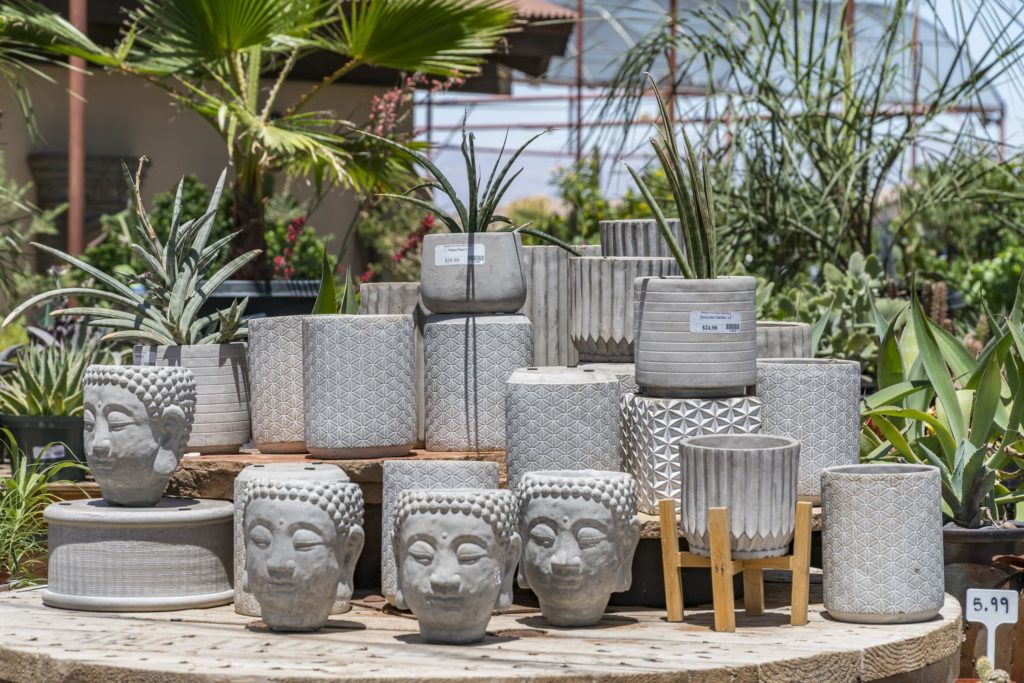
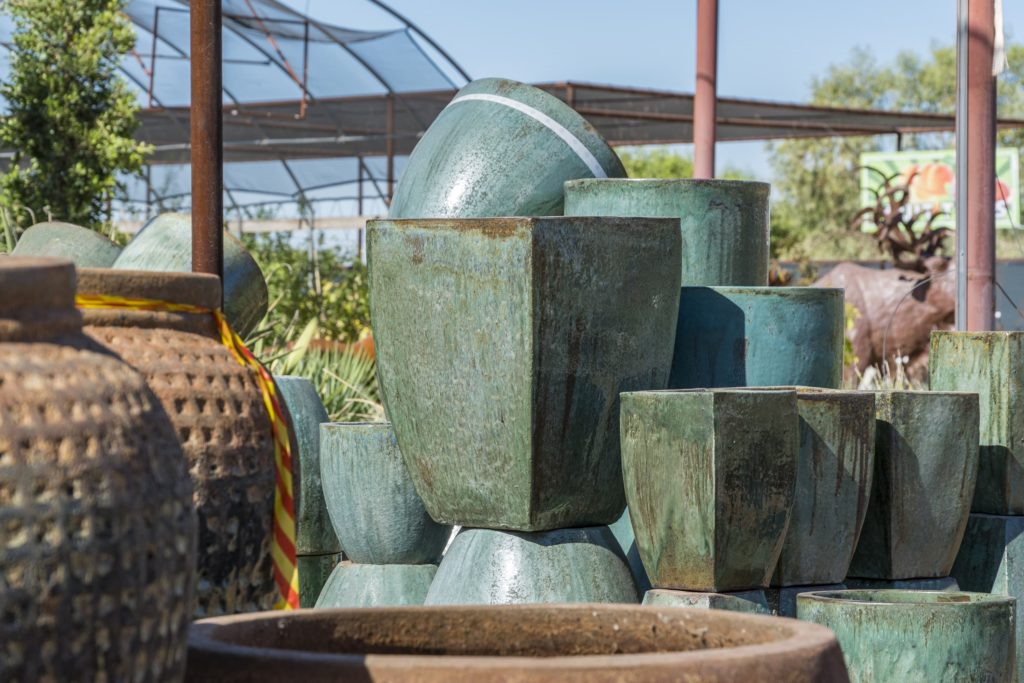
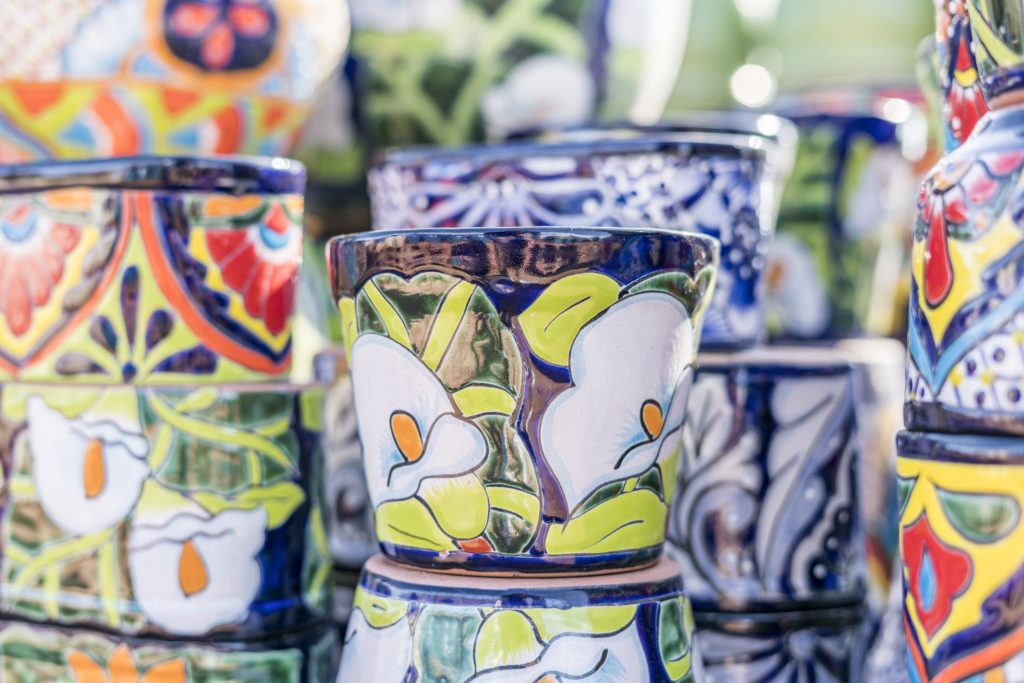
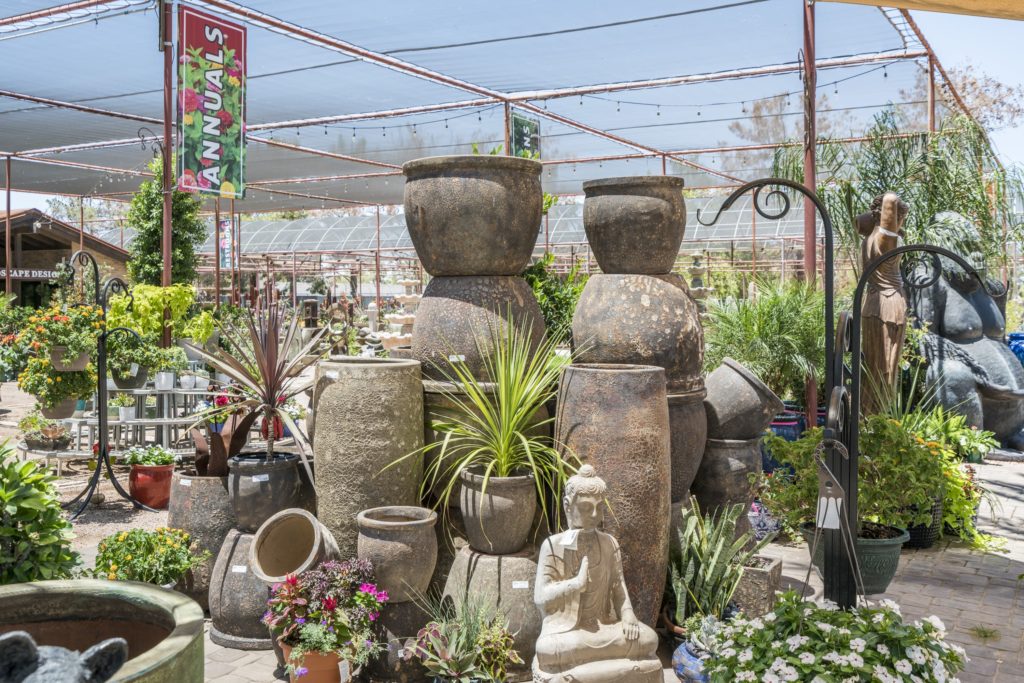
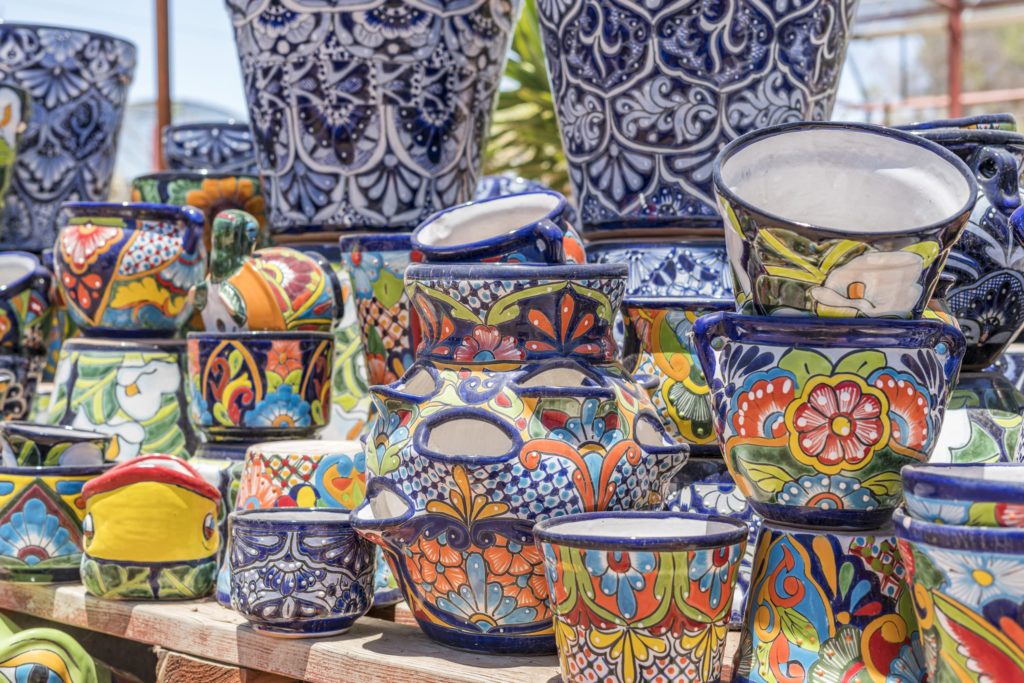
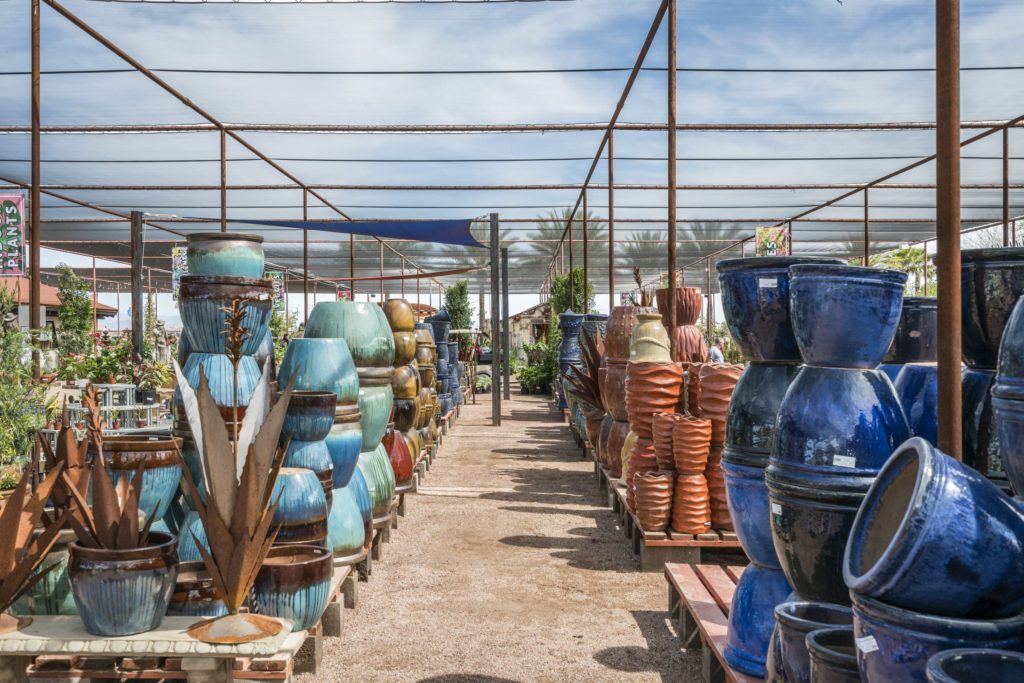
Annuals succeed or fail on what’s under them. We stock planting mix and compost for beds, potting mix for containers, bloom fertilizers including Tony’s Magic Mix and Magic Flower, starter fertilizer, drip fittings and frost cloth for the cold nights. The pottery yard has glazed and terracotta pots from 4-inch to whiskey-barrel size, window boxes and hanging baskets, and soil and mulch is sold by the bag or by the yard.
As a spring basket in full shade, yes — February through May. They collapse once highs pass 100°F. Treat them as seasonal color.
The basket dried out, or it got sun, or the heat has arrived. Water daily, keep it in deep shade, and feed weekly.
Every day, twice on warm windy days, until water runs through. Never let it dry out.
Only the softest early light. Full shade is safer here; direct sun scorches it.
Sometimes, in full shade with daily water. Cut it back by half in September and it may rebloom in October. Most people replace it.
Yes, non-toxic to cats and dogs.
Fuchsia live on the annuals tables; any staff member can point you to them. Locally owned, and a short drive from San Tan Valley, Gilbert, Chandler and Mesa.