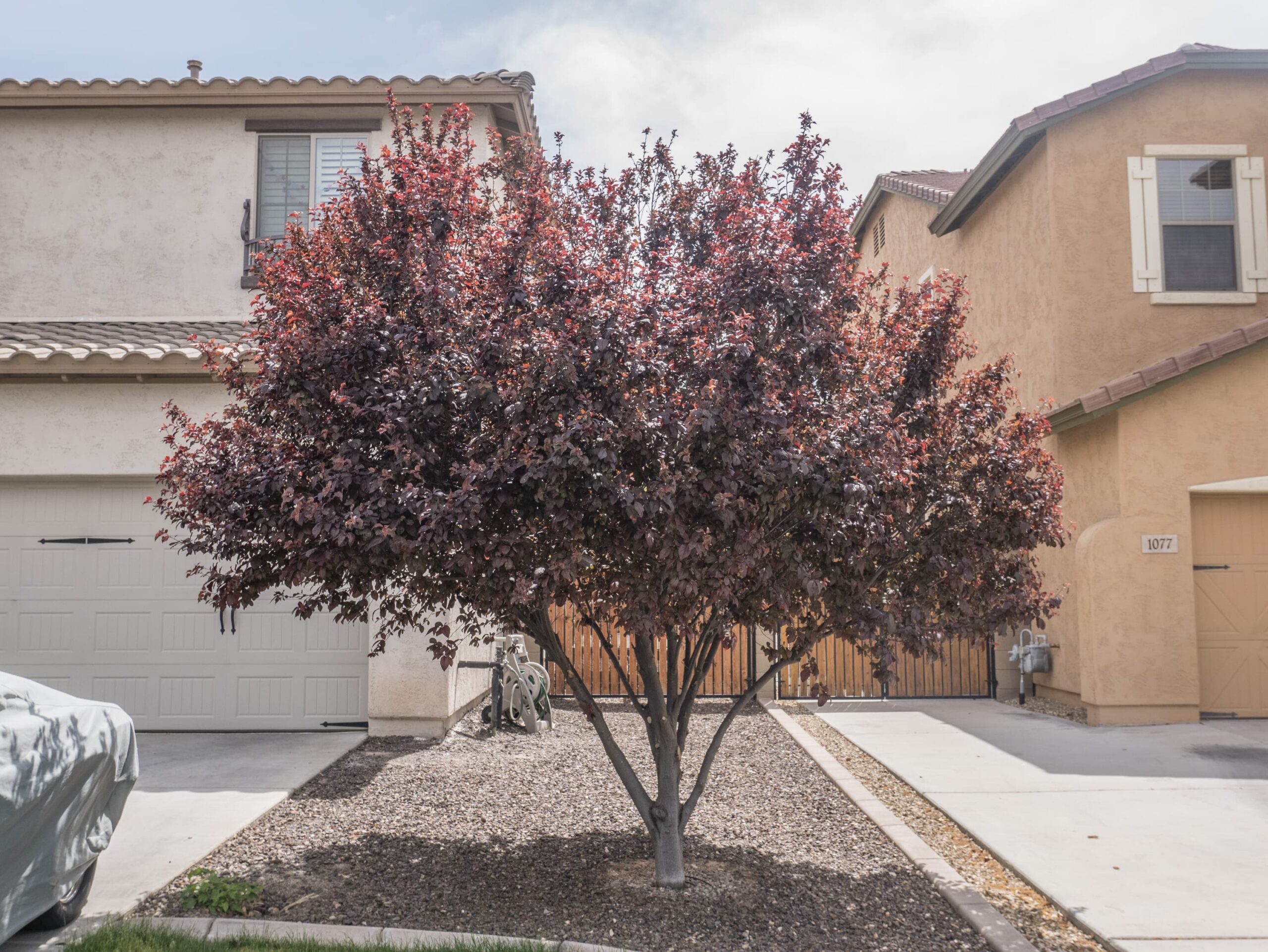
Moderate to high water needs in Phoenix. Water deeply throughout the root zone, allowing the upper few inches of soil to dry between irrigations. Newly planted trees and established trees during extreme summer heat need closer monitoring.
A small ornamental plum grown for early spring flowers and, in popular cultivars, rich purple foliage. Marginal in Phoenix’s extreme heat; best in a protected, irrigated landscape rather than a desert garden.
Wilted leaves, seeds, and pits toxic if ingested (cyanogenic); toxic to livestock
Care Instructions
Light: Full sun to partial shade; in Phoenix, favor morning sun with afternoon shade. Avoid reflected heat from west-facing walls and pavement.
Water: Moderate to high water needs in Phoenix. Water deeply throughout the root zone, allowing the upper few inches of soil to dry between irrigations. Newly planted trees and established trees during extreme summer heat need closer monitoring.
Soil: Well-drained loam preferred; tolerates other textures if drainage is good. Phoenix’s alkaline soils may cause nutrient deficiencies. Mulch the root zone, keeping mulch away from the trunk.
Mature size: Typically 15–25 feet tall and 15–25 feet wide, depending on cultivar and growing conditions.
Bloom: Late winter to early spring, often February–March in Phoenix, before or as leaves emerge. Bloom timing and abundance depend on cultivar and winter chill.
Evergreen / deciduous: Deciduous.
Growth rate: Moderate; potentially faster with favorable soil and adequate moisture.