

‘Uptick Red’ — a compact hybrid coreopsis with extra-large red-burgundy daisies from spring to fall. Full sun, moderate water, deadhead, and it returns each year.
Coreopsis, the tickseed, is a North American prairie daisy that blooms for months on end, and the ‘Uptick’ series brings that to a compact, tidy 12–14-inch mound with flowers two inches across — far larger than the species. ‘Uptick Red’ is a deep burgundy-red with a gold ring at the center. In Queen Creek it flowers from March into June, pauses in the worst heat, and comes back for a second season in fall, returning from the roots each spring.
We commonly carry ‘Uptick Red’. Full sun, well-drained soil, moderate water, and a shearing after each flush. The rest of our perennials are on the Plants pages.
This is the Coreopsis ‘Uptick’ we commonly carry. Availability changes week to week and season to season, so call (480) 987-3308 or stop in to see what’s on the bench today.
Coreopsis ‘Uptick Red’: a compact hybrid to 14 inches with large burgundy-red daisies with a gold center, blooming from spring to fall. Hardy perennial.
Looking for one that isn’t listed? Ask — we can usually suggest a close match or tell you when it tends to come around.
The care tag was written somewhere else. This is the Queen Creek version.
October through April. Fall plantings root over winter and bloom from March; spring plantings bloom within weeks. It is fully frost-hardy and usually keeps some foliage through a Queen Creek winter.
Well-drained soil, lightly amended; it dislikes heavy, wet ground. Water every three to four days for the first month, then every four to five days in summer and every ten days in winter, on drip. Established plants tolerate short dry spells.
Expect flowering to slow in July and August when nights stay above 80°F. Keep watering, don’t feed, and it resumes in September and blooms until frost.
Full sun for the most flowers; afternoon shade from June is acceptable and helps it through the summer pause. In shade it grows open and flowers little.
Deadhead individual flowers to keep it blooming, or — easier — shear the whole mound back by a third when a flush fades. It reblooms in two to three weeks. Cut back to a few inches after frost in December.
A light balanced fertilizer in spring. Aphids on buds, occasional powdery mildew in humid spells. Coreopsis is non-toxic to cats and dogs.
Snap a photo of the spot — sun, soil, what’s already there — and we’ll pick perennials that will still be alive in three summers. Advice is free.
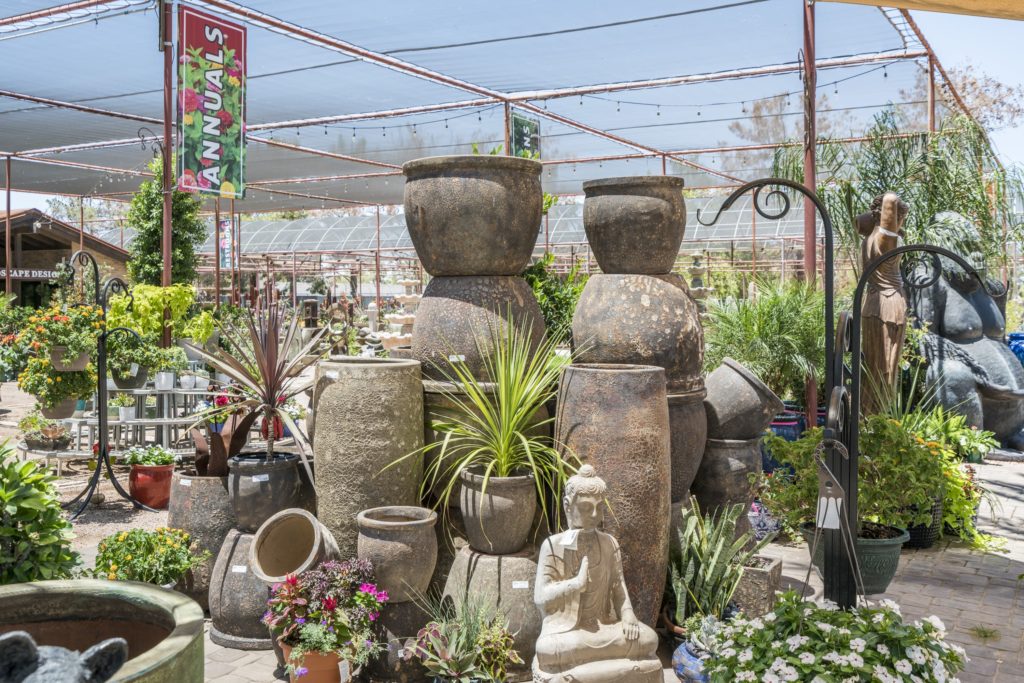
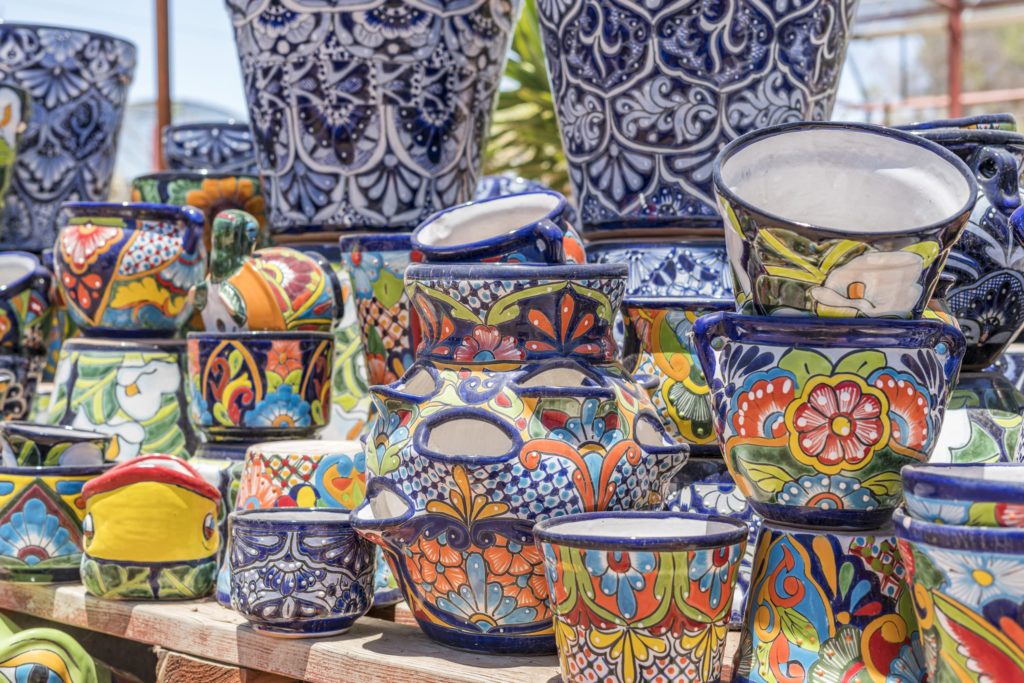
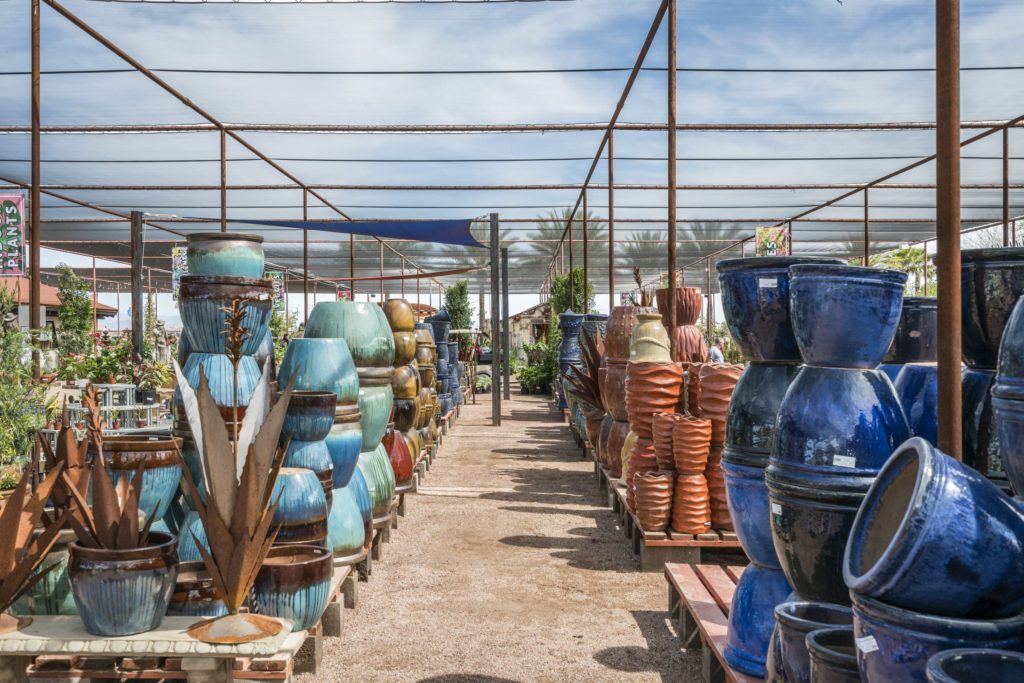
Perennials are a soil investment: we stock planting mix and compost to break up caliche-heavy beds, gypsum, slow-release and bloom fertilizers, drip fittings and bark or rock mulch. The pottery yard has large glazed and terracotta pots for the ones that live on a patio, and soil and mulch is sold by the bag or by the yard.
October through April. It blooms from March to June, pauses in the heat, and blooms again in fall.
Yes — it is a hardy perennial here. Cut it back after frost and it regrows in late winter.
Every four to five days in summer and every ten days in winter once established, in well-drained soil.
Shear the mound back by a third after each flush; it reblooms in two to three weeks.
Heat — coreopsis pauses when nights stay above 80°F. It resumes in September.
Yes, non-toxic to cats and dogs.
Coreopsis ‘Uptick’ live on the perennial benches; any staff member can point you to them. Locally owned, and a short drive from San Tan Valley, Gilbert, Chandler and Mesa.