Moderate to high water use; keep the root zone consistently moist but not waterlogged. Water deeply and frequently during Phoenix summers; reduce watering substantially during winter dormancy.
Size
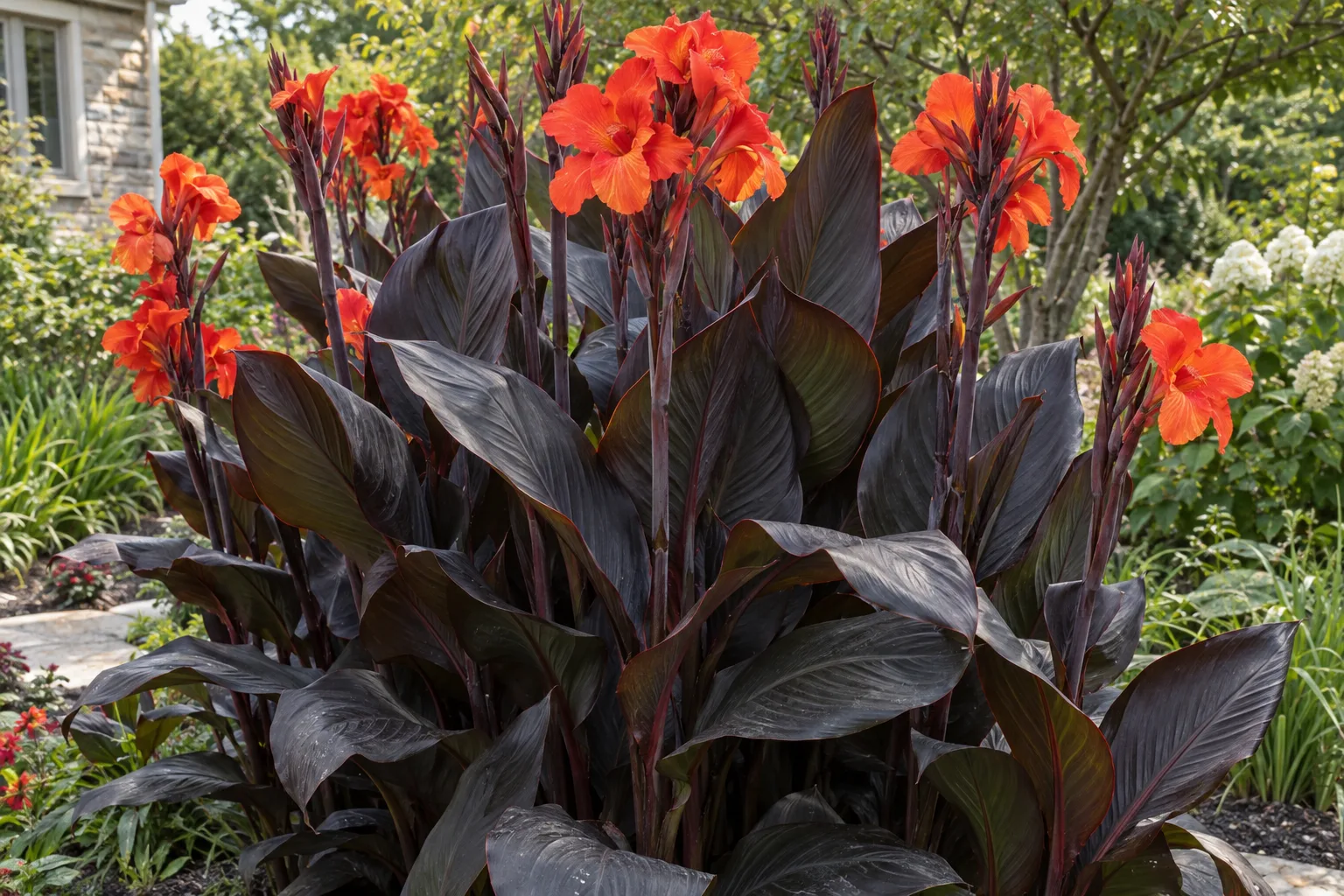
4-6 ft tall × 2-3 ft wide
Habit
Perennial clump
Toxicity
Non-toxic
Description
A bold, tropical-looking canna commonly sold as Tropicanna Black, with broad, dark burgundy-black leaves and vivid orange-scarlet flowers.
Elephant ears, Liriope, Society garlic, Tropical hibiscus
Non-toxic
Non-toxic
Care Instructions
Light: Morning sun with afternoon shade is ideal in Phoenix; protect from intense reflected heat. Strong light promotes dark foliage and flowering.
Water: Moderate to high water use; keep the root zone consistently moist but not waterlogged. Water deeply and frequently during Phoenix summers; reduce watering substantially during winter dormancy.
Soil: Fertile, organically enriched, well-drained soil. Amend sandy or compacted desert soil with compost and mulch to conserve moisture and cool roots.
Mature size: Typically 4–6 feet tall and 2–3 feet wide, gradually spreading into broader clumps.
Bloom: Repeated flowering from late spring through fall with adequate moisture and nutrients; extreme summer heat may reduce flowering.
Evergreen / deciduous: Herbaceous perennial; frost-deciduous in Phoenix. Foliage may persist through mild winters, but cold or frost can cause dieback.
Growth rate: Fast during warm weather with regular irrigation and feeding.