

Miniature petunia-like flowers by the hundred on trailing stems: ‘Cabaret’, ‘Superbells’, ‘Candy Shop’ and ‘Unique’, plus ready-made color combos in hanging baskets. A container plant in the low desert — and it wants acid fertilizer.
Calibrachoa is the hanging-basket flower of the cool season: a cascade of inch-wide trumpets in every color but true blue, self-cleaning so it never needs deadheading, and blooming from a fall planting straight through to June. In Queen Creek it has one non-negotiable: it goes in a container, not a bed. Our alkaline soil and hard water lock up iron and turn the leaves yellow within weeks; in quality potting mix with an acid fertilizer it stays green and covered in flower.
We commonly carry the ‘Cabaret’ series in four colors plus ‘Superbells Lemon Slice’, ‘Candy Shop Pixie Stix Mix’ and ‘Unique Sangria Fizz’, and six ready-made color combinations in hanging baskets. The rest of the color tables are on our Annual Flowers & Foliage page.

These are the calibrachoa varieties we commonly carry. Availability changes week to week and season to season, so call (480) 987-3308 or stop in to see what’s on the bench today.
A compact, early, mounding-trailing series with saturated color; ‘Red’ is a clean true red.
Pure white ‘Cabaret’ — the one that ties a mixed basket together.
Deep pink-purple with a dark eye and veining.
Near-black purple with a yellow throat — dramatic against yellow or white.
The Proven Winners pinwheel of yellow and white stripes; vigorous, heat-tolerant and the longest-blooming calibrachoa we carry.
A mix of small-flowered, candy-striped and star-patterned colors in one pot.
Double-flowered, ruffled blooms in wine-red with pink highlights, sold.
ready to hang
Three-color calibrachoa baskets, sold ready to hang. Recipes change with the season; these are typical combinations:
Looking for one that isn’t listed? Ask — we can usually suggest a close match or tell you when it tends to come around.
The care tag was written somewhere else. This is the Queen Creek version.
Set out calibrachoa from mid-October, once daytime highs are reliably under 95°F, through March. A fall planting blooms from November to June; a spring planting from March to June. It fades when nights stay above 75°F, so there is no summer calibrachoa here — replace it with vinca or portulaca in June.
Full sun through the cool months for the most flowers; morning sun and afternoon shade from April on, which extends the season into June. Baskets on a west-facing wall in May cook in an afternoon.
A bloom fertilizer with iron at half strength every two weeks, or a slow-release fertilizer at planting plus liquid feed monthly. No deadheading needed — it is self-cleaning. If a basket goes leggy in February, cut the stems back by a third and feed; it refills within three weeks.
Calibrachoa in Queen Creek garden soil turns yellow between the veins within a month: our soil and water are alkaline, which locks up iron. Grow it in hanging baskets, window boxes and pots with a quality peat- or coir-based potting mix, feed with an acid-forming or petunia fertilizer that contains iron every two weeks, and treat yellowing with chelated iron. Keep it out of the ground.
Water when the top inch of mix is dry, then until it runs through: every two to three days in fall and winter, daily by April. Calibrachoa rots in a basket that stays wet and wilts hard when bone dry — it recovers from the second, not the first. Never leave a saucer full. In a hot wind, check baskets twice a day.
Aphids on new growth and budworm caterpillars chewing holes in buds in spring — hose or hand-pick, or use Bt for budworm. Cover baskets on nights below 30°F; a light frost only checks it. Calibrachoa is non-toxic to cats and dogs.
Snap a photo of the spot — sun direction, wall color, pot size — and we’ll pick a season-correct combination with you. Advice is free.
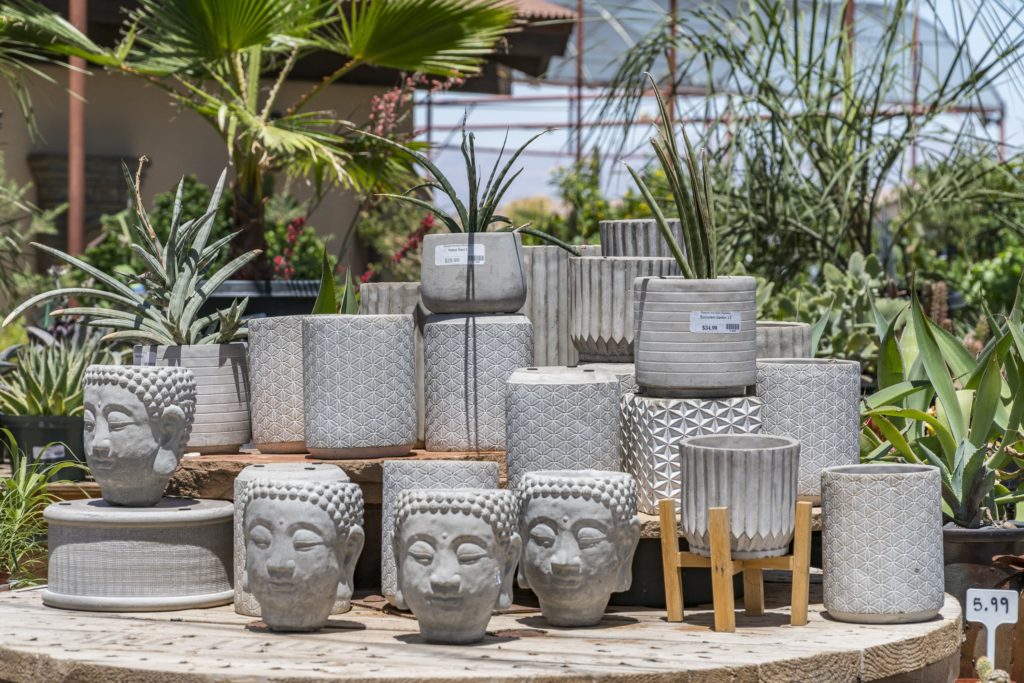
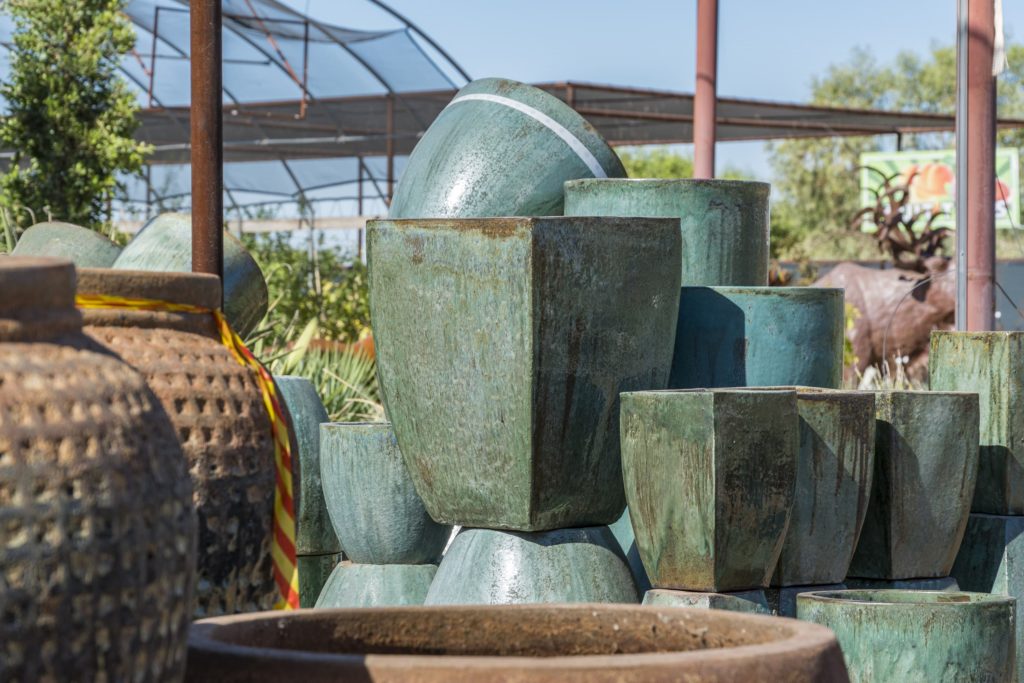
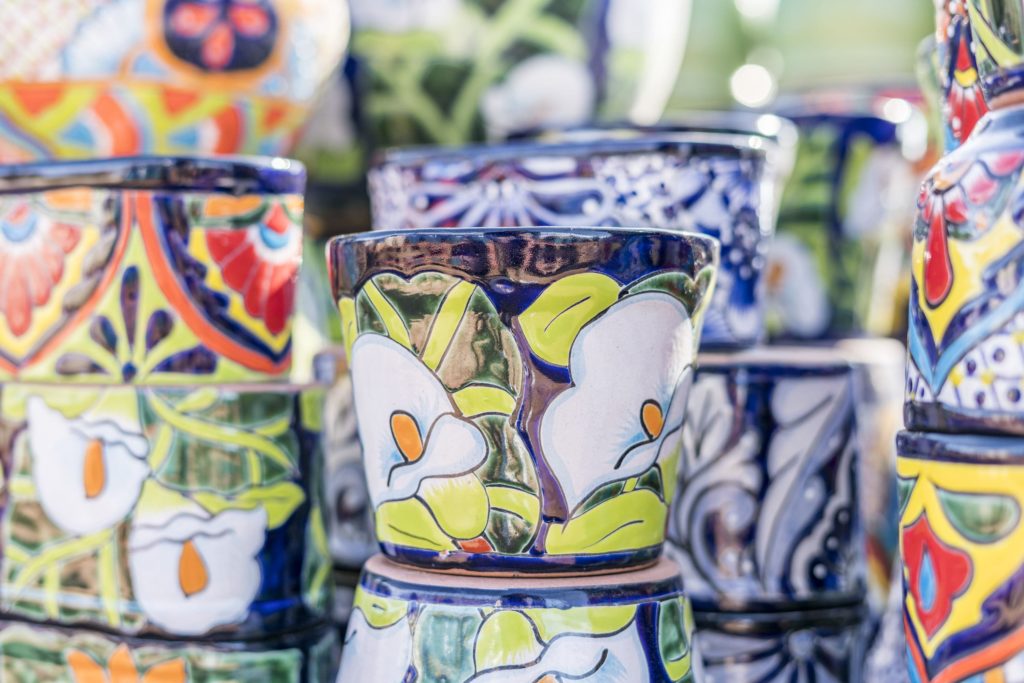
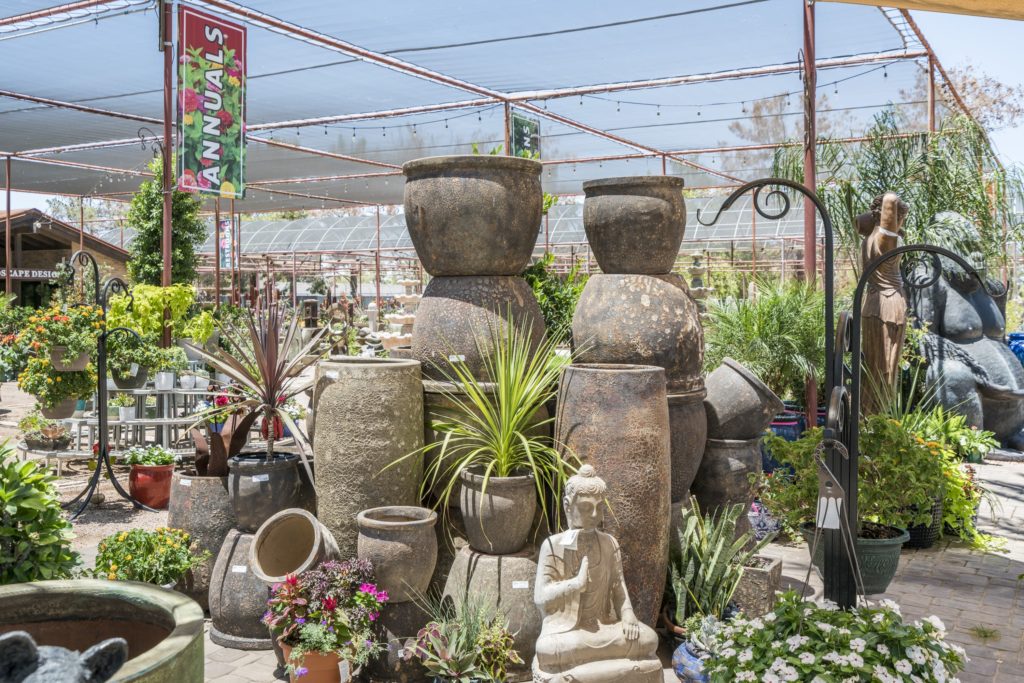
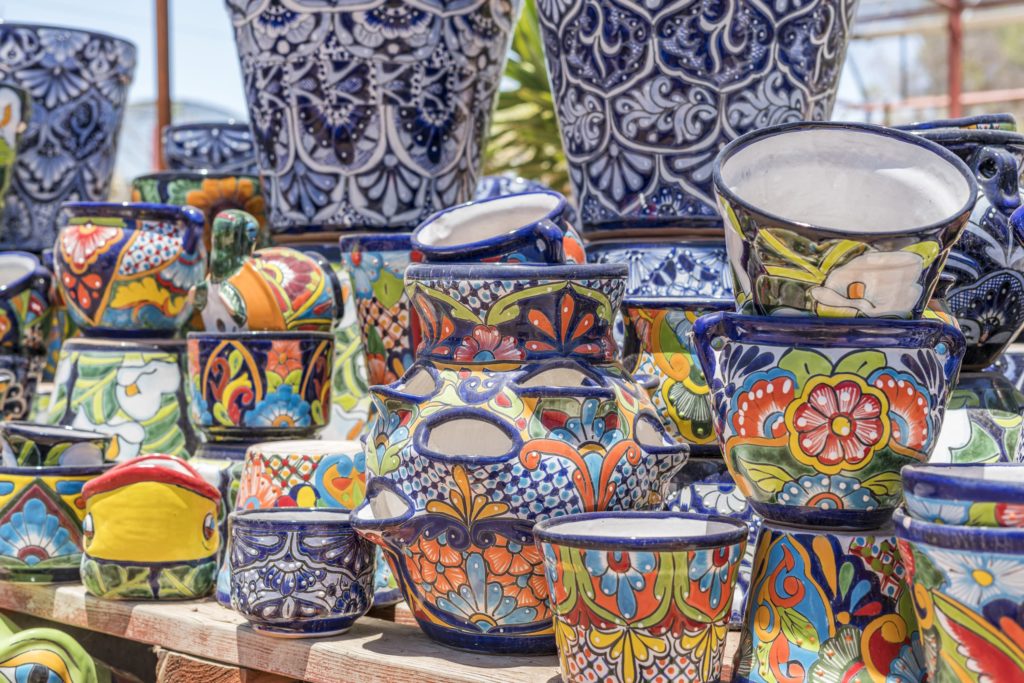
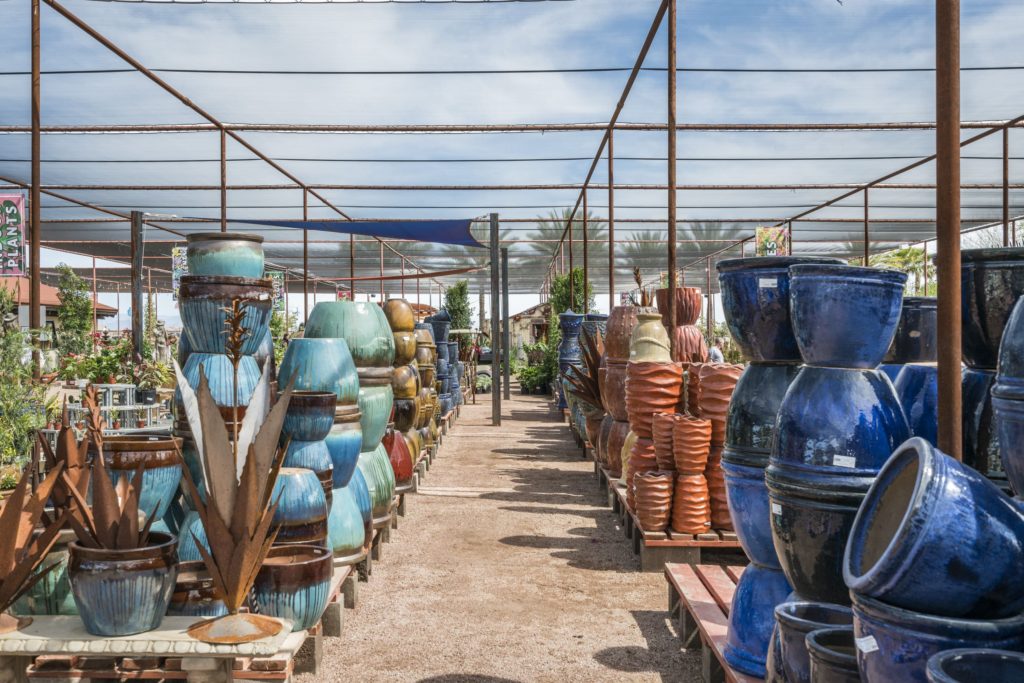
Annuals succeed or fail on what’s under them. We stock planting mix and compost for beds, potting mix for containers, bloom fertilizers including Tony’s Magic Mix and Magic Flower, starter fertilizer, drip fittings and frost cloth for the cold nights. The pottery yard has glazed and terracotta pots from 4-inch to whiskey-barrel size, window boxes and hanging baskets, and soil and mulch is sold by the bag or by the yard.
Iron chlorosis from alkaline soil or water — the most common calibrachoa problem in Arizona. Grow it in potting mix, not garden soil, feed with an acid-forming fertilizer with iron every two weeks, and apply chelated iron when you see yellowing between the veins.
Mid-October through March. It blooms until June and fades once nights stay warm; it is not a summer plant here.
Not here. Our alkaline soil yellows it within weeks. Keep it in baskets, window boxes and pots with quality potting mix.
When the top inch is dry: every two to three days in the cool months, daily by April. Water until it runs through and never let it sit in a saucer.
No — calibrachoa drops its spent flowers on its own. Cut leggy baskets back by a third in late winter to refresh them.
Yes, calibrachoa is non-toxic to cats and dogs.
Calibrachoa live on the annuals tables; any staff member can point you to them. Locally owned, and a short drive from San Tan Valley, Gilbert, Chandler and Mesa.